
Norman Rockwell

Picture this: It’s 1990, and the Scorpions are belting out “Winds of Change” to massive crowds across a transforming Europe. Just a year earlier, people around the world had woken up to the impossible news that the Berlin Wall was actually falling—that the concrete symbol of Cold War division was being torn apart by ordinary people with hammers and hope.

For those who were 19 in 1990, watching this unfold, the song became more than just a power ballad. It was an anthem of hope that seemed, for a while at least, to materialize into genuine possibilities. The world felt suddenly malleable in a way it hadn’t for decades. Meanwhile, in academic circles, scholars were beginning to re-examine how fear has shaped our world, while Norman Rockwell’s 1943 painting “Freedom from Fear” continued to hang in museums and some collective memories as a reminder of what we’re all supposedly working toward.

What connects these seemingly disparate cultural moments? They all grapple with the same fundamental question: How does fear drive human transformation?

In the future days, which we seek to make secure, we look forward to a world founded upon four essential human freedoms.

The first is freedom of speech and expression–everywhere in the world.
The second is freedom of every person to worship God in his own way–everywhere in the world.

The third is freedom from want–which, translated into world terms, means economic understandings which will secure to every nation a healthy peacetime life for its inhabitants-everywhere in the world.

The fourth is freedom from fear–which, translated into world terms, means a world-wide reduction of armaments to such a point and in such a thorough fashion that no nation will be in a position to commit an act of physical aggression against any neighbor–anywhere in the world

Franklin D. Roosevelt Annual Message to Congress, January 6, 1941; Records of the United States Senate; SEN 77A-H1; Record Group 46; National Archives.

I have started reading Robert Peckham’s “Fear: An Alternative History of the World”which reads like a detective story where the criminal and the hero are the same person. Starting with the Black Death in the 14th century, Peckham traces fear’s dual role throughout history—sometimes as a tool of oppression, sometimes as a catalyst for progress.

His central insight is provocative: fear has served “both a coercive tool of power and as a catalyst for social change.” Think about it. The same emotion that allows dictators to control populations also drives revolutionary movements. The fear of injustice motivates protests. The fear of environmental collapse spurs climate action. The fear of authoritarianism strengthens democratic institutions.

Peckham’s “shadow history” approach reveals how our most transformative moments—from the Renaissance to the Civil Rights Movement—often emerged from confronting our deepest collective anxieties rather than avoiding them.

Now flip to Norman Rockwell’s “Freedom from Fear.” Painted during World War II, it shows parents tucking their kids into bed while war headlines lurk in the background. It’s pure Americana—the suburban dream of safety, stability, and sleeping soundly despite the chaos outside.

But here’s what makes it powerful: Rockwell wasn’t just painting propaganda. He was painting aspiration. The image says, “This is what we’re fighting for—not just victory, but the right to live without constant anxiety.”

The painting represents the endpoint that Peckham’s historical analysis points toward: societies stable enough that families can exist in protective bubbles of normalcy, even when the world burns around them.

Which brings us to the Scorpions’ “Winds of Change.” Released in 1990, the song became an unofficial anthem for the end of the Cold War—but more than that, it captured something profound about generational hope. For those who were teenagers and young adults watching the impossible become possible, the song wasn’t just about political change. It was about the sudden realization that the world was far more malleable than anyone had imagined.

Whatever one might think about the song’s musical merits, it became a soundtrack for hope that, for a while, seemed to materialize into real possibilities. The fear that had held Europe in a stranglehold for decades—fear of nuclear war, of permanent division, of unchangeable systems—suddenly transformed into collective action and unprecedented change.

The song works because it embodies Peckham’s thesis in three-and-a-half minutes of soaring guitar solos. The fear that had held Europe in a stranglehold for decades became the very force that motivated people to tear down walls and demand change. The “winds” weren’t just meteorological—they were the accumulated anxieties of generations finally finding release.

Like Rockwell’s painting, the song also represents an aspirational moment—the belief that we could move from a world defined by fear to one defined by possibility.

We’re living through our own “Winds of Change” moment. Collective anxieties about technology, climate change, political polarization, and social inequality are reaching tipping points around the world. The question isn’t whether these fears are justified—Peckham’s analysis suggests that’s the wrong question entirely.

The real question is: Will we let fear paralyze us, or will we harness it as a force for positive transformation?

Peckham’s historical analysis gives us the intellectual framework to understand fear’s complexity. We need to recognize when fear is being weaponized against us and when it’s signaling genuine problems that require action.

Rockwell’s vision reminds us what we’re aiming for: societies where people can sleep peacefully, secure in their freedom from existential anxiety.

And the Scorpions? Well, they remind us that transformation is possible—that the walls we think are permanent can come tumbling down when enough people decide they’ve had enough of living in fear. For those who lived through 1989-1990, watching seemingly impossible changes unfold in real time, the song captured not just a political moment but a feeling of generational possibility that the world could actually be different.

That sense of hope materializing into reality—however briefly—offers a template for how accumulated fears can reach tipping points and transform into collective action.
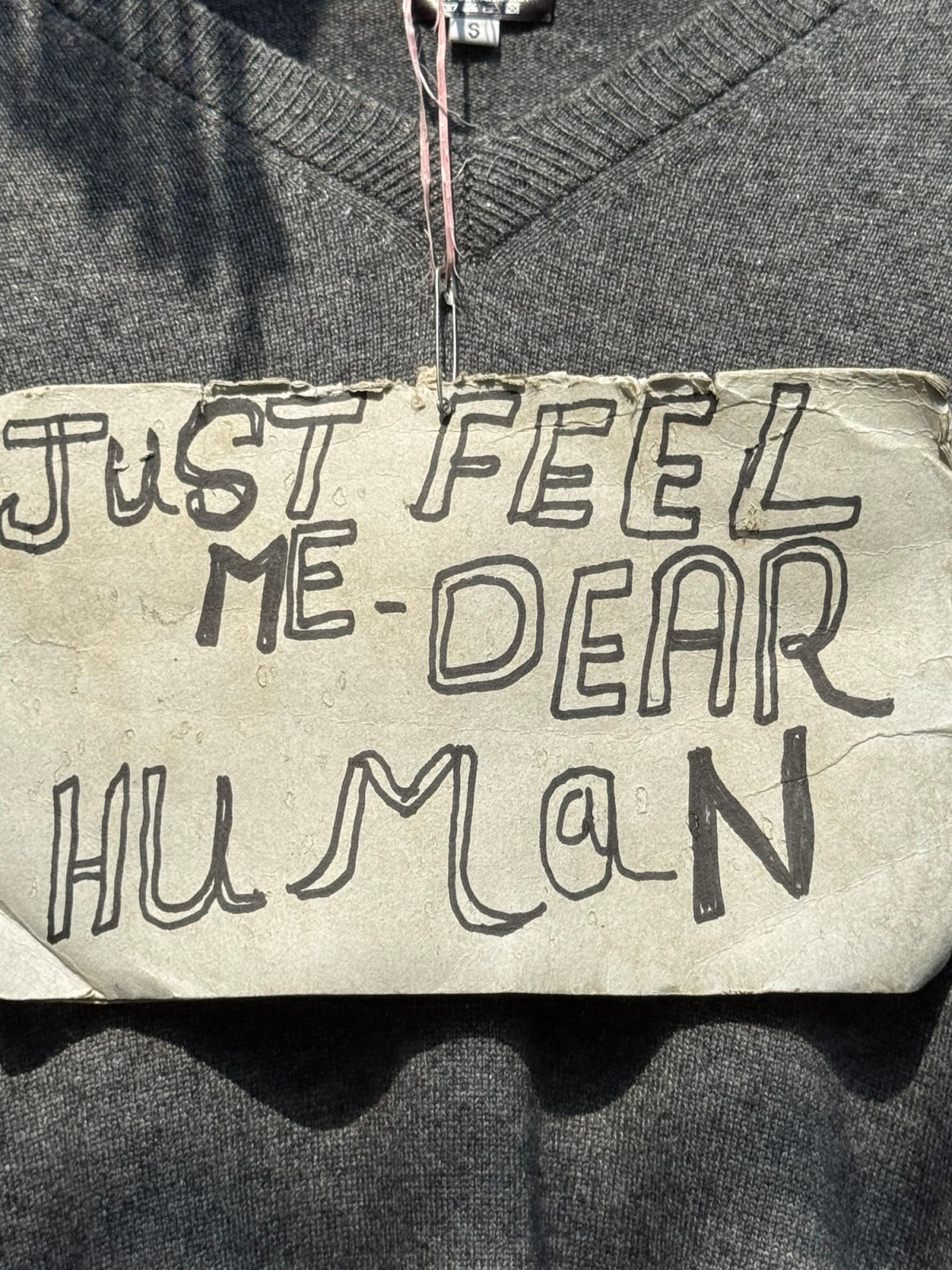
All the suffering I can’t fix

A Meditation on Modern Cruelty
After Eduardo Galeano’s “The Nobodies”


They are not human beings,
they are human resources.
They do not have names,
they have productivity metrics.
They do not have faces,
they have employee ID numbers.
They do not have hearts,
they have performance indicators.

Eduardo Galeano’s poem “The Nobodies” pierces through the comfortable abstractions we use to distance ourselves from human suffering. In its stark repetition, it reveals how modern systems transform people into categories, individuals into statistics, and pain into acceptable externalities. But Galeano’s vision, written decades ago, has evolved into something even more insidious in our contemporary moment: we have built a machinery of indifference so sophisticated that it operates without malice, so efficient that it barely requires conscious cruelty.


The Architecture of Abstraction
Modern society has perfected the art of making suffering invisible through layers of abstraction. We speak of “market corrections” rather than families losing their homes. We discuss “labor optimization” instead of communities destroyed by factory closures. We analyze “demographic transitions” while people flee wars we barely acknowledge. The language itself becomes a buffer, creating distance between decision-makers and consequences, between the comfortable and the expendable.


This linguistic sleight of hand serves a psychological function as much as a political one. When a pharmaceutical company prices medication beyond the reach of the dying, executives sleep soundly because they are “maximizing shareholder value.” When a social media algorithm amplifies hate speech because it drives engagement, engineers rationalize it as “user preference optimization.” The suffering is real, immediate, and measurable, but the responsibility is diffused through systems so complex that no individual feels accountable for the human cost.


The efficiency obsession that defines our era has transformed this indifference from a moral failing into a virtue. To pause and consider the human impact of our decisions is seen as inefficient, unprofessional, naive. The manager who agonizes over layoffs is less valuable than one who can execute them cleanly. The doctor who spends time comforting patients is less productive than one who processes more cases per hour. We have created incentive structures that systematically reward the suppression of empathy.


The Cruelty Inheritance
But beneath these institutional failures lies something more troubling: the persistence of human cruelty across all attempts at moral progress. The armed conflicts ravaging our world today follow patterns established thousands of years ago. In Ukraine, Gaza, Sudan, Myanmar, and countless other places, human beings wake up each day and choose to inflict suffering on other human beings. They do so not despite their humanity, but because of it.


This cruelty is not random or inexplicable. It follows a logic as old as our species: the logic of payback, of transferred pain, of suffering seeking outlet. The person humiliated by their superior finds someone weaker to humiliate. The community traumatized by violence becomes willing to traumatize others. The nation that has been invaded becomes, when strong enough, an invader. We pass our pain down like an inheritance, each generation finding new ways to make others pay for what was done to them.


Modern life has not eliminated this dynamic but has made it more sophisticated. Our frustrations are more diffuse—traffic jams, automated phone systems, bureaucratic mazes, jobs that feel meaningless. None of it is dramatic enough to justify real rage, but it accumulates into a background resentment that seeks expression. The road rage incident, the cruel comment on social media, the casual workplace bullying—these are not aberrations but pressure valves in a system that generates more frustration than it knows how to process.


The Adaptation of Numbness
Perhaps most disturbing is how indifference becomes a survival strategy. Healthcare workers learn not to get too attached to patients who might die. Social workers develop emotional barriers to protect themselves from the endless parade of human misery. Politicians master the art of discussing mass suffering in abstract terms because the alternative—feeling it all—would be paralyzing.


This numbness serves a function, but it comes at a cost. The protective callousness that helps us navigate a cruel world gradually becomes genuine indifference. The executive who starts by reluctantly cutting benefits to save the company ends up seeing employees as line items on a spreadsheet. The soldier who learns to dehumanize enemies to survive combat struggles to see civilians as fully human afterward.

The adaptation becomes the identity.
We have built economic systems that reward this emotional numbness. The most successful leaders are often those who can make decisions without being burdened by empathy. They advance not despite their indifference to suffering but because of it. Meanwhile, those who remain sensitive to human cost find themselves at a systematic disadvantage, gradually filtered out of positions where they might make a difference.


The Persistence of Patterns

Look at the armed conflicts tearing apart our world, and you see the same dynamics Galeano observed in economic exploitation applied to violence. The victims become statistics, their names unknown, their faces unseen. A hospital becomes a “military target.” A school becomes “collateral damage.” Children become “enemy combatants.” The same abstraction that turns workers into resources turns civilians into acceptable losses.

These conflicts reveal something uncomfortable about human nature: our capacity for systematic cruelty seems inexhaustible. We have international laws, human rights frameworks, global communication that makes suffering visible, and yet the violence continues. Each generation discovers new ways to inflict ancient forms of pain. The tools evolve—from swords to drones—but the willingness to use them against other humans remains constant.

What makes this particularly disheartening is how quickly victims can become perpetrators. The oppressed, when they gain power, often replicate the systems that oppressed them. The colonized become colonizers. The abused become abusers. The pattern suggests that cruelty is not a deviation from human nature but an expression of it, waiting to emerge whenever conditions permit.

The Illusion of Progress
We tell ourselves stories about moral progress, about civilization advancing toward greater compassion and justice. And there is truth in these stories—slavery is now universally condemned, democratic ideals have spread, human rights discourse has global reach. But these advances exist alongside unchanged patterns of cruelty and indifference. We have become more sophisticated in our methods, more subtle in our violence, more efficient in our exploitation.

The plantation becomes the sweatshop. The colonial administrator becomes the international development expert. The inquisitor becomes the algorithm that decides who gets healthcare. The forms change, but the fundamental dynamic persists: some humans deciding that other humans are expendable in service of larger goals.

Perhaps the most honest conclusion is that the brief periods of peace and cooperation in human history are the anomalies, not the norm. The moral frameworks we construct—religions, philosophies, legal systems—are elaborate attempts to contain something that remains fundamentally unchanged within us. They work, sometimes, for some people, in some places, for limited periods. But they are always fighting against gravity.

The Acceptance of Limits
There is something oddly liberating in accepting the persistence of human cruelty rather than continuing to believe it can be eliminated. If indifference and violence are permanent features of human society rather than problems to be solved, then the question becomes not how to create a perfect world but how to minimize harm in an imperfect one.

This acceptance does not mean resignation. It means working within reality rather than against it. Building systems that assume humans will sometimes be cruel rather than systems that assume they won’t. Creating redundancies and safeguards that limit the damage any individual or group can inflict. Recognizing that moral progress is temporary and fragile, requiring constant maintenance rather than being a permanent achievement.

Galeano’s nobodies are still with us, multiplied by technology and globalization. They work in factories we never see, fight in wars we barely acknowledge, suffer from diseases we could cure but choose not to fund. They remain nobody not because we cannot see them but because seeing them clearly would require us to confront uncomfortable truths about ourselves and the systems we maintain.

The machinery of indifference grinds on, fed by our small cruelties and large abstractions, our inherited pain and systemic incentives. It operates with or without our consent, but never without our participation. We are all complicit, and we are all victims, caught in patterns older than civilization and seemingly more durable than any attempt to break them.

Perhaps wisdom lies not in the impossible dream of ending human cruelty but in the more modest goal of reducing it where we can, acknowledging it where we cannot, and refusing to let our necessary numbness become complete blindness. The nobodies are still nobody, but at least we can choose whether to keep pretending we don’t see them.


The nobodies (Los nadies) by Eduardo Galeano, from the book El libro de los abrazos, 1989.

Fleas dream of buying themselves a dog,
and nobodies dream of escaping from poverty,
that one magical day
good luck will soon rain,
that good luck will pour down,
but good luck doesn’t rain, neither yesterday
nor today,nor tomorrow, nor ever,
nor does good fall from the sky in little mild showers,
however much the nobodies call for it,
even if their left hands itch
or they get up using their right feet,
or they change their brooms at new year.
The nobodies: the children of nobody, that masters of nothing,
The nobodies: the nothings, those made nothing,
running after the hare, dying life, fucked, totally fucked:
who are not, although they were.
Who speak no languages, only dialects.
Who have no religions, only superstitions.
Who have have no arts, only crafts.
Who have no culture, only folklore.
Who are not human beings, but human resources.
Who have faces, only arms.
Who don’t have names, only numbers.
Who don’t count in world history,
just in the local press’s stories of violence, crime, misfortune and disaster,.
The nobodies who are worth less than the bullets that kill them.


Sueñan las pulgas con comprarse un perro
y sueñan los nadies con salir de pobres,
que algún mágico día llueva de pronto la buena suerte,
que llueva a cántaros la buena suerte;
pero la buena suerte no llueve ayer, ni hoy, ni mañana, ni nunca,
ni en lloviznita cae del cielo la buena suerte,
por mucho que los nadies la llamen
y aunque les pique la mano izquierda,
o se levanten con el pie derecho,
o empiecen el año cambiando de escoba.
Los nadies: los hijos de nadie, los dueños de nada.
Los nadies: los ningunos, los ninguneados,
corriendo la liebre, muriendo la vida…
Que no son, aunque sean.
Que no hablan idiomas, sino dialectos.
Que no profesan religiones, sino supersticiones.
Que no hacen arte, sino artesanía.
Que no practican cultura, sino folklore.
Que no son seres humanos, sino recursos humanos.
Que no tienen cara, sino brazos.
Que no tienen nombre, sino número.
Que no figuran en la historia universal, sino en la crónica roja de la prensa local.
Los nadies, que cuestan menos que la bala que los mata

What bothers me

Apathy

Bitterness

Contempt

Despair

Disillusionment

Emptiness

Fatalism

Guilt

Hostility

Insecurity

Jealousy

(Un)Kindness

Laziness (my own)

Manipulation

Numbness

Overloading

Prickliness

Passiveness

Quarrelsomeness

Resentfulness

Stubbornness

Feeling Tired all the time

Uncertainty

Violence

Xenophobia

Whining

Yielding

(Over)Zealousness

Why? Probably because I don’t have any real problems or, therapy isn’t working.