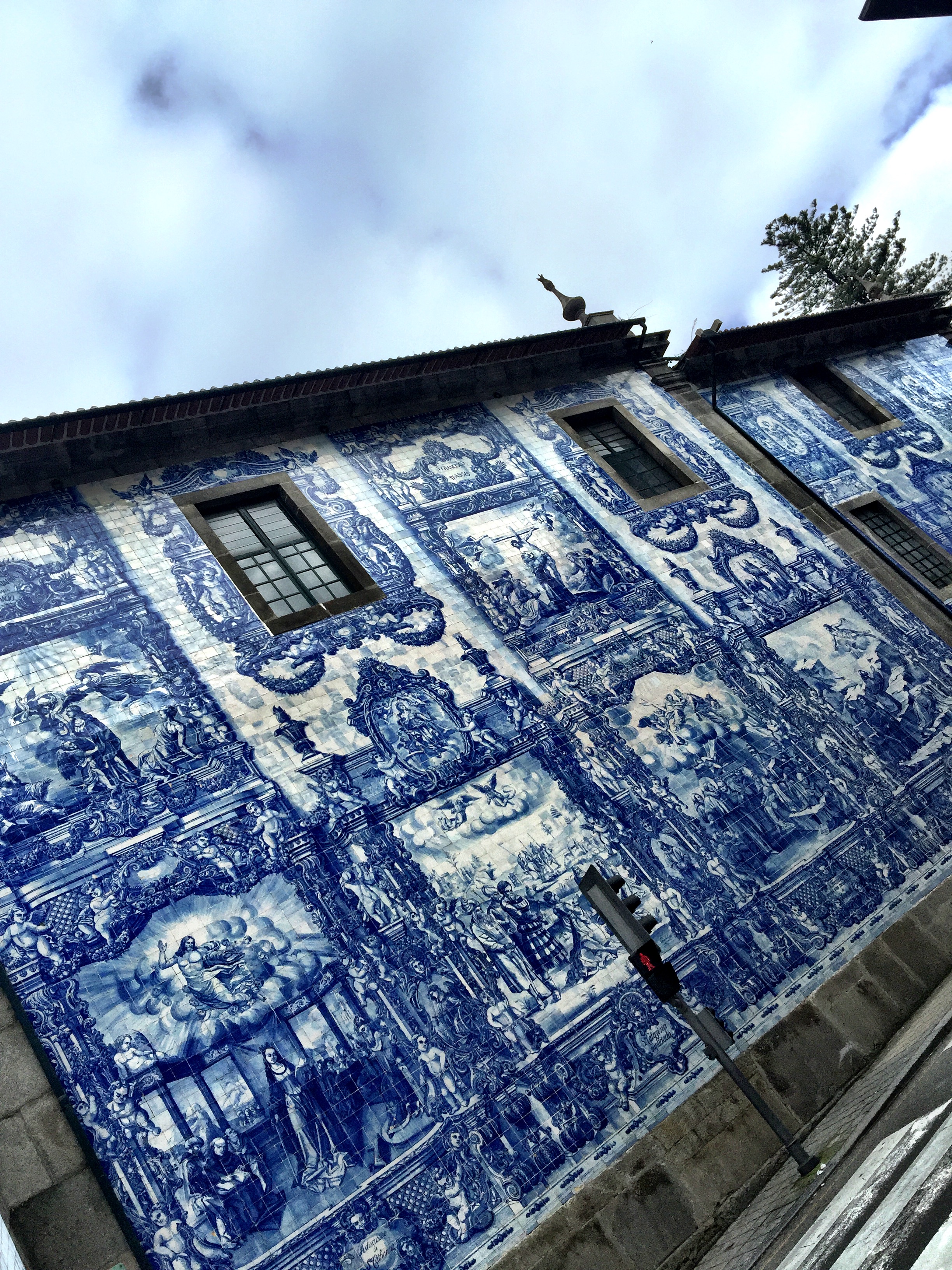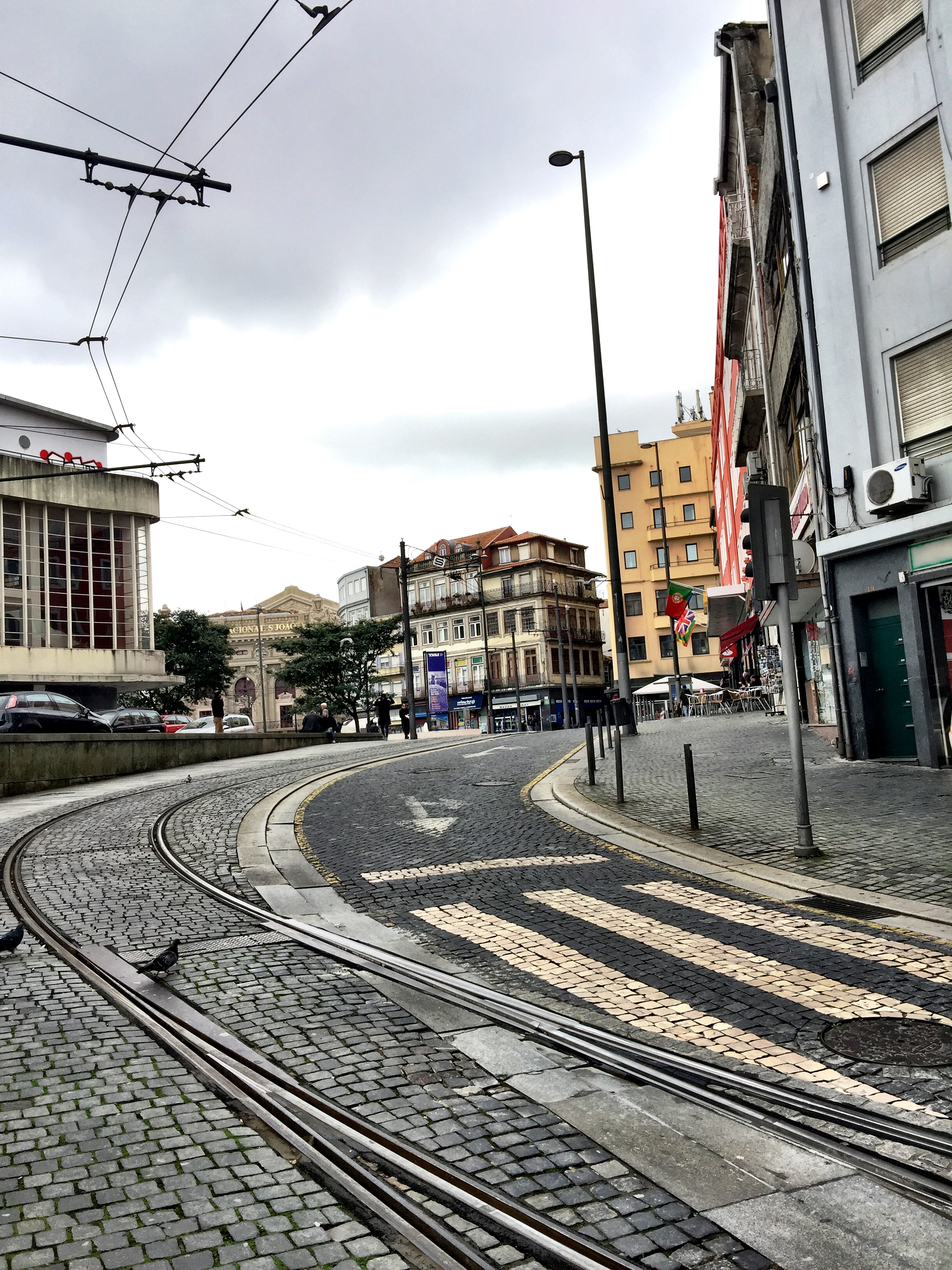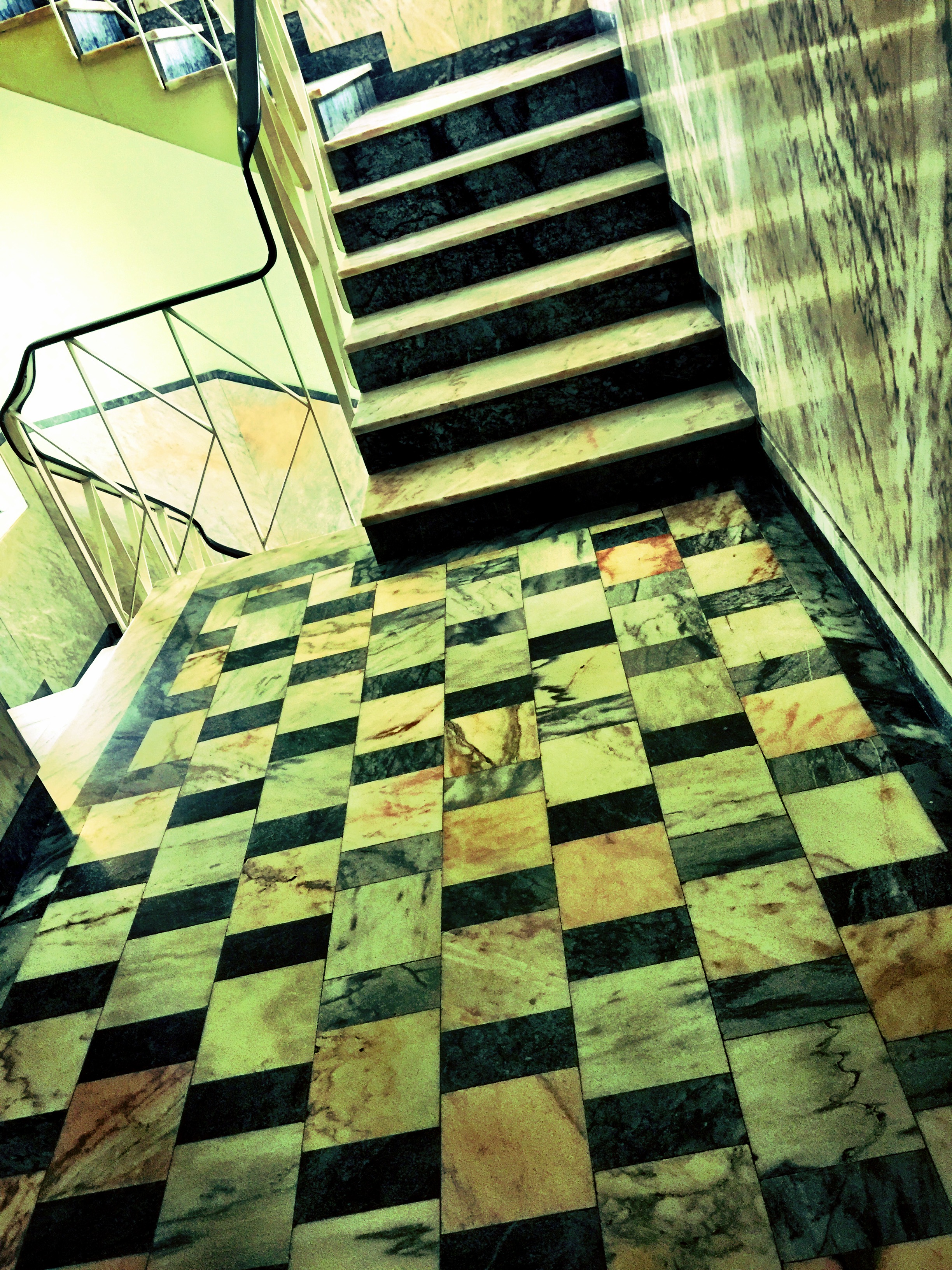
The roads not taken

I am a terrible decision maker. I do not like planning or strategizing or even making pro/con lists.

I find decision making excruciatingly tedious and, on top of that, I can’t read maps and even manage to get lost using gps devices. That’s how I often take the roads less traveled. I am also not good at following instructions.

Not many, if any, of these new roads are left to be metaphorically or literally explored. I suppose we all would like to be pioneers and trailblaze our own road but that is lonely and difficult path we’re seldom ready to take.

In some ways, this blog is, for me, the road less traveled, the road of self-examination as a public exercise. And, as Dr. Peck would put it “life is difficult”, being honest with yourself is not an easy task. Being honest with yourself in public can oftentimes be soul crushing as is the realization that you can’t really always get what you want.

At least two people in my life have tried to make me understand (in very obvious ways) that life is seldom what you want it to be and often what it has to be. I haven’t learnt this lesson yet. I go on insisting that there has to be more. As a traveler, I always want to take both or all the roads in front of me and start walking even if sometimes never arriving and other times taking the easy, comfortable road and not getting where I wanted to be.

The roads left are the roads not taken and these might be the ones that would make all the difference.

References:

Robert Frost (1920)

Morgan Scott Speck (1978)

Mick Jagger / Keith Richards (1969)

The Road Less Traveled

Anaïs’ Closet

“I must be a mermaid, Rango. I have no fear of depths and a great fear of shallow living.”

Anaïs Nin, “The Four-Chambered Heart.”

Oddly enough, a “great fear of shallow living” has also been somewhat responsible for the unmanageable size of my closet. Although an obsessive interest on clothes would probably point towards a very shallow living indeed, I have always seen clothes as a way to connect to my true (deep) self even when this self is busy living in imaginary spaces.

I could not have been a famous fashion designer (I’ve played briefly with this idea when I was 17 or 18) as claimed by Ms. Nin but, like her, my problem also seems to be that “my imagination created [and still creates] costumes that did not fit my simple life”. I do love clothes far more than I like fashion. I love their power to “evoke the fairy tale” and I’m still not ready to start “dressing more simply”, I took the first step in putting my Closet of Errors out there not as an exercise on downsizing but as a way of dealing with my own stories and letting the ones that were already lived go and find new lives.

Writing about Anaïs Nin’s  “Fractured Identity as Read through Fashion“,Tove Hermanson notes that [she] “grappled with complex self-identity issues that were revealed in her sartorial selections as much as her overtly philosophical prose. It’s unclear if Nin herself realized the extent to which she used fashion to act out her desires: to glamorize herself and seduce, and alternately to conceal and protect herself.” That’s how, I suppose, it all starts. More than a sign of individuality, clothes help to overcome your own insecurities by living the life of the character that more resembles what you have dreamt for yourself.

Someone once told me that I had lots of clothes and a ton of shoes because I didn’t think I was beautiful enough on my own. I remember taking that as an insult. Not anymore.  I am now able to have fun with all that I’ve collected everything remains, as Ms. Nin would put it ” very symbolical” and my clothes still have “first of all, a poetic significance: colours for certain occasions, evocations of other styles, countries (Spanish flavour, Moroccan touches, etc.)” and are, of course “a sign of individuality”. More than I would probably like to admit,   I  still “[want] striking clothes which [distinguish] me from other women. “

When I was growing up Anaïs was just the name of a Cacharel perfume that I was lucky enough to have my mum buy for me. I still recall the ethereal commercial on TV  that made you dream of becoming this wonderfully romantic creature. Today, after actually having read some of the diaries, I still see Anaïs as this unattainable ideal of being both the author and the character.

References:

The Diary of Anaïs Nin Volume One 1931-1934

Fanny and Alexander

I was 12 when me and my brother who was 10, decided to go to the movies and watch this to “kill some time”. We are not little precocious geniuses so we did not understand that ”

Bergman’s story is Dickensian in its extravagant emotional power – with a hint of Charlotte Brontë – and there is some Chekhov in its melancholy.” We did, probably, managed to understand the sibling complicity created in born out of adversity.

Even so, and as futile as it may seem, the movie made an impression on me because of the sailor outfits (it did, after all, won the Oscar for Best Costume Design in 1984; check Marik Vos’ costume sketches at The Criterion Collection). This movie, also  a contest “between magic and dull diurnal reality” was in part responsible for this Laura Ashley dress in my closet.  I suspect that also watching Upstairs, Downstairs, reading “Os Desastres de Sofia” (Les Malheurs de Sophie [Sophie’s misfortunes]) and a later fixation on Brideshead Revisited had something to do with it. A dress symbolizing and imagined childhood.

Getting to know who you are

What’s in a name

According to the label on it, I’ve had this t-shirt since I was 4. I guess these were quite popular at the time and my brother also had one.


At four, this was just a cute t-shirt with my name on it, now I look at it and see the beginning of my long saga of letting clothes tell me who I am. The fact that it actually has my name on it makes it even more important. I have always identified with the name chosen for me. Both of them. My two given names are Nadine and Stella. One meaning Hope and the other, of course, meaning Star. These meanings have, undoubtedly, shaped my main personality trait, I’m the eternal optimist, the obstinate one “that maintains that everything is best when it is worst.”

Nadine is the name everyone calls me, it’s also the name that has always made sense to call mine. Re-reading my 9 year old diary I realise that it also the name of the character I’ve created for myself. Most of the pages are full of descriptions of this girl called Nadine, an aspirational self, subject to countless experimentations of posture, behaviour, appearance, treated in writing like some amazing heroin in one of the countless books that were my most usual companions at the time.

Growing up in Portugal it was also too different from all the other names at school or the doctor’s office. At a time when you didn’t want to be noticed it was the kind of name that did not allow for any kind of invisibility. I didn’t actually realise how good that was. I do now. It is the kind of name that does not really require a surname. You can just be.

The imaginary or delusional grandeur I came to see in this name made it difficult to live up to it. How not to fall short from the character? I started by dressing it, all it’s moods, quirks, dreams and aspirations as a costume designer of some sorts. That’s how I ended up with a massive closet and no archiving space.

Stella has never been the protagonist. Others have never recognised it as a character and I am only slowly discovering that it might also be a name with it’s own voice.
Say Your Name

References

Voltaire

I’d love to wear a rainbow everyday 

I have started dressing in black in my late 20s. Before that I used to wear what I now think of as very loud and over the top colorful outfits that, in a way, were in direct contradiction with a tendency for existential nausea.

I do not remember if black was a conscious choice or it just happened that I started to resemble myself more while retreating into some kind of invisibility at the same time.

Now, dressing in black does have, sometimes,  the same burden of the “perpetual  mourning” for the state of the world and I identify with every single line on this song.  How could I possibly wear “bright colors on my back”? Black helps me not to manifest emotions in ways that would most probably lead me to a nervous breakdown.

Not everyday does dressing in black assume this suffocating grief for “our suffering age”.  In all its absence, black is full of contradictions. The color of oppression and rebellion, the color of religious Puritans and bondage fetishists, the uniform of authority and intellectual nonconformity.

In all its “poetic beauty” black allows me to write a different story everyday. This song is often part of the soundtrack.

References

Johnny Cash

Charles Baudelaire

Rebecca Willis via Feelguide

Paint it black