The Mediation of Truth: Hegel, Bloom, and the Role of Poetry


Art has long been regarded as a vessel for truth, transcending mere aesthetics to probe the depths of human experience. For Hegel, art is a stage in the unfolding of the Absolute Spirit, rendering abstract truths sensuously intelligible. Harold Bloom, in Take Arms Against a Sea of Troubles, positions poetry as a shield against existential despair, a means of self-creation in the face of chaos. This essay explores how poetry, as an art form, bridges Hegel’s universal truth and Bloom’s individual salvation, arguing that poetry uniquely mediates between collective human consciousness and personal revelation.


Hegel’s philosophy situates art within the dialectical journey of the Absolute Spirit toward self-realization. In his Lectures on Aesthetics, he posits that art’s purpose is to “unfold the truth” by embodying spiritual ideals in material forms. Unlike philosophy, which abstracts truth into concepts, art makes truth palpable through imagery, sound, and narrative. Poetry, as the highest form of verbal art, synthesizes the concrete and the abstract, using language to evoke both emotion and intellect. For Hegel, great poetry—such as Greek tragedy or Shakespearean drama—captures the spirit of its age, reflecting societal values and conflicts. The truth here is historical and collective, a manifestation of humanity’s evolving self-awareness.


Bloom’s Take Arms Against a Sea of Troubles shifts the focus inward, framing poetry as a tool for individual survival. Drawing on Shakespeare’s Hamlet (“take arms against a sea of troubles”), Bloom argues that poetry equips readers to confront suffering and mortality. Through close engagement with canonical poets—from Milton to Whitman—readers forge their own identities, resisting the “anxiety of influence” by internalizing and reinterpreting poetic voices. For Bloom, truth is not universal but existential; it emerges in the interplay between reader and text, offering solace and self-knowledge. Poetry becomes a “mirror turned lamp,” illuminating the reader’s inner world while reflecting shared human struggles.


Hegel and Bloom converge in their belief that art reveals truths inaccessible to pure reason, but they diverge in scope. Hegel’s truth is teleological, part of humanity’s collective march toward freedom. Bloom’s is intimate, a dialogue between solitary reader and text. Yet poetry bridges these realms. Consider Wordsworth’s Tintern Abbey: Hegel might laud its embodiment of Romanticism’s spirit, while Bloom would emphasize its therapeutic role in reconciling memory and loss. Similarly, Emily Dickinson’s condensed verses distill metaphysical inquiries into personal lyricism, satisfying Hegel’s demand for sensuous form and Bloom’s call for existential courage.

Poetry’s power lies in its duality. It transforms abstract truths (Hegel’s “Absolute”) into visceral imagery, while inviting readers to project their lived experiences onto its language (Bloom’s “self-creation”). A Shakespearean sonnet about time’s passage speaks both to Renaissance cosmology and a modern reader’s fear of mortality. This duality ensures poetry’s endurance: it is both a cultural artifact and a personal companion.


Hegel and Bloom, though separated by centuries and aims, collectively affirm poetry’s role as a mediator of truth. For Hegel, it is a historical force; for Bloom, a lifeline. Together, they illustrate how poetry transcends its form to become a space where universal and personal truths coexist. In an age of fragmentation, poetry remains vital—not merely as a relic of the spirit’s journey, but as a living dialogue between the self and the sublime. As long as humans seek meaning in chaos, poetry will endure as both witness and weapon, unfolding truths that philosophy cannot touch and solace that history cannot provide.

Disclaimer: not really jotting down the first thing that comes to mind, practicing for a speech next week

References:

Harold Bloom,  Take Arms Against a Sea of Troubles: the Power of the Reader’s Mind Over a Universe of Death (2020)

Hegel’s Aesthetics at Stanford Encyclopedia of Philosophy

It is important that awake people be awake

If you don’t know the kind of person I am
and I don’t know the kind of person you are
a pattern that others made may prevail in the world
and following the wrong god home we may miss our star.

For there is many a small betrayal in the mind,
a shrug that lets the fragile sequence break
sending with shouts the horrible errors of childhood
storming out to play through the broken dyke.

And as elephants parade holding each elephant’s tail,
but if one wanders the circus won’t find the park,
I call it cruel and maybe the root of all cruelty
to know what occurs but not recognize the fact.

And so I appeal to a voice, to something shadowy,
a remote important region in all who talk:
though we could fool each other, we should consider—
lest the parade of our mutual life get lost in the dark.

For it is important that awake people be awake,
or a breaking line may discourage them back to sleep;
the signals we give—yes or no, or maybe—
should be clear: the darkness around us is deep.

A Ritual To Read To Each Other by William Stafford

I have also learned to appreciate The Doors , Joy Division, David Sylvian, The Cocteau Twins and Nick Cave. Extreme music eclecticism germinated.

It isn’t the marriage that maps your course,

only the divorce.

One house has become all penance,
the other indulgence.

You struggle to resist
what has grown to feel illicit,

an appetite, threatening obsession,
for delectation.

What grows on trees tastes unfinished,
an imitation of  artifice.

What court determined
that sweetness be earned?

Some chef  with too much power
once called mixing salt and sugar

a form of   barbarism.
His decree, like any fashion,

should have evaporated,
but someone recorded it,

so centuries, a continent, away,
your whole body hesitates

to sweeten, even slightly,
chicken soup or broccoli.

There’s enough complication
in houses, in nations.

His laws are as good as blue.
The offender isn’t you.

Savory Versus Sweet

By Adrienne Su

Tokio ya no nos quiere

Other than The Stranger by Albert Camus that I have first read when I was 12 and had to re-read years later, for obvious reasons, I do not tend to return to books I’ve already read unless I’m reading for work.

If I had to choose one to go back to, I would probably settle on Tokyo Doesn’t Love Us Anymore by Ray Loriga.

Published in 1999, this prescient work examines themes that have only grown more relevant: the fragility of memory, the construction of identity, and our desperate attempts to escape emotional pain.

The unnamed protagonist works as a traveling salesman for a corporation that manufactures and distributes memory-erasing drugs. He traverses a near-future landscape of international cities—Tokyo, Barcelona, Los Angeles—selling his wares to those desperate to forget traumas, heartbreaks, and regrets. As he helps others erase their pasts, he increasingly samples his own product, gradually eroding his own identity in the process.

What makes Loriga’s narrative particularly compelling is how it positions memory erasure not as science fiction but as a logical extension of our pharmaceutical culture. The protagonist doesn’t view himself as peddling something extraordinary, but rather as providing a service comparable to antidepressants or sleep aids—just another chemical solution to human suffering.

The novel poses a profound question: If we are, essentially, the sum of our memories, what happens when we selectively delete parts of our past? The protagonist’s steady deterioration as he abuses memory-erasing drugs illustrates the devastating consequences. Without the anchoring force of his personal history, he drifts through existence as a hollow shell, unable to form meaningful connections or understand his own desires and fears.  Loriga’s spare prose mirrors the protagonist’s fractured psyche, leaving readers to question: If we erase our pain, what remains of our humanity?

At its core, Tokyo Doesn’t Love Us Anymore is a meditation on memory’s role in shaping identity. Loriga asks: Are we more than the sum of our experiences? The novel’s dystopia isn’t ruled by tyrants but by a collective yearning to numb the soul. Memorama, the drug, becomes a metaphor for modern escapes—social media, substances, consumerism—that promise freedom but deliver alienation.

Tokyo is both setting and symbol. Loriga paints it as a glittering ghost town, where skyscrapers pulse with artificial light but human connection flickers out. The protagonist wanders through love hotels, karaoke bars, and rain-soaked alleyways, each locale steeped in loneliness. Unlike the chaotic vitality of real-world Tokyo, this city feels like a screensaver—vivid yet void. It’s a backdrop that recalls Blade Runner’s dystopia but feels eerily adjacent to our tech-saturated present.

Our salesman is no hero. He’s a hollow man, a mirror for the reader’s complicity in systems of escape. His internal monologue—terse, fragmented—reveals a soul gasping for meaning. When he muses, “I sell what I need most,” we glimpse Loriga’s critique of capitalism’s cycle of creation and consumption. The character’s anonymity amplifies his universality: he could be anyone, anywhere, trading fragments of self for fleeting peace.

In 2025, as AI filters our realities and “digital detox” enters the lexicon, Tokyo Doesn’t Love Us Anymore reads like a prophecy. It challenges us to ask: What do we lose when we prioritize comfort over growth? The novel doesn’t offer answers but lingers like a phantom limb, reminding us that pain and joy are inseparable threads in the fabric of self.

Ray Loriga’s book is not a love letter to Tokyo but a requiem for the modern soul. It’s a slim, sharp novel that cuts deeper with each read, leaving readers to wonder: Would I take the pill? As you close the book, Tokyo’s neon fades, but the question remains, glowing in the dark.

FREEDOM & MEMORY: THE RAY LORIGA INTERVIEW

Sylvia vs. Maddalena

In Federico Fellini’s masterpiece “La Dolce Vita” (1960), the protagonist Marcello Rubini wanders through a decadent Rome, encountering various women who represent different facets of desire, connection, and modern existence. Among these characters, two stand in fascinating contrast to each other: Sylvia, the exuberant American starlet, and Maddalena, the wealthy, world-weary heiress.

Sylvia, portrayed with iconic flair by Anita Ekberg, embodies pure enthusiasm for life. Her character arrives in Rome like a force of nature, commanding attention and transforming the ancient city into her personal playground. The famous Trevi Fountain scene captures her essence perfectly—wading into the water with childlike wonder while fully dressed in an evening gown, beckoning Marcello to join her in this spontaneous celebration of being alive.

What makes Sylvia so captivating is her unfiltered joy. She moves through the world with an almost supernatural confidence, unconcerned with social conventions or consequences. When she climbs the stairs of St. Peter’s Basilica, dances in nightclubs, or pets kittens in an empty apartment, she does so with complete presence in the moment. She represents a kind of freedom that seems increasingly elusive in modern society—the freedom to experience pleasure without cynicism.

Sylvia’s appeal is immediate, visceral, and larger than life. She is the embodiment of spectacle in a film that is itself concerned with spectacle. Yet her character remains somewhat untouchable, a fantasy that can be approached but never fully possessed.

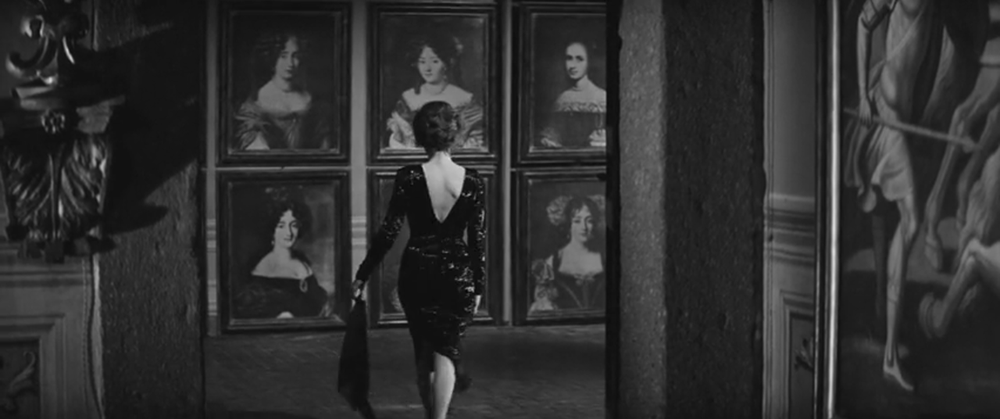
In stark contrast stands Maddalena, played with nuanced perfection by Anouk Aimée. Where Sylvia bursts with emotion, Maddalena presents a cool, composed exterior. Her elegance isn’t performative but ingrained—the natural result of someone who has seen all there is to see in Rome’s high society and found it wanting.

Maddalena navigates the night with a detached awareness that makes her all the more alluring. She’s not impressed by the trappings of wealth and fame because they are her everyday reality. Instead, she seeks authentic connection in a world of artifice, most memorably in the scene where she and Marcello communicate through the echo chambers of a flooded basement in a ruined aristocratic villa—a perfect metaphor for the distance that exists even in their moments of intimacy.

Her world-weariness isn’t simply cynicism but a form of wisdom. She understands the hollowness of “la dolce vita” because she has lived it fully. This knowing perspective gives her character depth and complexity that contrasts with Sylvia’s more straightforward exuberance.

The appeal of both characters creates an internal conflict familiar to many of us. Do we embrace life with Sylvia’s abandon, diving headfirst into experiences without reservation? Or do we move through the world with Maddalena’s sophisticated detachment, protecting ourselves from disappointment while seeking deeper meaning?

Fellini doesn’t present one approach as superior to the other. Instead, he uses these characters to illustrate the tensions of modern existence. Marcello is pulled between these poles throughout the film—between passion and detachment, innocence and experience, spontaneity and reflection. He does seem to reject flat out the emotional stability offered by Emma whose “sticky, maternal love” he despises.

What makes these characters so enduring is that they represent more than just different types of feminine appeal. They embody different philosophies of living, different responses to a world that simultaneously offers too much and not enough. Sylvia’s enthusiasm and Maddalena’s coolness aren’t just personality traits but strategies for navigating a changing society.

I would be Sylvia in the days I want to live as a fleeting dream, a force of nature that dazzles but never truly belongs. This is, I suppose, the luxury of anonymity. When we are the foreigner, no one really has any reference on how and who we are. Therefore, they have no idea on how we are supposed to be.

While Sylvia is the unattainable fantasy, Maddalena mirrors Marcello’s existential drift. She’s just as lost, but with a sharper self-awareness. A proud and typical GenX I, and most probably a lot of others reared on post punk and goth influences, resonate with depth, complexity, and the ache of searching for meaning in a world that feels hollow and could, thus, more easily be Maddalena.

Anouk Aimée plays her with this devastating coolness—luxury draped over emptiness. She craves love but sabotages ii. She’s too disillusioned to hope, yet too alive to stop searching. Fellini frames her suffering with such deliberate elegance that her loneliness becomes inseparable from her glamour. But this isn’t mere vanity—it’s a survival tactic, a way to exert control over the void.

  • Sylvia: Life as spectacle, pure dolce vita (the Trevi Fountain scene = ecstatic but fleeting).
  • Maddalena: Life as introspection, the aftermath of indulgence. She’s what happens when the party ends.
  • Fellini’s Contrast: Sylvia is myth; Maddalena is reality. One is adored, the other understood (sort of)—which is more tragic?

Ah, the young girl at the beachFellini’s silent, enigmatic coda to La Dolce Vita. She’s the film’s great unanswered question, a glimmer of purity in a world of exhausted decadence. A waitress from the seaside café (played by Valeria Ciangottini), unnamed, barely speaking. Marcello meets her earlier when she shyly asks for his autograph. Unlike the jaded socialites and performers, she’s untouched by Rome’s corruption. Her white dress mirrors Sylvia’s, but without the erotic charge—it’s virginal, almost angelic.


She waves, but it’s ambiguous—is it farewell, or an invitation? The sea (a classic symbol of renewal) separates them. She calls to him across the water, but he can’t hear her (or won’t). Her words are lost in the wind—Fellini’s metaphor for Marcello’s spiritual deafness. She is the irreversible loss of one’s own innocence, not through fate, but through a thousand small surrenders.

I’d woken up early,

and I took a long time getting ready to exist

I have tried but, I am not a morning person. I tend to be a person who lingers. I tend to wake up three hours before I am due to arrive at work. This is somewhat ridiculous. I live 15 km away. I once told my therapist this because I thought it was a sign of my inability to focus. He called me a social dilettante. I think it was meant as an insult. I didn’t take it as one. In my mind, I’m just resisting the urge to be a productive worker/consumer/tax-payer.

I wasn’t meant for reality, but life came and found me

Of course I manage to work and be some sort of productive member of society, I manage to take care of myself, pay the bills and everything else I am supposed to be doing. Next time around, I might be part of some 5 am club, I might be the bright eyed morning person who reads, meditates and writes and still has time to exercise before heading out the door. For now, I manage to read the news and loose track of time. Every single morning.

And there are many whose dullness and sameness of life is not what they wanted for their life, nor the result of not having wanted any life, but just a dulling of their own self-awareness, a spontaneous irony of the intellect.

I sometimes think that the decision of living with two dogs was a sort of an unconscious attempt to ground myself and feel responsible towards other living beings. It has worked for the past 5 years.

I’ve never had a knack for the active life. I’ve always taken wrong
steps that no one else takes; I’ve always had to make an effort to do
what comes naturally to other people. I’ve always wanted to achieve
what others have achieved almost without wanting it. Between me
and life there were always sheets of frosted glass that I couldn’t tell
were there by sight or by touch; I didn’t live that life or that
dimension. I was the daydream of what I wanted to be, and my
dreaming began in my will: my goals were always the first fiction of
what I never was.

References:
Bernardo Soares (Fernando Pessoa), The Book of Disquiet