My eternal to do list

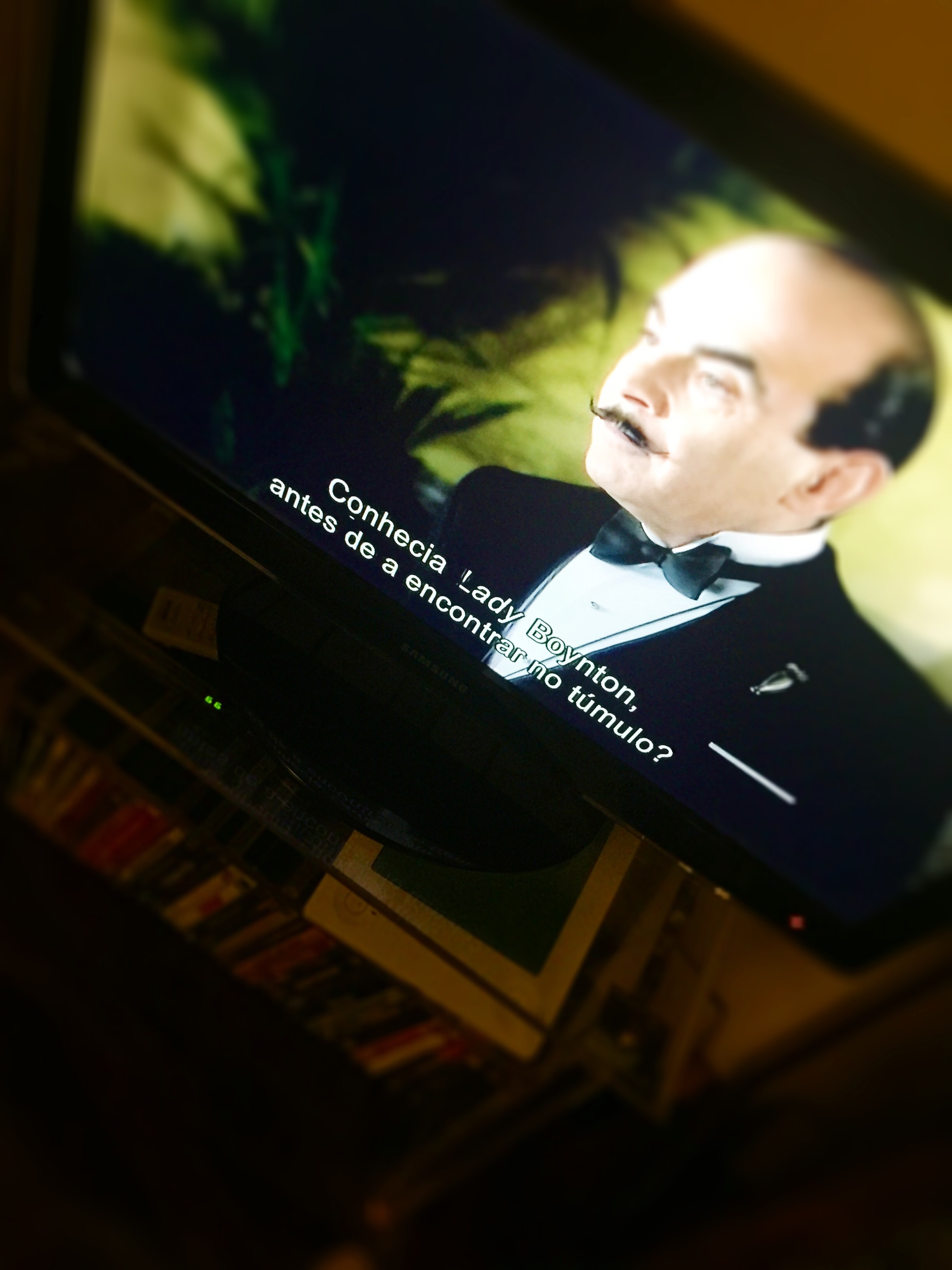
One day I’ll stop watching Poirot reruns and start organizing.


I will tame  the chaos after finally putting to use hours of reading “how to declutter” posts.


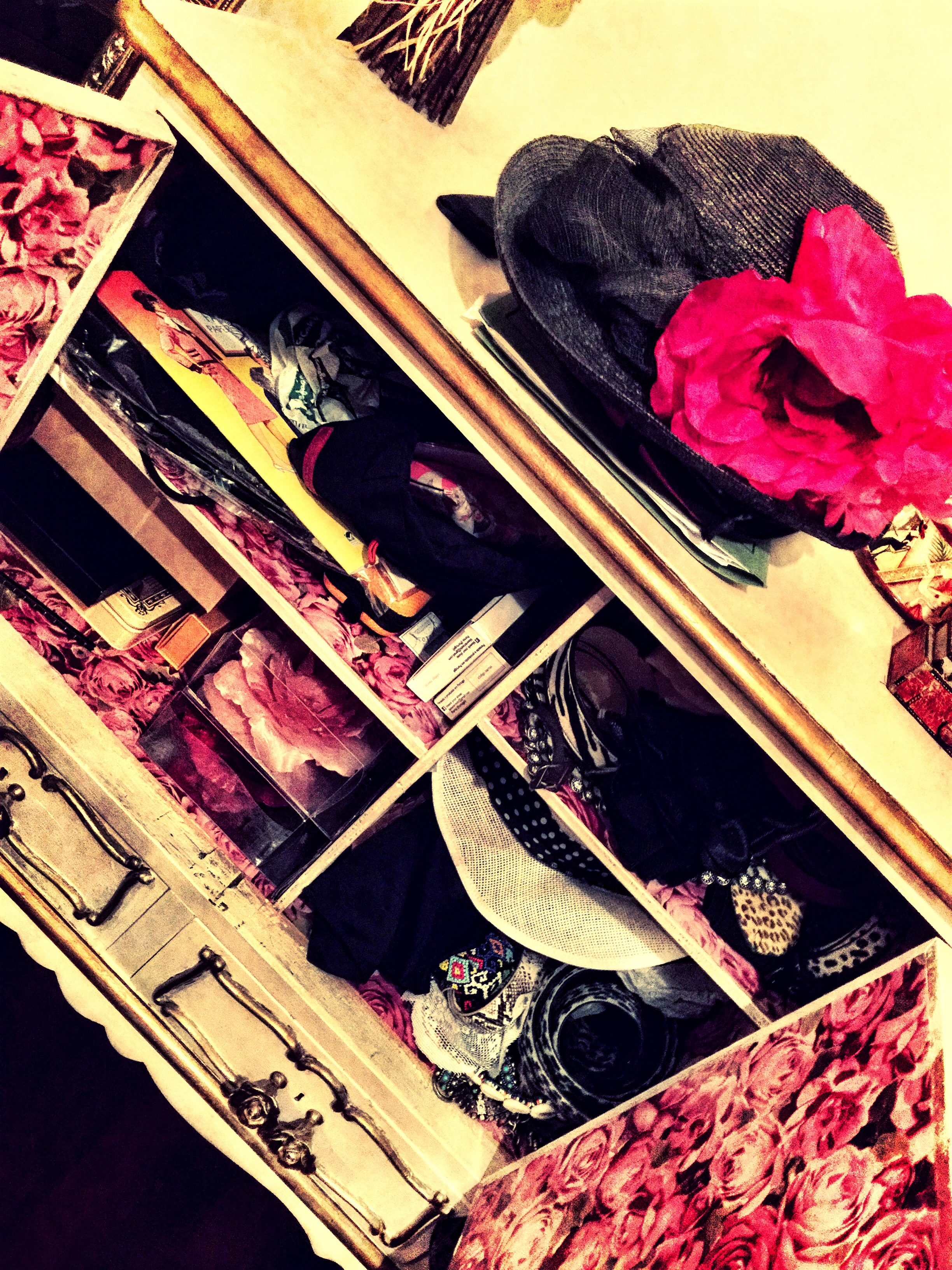
I will give my closets the professional organizer treatment and end up with a curated wardrobe of classical pieces.


I will stop buying every piece of vintage luggage that crosses my path because I will not need the extra storage space anymore.


I will keep only what is necessary.


And will try to convince myself that minimalism is sexy.


I will stop trying to keep all the things my granddad used to collect.


And after I have managed to strip my life off all the frivolity , I will finally have the time to read all the books lying around.


I have never crossed any item of this to do list. Either because I’m too lazy or too busy procrastinating.


Or because I can’t force my maximalist nature to become something else and pretend I don’t find beauty in the poetry of everyday chaos.


The Poetry of List-Making

Things I do when procrastinating 

I’m  the worst procrastinator I know. I do write do to lists and visualize results and even tried to follow one or more of the popular productivity methods and tools out there and have read countless articles and posts on how to beat procrastination to no success.

Things linger until the last minute because “performing better under pressure” seems  to be my favourite excuse. Things get done but the end result is seldom as good as it could or should be. My flat mate at university used to say I was a “perfectionist afraid of perfection”. This was, of course, only a polite or kind way of stating the obvious. I was, and still am, a typical procrastinator. I avoid what has to be done. I put off projects and beginnings because the optimal conditions are never present, they will materialize tomorrow. Or Someday,  which, according to me, actually seems to be a weekday.

I am the kind of person that thinks I can do it all even if, at the same time, I am pretty sure that I am incapable of doing anything at all. Reading   James Surowiecki’s  article Later – What does procrastination tell us about ourselves?,  I was thrilled to discover myself in one of the paragraphs:

Lack of confidence, sometimes alternating with unrealistic dreams of heroic success, often leads to procrastination, and many studies suggest that procrastinators are self-handicappers: rather than risk failure, they prefer to create conditions that make success impossible, a reflex that of course creates a vicious cycle.

Just like General McClellan, I excel at planning. Realizing – making those plans  “real” – is not something that I feel confident enough to do. I tend to get lost in the wonder of new knowledge and the beauty of concepts. This was never as evident to me as when when I needed to write my PhD thesis. I had procrastinated ( a lot) during the dreaded writing phase of my master’s dissertation but managed to bring myself to do nothing else for a whole month and finish it. After all, the only “procrastination hack” that really works it’s the “just do it” one.

To know what you’re going to draw, you have to begin drawing…

Pablo Picasso

Unfortunately it was not that simple while attempting to write a lengthy, “formal document that argues in defence of a particular thesis”. I kept changing focus and approaches and adding material to my reading list and daydreaming about doing something else. One of my plans at the time was to become a découpage artist instead of continuing up (or down) an academic career path and for a few days I devoted myself to upcycling my Aldo wedge sandals into a pair of shoes that maybe Frida Kahlo would use. I’ve never been happier about the results of my action as inaction approach.

You can check the results of my procrastination or even take them home with you, here.

Take a flower with you


“If you take a flower in your hand and really look at it, it’s your world for a moment.”
― Georgia O’Keeffe

New stories waiting to be lived. My new 70s Jean Varon wild lilies dress.

Details

It’s been 19 hours and 44 days

since United and SWISS lost my luggage in an overbooked flight between Denver and Chicago.

I have been trying not to be over dramatic about it and my incurable optimism has me thinking that it can still show up because it doesn’t really make any sense that a bag can just disappear without a trace.

The SWISS Baggage Service Team tells me that I have to wait. This is now high season, people are travelling everywhere for summer vacation and a lot of them are in the same situation or, maybe even worse, they got to the resort or city hotel where they planned to stay for a week or two and their bags didn’t get there, ruining their much needed and certainly deserved time away from the schedules of daily life.

At the SWISS Baggage Competence Centre, everyone is too busy to deal with me and my calls. Search will go on until approximately the 13th of July, someone wrote on the first email, and, as soon as we have news we will get in contact with you. They never did, so I called on the 15th and a very unpleasant and stressed out woman basically yelled at me for having the nerve to call about a carry on that, incidentally, I did not forget at some airport, but was actually lost because the flight was overbooked and I had to check it in at the gate because there was no space in the overhead compartments. How do you manage to lose a bag at the boarding gate is still a mystery to me.

The last emails I got from various people at the said baggage competence center, laconically informed me that [they] are sorry now it is by the end of July and that they will contact after the 31 July to advice you how to process for payment if bag not found. If the date is not changed again, I suppose August 1st will mark the beginning of yet another series of nonsensical electronic communication, since I do remember being told that I should be able to present receipts for the contents of my bag. Really? Do normal people actually keep receipts of everything they own and eventually pack? Or do they simply buy everything new before they travel and take care to keep a neat accounting file of source documents just in case their luggage disappears? I will not be able to present physical proof of the value of the contents of my bag. Does this mean that I will have no right to compensation? And then, after a business trip how does an airline compensate you for losing the results of your work? I suppose that’s not really their problem and all I am going to hear about it will probably be something along the lines of we really apologize and kind regards.

In the grand scheme of things, all this is, of course, very small and trivial, absolutely meaningless. I travel for work (mainly) and sometimes for fun. I am not forced to move by social, political or economic circumstances. I am not fleeing from wars and religious persecutions. I was not strip off by belongings and had to start from scratch rebuilding what has been taken away. No, an airline lost my luggage and I actually did not think that this would be possible since just about everything and everyone seems to be monitored and traceable.

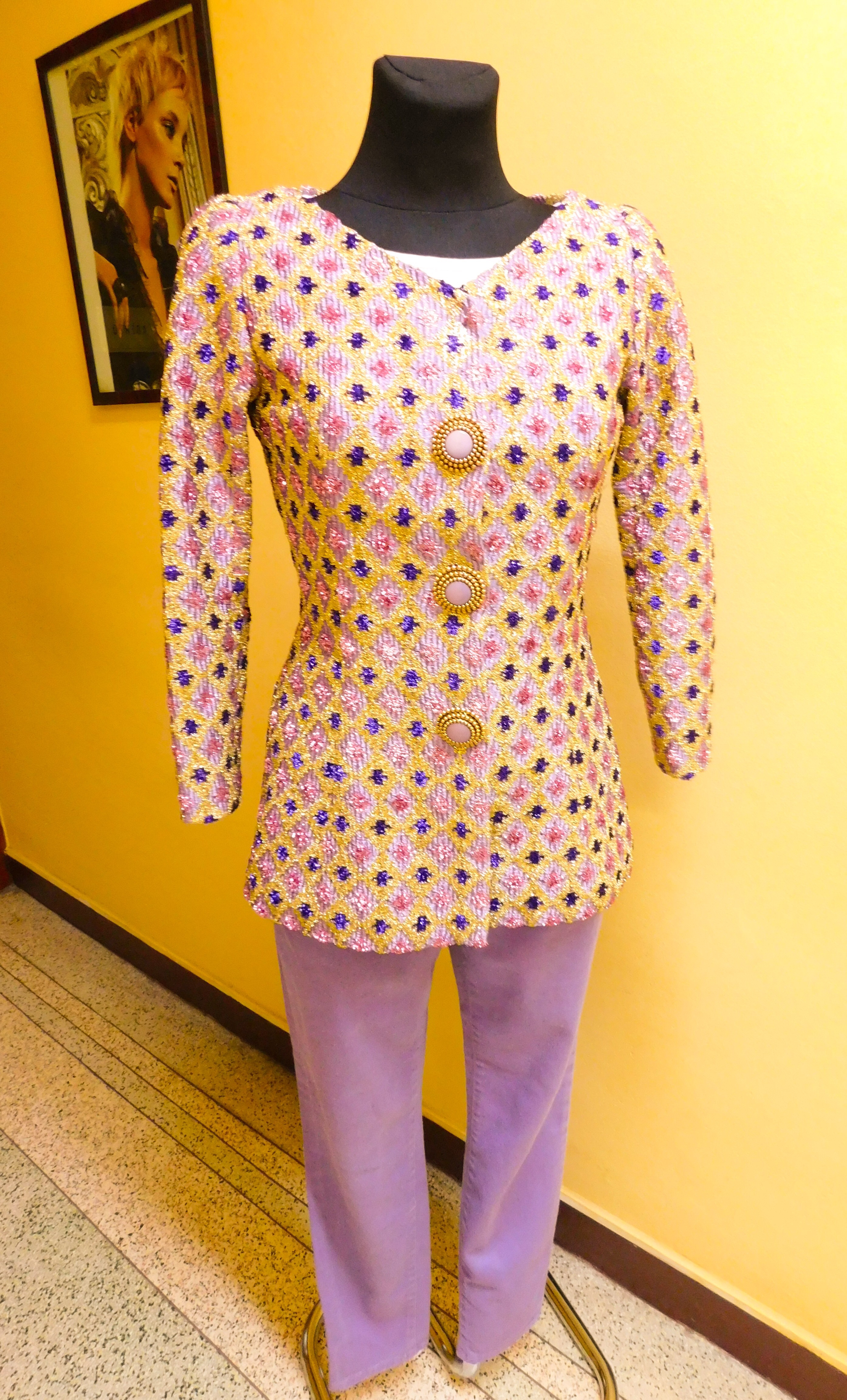
I suppose, considering that evanescence does not seem feasible, my bag could, one day, be a minor star in “Baggage Battles” or just get bought in a low profile mystery luggage auction. I hope that this is what happens if I don’t get it back. I hope whoever gets it has the same fondness I had for my 70s DVF paisley print shirt dress. I hope he or she likes gold lurex tops and thinks that a pair on Armani black slacks are a foundation piece of every sensible wardrobe.  I really hope that whoever gets my bag appreciates the silk tie I bought my dad as a present and mostly that he or she takes really good care of my favourite, battered beige studded leather jacket. Maybe he or she will even be kind enough to realize that my name and contact details are in there too.

References
The Things We Leave Behind

Butterflies on silk

I almost wish we were butterflies and liv’d but three summer days – three such days with you I could fill with more delight than fifty common years could ever contain.
John Keats

Sometimes a print on a piece of silk makes you contemplate life.


Hanae Mori Boutique butterfly print silk wrap dress

Doll face

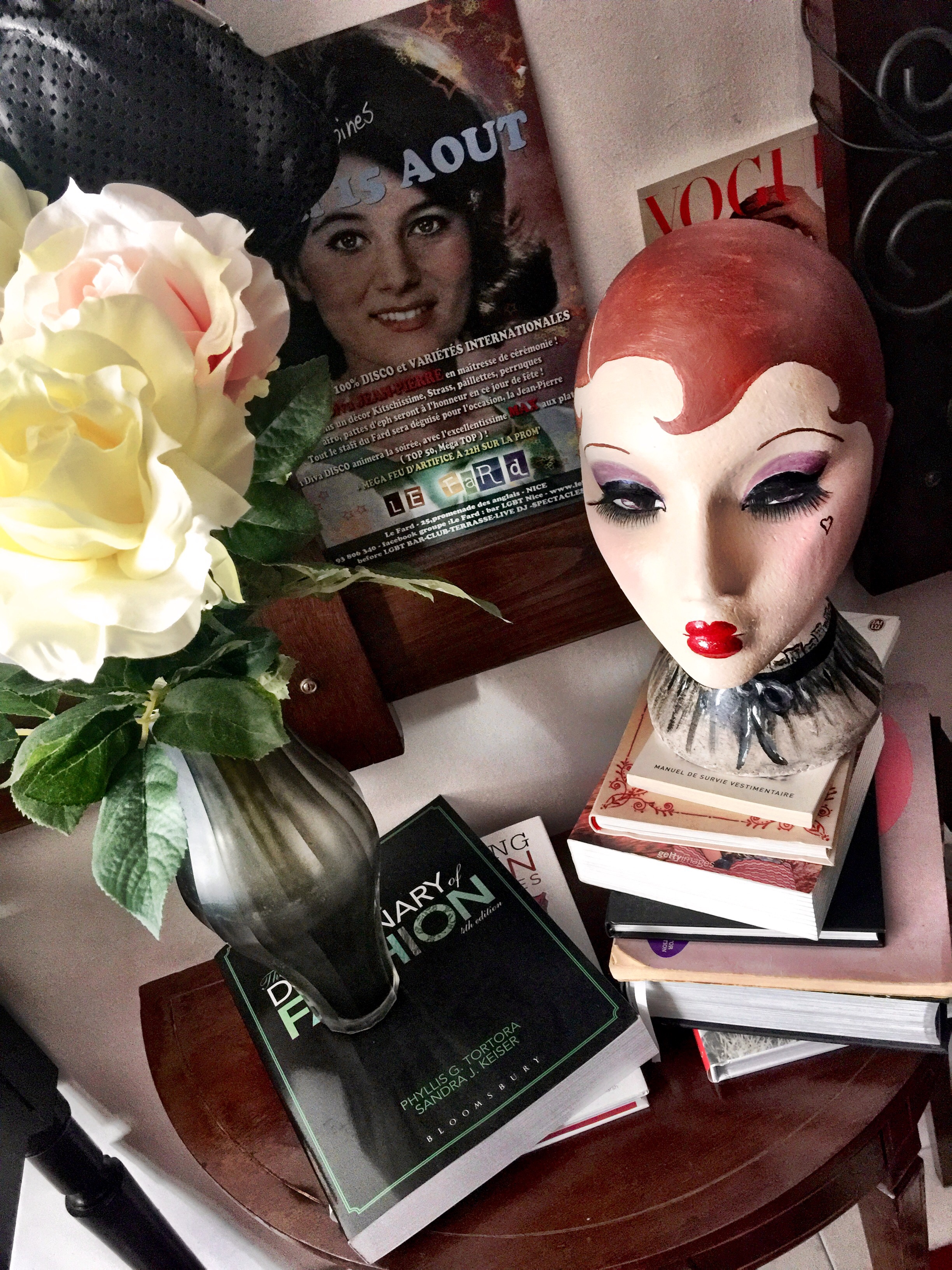
I bought this mannequin in September 2015. It was stored in a box because the previous owner returned it to the warehouse where I got it from, fearing that after his death his children might think he had been some kind of pervert for keeping such a piece in his antiques and bric-a-brac collection. At the time, I thought it was funny. Now, after eight months of sharing my weekend office space with this fake person and staging impromptu photo shoots with it, I can understand his concerns.

Mannequins, because they mimic us and force us, in a way, to look at our humanity and time, have an inherent creepiness to them, “they convey idealized images of ourselves, what we aspire to rather than what we actually are.” In elaborate window vignettes, they make space for dreaming, creating inspiring perfect worlds frozen in time.As they themselves remain.

Modern mannequins tend to be more of an abstract stylized shape, often faceless but none the less mysterious and fascinating when perhaps channeling Princess Langwidere, they are easily given an expression to go with a mood.

That I, sometimes, look at the mannequin living in my office and think that I see different expressions is, of course, the result of an over fantasizing mind fueled by one too many fairy tales of inanimate dolls coming to life at night.


Perspectives 

After reading a few posts and articles on the power of uniform dressing, last week I decided to only wear black dresses to experiment with sartorial disappearance.  Apparently, taking the choice away of getting dressed in the morning will make you a more stable, in control, smarter and productive person.  Probably more successful and happier too.

This was, quite obviously, the wrong experience for me. Black is actually not a uniform as far as I am concerned . All its nuances and textures and different associations make it versatile and welcoming and experimental. Just the opposite of a uniform. As much as I like black dresses and have a closet full of them to prove it, I found it extremely boring to put on the same thing everyday. Boring might be efficient and productive but this doesn’t seem to be what I’m interested in becoming.

I do understand the allure of having a streamlined, organized home / closet but I’m not, no matter how hard I try a minimalist. This doesn’t mean that I’m obsessed with fast changing fashion trends or fast fashion fixes. By now, about 70% of my wardrobe is vintage or secondhand because I do love clothes a lot more than I am interested in fashion.  I might be obsessed with my possessions but mainly because I got a lot of them from my grandmother, my great aunt and my mother. They tell, at least partially, the story of who I am.

For some, settling into an everyday uniform means that you have finally understood who you are and what outfit goes with that while becoming incredibly stylish. I do agree with Valerie Steel that the idea that clothes are supposed to express your true identity is  “almost laughably naive, clothes are a mask,a persona you put on. You present an aspect of yourself, not the core. Anyway, what would the core be? It’s a rather horrific thought.”

I need the choice, even if it’s a waste of energy and mental power. I need to be able to decide who I want to be in a given day and I need to be able to have fun with that. The normalizing discourse of uniform dressing/ capsule wardrobe sounds too much like a managerial trend applied to everyday life, transforming it into some kind of efficient unidimensional space and that’s also rather horrific. Foucault argues that through surveillance our bodies are made docile by institutions and become subject to mass standards of behaviour, these standards of behaviour (or ‘discourses’) are then internalized by individuals and govern the ways in which we use and understand our bodies. He also suggests, however, that people can act on their bodies in different ways and resist these normalizing discourses.

References

Valerie Steele

Foucault,M. (1977) Discipline and Punish


A day at the market 

Little adventures and missteps in the real world

Last week I had my first experience as a seller at a “Vintage Market” in Porto. Although it felt as something completely out of my comfort zone, I thought it would be interesting and even kind of fun to meet potential local customers since most of my modest business is done online and to other continents.

Vintage and craft markets are plentiful in the new retro-cool life of Porto even if “vintage” (at least for clothing) seems to be a somewhat loosely used catch phrase for any item that has been used before and that, in the mind of most market visitors, should have a price range anywhere between €0.50 and €5.00.  Maybe vintage just has a nicer, more appealing ring to the vast majority who is actually interested in secondhand bargain hunting.

Originally used  to denote a year’s wine harvest, the term vintage has been adopted by the fashion world to define “a rare and authentic piece that represents the style of a particular couturier or era” (Gerval, 2008). The most common definition today is perhaps that advanced by J.E. Cornett, “most clothing considered vintage dates from the 1920s-early 1980s. Pre-1920s clothing is considered antique, while clothing newer than the mid-1980s has not reached vintage status – yet.” Even so, both Etsy and eBay classify as vintage items that are at least 20 years old thus making way to “90s vintage”. Of course, nowadays we are almost forced to agree with Pauline Weston Thomas of Fashion-Era , “there’s no doubt that whether or not an item is Vintage is in the eye of the beholder.”

The growing popularity of secondhand shopping mainly connected with consumers eco-consciousness and  sustainability concerns as well as with the rise of “slow” and/or ethical fashion movements, has led to the erosion of  the negative social stigma for buying secondhand while vintage has developed into a “mega trend in clothing since the last decade all over the world, leading to major fashion brands launching collections inspired by vintage pieces or luxury haute couture houses digging into their archives to revive past designs. A number of second hand stores surfing on the trends also rename their stores as vintage” ( Cervellon, 2012).

Although the labels secondhand and vintage are close to become synonymous in consumers’ minds (Cervellon, Carey, and Harms 2012), I still think it’s important to make a clear distinction between them specially if you intend to keep some kind of integrity as a seller. 

The term second-hand refers to a piece of clothing which has been used before, despite the age of the clothes. Whether a second-hand cloth is vintage is determined by its age, and not the fact that it has been used (Mortara & Ironico, 2011).A  second-hand good is  also defined by the physical deterioration of the product, meaning that with every usage the product’s quality is reduced (Ohlwein 1990) even if it keeps it’s wearability. By comparison, vintage goods are not necessarily deteriorated or used (Cervellon, Carey, and Harms 2012).

With all this in mind I read all kinds of guides and blog posts on “making the most(and surviving) of your first market experience” and prepared all my stock identifying second-hand clothes and accessories and organized all vintage pieces by decade. I sold a grand total of four items. All of them second-hand.

All these considerations might not explain my experience at selling in the real world but have helped me to try to understand people’s motivations for visiting and shopping at vintage markets. As an avid shopper at vintage and flea markets of all sorts, I understand the thrill of the treasure hunt and the hope of finding that unique piece for a bargain. What I have failed to understand is that the majority of people visiting these markets are essentially bargain hunting and are neither interested in vintage nor can they distinguish between second-hand and vintage pieces.

Stepping out into the real world has not, overall, been a negative experience, I just misjudged my “target market” and will give it another go since, with the proper preparation, this kind of vintage market can, probably,  be the perfect outlet for the second-hand pieces that I haven’t been able to sell online.


References

Gerval, O. (2008). Fashion: Concept to Catwalk. London, UK: Bloomsbury

Cervellon, Marie-Cécile (2012). Back from the Past: specific antecedents to consumers’ purchase of vintage fashion vs. second-hand or recycled fashion.

Cervellon, M-C, Carey, L & Harms, T 2012, ‘Something old, something used: determinants of women’s purchase of vintage fashion vs second-hand fashionInternational Journal of Retail & Distribution Management, vol 40, no. 12, pp. 956-974., http://dx.doi.org/10.1108/09590551211274946

Brake, Daria (2014) Online Second-Hand Shopping. Threat or Opportunity for Branded Products?

I used to be a Tomboy – a micro collection

Growing up, I never managed to be the pretty girl. My hair always looked messy and my bangs covered my eyes, my knees were always bruised from running and falling or bumping into things. Although I suppose I longed to be prim and polished, I’ve never managed to. This is my little tribute to all the girls that have never managed to be “true ladies” and are happy about it.

[cincopa AkMA5WNaZE6r]


Check the collection here

Fanny and Alexander

I was 12 when me and my brother who was 10, decided to go to the movies and watch this to “kill some time”. We are not little precocious geniuses so we did not understand that ”

Bergman’s story is Dickensian in its extravagant emotional power – with a hint of Charlotte Brontë – and there is some Chekhov in its melancholy.” We did, probably, managed to understand the sibling complicity created in born out of adversity.

Even so, and as futile as it may seem, the movie made an impression on me because of the sailor outfits (it did, after all, won the Oscar for Best Costume Design in 1984; check Marik Vos’ costume sketches at The Criterion Collection). This movie, also  a contest “between magic and dull diurnal reality” was in part responsible for this Laura Ashley dress in my closet.  I suspect that also watching Upstairs, Downstairs, reading “Os Desastres de Sofia” (Les Malheurs de Sophie [Sophie’s misfortunes]) and a later fixation on Brideshead Revisited had something to do with it. A dress symbolizing and imagined childhood.

I’d love to wear a rainbow everyday 

I have started dressing in black in my late 20s. Before that I used to wear what I now think of as very loud and over the top colorful outfits that, in a way, were in direct contradiction with a tendency for existential nausea.

I do not remember if black was a conscious choice or it just happened that I started to resemble myself more while retreating into some kind of invisibility at the same time.

Now, dressing in black does have, sometimes,  the same burden of the “perpetual  mourning” for the state of the world and I identify with every single line on this song.  How could I possibly wear “bright colors on my back”? Black helps me not to manifest emotions in ways that would most probably lead me to a nervous breakdown.

Not everyday does dressing in black assume this suffocating grief for “our suffering age”.  In all its absence, black is full of contradictions. The color of oppression and rebellion, the color of religious Puritans and bondage fetishists, the uniform of authority and intellectual nonconformity.

In all its “poetic beauty” black allows me to write a different story everyday. This song is often part of the soundtrack.

References

Johnny Cash

Charles Baudelaire

Rebecca Willis via Feelguide

Paint it black 

The travelling closet

From Skagway, Alaska to Apache Junction, Arizona, Los Angeles, New York, Londonderry in Northern Ireland, Arnatveit in Norway, New South Wales Australia and beyond. My stories and errors have travelled further than what I have in 2015.