
Memory, Desire and Lost Time

These eleven films form a constellation around themes of memory, desire, and the cruel passage of time. Each represents cinema at its most emotionally penetrating, whether through the neon-soaked dystopia of Strange Days, the sun-drenched melancholy of In the Mood for Love, or the theatrical intensity of A Streetcar Named Desire.

Several of these films share a fascination with non-linear storytelling and the unreliability of memory. Memento constructs its entire narrative around the protagonist’s inability to form new memories, creating a puzzle that mirrors our own struggles to make sense of fragmented experiences.

Similarly, Strange Days explores how technology might allow us to literally experience others’ memories, raising questions about authenticity and identity.

Wong Kar-wai’s 2046 and In the Mood for Love approach time more poetically, using repetition, slow motion, and careful composition to create a sense of moments suspended in amber.

The films suggest that certain experiences – particularly those involving unrequited love – exist outside normal temporal flow.

Le Mépris, Pierrot Le Fou, and Bonjour Tristesse represent different facets of French cinema’s relationship with American genre films and European art house traditions. Godard’s works deconstruct classical narrative while maintaining an almost naive romanticism about love and cinema itself.

Bonjour Tristesse, the 1958 one, though earlier, not French, and more conventional in structure, shares this tension between sophistication and genuine emotional vulnerability. I also have to say that my relation to these three movies is strongly emotional, probably because they all represent the sort of endless Mediterranean summer that I see as my “happy place”.

The Tennessee Williams adaptations – Suddenly Last Summer and A Streetcar Named Desire – bring a heightened theatrical sensibility to cinema. Both films explore themes of desire, madness, and social decay with an intensity that borders on the operatic. Their Southern Gothic atmosphere creates a unique American contribution to the broader themes of psychological dissolution found throughout this collection.

Wild at Heart stands as perhaps the most anarchic entry in this collection, with Lynch’s characteristic blend of violence, dark humor, and surreal imagery. Yet it shares with the other films an interest in characters who exist outside conventional society, whether by choice or circumstance.

Taste of Cherry approaches this outsider status from a profoundly different angle. Kiarostami’s meditative masterpiece follows a man driving through the hills around Tehran, seeking someone to help him with a final act. The film’s minimalist approach – long takes, natural lighting, real-time conversations – creates a contemplative space that stands in stark contrast to the more stylized works in this collection, yet shares their interest in characters grappling with fundamental questions of existence.

What unites these diverse films is their commitment to cinema as a form of visual poetry. Each director uses the medium’s unique properties – its ability to manipulate time, space, and perception – to explore internal psychological states that might be difficult to express in other art forms.

The careful attention to color, composition, and rhythm in films like In the Mood for Love creates meaning that exists beyond dialogue or plot. Similarly, the fragmented structure of Memento becomes a metaphor for how we all construct identity from incomplete information. Taste of Cherry‘s patient, observational style transforms the Iranian landscape into a canvas for philosophical reflection, proving that cinema’s poetry can emerge from the most naturalistic approaches.

These films suggest that cinema’s greatest power lies in its ability to preserve moments of intense feeling and make them eternal. Whether it’s the devastating final shot of In the Mood for Love, the cyclical structure of 2046, or the backwards progression of Memento, each film grapples with time’s passage and our desire to hold onto fleeting experiences, and to ourselves.

I’ve chosen these particular films because they understand cinema not just as entertainment. They view it as a means of exploring the deepest questions of human experience: How do we love? How do we remember? How do we make meaning from the chaos of existence?

These are films that reward multiple viewings, revealing new layers of meaning with each encounter – much like memory itself, they become richer and more complex over time.

“The cinema,” said André Bazin, “substitutes for our gaze at a world more in harmony with our desires.”

Inner Soundtracks

Despite all critical advice, I have finally decided to watch Joker: Folie à Deux and actually liked it.

“Joker: Folie à Deux” succeeds brilliantly, in my opinion, in presenting music not as traditional Broadway spectacle, but as something far more intimate and psychologically honest—the way a real person might slip into musical response when processing their world. The film uses its musical sequences to show how characters experiencing mental illness might perceive reality, with songs emerging organically from their psychological states rather than as theatrical showstoppers.

This approach places the film in fascinating company with movies like “All That Jazz” and “Dancer in the Dark,” where musical elements emerge from psychological necessity rather than theatrical convention.

Lars von Trier’s Dancer in the Dark (2000) is a heart-wrenching musical drama that uses music as a form of escapism for its protagonist, Selma (Björk), a factory worker who is slowly losing her sight. Selma’s internal soundtrack is a series of elaborate musical numbers that she imagines to escape the harsh realities of her life.

The film’s musical sequences are starkly different from its grim, handheld-camera visuals. When Selma sings, the world around her transforms into a vibrant, dreamlike stage, filled with synchronized dancers and sweeping orchestration. These moments are not just fantasies; they are Selma’s way of coping with her struggles and finding beauty in an otherwise bleak existence.

What makes Dancer in the Dark so powerful is the contrast between Selma’s internal soundtrack and the external world. The music is a refuge, a place where she can momentarily forget her pain. However, as the film progresses, the line between her fantasies and reality begins to blur, leading to a devastating climax.

In All That Jazz, music isn’t just a backdrop—it’s the heartbeat of Joe Gideon’s world. The film uses musical numbers as a way to externalize Joe’s thoughts, fears, and desires. These sequences are often surreal, blending fantasy and reality in a way that mirrors Joe’s fragmented state of mind.

One of the most striking aspects of the film is how it uses music to explore Joe’s inner conflicts. For example, the recurring song “Take Off With Us” from the fictional musical Joe is directing becomes a metaphor for his own life—glamorous on the surface but deeply chaotic underneath. The musical numbers are often grandiose and theatrical, reflecting Joe’s larger-than-life personality and his tendency to escape into his art rather than confront his personal demons.

The film’s climax, set to the song “Bye Bye Life,” is a masterful use of music as an internal soundtrack. As Joe lies on his deathbed, he imagines a final, elaborate performance where he bids farewell to his loved ones and his own life. This sequence is both heartbreaking and exhilarating, as it captures Joe’s acceptance of his mortality while celebrating his passion for performance. The music here isn’t just a narrative device; it’s a window into Joe’s soul, revealing his regrets, his pride, and his ultimate surrender.

Like Bob Fosse’s semi-autobiographical exploration of a mind fracturing into musical fragments, “Joker” uses music both as a representation of psychological breaking and as an attempt to make sense of a fractured self.

What makes “Joker: Folie à Deux” particularly compelling is its critical examination of how audiences consume and destroy the very authenticity they claim to seek. Arthur’s relationship with his audience is fundamentally parasitic—they don’t see him as a person, but as a performance, a symbol, or a projection of their own desires. Even his most intimate musical moments become public spectacle, transforming personal expression into consumable entertainment.

This stands in stark contrast to David Lynch’s “Wild at Heart,” where Sailor’s Elvis channeling serves a completely different function. When Nicolas Cage’s Sailor breaks into Elvis, he’s not seeking validation—he’s expressing something essential about himself that can’t be contained in normal conversation. His musical moments are defiantly authentic, performed for himself and Lula while remaining beautifully unconcerned with audience approval.

The difference is crucial: Sailor tries to explain who he is but ultimately doesn’t need the audience’s approval, while Arthur is trapped in the tragic paradox of only being allowed to exist as what people think he is. In “Wild at Heart,” performance becomes liberation; in “Joker,” it becomes another form of confinement.

Both films explore the concept of shared reality, but they reach opposite conclusions about its power. Sailor and Lula’s relationship in “Wild at Heart” can be understood as a kind of folie à deux—a shared delusion—but it’s ultimately the fairy tale reinterpretation that wins out. Their shared fantasy world isn’t madness; it’s a shield against the real madness surrounding them. Their love story becomes a survival mechanism, with their heightened, stylized worldview protecting them from genuine grotesquerie.

“Joker: Folie à Deux,” however, suggests that shared musical reality is ultimately illusory. By the end, there’s the devastating recognition that nothing was truly shared—just parallel solitudes briefly overlapping before dissolving into the resigned acceptance of “That’s Life.”

Most of us also turn to internal soundtracks to help us process emotions, express what we can’t verbalize, and transform mundane moments into something more meaningful. Whether consciously or not, we live with our own ongoing musical theater—often of questionable taste—that helps us make sense of our daily experiences.

The key difference between healthy and destructive musical thinking lies in agency and authenticity. When our internal soundtracks serve genuine self-understanding rather than performance for others’ consumption, they become tools for emotional navigation rather than traps of external expectation.

David Lynch’s work consistently championed individual authenticity against societal norms, seeing personal expression as a sacred, almost magical force capable of transforming reality through sheer commitment to one’s authentic self.

This offers a hopeful counterpoint to “Joker’s” more pessimistic view of how individual authenticity can be crushed under the weight of public perception and media consumption. Where Lynch sees individual expression as liberating, “Joker” presents it as tragically vulnerable to commodification and distortion.

Perhaps the most honest approach to our internal musical theater is to embrace it with both commitment and humor—acknowledging its questionable taste while recognizing its genuine power to help us navigate life’s complexities. We can choose to be more like Sailor, using our personal soundtracks as tools for authentic self-expression, or risk becoming like Arthur, trapped by others’ expectations of our performance.

Music isn’t just entertainment—it’s a fundamental way humans process reality, express emotion, and connect with both ourselves and others. Whether it becomes a source of liberation or confinement depends on whether we’re performing for ourselves or for an audience that may never truly see us.

In the end, we’re all living with our own internal musical theater. The question isn’t whether this is normal or healthy—it’s whether we can maintain agency over our own soundtrack while staying true to the complex, sometimes ridiculous, often beautiful music of being human.

A Personal Note: The Power of the Snakeskin Jacket

After watching “Wild at Heart,” (for the first time) I was so moved by Sailor’s unapologetic authenticity—his commitment to being exactly who he was, snakeskin jacket and all—that I convinced my mother to buy me my own snakeskin jacket. It wasn’t about cosplay or imitation; it was about understanding that sometimes we need external symbols of our internal commitment to authenticity.

Like Sailor’s jacket, which he describes as “a symbol of my individuality and my belief in personal freedom,” my jacket became a reminder that it’s possible to navigate the world on your own terms, with your own soundtrack, regardless of what others might think. Sometimes the most profound cinematic experiences aren’t just about understanding characters—they’re about finding the courage to become more authentically ourselves.

That jacket still hangs in my closet, a tangible reminder that the best films don’t just entertain us—they give us permission to live more boldly, more musically, and more true to our own questionable-taste internal theater.

Sylvia vs. Maddalena

In Federico Fellini’s masterpiece “La Dolce Vita” (1960), the protagonist Marcello Rubini wanders through a decadent Rome, encountering various women who represent different facets of desire, connection, and modern existence. Among these characters, two stand in fascinating contrast to each other: Sylvia, the exuberant American starlet, and Maddalena, the wealthy, world-weary heiress.

Sylvia, portrayed with iconic flair by Anita Ekberg, embodies pure enthusiasm for life. Her character arrives in Rome like a force of nature, commanding attention and transforming the ancient city into her personal playground. The famous Trevi Fountain scene captures her essence perfectly—wading into the water with childlike wonder while fully dressed in an evening gown, beckoning Marcello to join her in this spontaneous celebration of being alive.

What makes Sylvia so captivating is her unfiltered joy. She moves through the world with an almost supernatural confidence, unconcerned with social conventions or consequences. When she climbs the stairs of St. Peter’s Basilica, dances in nightclubs, or pets kittens in an empty apartment, she does so with complete presence in the moment. She represents a kind of freedom that seems increasingly elusive in modern society—the freedom to experience pleasure without cynicism.

Sylvia’s appeal is immediate, visceral, and larger than life. She is the embodiment of spectacle in a film that is itself concerned with spectacle. Yet her character remains somewhat untouchable, a fantasy that can be approached but never fully possessed.

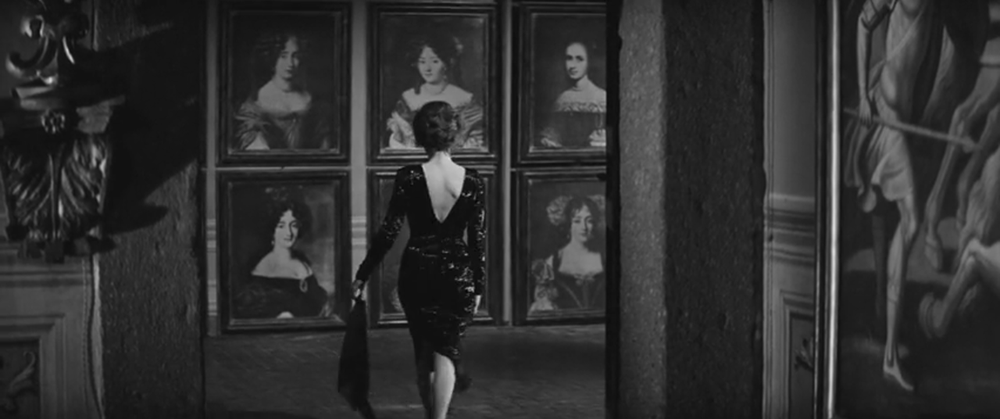
In stark contrast stands Maddalena, played with nuanced perfection by Anouk Aimée. Where Sylvia bursts with emotion, Maddalena presents a cool, composed exterior. Her elegance isn’t performative but ingrained—the natural result of someone who has seen all there is to see in Rome’s high society and found it wanting.

Maddalena navigates the night with a detached awareness that makes her all the more alluring. She’s not impressed by the trappings of wealth and fame because they are her everyday reality. Instead, she seeks authentic connection in a world of artifice, most memorably in the scene where she and Marcello communicate through the echo chambers of a flooded basement in a ruined aristocratic villa—a perfect metaphor for the distance that exists even in their moments of intimacy.

Her world-weariness isn’t simply cynicism but a form of wisdom. She understands the hollowness of “la dolce vita” because she has lived it fully. This knowing perspective gives her character depth and complexity that contrasts with Sylvia’s more straightforward exuberance.

The appeal of both characters creates an internal conflict familiar to many of us. Do we embrace life with Sylvia’s abandon, diving headfirst into experiences without reservation? Or do we move through the world with Maddalena’s sophisticated detachment, protecting ourselves from disappointment while seeking deeper meaning?

Fellini doesn’t present one approach as superior to the other. Instead, he uses these characters to illustrate the tensions of modern existence. Marcello is pulled between these poles throughout the film—between passion and detachment, innocence and experience, spontaneity and reflection. He does seem to reject flat out the emotional stability offered by Emma whose “sticky, maternal love” he despises.

What makes these characters so enduring is that they represent more than just different types of feminine appeal. They embody different philosophies of living, different responses to a world that simultaneously offers too much and not enough. Sylvia’s enthusiasm and Maddalena’s coolness aren’t just personality traits but strategies for navigating a changing society.

I would be Sylvia in the days I want to live as a fleeting dream, a force of nature that dazzles but never truly belongs. This is, I suppose, the luxury of anonymity. When we are the foreigner, no one really has any reference on how and who we are. Therefore, they have no idea on how we are supposed to be.

While Sylvia is the unattainable fantasy, Maddalena mirrors Marcello’s existential drift. She’s just as lost, but with a sharper self-awareness. A proud and typical GenX I, and most probably a lot of others reared on post punk and goth influences, resonate with depth, complexity, and the ache of searching for meaning in a world that feels hollow and could, thus, more easily be Maddalena.

Anouk Aimée plays her with this devastating coolness—luxury draped over emptiness. She craves love but sabotages ii. She’s too disillusioned to hope, yet too alive to stop searching. Fellini frames her suffering with such deliberate elegance that her loneliness becomes inseparable from her glamour. But this isn’t mere vanity—it’s a survival tactic, a way to exert control over the void.

  • Sylvia: Life as spectacle, pure dolce vita (the Trevi Fountain scene = ecstatic but fleeting).
  • Maddalena: Life as introspection, the aftermath of indulgence. She’s what happens when the party ends.
  • Fellini’s Contrast: Sylvia is myth; Maddalena is reality. One is adored, the other understood (sort of)—which is more tragic?

Ah, the young girl at the beachFellini’s silent, enigmatic coda to La Dolce Vita. She’s the film’s great unanswered question, a glimmer of purity in a world of exhausted decadence. A waitress from the seaside café (played by Valeria Ciangottini), unnamed, barely speaking. Marcello meets her earlier when she shyly asks for his autograph. Unlike the jaded socialites and performers, she’s untouched by Rome’s corruption. Her white dress mirrors Sylvia’s, but without the erotic charge—it’s virginal, almost angelic.


She waves, but it’s ambiguous—is it farewell, or an invitation? The sea (a classic symbol of renewal) separates them. She calls to him across the water, but he can’t hear her (or won’t). Her words are lost in the wind—Fellini’s metaphor for Marcello’s spiritual deafness. She is the irreversible loss of one’s own innocence, not through fate, but through a thousand small surrenders.

Whatever genius is

On Saturday I went to see Pablo Larraín’s Maria with a a friend. My friend cried at the end of the movie. Surprisingly ( to me), I didn’t. I am not quite sure I liked it. Angelina Jolie presumably excels as the tragic Diva; Massimo Cantini Parrini’s costume design was impeccable, as it should, since the source material was already extraordinary as he acknowledges in this interview to Harper’s Bazaar:

Costume design in María not only transforms Jolie into La Divina, it also serves as a visual metaphor for the film’s meditation on artistry, identity, and transformation. Through María Callas’ wardrobe, Larraín and Massimo Cantini Parrini articulate the tension between art as a living, breathing force and art as a frozen, ornamental relic

Callas was an artist shaped by both her voice and her image. Her costumes reflect this duality. Onstage, she is adorned in grand, operatic gowns. These gowns are heavy with history, as if carrying the weight of her own myth. These pieces emphasize how she became an icon, a living masterpiece. But offstage, her wardrobe shifts to softer, more intimate attire, revealing the woman beneath the legend. The contrast suggests that while the world sees only the diva, Callas herself wrestles with her own identity beyond the stage.

In her later years, Callas’ wardrobe takes on a different role. The extravagant fashion—high collars, structured silhouettes, luxurious fabrics—becomes almost like a museum exhibit. It serves as a way of preserving an identity that is slipping away. Even as her voice fades, her costumes remain striking. They seem like the last remnants of the persona she spent a lifetime constructing.

As Callas grapples with the loss of her voice, her costumes become more muted, understated—less fireworks, more elegy. The colors may darken, the embellishments may soften, mirroring the internal shift from performance to reflection.

A very long introduction to answer that if I could be someone else for a day, I would choose to be this kind of genius. Not the one shown in the movie. While not everyone knows what it’s like to command an opera house or possess extraordinary talent, we all know and experience, in very different measures, the personal side of decline.

You are born an artist or you are not. And you stay an artist, dear, even if your voice is less of a fireworks.

To be able to experience for one day what it would feel like having lightning running through your veins, knowing that every note you produce is pure artistic truth. The sheer physical and emotional power required to project that voice, to inhabit roles like Tosca or Norma so completely that the boundary between performance and reality almost disappears…

To know not adoration but to live with the certainty that your extraordinary gift has made a difference in the world through beauty.

Now, I am the same age as Callas was when she died and realize that I really wished I could be myself everyday even if there are so many more spectacular lives than my own.