Movie Inspiration of the week – Orlando (1992)

Vain trifles as they seem, clothes have, they say, more important offices than to merely keep us warm. They change our view of the world and the world’s view of us.
― Virginia Woolf, Orlando
o3 copy

Costume Designer Sandy Powell who has won three Oscars for Best Costume Design (Shakespeare in Love, 1998; The Aviator, 2014 and The Young Victoria, 2009) and is responsible for sartorially composing characters in some of my favourite movies.

o7 copy

For it was this mixture in her of man and woman, one being uppermost and then the other, that often gave her conduct an unexpected turn. The curious of her own sex would argue, for example, if Orlando was a woman, how did she never take more than ten minutes to dress? And were not her clothes chosen rather at random, and sometimes worn rather shabby? And then they would say, still, she has none of the formality of a man, or a man’s love of power.

― Virginia Woolf, Orlando

o16 copy


Yet again, though bold and active as a man, it was remarked that the sight of another in danger brought on the most womanly palpitations. She would burst into tears on slight provocation. She was unversed in geography, found mathematics intolerable, and held some caprices which are more common among women than men, as for instance that to travel south is to travel downhill.

― Virginia Woolf, Orlando

o13 copy


Whether, then, Orlando was most man or woman, it is difficult to say and cannot now be decided. .

― Virginia Woolf, Orlando

o19 copy

The film’s social commentary is never far from the surface, however, and “the sheer crippling unmanageability of Orlando’s bourgeois female attire… brilliantly conveys feminine physical and social constraint” (Pidduck, 106).

Orlando 3 copy

To be born a woman has been to be born, within an allotted and confined space, into the keeping of men. The social presence of women has developed as a result of their ingenuity in living under such tutelage within such a limited space. But this has been at the cost of a woman’s self being split in two. A woman must continually watch herself. She is almost continually accompanied by her own image of herself.

John Berger, Ways of Seeing


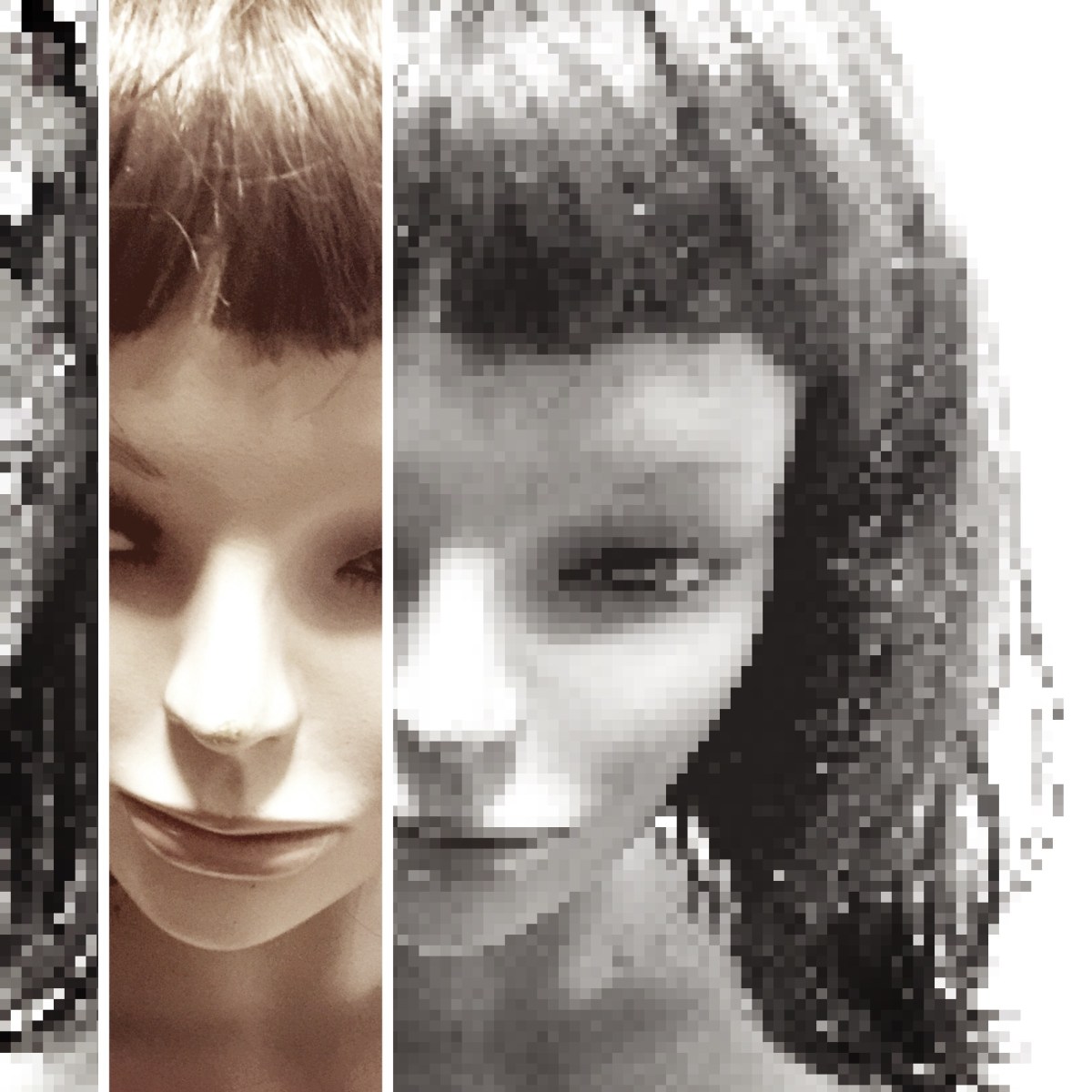
‘we are one with a human face’.


…not a blend of masculine and feminine characteristics, but an absence of them, and where androgynes are perceived to rely on neither masculine nor feminine behaviors.

Larin McLaughlin


Photos via Costume Captures

Sometimes it snows in April 

and, sometimes,  it never stops

Sometimes I feel so bad, so bad

O. died yesterday. Last time I saw him was in 2013 after a long hiatus in our conversations on art and music and books. We met at a conference on photography and it was like our conversation had never really gone mute.

If you look into someone’s face long enough, eventually you’re going to feel that you’re looking at yourself

We promised to reconnect and go out for coffee,  rekindle our platonic passion for Auster and New York and let our words wander to beautiful spaces. We never did. We exchanged texts wishing each other a happy new year and thought we would have time to keep our promises.

Every life is inexplicable, I kept telling myself. No matter how many facts are told, no matter how many details are given, the essential thing resists telling. To say that so and so was born here and went there, that he did this and did that, that he married this woman and had these children, that he lived, that he died, that he left behind these books or this battle or that bridge – none of that tells us very much.

Even if we know it’s a part of life, death is inexplicable as well. O. died yesterday. His heart just stopped on the same day of his birthday. The day he had given up celebrating a long time ago. Mr. Vertigo left the same day he arrived. Like a time traveller.

The emptiness inside your body grows lighter than the air around you. Little by little, you begin to weigh less than nothing. You shut your eyes; you spread your arms; you let yourself evaporate. And then, little by little, you lift yourself off the ground.
Like so.

References

Prince

Paul Auster, Mr. Vertigo

Paul Auster, The New York Trilogy

Photo: Central Park CC0 Public Domain

Les Parapluies de Cherbourg (1964)


Costume Designer Jacqueline Moreau, César Award for Best Costume Design for La passion Béatrice in 1988 and La vie et rien d’autre in 1990.
003-les-parapluies-de-cherbourg-theredlist-788x800


French director Jacques Demy didn’t just make movies—he created an entire cinematic world. Demy launched his glorious feature filmmaking career in the sixties, a decade of astonishing invention in his national cinema. He stood out from the crowd of his fellow New Wavers, however, by filtering his self-conscious formalism through deeply emotional storytelling.

parapluies-de-cherbourg-05-g

Palme d’Or, Technical Grand Prize and OCIC Award 1964 Cannes Film Festival

umbrellas10

It’s been raining for over three months here. Every week. This is Southern Europe and it’s getting to be depressing. It doesn’t get much uplifting than this brilliant, bright and bold technicolor world of exuberant details where clothes even match wallpaper.


Spiral 

For a few moths, after I hurt my knee doing a “remate” during a rehearsal for a flamenco show, I was afraid of stairs. For a few months, every step required thinking. Walking downstairs was especially difficult, the rule that tells you to walk up as a little kid would do, doesn’t really apply when going down. The movement becomes mechanized and painful. The rhythmic fluidity of walking down is gone and you are left with a bust metronome that can’t actually keep the time.

Being somewhat of a drama queen, I thought this was going to last forever. I tried to reinvent myself as some kind of replicant, to come up with  a cyberpunk character to match my armor knee brace. For three months or so I looked like an extra on The Matrix and even though I felt vulnerable and generally afraid of stairs, escalators and crowded places, wearing a medical device as a fashion statement felt empowering. I don’t even know if people stared, it didn’t matter if they did. I suppose that’s what “power dressing” means, to me at least.

Every day I would go out to work in my warrior costume and every day at 12 I would go to physiotherapy and would have to climb up and down the hospital staircases as a form of exercise.  As much as this was a daily routine, seeing it in a metaphorical way is almost unavoidable. Steps as obstacles to be surpassed, stairs as progression and stairs as regression. In this case coming down just took a lot longer than a real fall.

The fact that I got hurt to the sound of La Leyenda del Tiempo strikes me as both ironic and enlightening. I  hurt myself for not paying attention to what I was doing while feeling the music that gives life to a wonderful poem that makes life sound as a mad galloping spiral staircase in constant movement. All of a sudden I was back down at the starting step trying to convince myself that it wasn’t as serious as it looked, a few days of ice packs and everything would be back to normal.

It was serious, and it involved convincing my restless self that it was a step at a time kind of situation and still, from certain angles, all staircases are spirals of infinite movement, how do you to get back in when understanding how you have managed to fall out is difficult enough?

Scarface

Movie inspiration of the week Scarface (1983) Costume Designer Patricia Norris
Movie inspiration of the week
Scarface (1983) Costume Designer Patricia Norris

Not a particular favourite of mine (the movie) but I do have a soft spot for the “Halston / Disco/ show off” style of Elvira Hancock in Scarface.

elvira

Read the wonderful “Scareface: Dress and Excess”

In awe

I admire dancers. I admire the ability to make your body tell stories, the beauty of carrying within you the world, of stopping time.

Some days I wake up and pretend to be a dancer.


And then I remember,  my past really is everything I failed to be.

And I realize it is also the courage of being yourself trough impersonation on stage that leaves me in awe.

References

Fernando Pessoa / Bernardo Soares

The Book of Disquiet

Tropicália

I’m standing at the entrance of the  room checking Caetano Veloso get on stage for the technical rehearsal of this evening’s show. And this is actually happening. Tropicália, one of the founding songs of the movement, echoes in the empty room and Caetano’s voice seems to hold me in a hug.

I grew up listening to Brazilian music, not specifically to Caetano whose music I only discovered in my 20s,  but to the amazing voices of Elis Regina, to the powerful words of Chico Buarque and the outrageous performances of Ney Matogrosso. That music, those words,  have functioned as my citizenship, like a deeper connection to a language that even though it’s my native language, I have never managed to master in an elegant way but could, none the less, substitute my passport.

I was not born in 1967, my generation didn’t actually have to create a revolution, we were born in the aftermath of insurrection and before red carnations took to the streets.

Brazil, a country I traveled to for the first time when I was 9, meant as a cliché, samba, beach and a carefree existence. Caetano’s songs showed me something else. A country that can hold the entire world in both its glory and its misery. I started paying attention to the music that makes you want to get up and celebrate life through dancing and to the words that make you stand still and think. Last time I was in Brazil was in 2000 while the celebrations for its 500 years of postcolonial history were underway. Walking through the streets of Salvador all the way up to a candomblé house made me feel thankful for paying attention. That’s where the music materialized itself, in the Roma Negra.

From Porto Seguro and Salvador, the journey ended in Rio de Janeiro and I could still hear the words, who hasn’t felt the swing of Henri Salvador. We were staying in Copacabana and took the bus to the Flamengo neighborhood to see the Carmen Miranda Museum on an amazing journey through scandalous platform shoes and outrageous costumes and jewelry. A dream closet. In all her esthetic exaggeration, the adopted icon of tropicalism was a true precursor, taking it all in, who she was, who others thought she was, Europe, America and the tropics in one flamboyant persona.

Oswald’s anthropophagy, the solution to the problem of identity, the antidote to having your mind chained to labels and to grim  values of behavior and morality. Thoroughly thought anarchy and cultural eclecticism, helas, flamboyance as a beautiful form of resistance.

Movements become dated and even our music heroes get old but this evening, the Coliseu sang Tieta to the ones that still shine brighter than a million suns and Gilberto Gil, all dressed in white, danced. And I have no films, photos or recordings and yet it will be registered forever.

References

Photo cover to Tropicália ou Panis et Circencis by Mário de Andrade

Reconvexo

Luz de Tieta

Sign O’ The Times

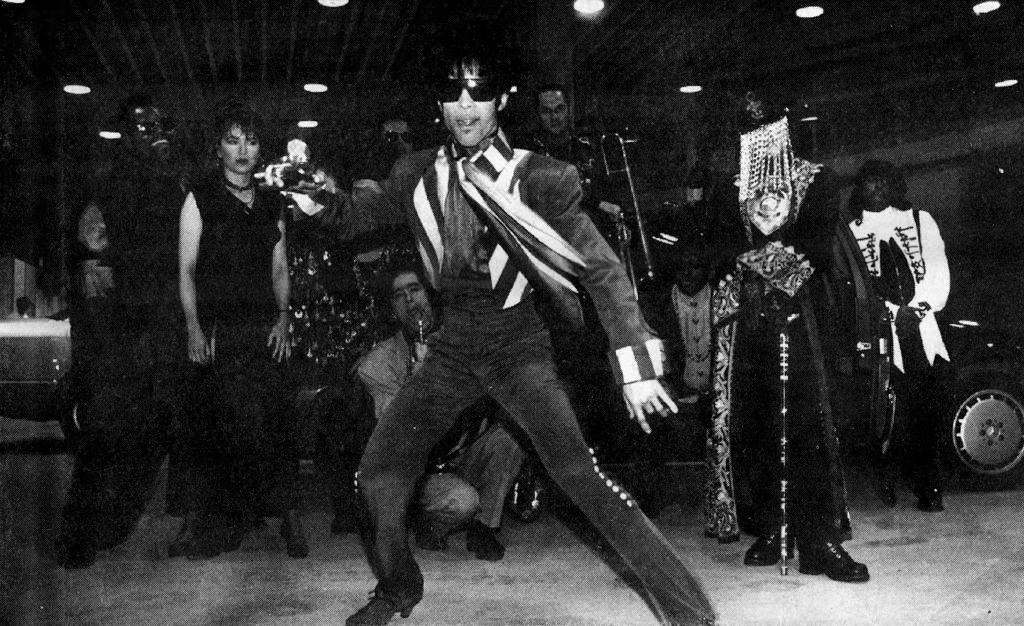
On August 17 1993, a lifetime ago, me and the three people that were the closest to me at the time (one of them is still my best friend), drove to Santiago de Compostela to see “The Artist formerly known as Prince”. I think he had played in Lisbon the day before or was going to the day after but Santiago is closer to Porto and the tickets were considerably cheaper in Spain.

Before the European funded highways and the open borders that made life so much simpler for a while, traffic in Porto was chaotic and someone ended up bumping our car from behind at the still today chaotic “Rotunda dos Produtos Estrela”. I remember we all got out of the car shouting at this poor man that we had to go to Spain and he was going to make us late. He didn’t. The car didn’t even have a dent.

We drove first to Viana do Castelo to pick up the fourth element of our little pilgrimage. We actually managed not to get lost driving in Santiago and had to park the car some 2 km away from the venue. And then we hiked up hill and reached Monte do Gozo all sweaty and scratched and waited around for that magic moment when Prince finally showed himself on stage and the concert started.

Monte do Gozo is known for being the place where Christian pilgrims on the Camino de Santiago  get their first views of the three spires of their destination, the Cathedral of Santiago de Compostela. At 370 metres (1,210 ft),it is the pilgrims’ last hill and last stop before reaching the cathedral, with about an hour’s walk still to go, and by tradition is where they cry out in rapture at finally seeing the end of their path.

For us, it was also the end of a journey although it felt like the beginning of a new way of living. It was the perfect setting for a perfect experience, we walked down hill back to the car feeling whole in the way that only music you love can make you feel. We drove back singing Purple Rain as loud as we could and in the early hours of the morning waited for the “Pastelaria Fãozense” to open so we could eat some “clarinhas” (traditional squash pastry). The 229th day of 1993 was a perfect day. As far as I can remember, all the days of the summer of 1993, spent between Porto and Viana, lying in the sun and dancing the night away, where perfect.

Prince Setlist Monte do Gozo, Santiago de Compostela, Spain 1993, Act II

Today, according  to a friend who is counting time post by post on her Facebook timeline, is the 110th day of a year that I feel I don’t want to experience anymore. If the sense of loss of humanity seems to invade our life with every news report of people being washed ashore while others sunbathe, of stranded lifes in filthy refugee camps and of horror stories behind closed doors, today this sense of loss runs deeper. Not because some lifes seem to be more important.  Some people’s talent just transform the world into a place where you actually want to be.

In the midst of collective mourning, the loss of someone who composed my “coming of age soundtrack”, after I understood that while I have a somewhat melancholic personality, I am not depressive enough to embrace darker tunes, is also deeply personal.  And sometimes you don’t even see it, you’re too busy hurrying so you get somewhere before it’s too late. And you never get anywhere. You have just left the sign of the times mess up with your mind.

In days like today I realize that I locked away a part of what I have lived and that I will not be able to recover it. In days like today I fear that the world is becoming flat again. And square.

Take me to the streets of Portugal
That might be my destiny to see the waterfall
Tears or rain, they’re all the same
The only way to win this game
To let everybody play and share the ball

References

Sign O’ The Times (1987) and Lavaux (2010)

Photo:  Backstage Auditorio do Monte do Gozo, Santiago de Compostela, Spain – August 17th, 1993 via The Prince Army

The Cosulich Line

All is left from the luggage label on my beautiful US Trunk Company of Fall River Massachusetts was enough to find out that it sailed eastbound from New York to Lisbon in May 1921. I bought it at a charity shop and the lady working there was thrilled that she was selling “something as old as the Titanic”. I was overwhelmed by all the imaginary stories going on in my mind. Now it doesn’t go anywhere. I use it as a side table and as storage for vintage dresses.


My grandmother’s wooden chest was the first piece of my small collection. It went to Angola with her in 1951 and came back to Portugal carrying the rests of a life left behind. The small leather suitcase on top was her father’s. My aunt gave it to me because I have a reputation of wanting everything that is old a no one else really wants anymore. The bigger one was bought at a flea market and belonged to someone who used to vacation in Sintra.


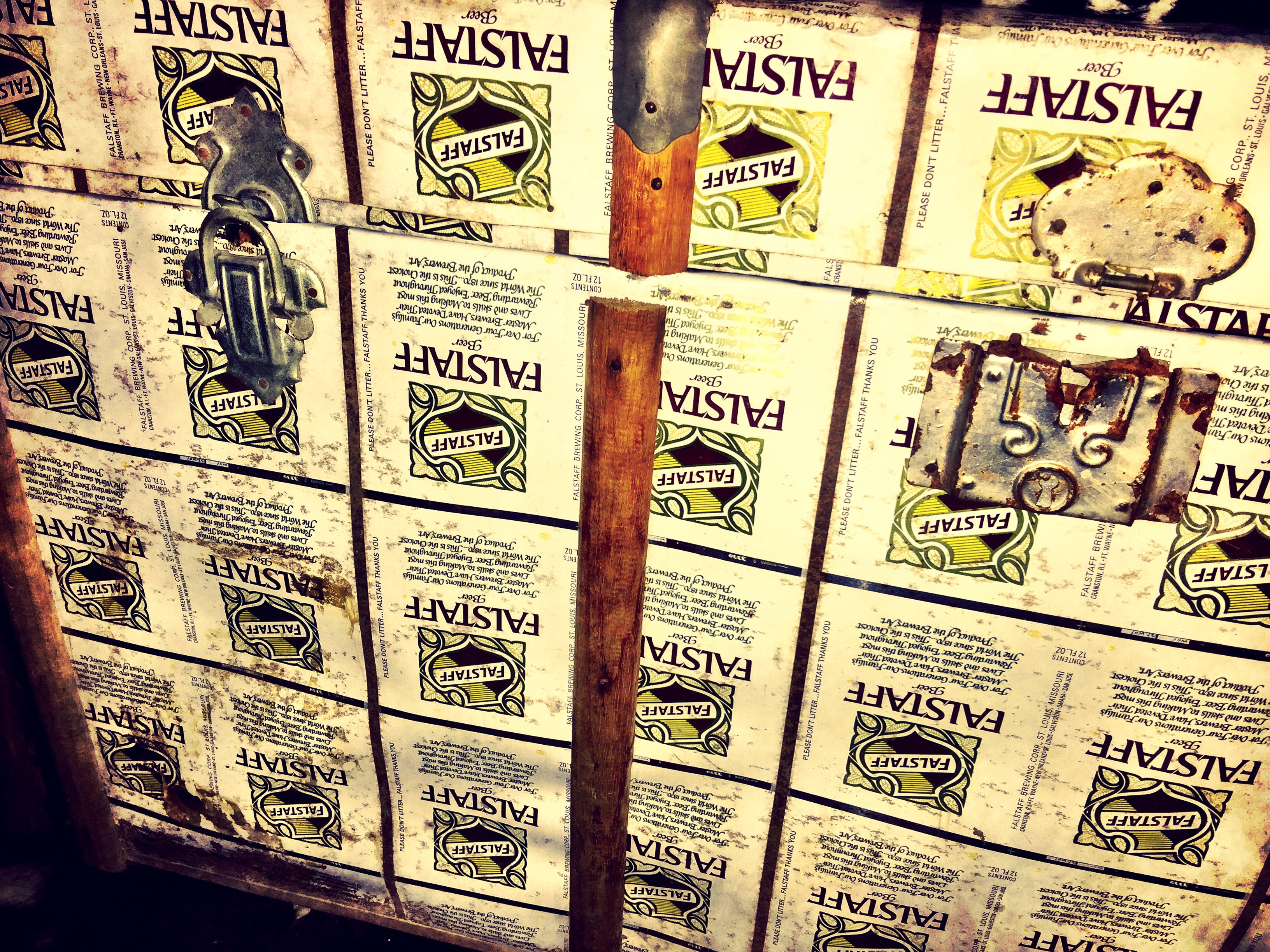
My great aunt died when I was traveling in Vietnam. After coming back I helped my mother and her sister with sorting  out all her things. This Falstaff beer tin trunk was hers. The label inside says “Onil, Angola suitcases for the world that travels”.

I had never before realized that other people’s luggage is also part of my emotional baggage.
Pingbacks are easy! Just copy and paste the code below into the HTML tab of your post editor and you should be all set.
Please note that sometimes it takes a little while for your post to show up in our grid.

Suitcase

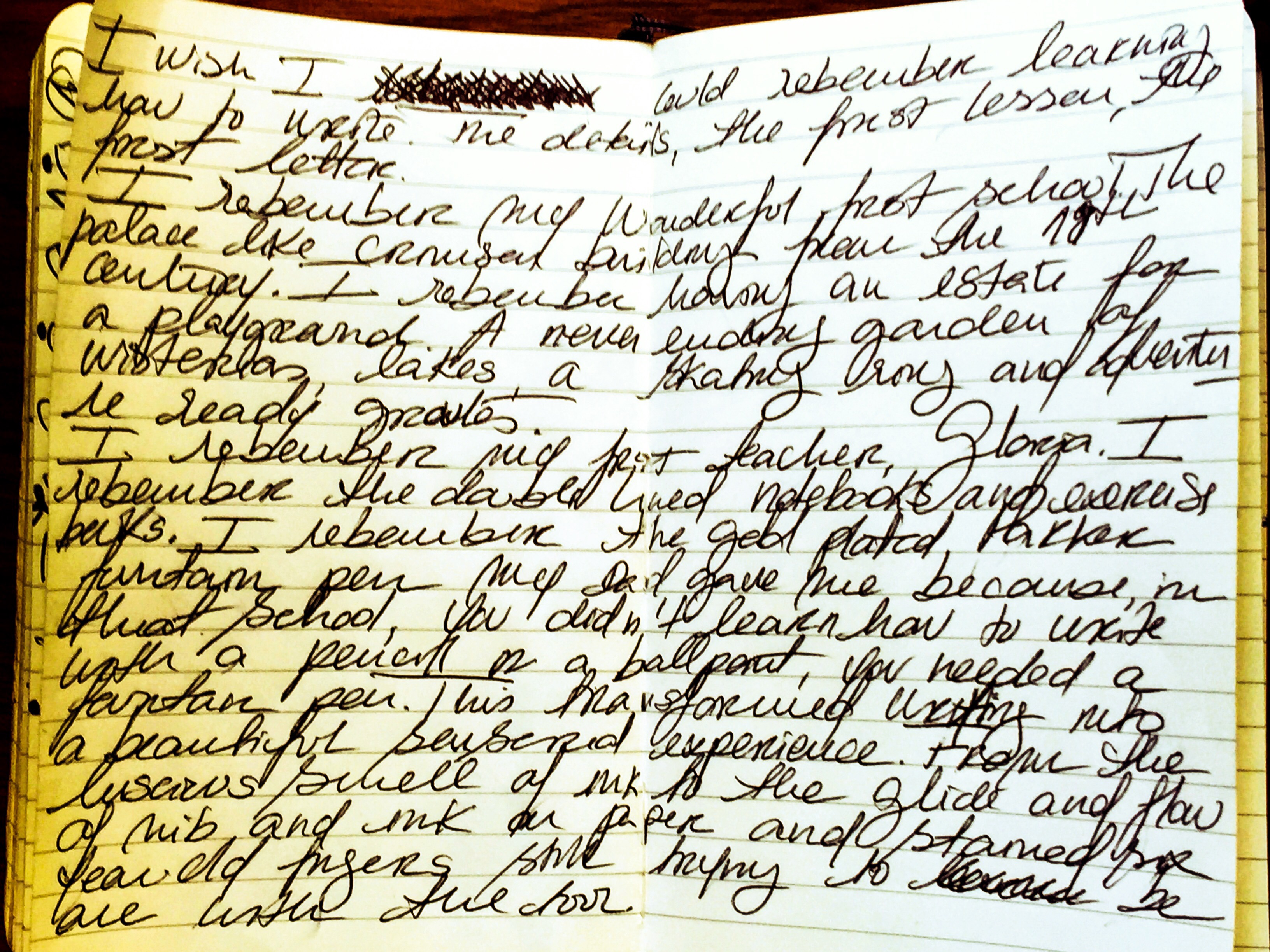
Handwritten 

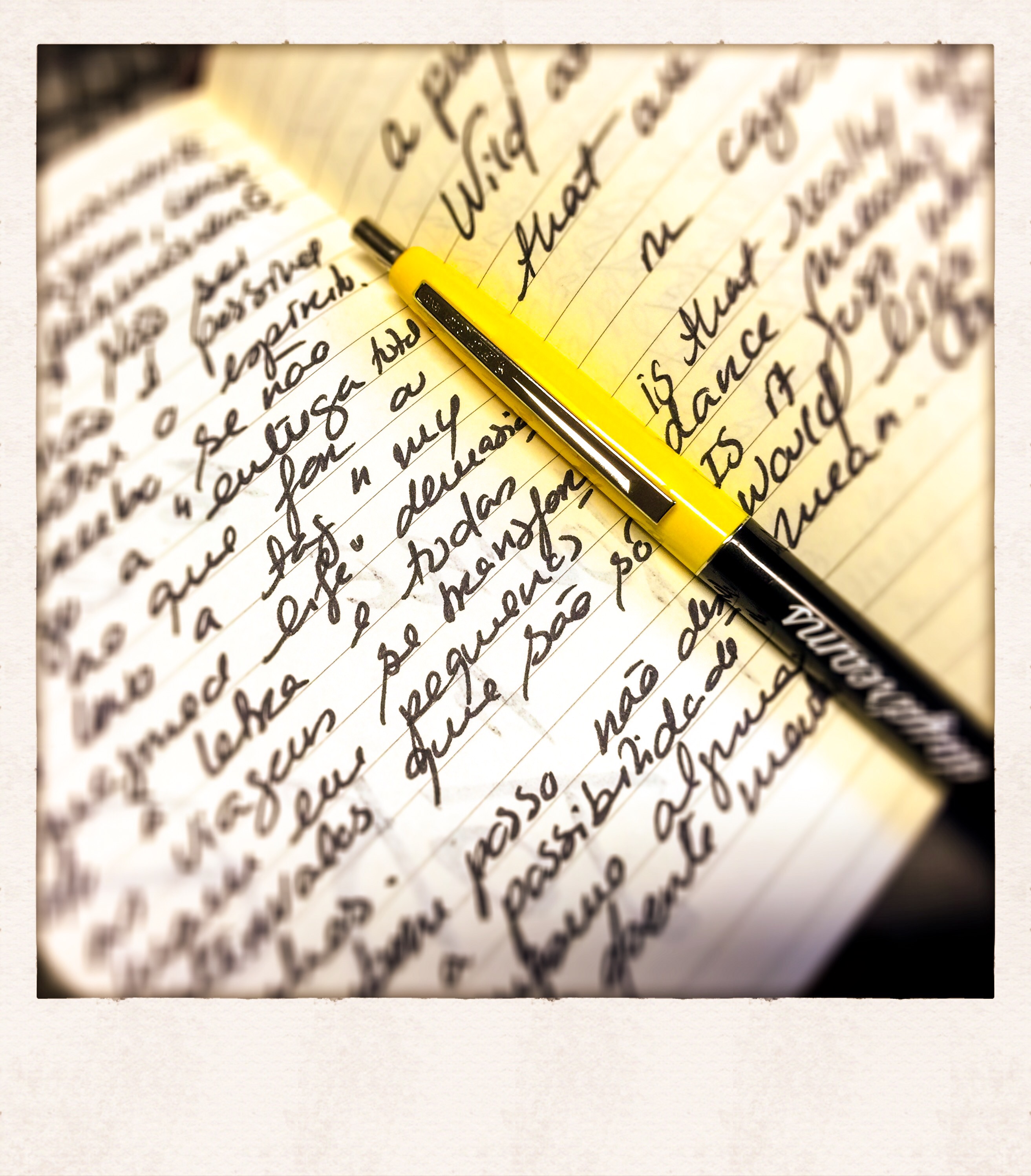
the beauty and nobility, the august mission and destiny, of human handwriting.
George Bernard Shaw


Like seeing a photograph of yourself as a child, encountering handwriting that you know was once yours but that now seems only dimly familiar can inspire a confrontation with the mystery of time.
Francine Prose

She may have looked normal on the outside, but once you’d seen her handwriting you knew she was deliciously complicated inside.
Jeffrey Eugenides

Perspectives 

After reading a few posts and articles on the power of uniform dressing, last week I decided to only wear black dresses to experiment with sartorial disappearance.  Apparently, taking the choice away of getting dressed in the morning will make you a more stable, in control, smarter and productive person.  Probably more successful and happier too.

This was, quite obviously, the wrong experience for me. Black is actually not a uniform as far as I am concerned . All its nuances and textures and different associations make it versatile and welcoming and experimental. Just the opposite of a uniform. As much as I like black dresses and have a closet full of them to prove it, I found it extremely boring to put on the same thing everyday. Boring might be efficient and productive but this doesn’t seem to be what I’m interested in becoming.

I do understand the allure of having a streamlined, organized home / closet but I’m not, no matter how hard I try a minimalist. This doesn’t mean that I’m obsessed with fast changing fashion trends or fast fashion fixes. By now, about 70% of my wardrobe is vintage or secondhand because I do love clothes a lot more than I am interested in fashion.  I might be obsessed with my possessions but mainly because I got a lot of them from my grandmother, my great aunt and my mother. They tell, at least partially, the story of who I am.

For some, settling into an everyday uniform means that you have finally understood who you are and what outfit goes with that while becoming incredibly stylish. I do agree with Valerie Steel that the idea that clothes are supposed to express your true identity is  “almost laughably naive, clothes are a mask,a persona you put on. You present an aspect of yourself, not the core. Anyway, what would the core be? It’s a rather horrific thought.”

I need the choice, even if it’s a waste of energy and mental power. I need to be able to decide who I want to be in a given day and I need to be able to have fun with that. The normalizing discourse of uniform dressing/ capsule wardrobe sounds too much like a managerial trend applied to everyday life, transforming it into some kind of efficient unidimensional space and that’s also rather horrific. Foucault argues that through surveillance our bodies are made docile by institutions and become subject to mass standards of behaviour, these standards of behaviour (or ‘discourses’) are then internalized by individuals and govern the ways in which we use and understand our bodies. He also suggests, however, that people can act on their bodies in different ways and resist these normalizing discourses.

References

Valerie Steele

Foucault,M. (1977) Discipline and Punish


Things I learned in the midst of frivolous amusements 

I am a frivolous person and I have often felt guilty about it mainly because I fear that most people would understand that as meaning that I am a shallow person. Most of my time seems to be occupied with aesthetic considerations or concerns of some kind. Most of the space I live in is organized accordingly. Every morning I go out hoping that what I have chosen to wear will contribute to make the day a little more beautiful, a little less real (I suppose that’s where the love of vintage clothes comes from). Every evening I want to come back home to the same kind of fantasy. I watch movies and plays looking for the kind of visual and emotional grandeur that can make one forget that there’s some kind of reality out there. I read books to be seduced by the music in words and I like music because it embodies all the beauty I find in movies and books.
Form always seems to overcome purpose and content.

Except when it comes to people. Their content is what sustains their form. And still, I also tend to understand human relationships as an aesthetic ideal in the sense that they should be a pursuit of pleasure and an avoidance of pain.  I like people. I like watching them, I like talking to them and getting to know their stories and I feel mesmerized by the things they know and the lives they lived.

I am terribly shy so I never start conversations with strangers but I do engage in them often and listen.

There was someone from Belgium sitting next to me on a flight to Lisbon and he told me how he hadn’t spoken to his family in over twenty years because he had taken his dad to court over child support money. There was an  elegant lady in the subway in New York who collected ancient tiles and a kid from Spain who talked for over seven hours during a flight between Johannesburg and Madrid and  street artists in London and drag queens in Porto and soccer fans in Zambia and the regal looking lady in Houston during intermission at the ballet. She was a widow and her son was working for an oil company in Nigeria. Maybe we could go to the ballet together the following week. I would not be in Houston anymore. And the Brazilian girl  that had been left at the altar and was trying to forget that she was hurt and afraid of flying while the plane was getting ready to land.

And, if they asked me, I could go on and almost write a book with all the moments some stranger decided to confide in me. Sometimes I talk and understand how liberating it is to be your vulnerable self with someone you know will not cross paths with you ever again. And you go on for hours sitting across a perfect stranger in some Lower East Side bar after checking some independent production of Hamlet and talk about all your unfulfilled dreams and what your fear and how finding Shakespeare has changed your life.

These are the moments of bliss that truly feel they could be enough for a whole lifetime and shield me when the world just seems to hurtful to endure. I am one of those. Deeply hurt by the trivial, the rudeness and mainly by the pain of others, of strangers, by the injustice, by whatever dehumanizing force seems to be operating on any given day.

“Yet, taught by time, my heart has learned to glow for other’s good, and melt at other’s woe.”

And my heart also got used to marvel at others, to shudder, tremble and thrill with the same pleasure and emotion it felt coming face to face with Hopper’s “New York Movie” or driving to Jarrett’s “Köln Concert”.

Works of art,  Martha Nussbaum says,  “give us insight into how other people live and feel, how they strive for happiness, and how conditions of many types affect them. [And] that is crucial for living any sort of decent life.”


References

Marcel Proust

Dinah Washington

Fyodor Dostoyevsky

Homer

Martha Nussbaum