
Norman Rockwell

Picture this: It’s 1990, and the Scorpions are belting out “Winds of Change” to massive crowds across a transforming Europe. Just a year earlier, people around the world had woken up to the impossible news that the Berlin Wall was actually falling—that the concrete symbol of Cold War division was being torn apart by ordinary people with hammers and hope.

For those who were 19 in 1990, watching this unfold, the song became more than just a power ballad. It was an anthem of hope that seemed, for a while at least, to materialize into genuine possibilities. The world felt suddenly malleable in a way it hadn’t for decades. Meanwhile, in academic circles, scholars were beginning to re-examine how fear has shaped our world, while Norman Rockwell’s 1943 painting “Freedom from Fear” continued to hang in museums and some collective memories as a reminder of what we’re all supposedly working toward.

What connects these seemingly disparate cultural moments? They all grapple with the same fundamental question: How does fear drive human transformation?

In the future days, which we seek to make secure, we look forward to a world founded upon four essential human freedoms.

The first is freedom of speech and expression–everywhere in the world.
The second is freedom of every person to worship God in his own way–everywhere in the world.

The third is freedom from want–which, translated into world terms, means economic understandings which will secure to every nation a healthy peacetime life for its inhabitants-everywhere in the world.

The fourth is freedom from fear–which, translated into world terms, means a world-wide reduction of armaments to such a point and in such a thorough fashion that no nation will be in a position to commit an act of physical aggression against any neighbor–anywhere in the world

Franklin D. Roosevelt Annual Message to Congress, January 6, 1941; Records of the United States Senate; SEN 77A-H1; Record Group 46; National Archives.

I have started reading Robert Peckham’s “Fear: An Alternative History of the World”which reads like a detective story where the criminal and the hero are the same person. Starting with the Black Death in the 14th century, Peckham traces fear’s dual role throughout history—sometimes as a tool of oppression, sometimes as a catalyst for progress.

His central insight is provocative: fear has served “both a coercive tool of power and as a catalyst for social change.” Think about it. The same emotion that allows dictators to control populations also drives revolutionary movements. The fear of injustice motivates protests. The fear of environmental collapse spurs climate action. The fear of authoritarianism strengthens democratic institutions.

Peckham’s “shadow history” approach reveals how our most transformative moments—from the Renaissance to the Civil Rights Movement—often emerged from confronting our deepest collective anxieties rather than avoiding them.

Now flip to Norman Rockwell’s “Freedom from Fear.” Painted during World War II, it shows parents tucking their kids into bed while war headlines lurk in the background. It’s pure Americana—the suburban dream of safety, stability, and sleeping soundly despite the chaos outside.

But here’s what makes it powerful: Rockwell wasn’t just painting propaganda. He was painting aspiration. The image says, “This is what we’re fighting for—not just victory, but the right to live without constant anxiety.”

The painting represents the endpoint that Peckham’s historical analysis points toward: societies stable enough that families can exist in protective bubbles of normalcy, even when the world burns around them.

Which brings us to the Scorpions’ “Winds of Change.” Released in 1990, the song became an unofficial anthem for the end of the Cold War—but more than that, it captured something profound about generational hope. For those who were teenagers and young adults watching the impossible become possible, the song wasn’t just about political change. It was about the sudden realization that the world was far more malleable than anyone had imagined.

Whatever one might think about the song’s musical merits, it became a soundtrack for hope that, for a while, seemed to materialize into real possibilities. The fear that had held Europe in a stranglehold for decades—fear of nuclear war, of permanent division, of unchangeable systems—suddenly transformed into collective action and unprecedented change.

The song works because it embodies Peckham’s thesis in three-and-a-half minutes of soaring guitar solos. The fear that had held Europe in a stranglehold for decades became the very force that motivated people to tear down walls and demand change. The “winds” weren’t just meteorological—they were the accumulated anxieties of generations finally finding release.

Like Rockwell’s painting, the song also represents an aspirational moment—the belief that we could move from a world defined by fear to one defined by possibility.

We’re living through our own “Winds of Change” moment. Collective anxieties about technology, climate change, political polarization, and social inequality are reaching tipping points around the world. The question isn’t whether these fears are justified—Peckham’s analysis suggests that’s the wrong question entirely.

The real question is: Will we let fear paralyze us, or will we harness it as a force for positive transformation?

Peckham’s historical analysis gives us the intellectual framework to understand fear’s complexity. We need to recognize when fear is being weaponized against us and when it’s signaling genuine problems that require action.

Rockwell’s vision reminds us what we’re aiming for: societies where people can sleep peacefully, secure in their freedom from existential anxiety.

And the Scorpions? Well, they remind us that transformation is possible—that the walls we think are permanent can come tumbling down when enough people decide they’ve had enough of living in fear. For those who lived through 1989-1990, watching seemingly impossible changes unfold in real time, the song captured not just a political moment but a feeling of generational possibility that the world could actually be different.

That sense of hope materializing into reality—however briefly—offers a template for how accumulated fears can reach tipping points and transform into collective action.
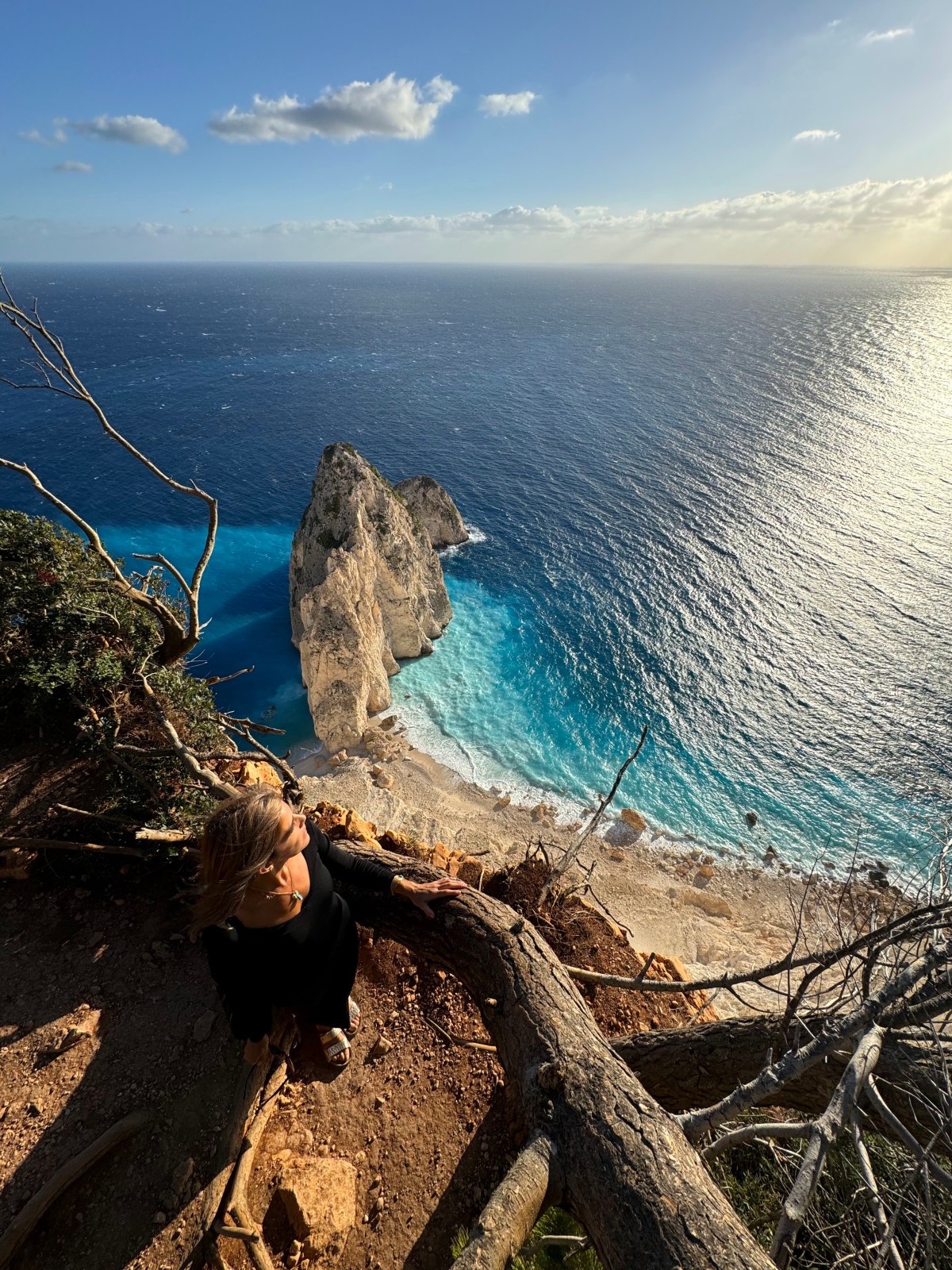
On the illusion of being fearless and the fear of living

The illusion of fearlessness often manifests as a kind of psychological armor – we convince ourselves we’re beyond fear, untouchable. But this supposed fearlessness can actually be a defense mechanism, a way of avoiding the vulnerability that comes with truly engaging with life. True courage doesn’t seem to be so much about being fearless – it’s about acknowledging our fears and moving forward despite them.

The fear of living itself is particularly paradoxical. It can manifest as a reluctance to fully engage with life’s experiences, to take risks, to open ourselves to both joy and pain, while not being afraid of what might be physically dangerous. This fear might lead us to live in a kind of half-state – physically alive but emotionally and spiritually withdrawn. We might avoid deep relationships, challenging opportunities, or meaningful changes because they require us to be vulnerable and face potential loss or failure.

The relationship between these two concepts – the illusion of fearlessness and the fear of living – is especially intriguing. Sometimes, those who project the strongest image of fearlessness are actually the most afraid of truly living. Their apparent fearlessness becomes a cage, preventing them from experiencing the full spectrum of human experience, including the fears that make us human.

What makes this dynamic even more complex is that some degree of fear is not just natural but necessary for meaningful living. Fear can be an indicator of what we truly care about, what matters to us. The person who claims to fear nothing might also love nothing, risk nothing, and ultimately live nothing.

There’s a particular kind of emptiness that comes not from feeling sad, but from feeling nothing at all. It’s a state many of us find ourselves in, though we rarely talk about it. We exist in a fortress of our own making – safe, perhaps, but isolated from the very experiences that make life vibrant and meaningful.

I’ve come to understand this state as emotional inertia. It’s not depression exactly, nor is it simple apathy. It’s more like being trapped in a glass box, watching life happen around you but feeling fundamentally disconnected from it. The most insidious part? Sometimes we convince ourselves this is preferable to the alternative.

“It’s not worth it,” we tell ourselves. “I wouldn’t know how to engage anyway.” These aren’t just excuses – they’re reflections of a deeper truth: somewhere along the way, many of us lost or never developed the emotional muscles needed for deep engagement with life. It’s as if we’re standing at the edge of a pool, knowing we should jump in, but feeling paralyzed by both the uncertainty of how to enter and a profound passivity that makes even taking that first step seem impossibly demanding.

The cruel paradox is that the person who claims to fear nothing might also love nothing, risk nothing, and ultimately live nothing. We build these walls of numbness thinking they’ll protect us from pain, but they end up protecting us from everything – joy, connection, growth, and yes, even the ability to feel fear itself.

This isn’t just about lack of motivation. It’s about a fundamental disconnect between knowing intellectually that life could be more and feeling capable of actually reaching for it. The challenge becomes self-reinforcing: the less we engage, the more foreign engagement feels, and the more insurmountable it appears.

But perhaps there’s another way to think about this. What if, instead of seeing engagement as an all-or-nothing proposition, we viewed it as a series of tiny experiments? Maybe it starts with allowing ourselves to feel mild interest in something small – a song that catches our attention, the taste of a new food, a moment of sunrise. No pressure to feel more than that. No expectation of transformation. Just small moments of allowing ourselves to experience rather than observe.

The path out of emotional inertia isn’t about suddenly becoming fearless or forcing ourselves to feel everything at once. It’s about gentle recognition – acknowledging where we are without judgment, understanding that this state of being likely served a purpose at some point in our lives, and accepting that change, if we want it, can begin with the smallest of steps.

To those standing at the edge of their own pools, watching others swim while feeling unable to join in: you’re not alone in this. The very fact that you can recognize this state in yourself is already a form of engagement. Sometimes, acknowledging the glass box is the first step toward finding its door.

Note to self and to whomever might need this: the goal isn’t to suddenly feel everything. It’s to slowly, gradually allow ourselves the possibility of feeling anything at all. And maybe, just maybe, that’s enough of a start

Standing at Fearful Attention

Standing at fearful attention, we’re grateful 
to fear, which keeps us from going mad.
Decision and courage are bad
for our health; life without living is safer.

Adventurers whose adventures are history,
standing in fear we struggle against
ironic ghosts in our ongoing quest
for what we never were and won’t be.

Standing in fear with no voice of our own,
our heart ground up by our teeth, we are
the madmen, we’re our own ghosts.

A flock of sheep pursued by fear,
we live so together and so alone
that life’s meaning has disappeared.

Alexandre O’Neill (1962) , Translation: 1997, Richard Zenith

Perfilados de medo, agradecemos
o medo que nos salva da loucura.
Decisão e coragem valem menos
e a vida sem viver é mais segura.

Aventureiros já sem aventura,
perfilados de medo combatemos
irónicos fantasmas à procura
do que fomos, do que não seremos.

Perfilados de medo, sem mais voz,
o coração nos dentes oprimido,
os loucos, os fantasmas somos nós.

Rebanho pelo medo perseguido,
já vivemos tão juntos e tão sós
que da vida perdemos o sentido . . . 

© 1962, Alexandre O’Neill
From: Poesias Completas
Publisher: Assírio & Alvim, Lisbon, 2000

On fear (an exercise in copy/paste)

I have been absolutely terrified every moment of my life – and I wish I could say that I’ve never let it keep me from doing a single thing I wanted to do. I have. Once you let fear get possession of your soul, it does not readily yield its place to another sentiment. Then you just realize you have to fight yourself and let everything happen to you, Beauty and terror. Just keep going. No feeling is final. I go back to a gin infused advice over “I am sailing” announcing the final round at Peter’s, years ago. Don’t think. And I realize I do appreciate the unknown, the feeling of jumping before looking. I learnt that through facing the fear of traveling alone. I prefer it like that now. No longer fearing freedom. For a few days. I do not fear mistakes. I do fear perfection and the fearlessness will come when I stop waiting for the right day to go up or down in my own way. I fear wasted time. 

References 

Georgia O’Keeffe 

Leo Tolstoi

Rainer Maria Rilke

Jim Morrison 

Pink Floyd

Photo via Pinterest