Memory, Desire and Lost Time

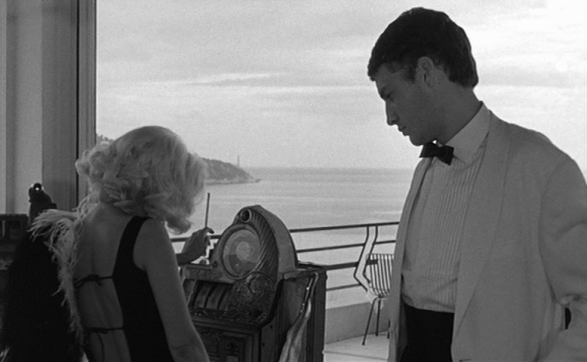
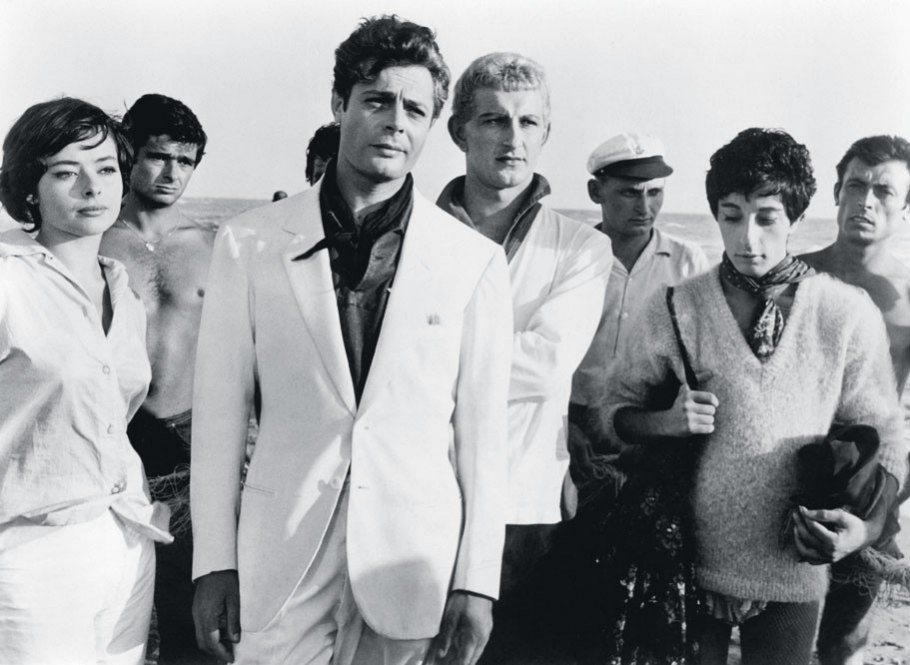
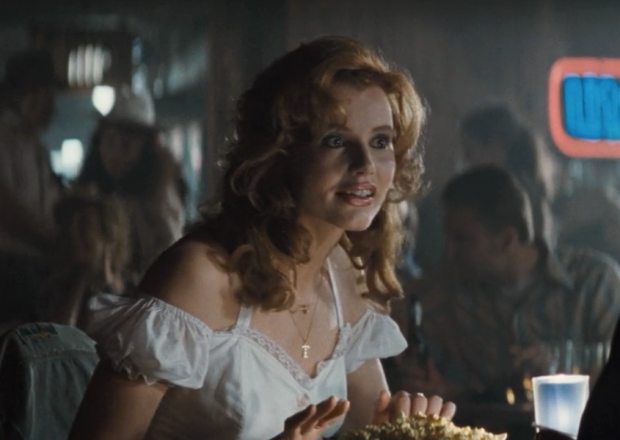
These eleven films form a constellation around themes of memory, desire, and the cruel passage of time. Each represents cinema at its most emotionally penetrating, whether through the neon-soaked dystopia of Strange Days, the sun-drenched melancholy of In the Mood for Love, or the theatrical intensity of A Streetcar Named Desire.

Several of these films share a fascination with non-linear storytelling and the unreliability of memory. Memento constructs its entire narrative around the protagonist’s inability to form new memories, creating a puzzle that mirrors our own struggles to make sense of fragmented experiences.

Similarly, Strange Days explores how technology might allow us to literally experience others’ memories, raising questions about authenticity and identity.

Wong Kar-wai’s 2046 and In the Mood for Love approach time more poetically, using repetition, slow motion, and careful composition to create a sense of moments suspended in amber.

The films suggest that certain experiences – particularly those involving unrequited love – exist outside normal temporal flow.

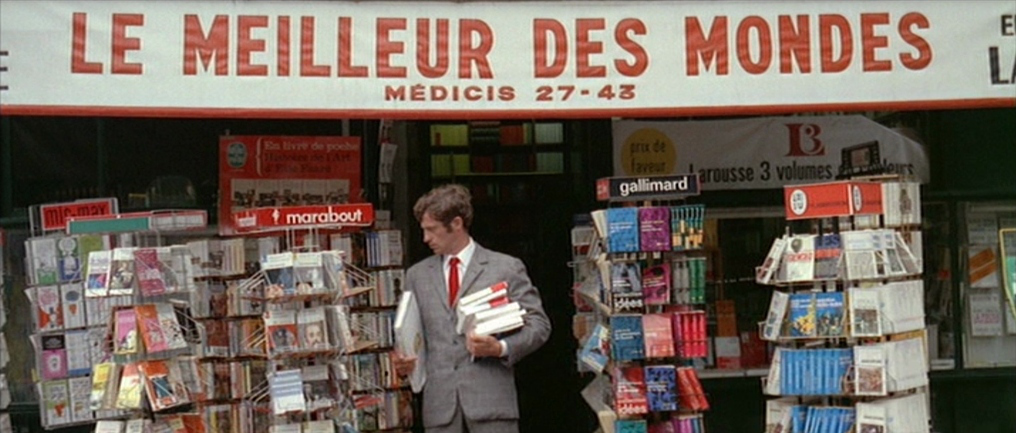
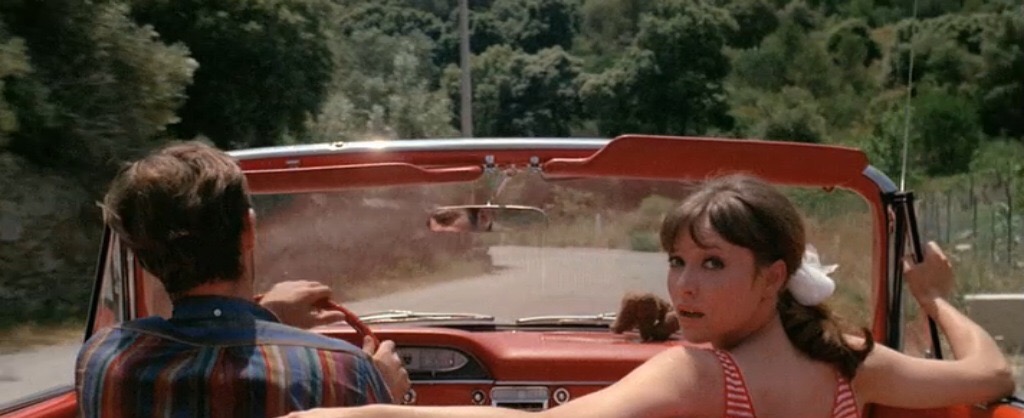
Le Mépris, Pierrot Le Fou, and Bonjour Tristesse represent different facets of French cinema’s relationship with American genre films and European art house traditions. Godard’s works deconstruct classical narrative while maintaining an almost naive romanticism about love and cinema itself.

Bonjour Tristesse, the 1958 one, though earlier, not French, and more conventional in structure, shares this tension between sophistication and genuine emotional vulnerability. I also have to say that my relation to these three movies is strongly emotional, probably because they all represent the sort of endless Mediterranean summer that I see as my “happy place”.

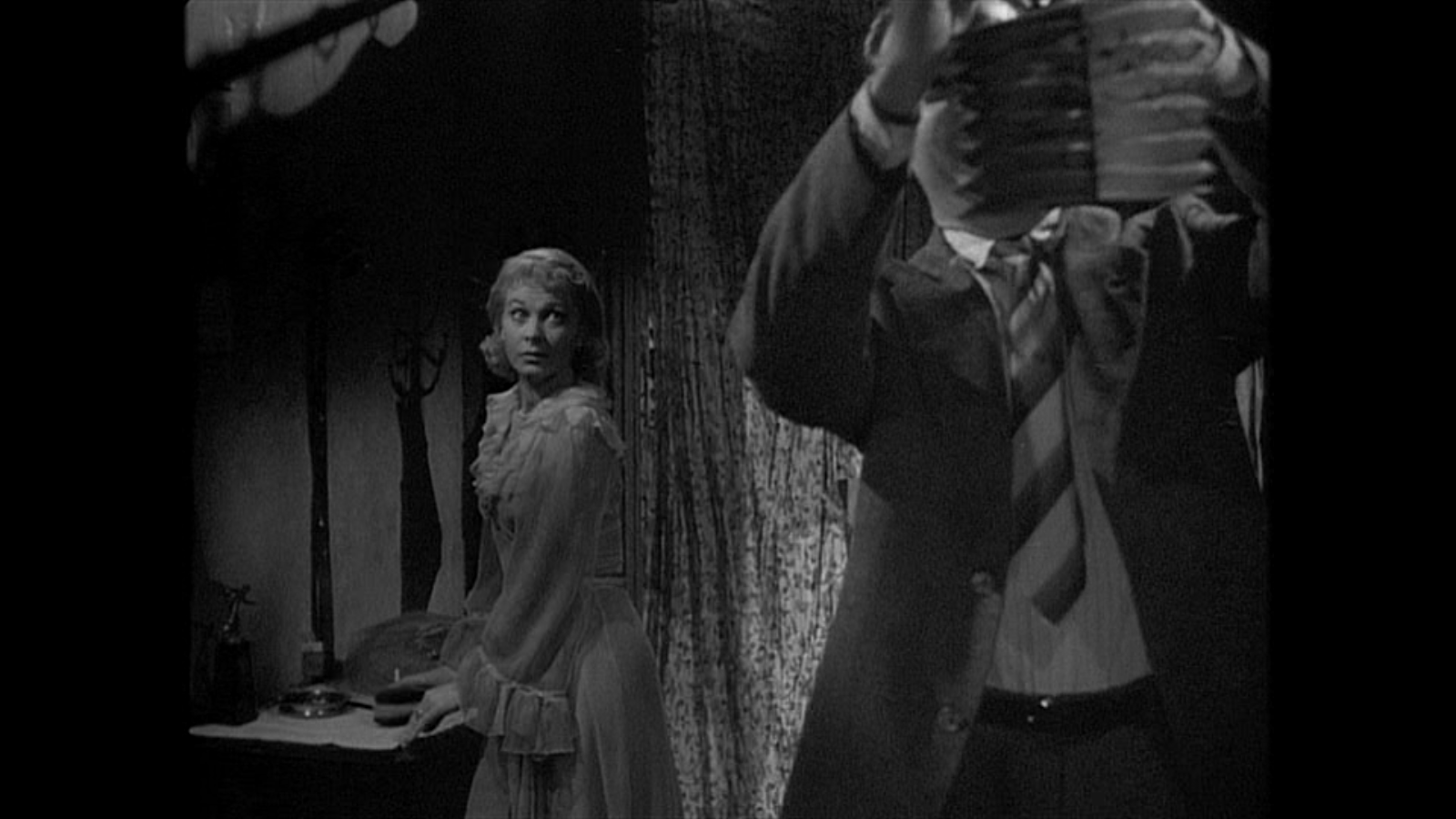
The Tennessee Williams adaptations – Suddenly Last Summer and A Streetcar Named Desire – bring a heightened theatrical sensibility to cinema. Both films explore themes of desire, madness, and social decay with an intensity that borders on the operatic. Their Southern Gothic atmosphere creates a unique American contribution to the broader themes of psychological dissolution found throughout this collection.

Wild at Heart stands as perhaps the most anarchic entry in this collection, with Lynch’s characteristic blend of violence, dark humor, and surreal imagery. Yet it shares with the other films an interest in characters who exist outside conventional society, whether by choice or circumstance.

Taste of Cherry approaches this outsider status from a profoundly different angle. Kiarostami’s meditative masterpiece follows a man driving through the hills around Tehran, seeking someone to help him with a final act. The film’s minimalist approach – long takes, natural lighting, real-time conversations – creates a contemplative space that stands in stark contrast to the more stylized works in this collection, yet shares their interest in characters grappling with fundamental questions of existence.

What unites these diverse films is their commitment to cinema as a form of visual poetry. Each director uses the medium’s unique properties – its ability to manipulate time, space, and perception – to explore internal psychological states that might be difficult to express in other art forms.

The careful attention to color, composition, and rhythm in films like In the Mood for Love creates meaning that exists beyond dialogue or plot. Similarly, the fragmented structure of Memento becomes a metaphor for how we all construct identity from incomplete information. Taste of Cherry‘s patient, observational style transforms the Iranian landscape into a canvas for philosophical reflection, proving that cinema’s poetry can emerge from the most naturalistic approaches.

These films suggest that cinema’s greatest power lies in its ability to preserve moments of intense feeling and make them eternal. Whether it’s the devastating final shot of In the Mood for Love, the cyclical structure of 2046, or the backwards progression of Memento, each film grapples with time’s passage and our desire to hold onto fleeting experiences, and to ourselves.

I’ve chosen these particular films because they understand cinema not just as entertainment. They view it as a means of exploring the deepest questions of human experience: How do we love? How do we remember? How do we make meaning from the chaos of existence?

These are films that reward multiple viewings, revealing new layers of meaning with each encounter – much like memory itself, they become richer and more complex over time.

“The cinema,” said André Bazin, “substitutes for our gaze at a world more in harmony with our desires.”

Inner Soundtracks

Despite all critical advice, I have finally decided to watch Joker: Folie à Deux and actually liked it.

“Joker: Folie à Deux” succeeds brilliantly, in my opinion, in presenting music not as traditional Broadway spectacle, but as something far more intimate and psychologically honest—the way a real person might slip into musical response when processing their world. The film uses its musical sequences to show how characters experiencing mental illness might perceive reality, with songs emerging organically from their psychological states rather than as theatrical showstoppers.

This approach places the film in fascinating company with movies like “All That Jazz” and “Dancer in the Dark,” where musical elements emerge from psychological necessity rather than theatrical convention.

Lars von Trier’s Dancer in the Dark (2000) is a heart-wrenching musical drama that uses music as a form of escapism for its protagonist, Selma (Björk), a factory worker who is slowly losing her sight. Selma’s internal soundtrack is a series of elaborate musical numbers that she imagines to escape the harsh realities of her life.

The film’s musical sequences are starkly different from its grim, handheld-camera visuals. When Selma sings, the world around her transforms into a vibrant, dreamlike stage, filled with synchronized dancers and sweeping orchestration. These moments are not just fantasies; they are Selma’s way of coping with her struggles and finding beauty in an otherwise bleak existence.

What makes Dancer in the Dark so powerful is the contrast between Selma’s internal soundtrack and the external world. The music is a refuge, a place where she can momentarily forget her pain. However, as the film progresses, the line between her fantasies and reality begins to blur, leading to a devastating climax.

In All That Jazz, music isn’t just a backdrop—it’s the heartbeat of Joe Gideon’s world. The film uses musical numbers as a way to externalize Joe’s thoughts, fears, and desires. These sequences are often surreal, blending fantasy and reality in a way that mirrors Joe’s fragmented state of mind.

One of the most striking aspects of the film is how it uses music to explore Joe’s inner conflicts. For example, the recurring song “Take Off With Us” from the fictional musical Joe is directing becomes a metaphor for his own life—glamorous on the surface but deeply chaotic underneath. The musical numbers are often grandiose and theatrical, reflecting Joe’s larger-than-life personality and his tendency to escape into his art rather than confront his personal demons.

The film’s climax, set to the song “Bye Bye Life,” is a masterful use of music as an internal soundtrack. As Joe lies on his deathbed, he imagines a final, elaborate performance where he bids farewell to his loved ones and his own life. This sequence is both heartbreaking and exhilarating, as it captures Joe’s acceptance of his mortality while celebrating his passion for performance. The music here isn’t just a narrative device; it’s a window into Joe’s soul, revealing his regrets, his pride, and his ultimate surrender.

Like Bob Fosse’s semi-autobiographical exploration of a mind fracturing into musical fragments, “Joker” uses music both as a representation of psychological breaking and as an attempt to make sense of a fractured self.

What makes “Joker: Folie à Deux” particularly compelling is its critical examination of how audiences consume and destroy the very authenticity they claim to seek. Arthur’s relationship with his audience is fundamentally parasitic—they don’t see him as a person, but as a performance, a symbol, or a projection of their own desires. Even his most intimate musical moments become public spectacle, transforming personal expression into consumable entertainment.

This stands in stark contrast to David Lynch’s “Wild at Heart,” where Sailor’s Elvis channeling serves a completely different function. When Nicolas Cage’s Sailor breaks into Elvis, he’s not seeking validation—he’s expressing something essential about himself that can’t be contained in normal conversation. His musical moments are defiantly authentic, performed for himself and Lula while remaining beautifully unconcerned with audience approval.

The difference is crucial: Sailor tries to explain who he is but ultimately doesn’t need the audience’s approval, while Arthur is trapped in the tragic paradox of only being allowed to exist as what people think he is. In “Wild at Heart,” performance becomes liberation; in “Joker,” it becomes another form of confinement.

Both films explore the concept of shared reality, but they reach opposite conclusions about its power. Sailor and Lula’s relationship in “Wild at Heart” can be understood as a kind of folie à deux—a shared delusion—but it’s ultimately the fairy tale reinterpretation that wins out. Their shared fantasy world isn’t madness; it’s a shield against the real madness surrounding them. Their love story becomes a survival mechanism, with their heightened, stylized worldview protecting them from genuine grotesquerie.

“Joker: Folie à Deux,” however, suggests that shared musical reality is ultimately illusory. By the end, there’s the devastating recognition that nothing was truly shared—just parallel solitudes briefly overlapping before dissolving into the resigned acceptance of “That’s Life.”
Most of us also turn to internal soundtracks to help us process emotions, express what we can’t verbalize, and transform mundane moments into something more meaningful. Whether consciously or not, we live with our own ongoing musical theater—often of questionable taste—that helps us make sense of our daily experiences.

The key difference between healthy and destructive musical thinking lies in agency and authenticity. When our internal soundtracks serve genuine self-understanding rather than performance for others’ consumption, they become tools for emotional navigation rather than traps of external expectation.

David Lynch’s work consistently championed individual authenticity against societal norms, seeing personal expression as a sacred, almost magical force capable of transforming reality through sheer commitment to one’s authentic self.

This offers a hopeful counterpoint to “Joker’s” more pessimistic view of how individual authenticity can be crushed under the weight of public perception and media consumption. Where Lynch sees individual expression as liberating, “Joker” presents it as tragically vulnerable to commodification and distortion.

Perhaps the most honest approach to our internal musical theater is to embrace it with both commitment and humor—acknowledging its questionable taste while recognizing its genuine power to help us navigate life’s complexities. We can choose to be more like Sailor, using our personal soundtracks as tools for authentic self-expression, or risk becoming like Arthur, trapped by others’ expectations of our performance.

Music isn’t just entertainment—it’s a fundamental way humans process reality, express emotion, and connect with both ourselves and others. Whether it becomes a source of liberation or confinement depends on whether we’re performing for ourselves or for an audience that may never truly see us.

In the end, we’re all living with our own internal musical theater. The question isn’t whether this is normal or healthy—it’s whether we can maintain agency over our own soundtrack while staying true to the complex, sometimes ridiculous, often beautiful music of being human.

A Personal Note: The Power of the Snakeskin Jacket

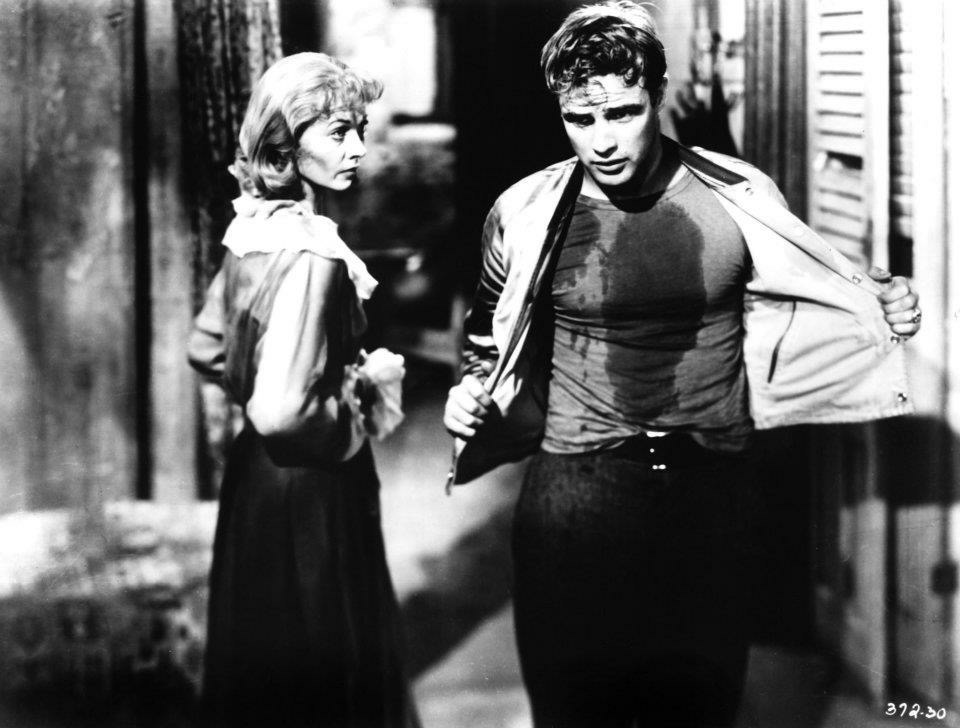
After watching “Wild at Heart,” (for the first time) I was so moved by Sailor’s unapologetic authenticity—his commitment to being exactly who he was, snakeskin jacket and all—that I convinced my mother to buy me my own snakeskin jacket. It wasn’t about cosplay or imitation; it was about understanding that sometimes we need external symbols of our internal commitment to authenticity.

Like Sailor’s jacket, which he describes as “a symbol of my individuality and my belief in personal freedom,” my jacket became a reminder that it’s possible to navigate the world on your own terms, with your own soundtrack, regardless of what others might think. Sometimes the most profound cinematic experiences aren’t just about understanding characters—they’re about finding the courage to become more authentically ourselves.

That jacket still hangs in my closet, a tangible reminder that the best films don’t just entertain us—they give us permission to live more boldly, more musically, and more true to our own questionable-taste internal theater.

Sylvia vs. Maddalena

In Federico Fellini’s masterpiece “La Dolce Vita” (1960), the protagonist Marcello Rubini wanders through a decadent Rome, encountering various women who represent different facets of desire, connection, and modern existence. Among these characters, two stand in fascinating contrast to each other: Sylvia, the exuberant American starlet, and Maddalena, the wealthy, world-weary heiress.

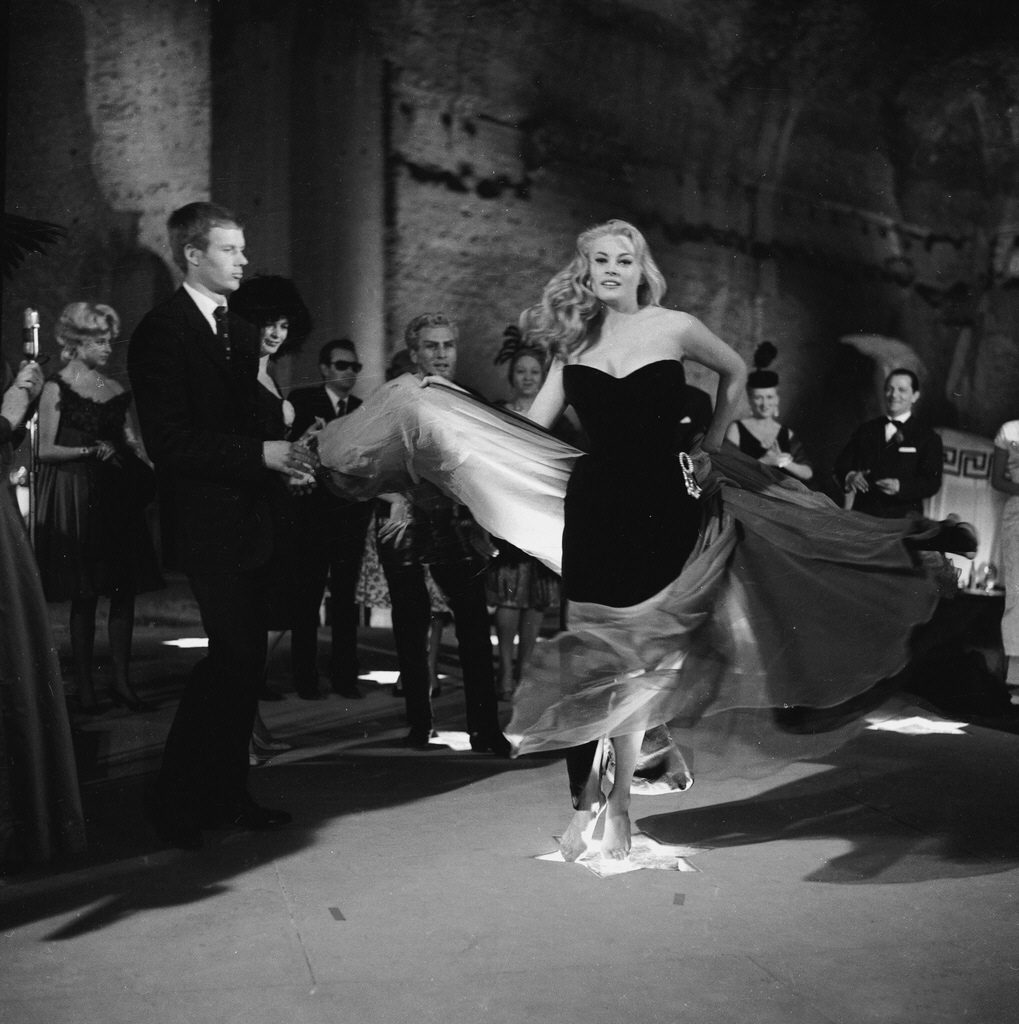
Sylvia, portrayed with iconic flair by Anita Ekberg, embodies pure enthusiasm for life. Her character arrives in Rome like a force of nature, commanding attention and transforming the ancient city into her personal playground. The famous Trevi Fountain scene captures her essence perfectly—wading into the water with childlike wonder while fully dressed in an evening gown, beckoning Marcello to join her in this spontaneous celebration of being alive.

What makes Sylvia so captivating is her unfiltered joy. She moves through the world with an almost supernatural confidence, unconcerned with social conventions or consequences. When she climbs the stairs of St. Peter’s Basilica, dances in nightclubs, or pets kittens in an empty apartment, she does so with complete presence in the moment. She represents a kind of freedom that seems increasingly elusive in modern society—the freedom to experience pleasure without cynicism.

Sylvia’s appeal is immediate, visceral, and larger than life. She is the embodiment of spectacle in a film that is itself concerned with spectacle. Yet her character remains somewhat untouchable, a fantasy that can be approached but never fully possessed.

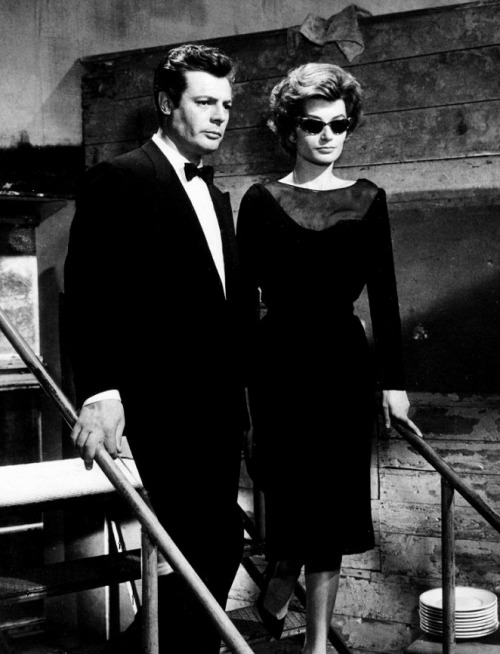
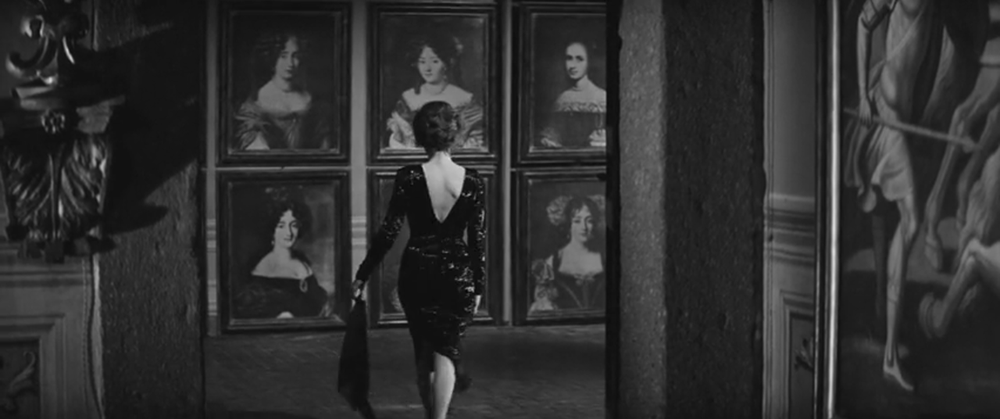
In stark contrast stands Maddalena, played with nuanced perfection by Anouk Aimée. Where Sylvia bursts with emotion, Maddalena presents a cool, composed exterior. Her elegance isn’t performative but ingrained—the natural result of someone who has seen all there is to see in Rome’s high society and found it wanting.

Maddalena navigates the night with a detached awareness that makes her all the more alluring. She’s not impressed by the trappings of wealth and fame because they are her everyday reality. Instead, she seeks authentic connection in a world of artifice, most memorably in the scene where she and Marcello communicate through the echo chambers of a flooded basement in a ruined aristocratic villa—a perfect metaphor for the distance that exists even in their moments of intimacy.

Her world-weariness isn’t simply cynicism but a form of wisdom. She understands the hollowness of “la dolce vita” because she has lived it fully. This knowing perspective gives her character depth and complexity that contrasts with Sylvia’s more straightforward exuberance.

The appeal of both characters creates an internal conflict familiar to many of us. Do we embrace life with Sylvia’s abandon, diving headfirst into experiences without reservation? Or do we move through the world with Maddalena’s sophisticated detachment, protecting ourselves from disappointment while seeking deeper meaning?

Fellini doesn’t present one approach as superior to the other. Instead, he uses these characters to illustrate the tensions of modern existence. Marcello is pulled between these poles throughout the film—between passion and detachment, innocence and experience, spontaneity and reflection. He does seem to reject flat out the emotional stability offered by Emma whose “sticky, maternal love” he despises.

What makes these characters so enduring is that they represent more than just different types of feminine appeal. They embody different philosophies of living, different responses to a world that simultaneously offers too much and not enough. Sylvia’s enthusiasm and Maddalena’s coolness aren’t just personality traits but strategies for navigating a changing society.

I would be Sylvia in the days I want to live as a fleeting dream, a force of nature that dazzles but never truly belongs. This is, I suppose, the luxury of anonymity. When we are the foreigner, no one really has any reference on how and who we are. Therefore, they have no idea on how we are supposed to be.

While Sylvia is the unattainable fantasy, Maddalena mirrors Marcello’s existential drift. She’s just as lost, but with a sharper self-awareness. A proud and typical GenX I, and most probably a lot of others reared on post punk and goth influences, resonate with depth, complexity, and the ache of searching for meaning in a world that feels hollow and could, thus, more easily be Maddalena.

Anouk Aimée plays her with this devastating coolness—luxury draped over emptiness. She craves love but sabotages ii. She’s too disillusioned to hope, yet too alive to stop searching. Fellini frames her suffering with such deliberate elegance that her loneliness becomes inseparable from her glamour. But this isn’t mere vanity—it’s a survival tactic, a way to exert control over the void.

  • Sylvia: Life as spectacle, pure dolce vita (the Trevi Fountain scene = ecstatic but fleeting).
  • Maddalena: Life as introspection, the aftermath of indulgence. She’s what happens when the party ends.
  • Fellini’s Contrast: Sylvia is myth; Maddalena is reality. One is adored, the other understood (sort of)—which is more tragic?

Ah, the young girl at the beachFellini’s silent, enigmatic coda to La Dolce Vita. She’s the film’s great unanswered question, a glimmer of purity in a world of exhausted decadence. A waitress from the seaside café (played by Valeria Ciangottini), unnamed, barely speaking. Marcello meets her earlier when she shyly asks for his autograph. Unlike the jaded socialites and performers, she’s untouched by Rome’s corruption. Her white dress mirrors Sylvia’s, but without the erotic charge—it’s virginal, almost angelic.


She waves, but it’s ambiguous—is it farewell, or an invitation? The sea (a classic symbol of renewal) separates them. She calls to him across the water, but he can’t hear her (or won’t). Her words are lost in the wind—Fellini’s metaphor for Marcello’s spiritual deafness. She is the irreversible loss of one’s own innocence, not through fate, but through a thousand small surrenders.

Whatever genius is

On Saturday I went to see Pablo Larraín’s Maria with a a friend. My friend cried at the end of the movie. Surprisingly ( to me), I didn’t. I am not quite sure I liked it. Angelina Jolie presumably excels as the tragic Diva; Massimo Cantini Parrini’s costume design was impeccable, as it should, since the source material was already extraordinary as he acknowledges in this interview to Harper’s Bazaar:

Costume design in María not only transforms Jolie into La Divina, it also serves as a visual metaphor for the film’s meditation on artistry, identity, and transformation. Through María Callas’ wardrobe, Larraín and Massimo Cantini Parrini articulate the tension between art as a living, breathing force and art as a frozen, ornamental relic

Callas was an artist shaped by both her voice and her image. Her costumes reflect this duality. Onstage, she is adorned in grand, operatic gowns. These gowns are heavy with history, as if carrying the weight of her own myth. These pieces emphasize how she became an icon, a living masterpiece. But offstage, her wardrobe shifts to softer, more intimate attire, revealing the woman beneath the legend. The contrast suggests that while the world sees only the diva, Callas herself wrestles with her own identity beyond the stage.

In her later years, Callas’ wardrobe takes on a different role. The extravagant fashion—high collars, structured silhouettes, luxurious fabrics—becomes almost like a museum exhibit. It serves as a way of preserving an identity that is slipping away. Even as her voice fades, her costumes remain striking. They seem like the last remnants of the persona she spent a lifetime constructing.

As Callas grapples with the loss of her voice, her costumes become more muted, understated—less fireworks, more elegy. The colors may darken, the embellishments may soften, mirroring the internal shift from performance to reflection.

A very long introduction to answer that if I could be someone else for a day, I would choose to be this kind of genius. Not the one shown in the movie. While not everyone knows what it’s like to command an opera house or possess extraordinary talent, we all know and experience, in very different measures, the personal side of decline.

You are born an artist or you are not. And you stay an artist, dear, even if your voice is less of a fireworks.

To be able to experience for one day what it would feel like having lightning running through your veins, knowing that every note you produce is pure artistic truth. The sheer physical and emotional power required to project that voice, to inhabit roles like Tosca or Norma so completely that the boundary between performance and reality almost disappears…

To know not adoration but to live with the certainty that your extraordinary gift has made a difference in the world through beauty.

Now, I am the same age as Callas was when she died and realize that I really wished I could be myself everyday even if there are so many more spectacular lives than my own.

Au noir – Cinematic inspirations

Ascenseur pour l’échafaud, 1958

ascenveur

Les Amants, 1958

Amants

Les liaisons dangereuses, 1959

liasons3

La Notte, 1960

la notte2

Jules et Jim, 1962

jules et jim

Eva, 1962

3.3

eva-1962-001-jeanne-moreau-stanley-baker-bar-00o-192

La baie des anges, 1963

jeanne-moreau-style-bay-of-angels-6-e1331577009996

jeanne-moreau-style-in-bay-of-angels-e1331578608981

baie 3

Claude Mann (Jean Fournier) et Jeanne Moreau (Jackie Demaistre)

jeanne-moreau-bay-of-angels-e1331621617217

baie1


1468679918-026-jeanne-moreau-theredlist


The cliché is that life is a mountain.

You go up, reach the top and then go down.

To me, life is going up until you are burned by flames.

Life is an accomplishment and each moment has a meaning and you must use it.

Life is given to you like a flat piece of land and everything has to be done.

 I hope that when I am finished, my piece of land will be a beautiful garden, so there is a lot of work.


jeanne


Photos via

The Red List

Vogue UK

Classiq

New Wave Film.com

References

Like Acting and Loving, Honor suits Jeanne Moreau


Movie inspiration of the week – Rosemary’s Baby (1968)

Costume Designer: Anthea Sylbert

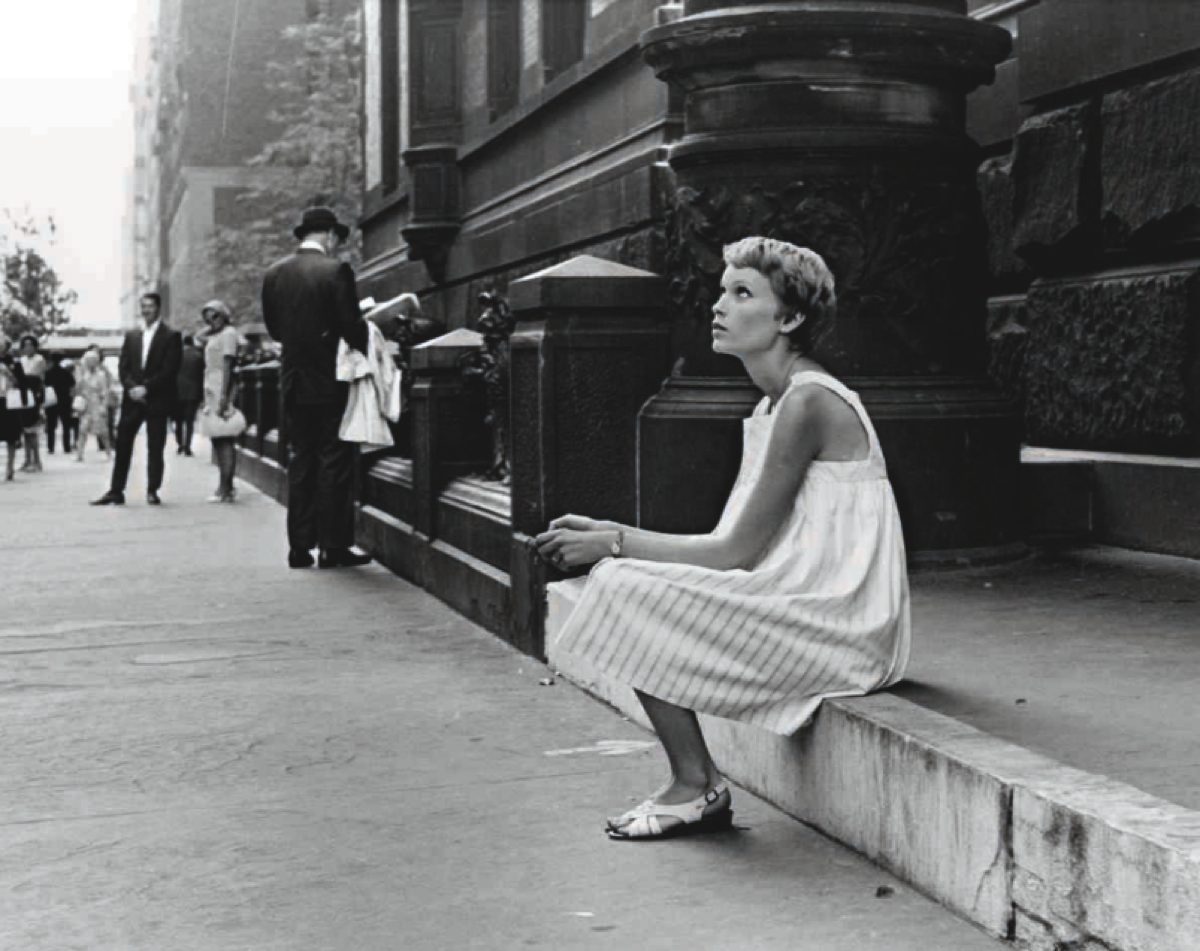
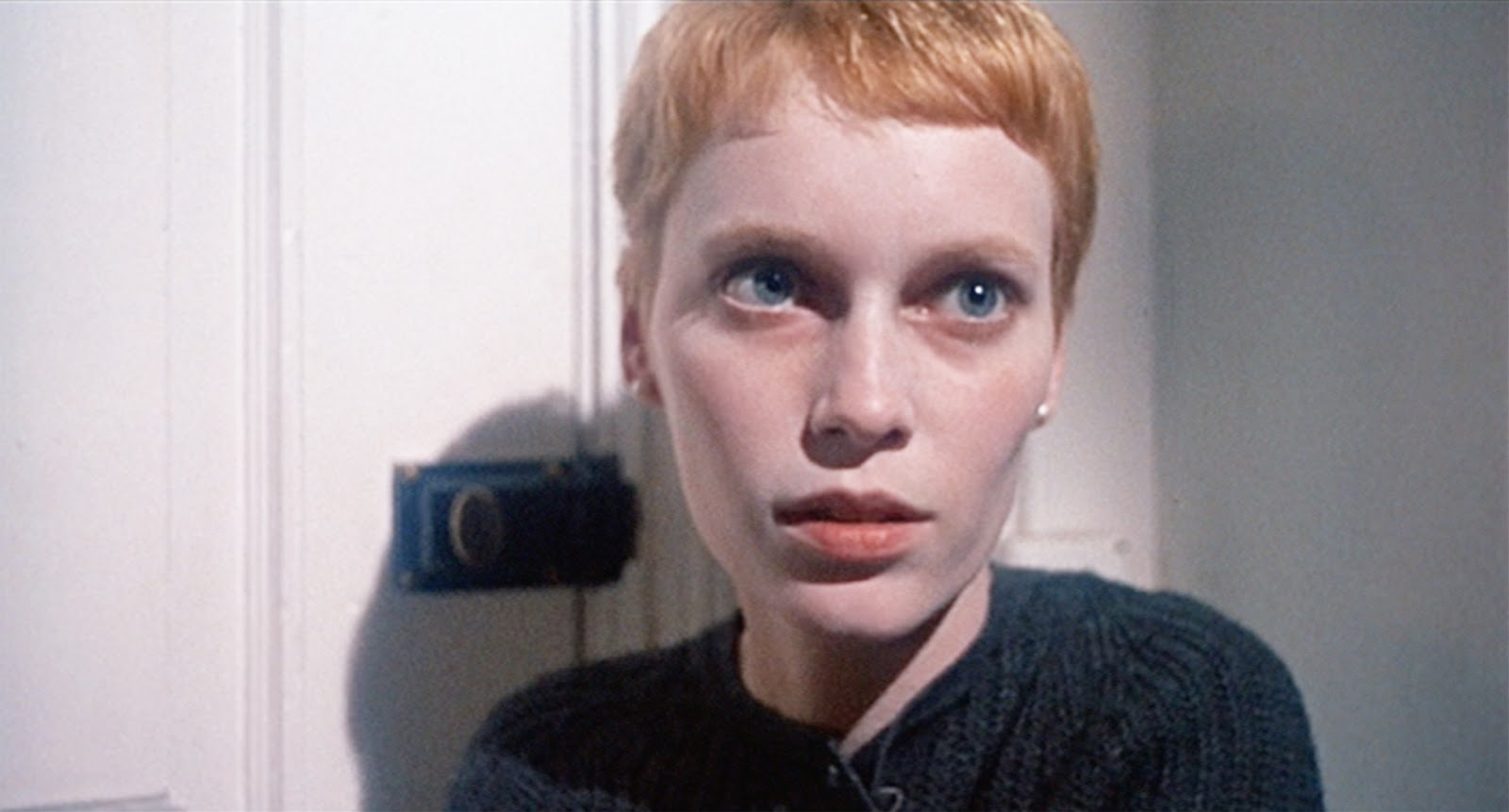
This is not one of my favourite movies and definitely not one of my favourite genres. However, I’m back to my beloved pixie haircut and 60s Mia Farrow is an unavoidable reference.

Plus, there are 56 outfit changes throughout the film and, whether performing a narrative function or a mere stylistic one, they are pretty much all memorable, inspired and inspiring.

rose

rose7

rose4

rose6

rose9

rose8

rose3

rose5

References and Photos

Rosemary’s Baby – Inspo

Rosemary’s Baby – KB’s Review

Dual Analysis: Rosemary’s Baby – Chris’ Thoughts

The Five Original Hipsters

Lessons We Can Learn From Rosemary’s Baby


Movie inspiration of the week – A Streetcar Named Desire (1951)

Costume Designer: Lucinda Ballard, Nominated Best Costume Design, Black-and-White (24th Academy Awards)

And so it was I entered the broken world

To trace the visionary company of love, it’s voice

An instant in the wind (I know not whither hurled)

But not for long to hold each desperate choice.

The Broken Tower” by Hart Crane

streetcar4

Her appearance is incongruous to this setting. She is daintily dressed in a white suit with a fluffy bodice, necklace and earrings of pearl, white gloves and hat, looking as if she were arriving at a summer tea or cocktail party in the garden district. She is about five years older than Stella. Her delicate beauty must avoid a strong light. There is something about her uncertain manner, as well as her white clothes, that suggests a moth.

IMG_3194

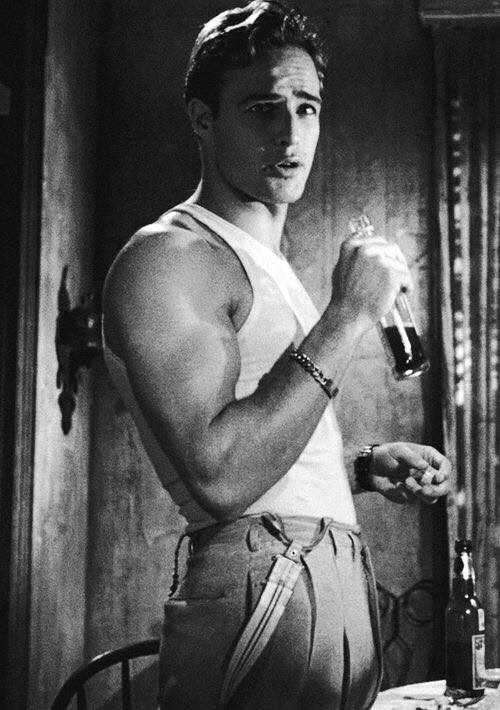
He is of medium height, about five feet eight or nine, and strongly, compactly built. Animal joy in his being is implicit in all his movements and attitudes. Since earliest manhood the center of his life has been pleasure with women, the giving and taking of it, not with weak indulgence, dependently, but with the power and pride of a richly feathered male bird among hens.

streetcar2

Look at these feathers and furs that she come here to preen herself in! What’s this here? A solid-gold dress, I believe! And this one! What is these here? Fox-pieces! Genuine fox fur-pieces, a half a mile long! Where· are your fox-pieces, Stella? Bushy snow-white ones, no less!

IMG_3198

Pearls! Ropes of them! What is this sister of yours, a deep-sea diver? Bracelets of solid gold, too! Where are your pearls and gold bracelets?

IMG_3197

Compliments to women about their looks. I’ve never met a woman that didn’t know if she was good-looking or not without being told, and some of them give themselves credit for more than they’ve got.

poker

The poker players–Stanley, Steve, Mitch and Pablo-wear colored shirts, solid blues, a purple, a red-and-white check, a light green, and they are men at the peak of their physical manhood, as coarse and direct and powerful as the primary colors.

IMG_3192

“And if God choose,

I shall but love thee better-after-death!”

Why, that’s from my favorite sonnet by Mrs. Browning!

lantern

I can’t stand a naked light bulb, any more than I can a rude remark or a vulgar action.

a_streetcar_named_desire1

I never was hard or self-sufficient enough. When people are soft-soft people have got to shimmer and g1ow-they’ve got to put on soft colors, the colors of butterfly’ wings, and put a paper lantern over the light …it isn’t enough to be soft. You’ve got to be soft and attractive. And I-I’m fading now! I don’t know how much longer I can turn the trick.

car-003488

We danced the Varsouviana! Suddenly in the middle of the dance the boy I had married broke away from me and ranout of the casino. A few moments later-a shot!
IMG_3193
 What do you two think you are? A pair of queens?

a-streetcar-named-desire-23

I don’t want realism. I want magic! Yes, yes, magic! I try to give that to people. I misrepresent things to them. I don’t tell truth, I tell what ought to be truth. And if that is sinful, then let me be damned for it!

scaryasHELL

The opposite is desire. So do you wonder? How could you possibly wonder!
a-streetcar-named-desire-tiara

She has dragged her wardrobe trunk into the center of the bedroom. It hangs open with flowery dresses thrown across it. As the drinking and packing went on, a mood of hysterical exhilaration came into her and -she has decked herself out in a somewhat soiled and crumpled white satin evening gown and a pair of scuffed silver slippers with brilliants set in their heels. Now she is placing the rhinestone tiara on her head before the mirror of the dressing-table and murmuring excitedly as if to a ‘group of spectral admirers.

IMG_3202

Well, it’s a red letter night for us both. You having an oil millionaire and me having a baby.

tiara

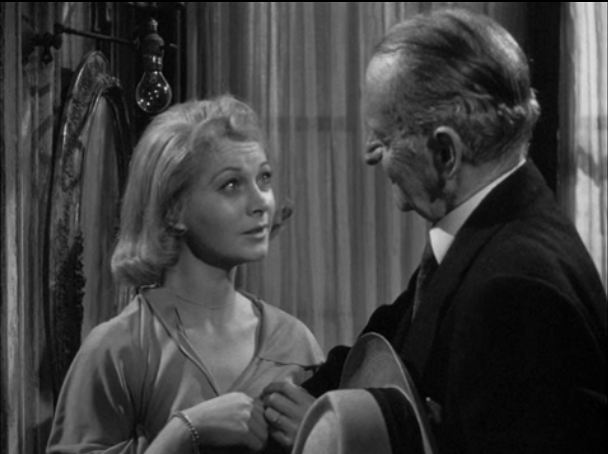
A cultivated woman, a woman of intelligence and breeding, can enrich a man’s life – immeasurably! I have those things to offer, and this doesn’t take them away. Physical beauty is passing. A transitory possession. But beauty of the mind and richness of the spirit and tenderness of the heart-and I have all of those things-aren’t taken away, but grow! Increase with the years! How strange that I should be called a destitute woman! When I have all of these treasures locked in my heart. I think of myself as a very, very rich woman! But I have been foolish-casting my pearls before swine!

shatter

The hot trumpet and drums from the Four Deuces sound loudly
kindness

He takes off his hat and now he becomes personalized. The unhuman quality goes. His voice is gentle and reassuring as he crosses to Blanche and crouches in front of her. As he speaks her name, her terror subsides a little. The lurid reflections fade from the walls, the inhuman cries and noises die out and her own hoarse crying is calmed.

Whoever you are-I have always depended on the kindness of strangers.

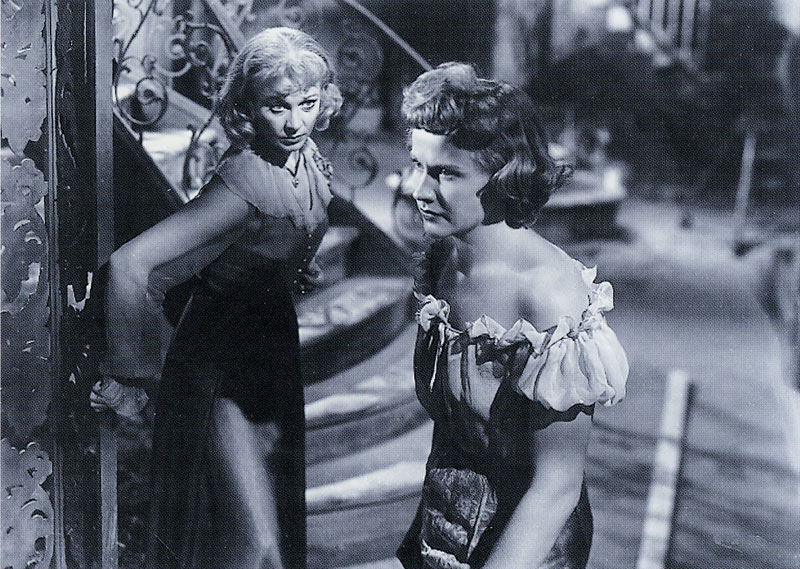
’In this dark march toward whatever it is we’re approaching,’ Blanche raises the flag of magic against the crushing disappointment of reality in her “worn-out Mardi Gras outfit” and the costumes are absolutely brilliant in creating this fantasy world, showing us  someone trying to survive the decay and decadence of her own life and not being able to cope with what the world has thrown at her. And that’s how a trunk full of flowery dresses and rhinestone tiaras can help you survive as long as you keep away from the brutes, maybe you’ll be able to not only tell, but also live what ought to be truth.  ( And this in no way an endorsement of post truths or a glorification of mental illness)

References and Photos

A Streetcar Named Desire BY TENNESSEE WILLIAMS – With an Introduction by the Author, Signet Books (1951)

Elia Kazan, A Streetcar Named Desire (1951). Norman N. Holland

Best Shot: “A Streetcar Named Desire”

A Madhouse In The Quarter: A STREETCAR NAMED DESIRE A Madhouse In The Quarter: A STREETCAR NAMED DESIRE

The Furniture: Decorating Madness in A Streetcar Named Desire

A Streetcar Named Desire

http://www.virtual-history.com/movie/film/2060/a-streetcar-named-desire

An ill fitting week

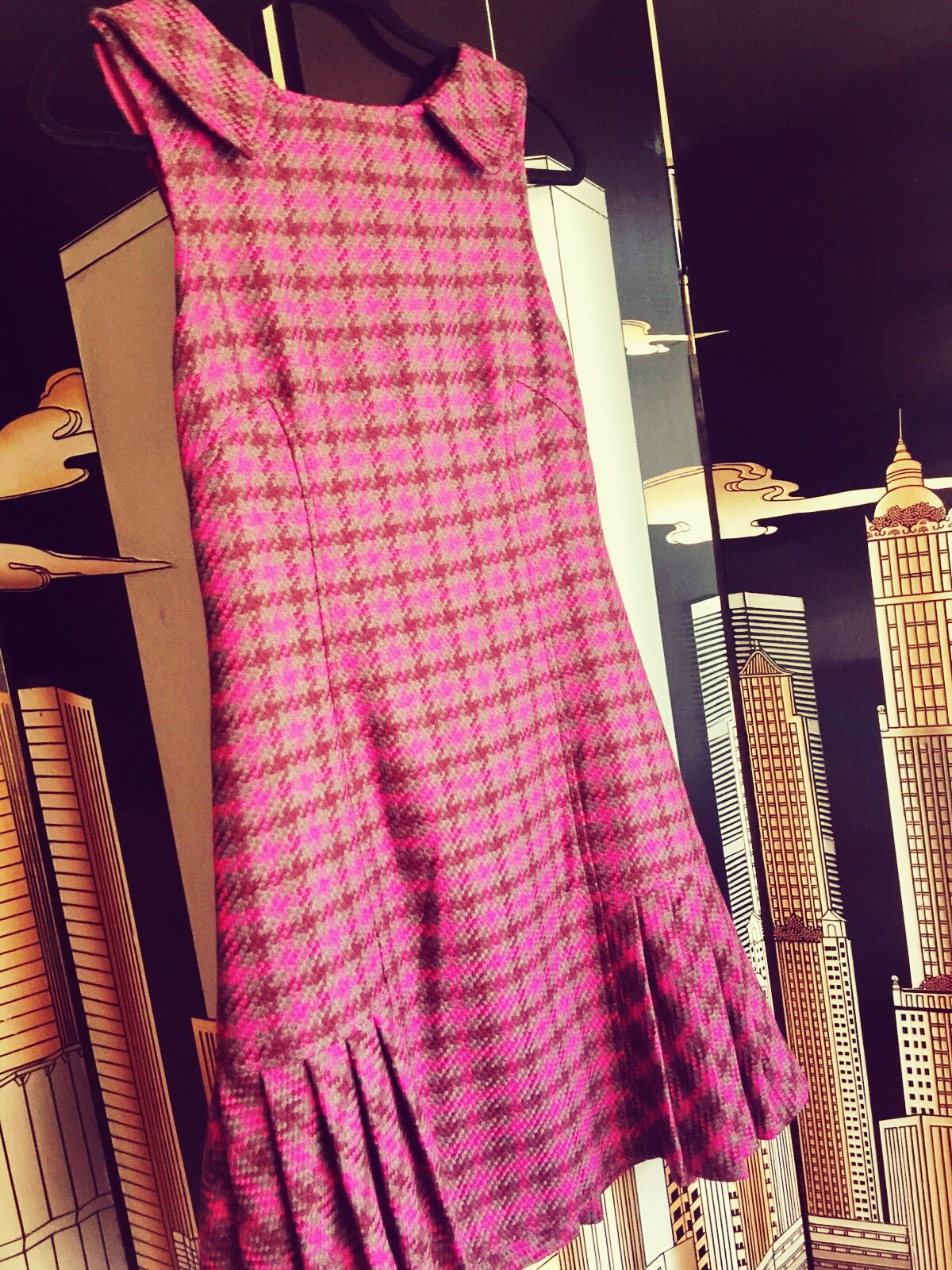
I wore this dress on Monday and the whole day I felt as if was in disguise. I thought I looked like a twenty first century flapper when I checked myself in the mirror before leaving the house, but the minute I got to work I looked as if I had borrowed the last available dress left in someone else’s closet. And that someone definitely didn’t  have a lot in common with me. I didn’t buy this dress. It was a gift from my mum who probably never abandoned the hope that, in the right outfit, I would look like a pretty girl. This dress is too pink for me, it’s either too short for me or I’m too tall for it, I am also too old to pull something like this off. Not being a mother myself, I am left with a daughter’s perspective on this strange relationship that sometimes infantilizes me in order to, so it seems, avoid confronting the inevitability of time.

Mondays are never easy and I have a horrible cold and the medication is making me feel like I’m living underwater and the weight of every single thought is too much to even consider taking any kind of action.

TUESDAY

I bought this jacket in Vietnam in November 2014. A text message received while I was in Hanoi let me know that my great aunt had died. I was there for work and alone and while I can’t really say that I have always depended on the kindness of strangers, I have found that sometimes, strangers make the best friends and know exactly what to do and how to help.

Stray people brought together by chance

WEDNESDAY

I have a weak spot for chinoiserie and I absolutely adore these pants. I think I bought them some twenty years ago and they have never made it to the error category.

I felt a lot better today. After work we went to Java, the usual hang out before theater, for dinner. The TV was showing the aftermath of the Westminster attack. The coffee shop was crowded and we are all seating at an uncomfortable closeness. The gentleman next to me is wearing a brown jacket and turns his head often in my direction. Maybe he’s getting irritated at the proximity. No, he starts talking about the news. I try not to engage. I studied political science and I have no idea how to comment on the historical, sociological, or political contexts of what we are staring at. I find it difficult to rationalize barbarity. He’s British. He goes on about foreigners and political correctness. For twelve years he served in the Royal Navy, like his father before him. His eyesight started failing. He’s now a civilian. He was born in Cornwall and grew up in Scotland, now he lives in Manchester because he can’t afford to live in London. He’s been in Portugal for two weeks on vacation, this was his last night. He’s wearing a black t-shirt with some very graphic expression of discontent written in Afrikaans. I’ve never been a big fan of clothes that are too explicit in doing your talking for you. We have to go, the play starts at 9. He says goodbye kissing our hands and thanking us for the company and patience. Whatever was said, I realize I missed that accent and the blue eyed frankness I have lived with for four or so years of my life.

The play is a Portuguese – Belgian co-production spoken in French, Portuguese and Flemish with subtitles in English and Portuguese. I like the set and love the wardrobe when Anna Karenina is the woman inhabiting them and their actions. Still, it’s difficult to focus on anything either than the text. Forty years apart in Lisbon and Antwerp two couples fall out of love, question the normal life people manage to live and read Anna Karenina in French. One of the characters hasn’t read it. He actually thought about reading War and Peace but there were too many pages.

How she dies. It’s not supposed to be about this particular written death but about how literature changes or makes us change our lives. So the author says in a number of interviews.

But she did not take her eyes from the wheels of the second car. And exactly at the moment when the midpoint between the wheels drew level with her, she threw away the red bag, and drawing her head back into her shoulders, fell on her hands under the car, and with a light movement, as though she would rise immediately, dropped on her knees. And at the instant she was terror-stricken at what she was doing. ‘Where am I? What am I doing? What for?’ She tried to get up, to throw herself back; but something huge and merciless struck her on the head and dragged her down on her back


THURSDAY

Last week there was a promise of an early Summer that has vanished during this week as temperatures dropped some twenty degrees and the news reported closed schools because of the snow. Not in Porto. I miss my second ballet class of the week and go to a conference on culture and citizenship. Friends and experts come together to pay tribute to the Poet. To Poetry. There’s a painting exhibition in the room. There’s this painting, A homage to Gaugin, it’s called, and there’s this amazing figure of a woman that could also be a man painted in the warm colours that live in Tahiti. It keeps me  from listening to most of what is being said.

FRIDAY

A lavender morning turned into a cold rainy afternoon. I took half the day off to seat at a open rehearsal of Macbeth at the national theater. They only started rehearsals on Monday so this is still the table-work phase of reading and exploring the text and the characters. There’s an English literature professor and expert in Shakespeare who has been invited to talk about the play, and the text, and the differences between the English original and the Portuguese translation. And there he was, academia at it’s very best, rethorical mighty with all its seductive power. And the words go on for five hours and I don’t feel tired or bored. There’s nothing more fascinating than being the witness to personal passions. Not to me, at least. The catastrophe of getting exactly what you want in life. Those who choose to loose everything and those who do. The fantasy of being whole and the prison it creates. And Sartre who could be very pedantic but also very intelligent.

We are left alone, without excuse. That is what I mean when I say that man is condemned to be free. Condemned, because he did not create himself, yet is nevertheless at liberty, and from the moment that he is thrown into this world he is responsible for everything he does.

In 2012 I did a course on Shakespeare at the University of Oxford. This was how I fell in love with Macbeth. My final essay was on the question of agency. My somewhat lazy conclusion stated that “Macbeth’s hamartia is not his ambition, as this is a character flaw, but his miscalculation of the personal consequences of assassinating Duncan and the inner torment that leads him on a murdering spree in the frantic desire for peace of mind. It is this tragic error that ultimately transforms his life in an empty mockery”. I’m often surprised and ashamed when reading what I have written.

SATURDAY

On Saturday I decided to revisit the rive gauche intellectual in me, ratty cashmere sweater and all.

Saturday is flamenco class day. I decided not to miss this one and take me and my cold for another session of trying to emulate Lola. It is not an easy, if at all possible, task to be a Lola. Either a fictional or a real one.

The rest of my Saturday is spent doing adult stuff, washing, and supermarket shopping, and other uninteresting errands. I sold a white Betty Barclay jacket. It’s going to Boise, Idaho.  At the end of all this I go and see Ana present a book on American cuisine. I’m only there for moral support. Cookbooks are basically useless at my house.

It took five songs of the weird (I like to think about it as eclectic but I suspect it’s just weird) driving playlist on my iPod to drive home:

Everybody knows

The famous blue raincoat

For once in my life

Girl, you’ll be a woman soon

Guilty

wp-1490479384225.jpg

I suspect rive gauche intellectuals didn’t care much for glitter ballet flats. Shoes off. I’m not going out, I decide that watching This Property is Condemned on TV is a much better option.

SUNDAY

Daylight saving time began at 1 AM. Outside it still looks like Winter.
I go to the only cinema we have downtown, one of the two movie theaters that is not a multiplex. Popcorn free zone, what a bliss. The movie is Aquarius with Sonia Braga. Two and half hours lost, gone forever. Such a grand actress deserved a much better movie. Great soundtrack, though.

I get home to this

 My next door neighbour is a sweet Lady.

References

Tolstoy

Tennessee Williams

Aristotle

Movie Inspiration of the week

Marguerite (2015)

Costume Designer: Pierre-Jean Larroque. César Best Costume Design (Meilleurs costumes)

I did not see this movie when it came out, I’ve watched it on TV on Christmas Eve. As with Florence Foster Jenkins (2016) , Marguerite is also inspired by the life of the “world’s worst opera singer“. While Stephen Frears‘ film (that I did not see)  is set in 1940s New York, director Xavier Gianolli, tells Marguerite’s story in Paris during the Golden Twenties. Since the 20s are my “in the wrong place at the wrong time” period in history, this little detail makes all the difference. Not only because Pierre-Jean Larroque’s period costumes are exquisite but also because the story benefits from the social, cultural and artistic  context of European avant-gardism.

marguerite-backdrop

This is a story of passion without talent. Not of a simple love of music but of a vital need to express that love. The  Baroness Marguerite Dumont loves opera and wants to be loved by her cheating husband through her talent as a venerated soprano, creating a dream world enabled by the butler / photographer  Madelbos and her own wealth, pleasant disposition and childlike enthusiasm that prevent everyone around her from telling her how excruciatingly bad she is. 

Marguerite creates a dream world helped by Madelbos, the butler, who protects her from the harsh reviews and mockeries of the outside world but also turns her and the elaborate photo shoots of delusional Diva roles into his own personal artistic project. For that he is willing to let her die and this was, for me, the darkest side of the movie. While this is a thoroughly beautiful and  inspirational look at the nature of art and the value of a dream it is also a bitter reflection on the use of others as the object / subject of that art.

marguerite_movie

While Florence Foster Jenkins might have never known just how terrible she was, Marguerite does get to know and that ends up not making Life possible anymore.


Movie Inspiration of the Week – The Addiction (1995)

I would not want to know a person who isn’t offended by aspects of this film, but I would be equally bored by an individual who would casually dismiss the film itself.

Abel Ferrara

Costume Designer Melinda Eshelman

This is not an obvious choice as far as fashion / style inspiration goes, nor does it fall (apparently) in a film genre I particularly appreciate. Not a conventional (romantic) vampire movie, The Addiction seems to depict “vampires” in an over realistic manner as intellectual drug addicts in a grungy 90s New York City.

annabellasciorra02c

An explicit metaphor (if that’s a thing) for heroin addiction and its  moral and physical decaying results, this is also a film that uses “the vampire as a metaphor for intellectual hubris in the face of systemic sinfulness in the world”.[*] Having practically been born into academia and having spent all my life in it, this is what strikes me as both inspiring and scary in The Addiction.

Suitably blood-festooned vampire flick (although the word vampire is never mentioned). Secondly, it operates as a philosophical and religious reflection on human evil and redemption and finally as an amusing take on certain aspects of university life, probably best appreciated by those directly involved in that venerable institution.

Clare O’Farrell

Kathleen (Lili Taylor) is a Philosophy doctoral student who transforms into a vampire / undead/ immortal after being bitten by the stylish Casanova ( Annabella Sciorra) because she, the victim, could not stand up to her sleek aggressor who specifically tells her: “Tell me to leave you alone”and begins “a slow transition from theoretical dependency to literal acts of horror and extreme physical addiction.” [*] Succumbing to her addiction, Kathleen neglects her thesis as she falls deeper into ennui until meeting Peina (Christopher Walken), who with the superiority of the recovering addict turns into an impromptu supervisor, sucking all her blood before giving her a reading list. “Read the books, Sartre,Beckett, who do you think they are talking about?”
I have felt the wind on the wing of madness
Baudelaire
Back to her thesis, Kathleen is now a junkie with a rationale.

 tumblr_neaxhkloro1twc5l6o4_500

By making the force of Kathleen’s appetite for blood, and an altering sense of moral perspective a parallel to a developing thesis, St John and Ferrara enable a wry, reflexive commentary on philosophy in action. As well as allowing a PhD student to take a rare leading role in a feature narrative (albeit made more exciting by vampirism), The Addiction is an ambitiously intellectual genre film, and a comic satire on intellectualism itself in its literalization of theory, as Kathleen both consumes her supervisor and eventually the academic community. 

GarethJames

The University, the institution “among the precious things that can be destroyed “, has changed a lot since 1995. I’m not quite sure if the institution transformed into an enabler of transversal skills through,  more or less fast tracks,  and in the process condemning learners to a life of follow up courses and debt (in some countries) is still the place of never ending theories trying to rationalize the unfathomable. Or maybe it’s just  “all theory and philosophy until someone gets bit”

To face what we are in the end, we stand before the light and our true nature is revealed. Self-revelation is annihilation of self.

P.S. In its neo noir aesthetic, this is, of course, a film that appeals to me with all the its different layers of black. The invisible, the evil, the academic, the existentialist, the transgressive, the bohemian, the absolute black.

Movie inspiration  of the week – Pierrot Le Fou (1965)

Leaving (for now) the Riviera Summer inspiration by means of Godard’s absurdist road movie of feelings versus ideas.

image002

image003

A film is like a battleground: there’s love, hate, action, violence, death. In one word: emotion

image006

image018

A noir movie in technicolor that follows the adventures of Ferdinand Griffon who is trying to fulfill his vast artistic plans, after losing his corporate job and Marianne Renoir the “ingénue fatale”, the epitome of easy French “girly style”.


Not to write about people’s lives anymore, but only about life—life itself. What lies in between people: space, sound, and color. I’d like to accomplish that. Joyce gave it a try, but it should be possible to do better.

A bittersweet representation of the absurd in our lives in full colour and cinemascope, Pierrot le Fou‘s self-destructive romanticism, the artistic self-consciousness, the frenetically unhinged form, the blend of emotional extravagance and cool self-mocking, the vanished boundaries between irony and sincerity and between symbol and reality is Life as loud as it gets. As an “inspiration”, for me, it goes far beyond the stylish Anna Karina whose style still resonates with designers and taste-makers worldwide.  My muse in this movie is most definitely Jean-Paul Belmondo and his tragic “Yves Klein Pierrot”. No matter what, “being afraid is [still] the worst sin there is”.


As in Le Mépris and Bonjour Tristesse, the Mediterranean is again the landscape of failed aspirations and human suffering but as far as Pierrot le Fou goes, I would have to agree with Michel Cournot , “I feel no embarrassment declaring that Pierrot le fou is the most beautiful film I’ve seen in my life.”


References and photos

Only the Cinema

Pierrot le fou: Self-Portrait in a Shattered Lens

FilmGrab

paintings in Pierrot le fou


Movie inspiration of the week – La Dolce Vita (1960)

the smarter the clothes, the more dangerous the man, and the more damaged the clothes, the more vulnerable the man

Costume Designer Piero Gherardi, Academy Award for Best Costume Design (BW) 1961 and 1963 for 8½

Piero Gherardi, self-taught in art and architecture, created the overall look of La Dolce Vita. He was costume and set designer, as well as art director. This is a stylish film as a whole, as Gherardi placed equal emphasis on the costumes for both female and male leads. Every scene in La Dolce Vita strikes you as a beautifully styled photograph and the film still guides sartorial aspirations around the globe.

And aspire you do. To be ” the first woman on the first day of creation. [The] mother, sister, lover, friend, angel, devil, earth, home”.  Of course much helped by the natural statuesque sensuality of Sylvia, costumes do play a decisive part on the construction this first Woman, the unattainable male fantasy.

Much in the same way as they immortalized  the sophisticated, frivolous elegance of the thrill seeking Maddalena. Has ennui ever looked more glamorous on-screen?

We need to live in a state of suspended animation like a work of art, in a state of enchantment. We have to succeed in loving so greatly that we live outside of time, detached.

In La Dolce Vita‘s mid-century Rome, Sylvia, Emma and Maddalena are each either proponents or victims of the media-hyped sweet life, with Sylvia as the celebrity symbol of fantasy, Maddalena as a habitual consumer of the trivial, and Emma as an outsider suffering the undesirability of being so.

But this is unmistakably a movie about a man, a magnificently attractive one. La Dolce Vita confirmed Mastroiani, even if he rejected the title himself, as the ultimate Latin Lover. This Latin Lover appears as a cultural symbol of the Italian as “other”, the “imagined embodiment of the primitive, whose unrestrained and exotic passion directly affronts the more civilized and restrained Northern European or American Society”. This cultural symbol is also a cultural commodity, a “poster boy” for Rome as the hot spot of the rich, the famous and the beautiful, but also for the “European Don Giovanni and the Italian style based on the emergence of Italian fashion and design”.

Fellini and Gherardi present fashion and clothing as a “subtle critique of Italian masculinity”. Jacqueline Reich claims that Marcello, the journalist, is an anti-hero (inetto), ” a man in conflict with an unsettled and at times unsettling political and sexual environment” but always immaculately dressed, the embodiment of the cultural heritage of the bella figura, “reflecting a taste for public display of self-worth though appearance”.

Malossi (quoted by Reich) observes that “the Italian male literally puts on a show for the admiring public. Like the dandy, the bella figura parades his sense of style, his masculinity, and his sensuality, regardless of his social and economic status. Both individual and national identity are written on the body through clothing and grooming and paraded for the community”. I have only been to Italy for work a couple of time, and in Rome stayed only a few hours, enough to walk to the Fontana di Trevi and drive past the Coliseum but, the parading of well dressed men did really make a strong impression on me. Never before I had seen in practice this notion that “dressing well [is] both a privilege and a responsibility” and the conscious use of public space as stage and tailoring and suits as costumes.

In La Dolce Vita, Fellini, presents us with the “discontinuity between surface and substance. Marcello Rubini is dressed in the latest fashions but the costuming fails to mask his moral, spiritual and sexual failings”. Still, at the end, vulnerable  and damaged in his white suit, Rubini is still showing us that, as claimed by Bruzzi, “masculinity is directly measured by narcissism”.

References

Jacqueline Reich, UNDRESSING THE LATIN LOVER Marcello Mastroiani, fashion and La Dolce Vita in Bruzzi and Gibson (2013) Fashion Cultures Revisited: Theories, Explorations and Analysis

classiq.me/style-in-film-la-dolce-vita

http://www.whatladylikes.com/2015/02/that-sweet-life.html

https://thefashioneaste.com/tag/la-dolce-vita/


Movie Inspiration of the Month – The Adventures of Priscilla Queen of the Desert (1994)

Costume Designers: Tim Chappel and Lizzy Gardiner (Oscar Best Costume Design, 1995; BAFTA Best Costume Design, 1995; Australian Film Institute Best Achievement in Costume Design, 1994).

After a somewhat long hiatus caused by jet lagging, I’m back to being movie inspired, this time by one of my absolute favourites.

A story of blood, sweat and tears and a ton of sequins on a tight budget ($20.000) that results in a fabulous road movie extravaganza.

ll-wide-priscilla3-20140221112622406877-620x349

Costume designer Tim Chappel says that for Priscilla, instead of getting briefed by the director or researching the characters, he and co-designer Lizzy Gardner started with the music. He was allowed to just do free association to the songs, and come up with ideas from that point. It was a truly creative experience.

priscilla2

Reading those words just made me want to experiment doing the same. How would “normal life” look like like if instead of the weather forecast or your scheduled meetings, or any other practical consideration, each day was inspired by a song?

Priscilla-BrokenHillBarL

Probably an idea worth considering.

I would like to have my words meet the grandeur and glamour of this larger than life adventure. The fact is, they can’t. Again in the the words of Tim Chappel this is a movie that taps into this idea of being yourself and absolute freedom

Glitter does never age and it does not get more fabulous than this.


Images via http://www.theguardian.com and http://www.nfsa.gov.au

Movie inspiration of the Month – Thelma and Louise (1991)


Costume Designer Elizabeth McBride

image

I’m in Colorado for the week so it seemed natural to go back to a movie of South West journeys.

image

While this is not a movie with elaborate costumes, clothes do tell a powerful story on Thelma and Louise, accompanying character development and the change of direction and the so

image

You said you ‘n’ me was gonna get out of town and for once just really let our hair down. Well darlin’, look out ’cause my hair is comin’ down!image

they become more and more natural, but more and more beautiful as it goes on and by the end… just these mythical looking creatures.

Ridley Scott

image


Movie Inspiration of the week – Il Gattopardo (1963)

Without Sicily, Italy creates no image in the soul: here is the key to everything.

Goethe

Costume Designer Piero Tosi. His work can be admired in luminous films by such directors as Luchino Visconti, Vittorio De Sica and Franco Zeffirelli.  Tosi earned five Academy Award nominations during his career and an Academy Honory Award in 2013. His designs brought elegance, artistry, passion and, dare I say, a mastery of fantasmagoria and nostalgia, and even humour  to neo-realist dramas, historical romances and farsical comedies, including Senso, Death in Venice (BAFTA Award for Best Costume Design), The DamnedLa Traviata (BAFTA Award for Best Costume Design) and La Cage Aux Folles.

claudia_cardinale

Martin Scorsese, who restored this 1963 classic to its former glory and brought it back to Cannes in 2010, has often referred to “The Leopard” as one of the five best films ever made, having live [d] with this movie every day of [his] life. One of director Luchino Visconti’s handful of masterpieces, the film features subtle, visual storytelling in a world of decaying opulence, with its “deeply measured tone … its use of vast spaces and also the richness of every detail.” .

il_gattopardo14

As far as costume design goes, this is a true masterpiece. Tosi was born in Florence amid art, and studied at Florence’s Accademia di Belle Arti.  Both his appreciation for art and his knowledge of art’s history as a living and breathing heritage is evident in the design of his costumes (Christian Esquevin)

il_gattopardo3

 The extraordinary, verging on obsessive, collaboration between Piero Tosi and Umberto Tirelli , the tailor whose fate led him to create not for men but their representations, created a magnificent work of art through costume. Something like 2,000 costumes were made for this film. Visconti was one of the most meticulous Italian directors, he loved historical accuracy and had a great attention to details. Tirelli often remembered him working together with the costume designers, picking the colours for the costumes, studying the silhouettes and the shapes, sampling the fabrics and checking upon the work made by the tailoring houses (Anna Battista).

il_gattopardo1

The ball scene, where new and old Italy come face to face with each other,  takes about one-third of the total length of the movie and took a whole month to film, involving around 200 people in 14 interconnected rooms. 400 costumes were made for this scene alone, the most celebrate of which is, of course, the magnificent organza ball gown worn by Claudia Cardinale /Angelica Sedara.

il_gattopardo7

Il Gattopardo, an epic adaptation of Giuseppe de Lampedusa’s novel about an aristocratic Sicilian family’s adjustment to a changing way of life during the Risorgimento (1815-1871, the novel itself opens in 1860) is a tale of melancholy and change, a testimony of social avalanche, Art embodying History.

il_gattopardo6

Those were the best days in the life of Tancredi and Angelica, lives later to be so variegated, so erring, against the inevitable background of sorrow. But that they did not know then; and they were pursuing a future which they deemed more concrete than it turned out to be, made of nothing but smoke and wind.

Giuseppe Di Lampedusa, The Leopard: A Novel

il_gattopardo5

All Sicilian sensuality is a hankering for oblivion … that is the cause of the well-known time lag of a century in our artistic and intellectual life; novelties attract us only when they are dead.

Giuseppe Di Lampedusa, The Leopard: A Novel

burt_lancaster
Fabrizio and Jean Baptiste Greuze’s The Punished Son (1778)

Do you really think, Chevalley, that you are the first who has hoped to canalise Sicily into the flow of universal history? I wonder how many Moslem Imams, how many of King Roger’s knights, how many Swabian scribes, how many Angevin barons, how many jurists of the Most Catholic King have conceived the same fine folly; and how many Spanish viceroys too, how many of Charles III’s reforming functionaries! And who knows now what happened to them all! Sicily wanted to sleep in spite of their invocations; for why should she listen to them if she herself is rich, if she’s wise, if she’s civilized, if she’s honest, if she’s admired and envied by all, if, in a word, she is perfect?

Giuseppe Di Lampedusa, The Leopard: A Novel

I-vestiti-dei-sogni-Palazzo-Braschi-Roma-2015

If we want things to stay as they are, things will have to change

Giuseppe Di Lampedusa, The Leopard: A Novel

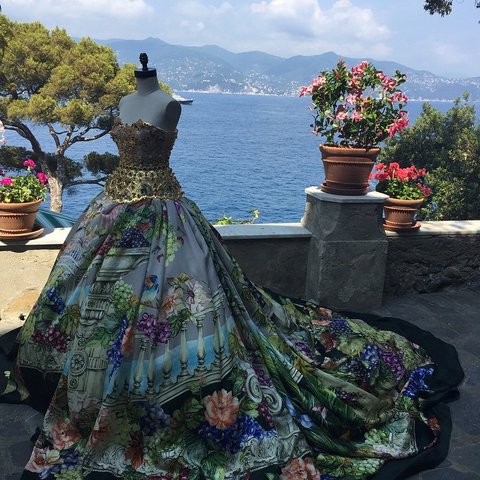
dolce_gabbana_alta_moda
Dolce and Gabbana Alta Moda 2015

Everyone is either a fairy or princess.

Stefano Gabbana

dolce-and-gabbana
Dolce and Gabbana Alta Moda 2015


Look at all this beauty, truth and emotion, created from nothing but words. Just words. How can you possibly spend your life not trying to do the same?

Giuseppe Di Lampedusa, The Leopard: A Novel

Tosi and Tirelli magnificently bring to life the glamorous, sensual and desperate  characters in Lampedusa’s novel. This is also, a portrait of the “lost South” or as Jonathan Jones so eloquently put it Lampedusa’s Sicily is a place where the optimistic, progressive, rational forces of history as viewed in the 19th century – the march of liberal democracy and of socialism alike – get lost in baroque back streets at midnight. As a myth, as a fiction of history, The Leopard will continue to ensnare minds, and not only in Italy. Lampedusa’s despair is not so different from that of today’s world, with its shrunken political expectations. We are all Sicilians now.

References

Goethe, Martin Scorsese, Giuseppe Di Lampedusa,

Photos via http://www.virtual-history.com and http://www.vogue.com