
might prevent me from going back
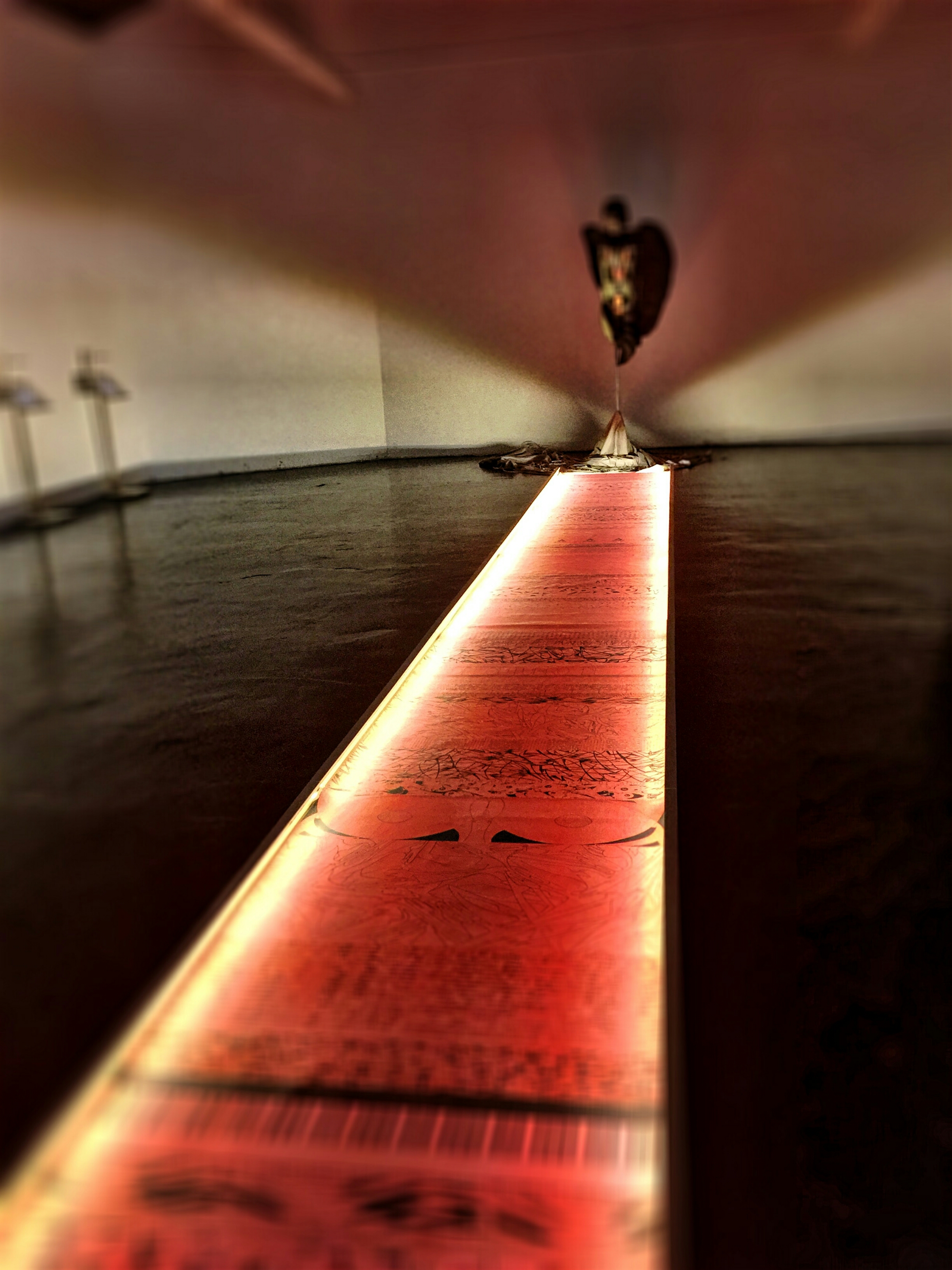
but sometimes light the way forward
Bridge
“I have been impressed with the urgency of doing. Knowing is not enough; we must apply. Being willing is not enough; we must do.”
― Leonardo da Vinci
The fear of the empty space, most times understood as “ridiculous to the excess”.
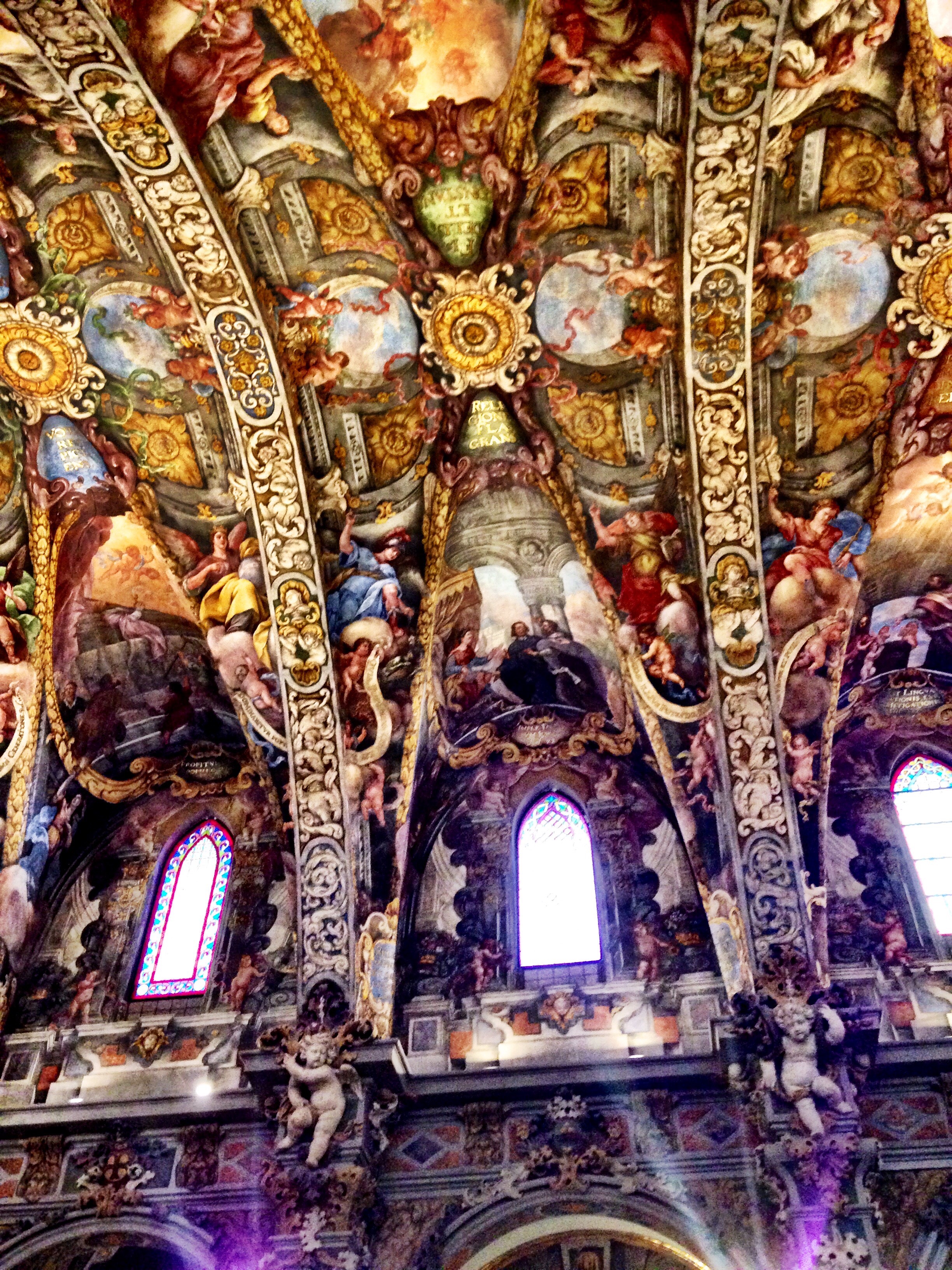
Fantasy, abandoned by reason, produces impossible monsters; united with it, she is the mother of the arts and the origin of marvels. Francisco Goya

Historically understood as an expression of Catholic Anti-Reformation propaganda, Baroque art is normally understood as lacking the reason and discipline associated with neoclassicism and the sophistication of more refined mannerism styles. In the 17th century, Baroque emerges in Europe as an extravagant, impetuous reaction against religious wars, the Reformation and the Counter Reformation, The 30 Years War, economic crisis and other ills and plagues form its historical backdrop. Going beyond the balanced and orderly representation of the world, it is an aesthetic of distortion, deception, complexity, and over-elaboration: the novel inside the novel (Don Quijote [1605 and 1615]), theater inside the theater (Hamlet [c1601]), the painting inside the painting (Velázquez’s Las Meninas [1656] ), mirrors inside mirrors, etc. An emotional response to emptiness and disenchantement.

Leonardo da Vinci’s simplicity as the ultimate sophistication has become the norm in a society overwhelmed my the amount of visual information and material possessions that seem to clutter our minds and dominate our living spaces The claustrophobic in me has tried often times to convert to the minimalist / sophisticated imperative with no success. The maximalist in me can’t resist the emotional drama, radical spirit and aesthetic vertigo of the horror vacui.

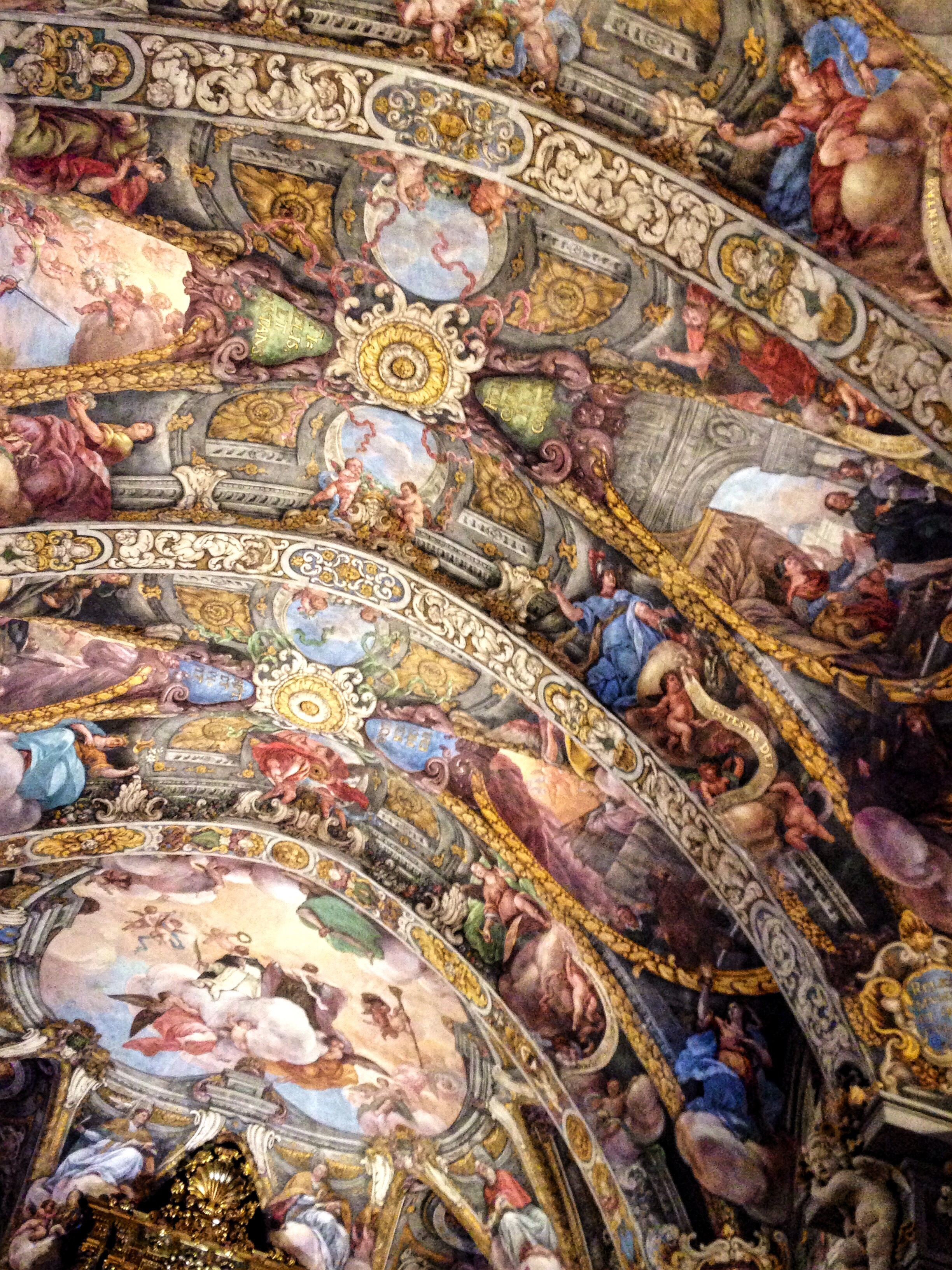
Photos (mine) San Nicolás Church in Valencia, Spain, A Gothic structure invaded by Baroque extravaganza.
References
I first started buying vintage and second-hand clothes while I was studying in England, when I moved back to Porto, after spending a couple of months in Mozambique, I met Orion (António Júlio). I remember him driving some sort of purple American convertible when I was still in high school and being mesmerized at this dark glamorous kind of Gothic urban cowboy and his entourage. Entering Amsterdam Underground, at the time on the first floor of the (now) iconic Centro Comercial Stop , I felt like an intruder arriving home. I was not Gothic, or underground but the empathy and the sense of belonging was immediate. I have spent many hours there, preparing for possibilities, sharing outrageous eccentric dreams and plans to transform a dormant city into a rainbow, checking architectural plans for his castle up North, admiring the stained glass that would decorate the windows, lusting after the Afghan rug coat that survived the 70s pilgrimage to Kathmandu and, again, missing a life that had not been mine.
In 2012 António Júlio died. Orion didn’t because constellation stars never burn out.
Being unique and unrepeatable, António Júlio had this ability to jump generations, to go against the norm, to insist, to create diversity by making our urban routes amazing, and surprising . It is the sum of lives like this, in different areas, which make the wealth of cities

Fátima I met when her store, Rosa Chock Vintage, looked like a psychedelic cloud at Rua Oliveira Monteiro, close to my former high school. I bought an amazing green 80s batwing leather jacket that still lives in my closet and gets a lot of compliments every time I wear it. “It looks so vintage” said the girl behind the counter at the coffee shop. Well, it actually is.

Fátima’s store then moved to Rua do Almada at the center of Porto’s new life but it kept it’s difference. It was never about following the retromania hype of curated new stores made up to look old and selling imaginary “retro vintage” items.
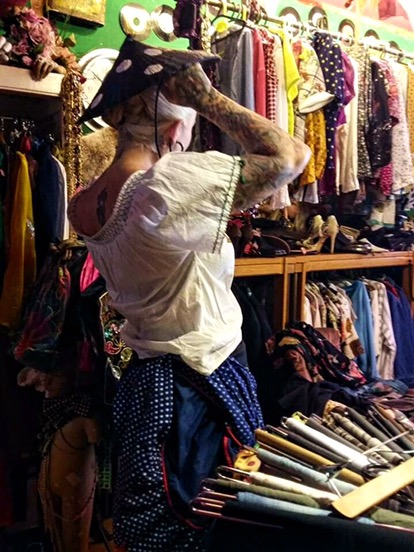
Fatima’ s store, now at Rua Formosa, is curated to the T. Curated for each individual that crosses her door and shares her love for detail and her passion for clothes with history ready to be used in new life stories. Curated for treasure hunters who enjoy the apparent chaos of the hundreds of scarves and necklaces and dresses and sequined tops and ruffles and leopard prints and stuffed animals and the old movie advertising posters bought from Orion.
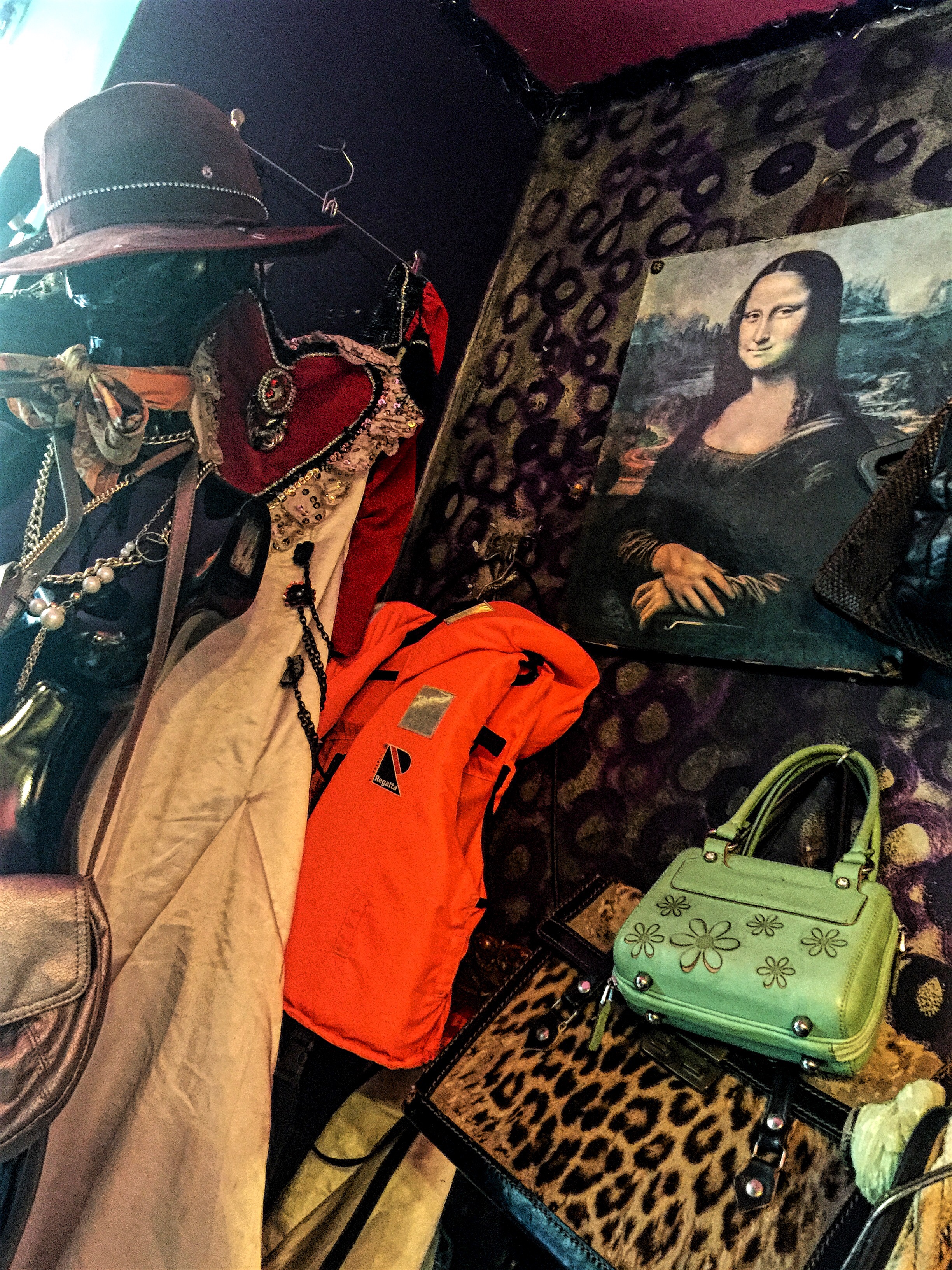
Curated for all of us that still believe that a wardrobe door can be opened to enter a different dimension.
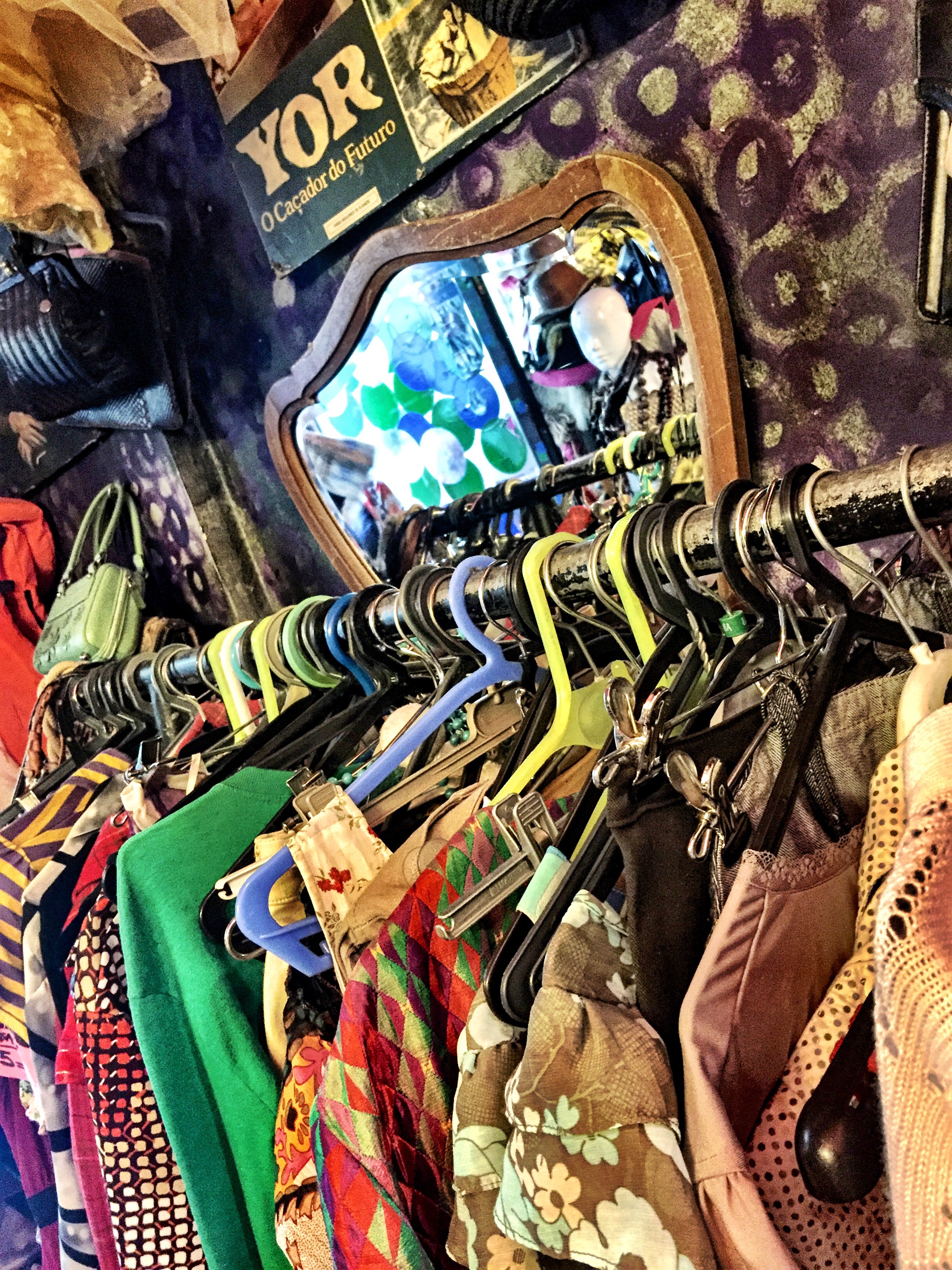
Fátima is a true vintage dealer who has worked with clothes all her life. She knows what she is selling, she knows the history, the context and she knows that clothes are never just clothes. Like Gaultier, she knows that they are about “what you look like, which translates to what you would like to be like.”

A common friendship and a common sense of loss make me feel at home with Fátima at her larger than life albeit tiny shop but it is her expert eye, her understanding of how to match the right piece to what I have dreamed for myself that keeps me coming back. And this always feels like the truth.

Photos:
Featured image from: http://rgp-journal.ru/users/Amsterdam_Underground/page/1
Photos 3 and 7 courtesy of Fátima Leite
All others, my own
who journeyed to Denver, who died in Denver, who came back to Denver & waited in vain, who watched over Denver & brooded and loned in Denver and finally went away to find out the Time, & now Denver is lonesome for her heroes,
Allen Ginsberg, Howl and Other Poems
I was born in the Southern Hemisphere and live in Southern Europe although my current city is geographically “up North” and people here tend to passionately identify themselves as “northerners “.
For a while I lived in Brighton, also the South in the North and then moved to London and to a more northern lifestyle. I did identify with England mainly because of the music that nurtured me through my teenage angst and bouts of dramatic isolation from the rest of the world. I miss my English life often, I miss the politeness and the freedom of being foreigner but accepted, or at least tolerated. I even miss the pebble beaches and the custard and the days spent in libraries and trying to find a proper espresso. I miss wandering around with nowhere to go. I miss feeling lonely in London and still quietly happy. I miss the quirkiness and people not staring at you because you look different. I miss talking to street performers and photographing them. I miss spending a fortune at Joe’s Basement in Soho to get contacts printed.
I could have stayed. I left and felt that I really belonged there. Up North. I don’t. My landscape is now far from the green grass, blue eyes, grey sky and the gothic lines that I only revisit when travelling Northbound. Now I marvel at the marble collonades, the porches and patios and baroque pearls of the south. Red soil, black eyes, blue sky.
son dos pozos de estrellas tus ojos negros
Geographies aside, I’m intellectually from the North and culturally and emotionally from the South. Not the place. The set of values. The feeling. That different dimension where one floats and feels whole and at home in all “souths”. The olive tree souths, the palm tree souths and the fern souths. The Atlantic souths and the Indic souths, the Mediterranean and the Gulf souths. The carnation souths, the azahar souths, the magnolia-scented souths and the lavender souths. The jacaranda south. The iced tea souths and the wine and manzanilla souths. The beignet souths and the cannoli souths. The pistachio colored souths, the turquoise souths and the ochre souths. The south of Tango and the south of Blues. The rhythmic south. The south of Duende.
Llevo el Sur,
como un destino del corazon,
soy del Sur,
como los aires del bandoneon.
The Belles souths and the Amazons souths. The Maria souths and the Carmen souths and the Tallulah souths. The polite souths and the loud-mouthed souths. The south of dark hair and lustrous eyes and cadenced walks and throbbing charm. The south of apparent frailty and unbreakable strength.
The orange souths, the mango souths and the strange fruit souths.
The lazy, laughing South
With blood on its mouth.
The cruel south. Not a geography. A metaphor of all the pain in humanity. A testimony of decadence. The fatalist souths and the combative souths.
The emotional souths and the passionate souths. The souths of private virtues and public vices. The south of sin. The south of absolution.
The souths of Homer. The south of Faulkner. The souths of disquiet. The lazy Apollonian souths, the dancing, graceful, spontaneous, impulsive souths. The eternal midday, clear, still and in the moment South. The nostalgic, embracing South.
And still, the yearning for the lost South. “And there were other ways to live…”
Se você tem uma idéia incrível. É melhor fazer uma canção. Está provado que só é possível. Filosofar em alemão.
References (in a very random order)
Astor Piazolla, Caetano Veloso, Camaron de la Isla, Jorge Luis Borges, Eugene Walter, Langston Hughes, Agustina Bessa-Luís, Fernando Pessoa, Susan Sontag, William Faulkner, Billie Holiday, Oswald Spengler, Nietzsche
and, sometimes, it never stops
Sometimes I feel so bad, so bad
O. died yesterday. Last time I saw him was in 2013 after a long hiatus in our conversations on art and music and books. We met at a conference on photography and it was like our conversation had never really gone mute.
If you look into someone’s face long enough, eventually you’re going to feel that you’re looking at yourself
We promised to reconnect and go out for coffee, rekindle our platonic passion for Auster and New York and let our words wander to beautiful spaces. We never did. We exchanged texts wishing each other a happy new year and thought we would have time to keep our promises.
Every life is inexplicable, I kept telling myself. No matter how many facts are told, no matter how many details are given, the essential thing resists telling. To say that so and so was born here and went there, that he did this and did that, that he married this woman and had these children, that he lived, that he died, that he left behind these books or this battle or that bridge – none of that tells us very much.
Even if we know it’s a part of life, death is inexplicable as well. O. died yesterday. His heart just stopped on the same day of his birthday. The day he had given up celebrating a long time ago. Mr. Vertigo left the same day he arrived. Like a time traveller.
The emptiness inside your body grows lighter than the air around you. Little by little, you begin to weigh less than nothing. You shut your eyes; you spread your arms; you let yourself evaporate. And then, little by little, you lift yourself off the ground.
Like so.
References
Prince
Paul Auster, Mr. Vertigo
Paul Auster, The New York Trilogy
Photo: Central Park CC0 Public Domain
For a few moths, after I hurt my knee doing a “remate” during a rehearsal for a flamenco show, I was afraid of stairs. For a few months, every step required thinking. Walking downstairs was especially difficult, the rule that tells you to walk up as a little kid would do, doesn’t really apply when going down. The movement becomes mechanized and painful. The rhythmic fluidity of walking down is gone and you are left with a bust metronome that can’t actually keep the time.
Being somewhat of a drama queen, I thought this was going to last forever. I tried to reinvent myself as some kind of replicant, to come up with a cyberpunk character to match my armor knee brace. For three months or so I looked like an extra on The Matrix and even though I felt vulnerable and generally afraid of stairs, escalators and crowded places, wearing a medical device as a fashion statement felt empowering. I don’t even know if people stared, it didn’t matter if they did. I suppose that’s what “power dressing” means, to me at least.
Every day I would go out to work in my warrior costume and every day at 12 I would go to physiotherapy and would have to climb up and down the hospital staircases as a form of exercise. As much as this was a daily routine, seeing it in a metaphorical way is almost unavoidable. Steps as obstacles to be surpassed, stairs as progression and stairs as regression. In this case coming down just took a lot longer than a real fall.
The fact that I got hurt to the sound of La Leyenda del Tiempo strikes me as both ironic and enlightening. I hurt myself for not paying attention to what I was doing while feeling the music that gives life to a wonderful poem that makes life sound as a mad galloping spiral staircase in constant movement. All of a sudden I was back down at the starting step trying to convince myself that it wasn’t as serious as it looked, a few days of ice packs and everything would be back to normal.
It was serious, and it involved convincing my restless self that it was a step at a time kind of situation and still, from certain angles, all staircases are spirals of infinite movement, how do you to get back in when understanding how you have managed to fall out is difficult enough?
After reading a few posts and articles on the power of uniform dressing, last week I decided to only wear black dresses to experiment with sartorial disappearance. Apparently, taking the choice away of getting dressed in the morning will make you a more stable, in control, smarter and productive person. Probably more successful and happier too.
This was, quite obviously, the wrong experience for me. Black is actually not a uniform as far as I am concerned . All its nuances and textures and different associations make it versatile and welcoming and experimental. Just the opposite of a uniform. As much as I like black dresses and have a closet full of them to prove it, I found it extremely boring to put on the same thing everyday. Boring might be efficient and productive but this doesn’t seem to be what I’m interested in becoming.
I do understand the allure of having a streamlined, organized home / closet but I’m not, no matter how hard I try a minimalist. This doesn’t mean that I’m obsessed with fast changing fashion trends or fast fashion fixes. By now, about 70% of my wardrobe is vintage or secondhand because I do love clothes a lot more than I am interested in fashion. I might be obsessed with my possessions but mainly because I got a lot of them from my grandmother, my great aunt and my mother. They tell, at least partially, the story of who I am.
For some, settling into an everyday uniform means that you have finally understood who you are and what outfit goes with that while becoming incredibly stylish. I do agree with Valerie Steel that the idea that clothes are supposed to express your true identity is “almost laughably naive, clothes are a mask,a persona you put on. You present an aspect of yourself, not the core. Anyway, what would the core be? It’s a rather horrific thought.”
I need the choice, even if it’s a waste of energy and mental power. I need to be able to decide who I want to be in a given day and I need to be able to have fun with that. The normalizing discourse of uniform dressing/ capsule wardrobe sounds too much like a managerial trend applied to everyday life, transforming it into some kind of efficient unidimensional space and that’s also rather horrific. Foucault argues that through surveillance our bodies are made docile by institutions and become subject to mass standards of behaviour, these standards of behaviour (or ‘discourses’) are then internalized by individuals and govern the ways in which we use and understand our bodies. He also suggests, however, that people can act on their bodies in different ways and resist these normalizing discourses.
References
Valerie Steele
Foucault,M. (1977) Discipline and Punish
I am a frivolous person and I have often felt guilty about it mainly because I fear that most people would understand that as meaning that I am a shallow person. Most of my time seems to be occupied with aesthetic considerations or concerns of some kind. Most of the space I live in is organized accordingly. Every morning I go out hoping that what I have chosen to wear will contribute to make the day a little more beautiful, a little less real (I suppose that’s where the love of vintage clothes comes from). Every evening I want to come back home to the same kind of fantasy. I watch movies and plays looking for the kind of visual and emotional grandeur that can make one forget that there’s some kind of reality out there. I read books to be seduced by the music in words and I like music because it embodies all the beauty I find in movies and books.
Form always seems to overcome purpose and content.
Except when it comes to people. Their content is what sustains their form. And still, I also tend to understand human relationships as an aesthetic ideal in the sense that they should be a pursuit of pleasure and an avoidance of pain. I like people. I like watching them, I like talking to them and getting to know their stories and I feel mesmerized by the things they know and the lives they lived.
I am terribly shy so I never start conversations with strangers but I do engage in them often and listen.
There was someone from Belgium sitting next to me on a flight to Lisbon and he told me how he hadn’t spoken to his family in over twenty years because he had taken his dad to court over child support money. There was an elegant lady in the subway in New York who collected ancient tiles and a kid from Spain who talked for over seven hours during a flight between Johannesburg and Madrid and street artists in London and drag queens in Porto and soccer fans in Zambia and the regal looking lady in Houston during intermission at the ballet. She was a widow and her son was working for an oil company in Nigeria. Maybe we could go to the ballet together the following week. I would not be in Houston anymore. And the Brazilian girl that had been left at the altar and was trying to forget that she was hurt and afraid of flying while the plane was getting ready to land.
And, if they asked me, I could go on and almost write a book with all the moments some stranger decided to confide in me. Sometimes I talk and understand how liberating it is to be your vulnerable self with someone you know will not cross paths with you ever again. And you go on for hours sitting across a perfect stranger in some Lower East Side bar after checking some independent production of Hamlet and talk about all your unfulfilled dreams and what your fear and how finding Shakespeare has changed your life.
These are the moments of bliss that truly feel they could be enough for a whole lifetime and shield me when the world just seems to hurtful to endure. I am one of those. Deeply hurt by the trivial, the rudeness and mainly by the pain of others, of strangers, by the injustice, by whatever dehumanizing force seems to be operating on any given day.
“Yet, taught by time, my heart has learned to glow for other’s good, and melt at other’s woe.”
And my heart also got used to marvel at others, to shudder, tremble and thrill with the same pleasure and emotion it felt coming face to face with Hopper’s “New York Movie” or driving to Jarrett’s “Köln Concert”.
Works of art, Martha Nussbaum says, “give us insight into how other people live and feel, how they strive for happiness, and how conditions of many types affect them. [And] that is crucial for living any sort of decent life.”
References
Marcel Proust
Dinah Washington
Fyodor Dostoyevsky
Homer
Martha Nussbaum
I am a terrible decision maker. I do not like planning or strategizing or even making pro/con lists.
I find decision making excruciatingly tedious and, on top of that, I can’t read maps and even manage to get lost using gps devices. That’s how I often take the roads less traveled. I am also not good at following instructions.
Not many, if any, of these new roads are left to be metaphorically or literally explored. I suppose we all would like to be pioneers and trailblaze our own road but that is lonely and difficult path we’re seldom ready to take.
In some ways, this blog is, for me, the road less traveled, the road of self-examination as a public exercise. And, as Dr. Peck would put it “life is difficult”, being honest with yourself is not an easy task. Being honest with yourself in public can oftentimes be soul crushing as is the realization that you can’t really always get what you want.
At least two people in my life have tried to make me understand (in very obvious ways) that life is seldom what you want it to be and often what it has to be. I haven’t learnt this lesson yet. I go on insisting that there has to be more. As a traveler, I always want to take both or all the roads in front of me and start walking even if sometimes never arriving and other times taking the easy, comfortable road and not getting where I wanted to be.
The roads left are the roads not taken and these might be the ones that would make all the difference.
References:
Robert Frost (1920)
Morgan Scott Speck (1978)
Mick Jagger / Keith Richards (1969)
I have started dressing in black in my late 20s. Before that I used to wear what I now think of as very loud and over the top colorful outfits that, in a way, were in direct contradiction with a tendency for existential nausea.
I do not remember if black was a conscious choice or it just happened that I started to resemble myself more while retreating into some kind of invisibility at the same time.
Now, dressing in black does have, sometimes, the same burden of the “perpetual mourning” for the state of the world and I identify with every single line on this song. How could I possibly wear “bright colors on my back”? Black helps me not to manifest emotions in ways that would most probably lead me to a nervous breakdown.
Not everyday does dressing in black assume this suffocating grief for “our suffering age”. In all its absence, black is full of contradictions. The color of oppression and rebellion, the color of religious Puritans and bondage fetishists, the uniform of authority and intellectual nonconformity.
In all its “poetic beauty” black allows me to write a different story everyday. This song is often part of the soundtrack.
References
Johnny Cash
Charles Baudelaire
Rebecca Willis via Feelguide
When I was a kid I wanted to be an archeologist. Because of this I spent hours improvising excavation sites with sofa cushions in my father’s office and fantasizing about going to Egypt, while my apparent natural vocation was nurtured by history books I was not old enough to understand. I did not become some sort of post modern female Indiana Jones (Lara Croft had not been created) but finally made it to Egypt for work (totally unrelated to my childhood fantasies) in 2008.
I was in Alexandria for a conference for four days feeling as excited as the kid who had fantasies of breakthrough discoveries that would forever alter the understanding of history. I did discover a common history and felt small, humbled, ecstatic and privileged for having the opportunity to walk to the Bibliotheca Alexandrina every day, to wander inside, to imagine how the Ancient Library of Alexandria might have looked, to stare in awe at full reading rooms and the bookcases still longing to be filled.
Apart form a small bronze Egyptian cat statue, this was my only souvenir, I don’t even know what happened to the photos I took (I do tend to loose digital photos) but when I found this caftan yesterday, I’ve realized I don’t actually need the photos, I can still feel the incessant wind and the warmth and the blue, I can still remember talking to three small kids who wanted to have friends in different parts of the world. Better than a photo and it sure beats a magnet.
Last time I was in Johannesburg I met Rosemary at her vintage shop in Melville. I remember thinking that hers was the life I would have wanted for myself in the way we think of the lives of those who seem to be bigger than their own context. This very special Lady also made me feel like a “movie star”, as special Ladies tend to, regardless of who you are. Because of my two visits toReminiscence that year, I finally managed to open my little virtual vintage corner on Etsy and I’ve called it dreaming of Melville. It was my attempt at taming my vintage closet and living that life.
Being somewhat of an academic almost by birth / education / unavoidability, the temptation to think about what an ever growing closet means in terms of personal history/identity was too strong and the Closet of Errors was born, keeping dreaming of Melville as the name of the collection representing my imagined life.
photo via SA Venues
In 1990 Cristina and her brother took me to see him live. I am forever grateful. It did change something in my life.


 Stories from A Closet of Errors