The cinema substitutes for our gaze a world more in harmony with our desire. This is the story of that world
Costume Designer Tanine Autré
Aristotelian tragedies might not need elaborate costumes. After all, sometimes what you do not wear speaks as loud as what you do.
This week, inspiration seems to be simple, the always present, always perfect always modern Breton shirt. This week, more than ever, craving Summer by the harsh and timeless landscapes of Mediterranean sea.
This was the first film that made me feel I could (I needed to) live inside it.
You aspire to a world like Homer’s, but, unfortunately, that doesn’t exist
the smarter the clothes, the more dangerous the man, and the more damaged the clothes, the more vulnerable the man
Costume Designer Piero Gherardi, Academy Award for Best Costume Design (BW) 1961 and 1963 for 8½
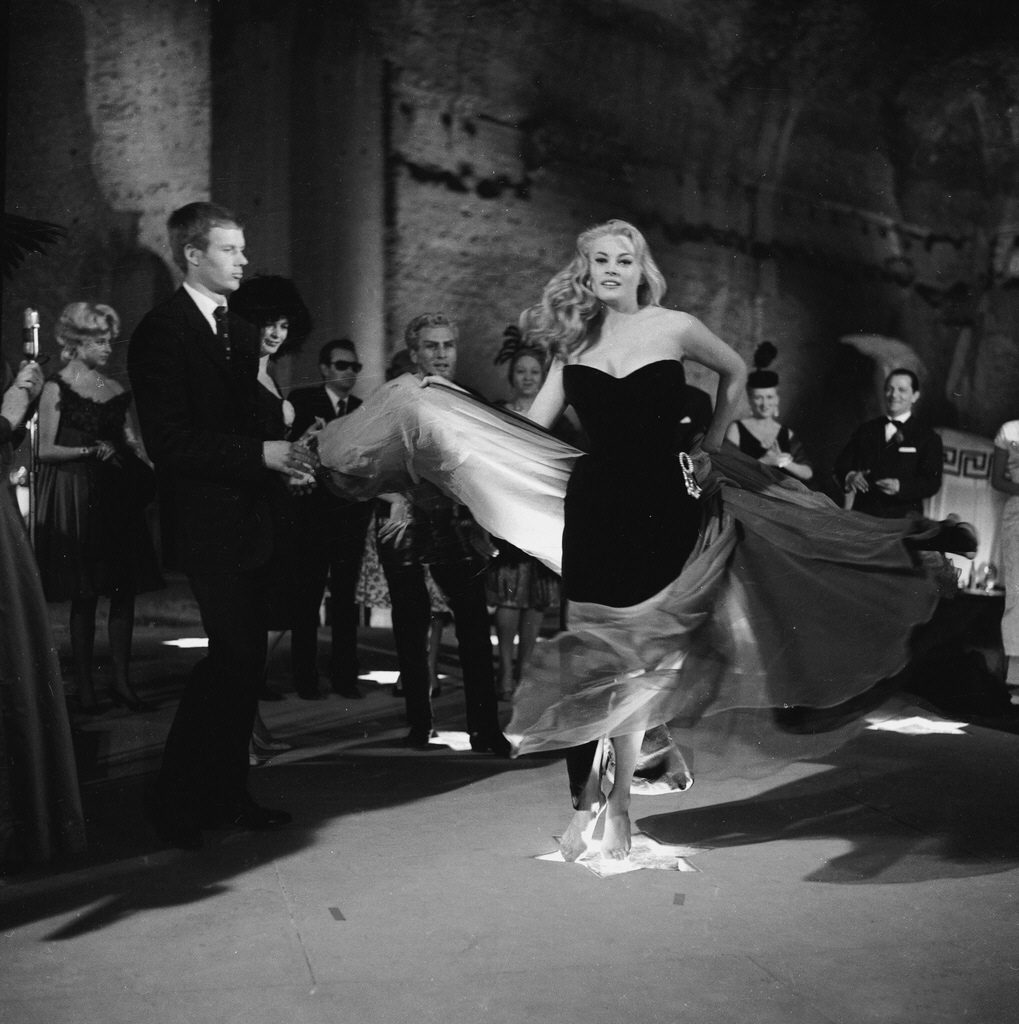
Piero Gherardi, self-taught in art and architecture, created the overall look of La Dolce Vita. He was costume and set designer, as well as art director. This is a stylish film as a whole, as Gherardi placed equal emphasis on the costumes for both female and male leads. Every scene in La Dolce Vita strikes you as a beautifully styled photograph and the film still guides sartorial aspirations around the globe.
And aspire you do. To be ” the first woman on the first day of creation. [The] mother, sister, lover, friend, angel, devil, earth, home”. Of course much helped by the natural statuesque sensuality of Sylvia, costumes do play a decisive part on the construction this first Woman, the unattainable male fantasy.
Much in the same way as they immortalized the sophisticated, frivolous elegance of the thrill seeking Maddalena. Has ennui ever looked more glamorous on-screen?
We need to live in a state of suspended animation like a work of art, in a state of enchantment. We have to succeed in loving so greatly that we live outside of time, detached.
In La Dolce Vita‘s mid-century Rome, Sylvia, Emma and Maddalena are each either proponents or victims of the media-hyped sweet life, with Sylvia as the celebrity symbol of fantasy, Maddalena as a habitual consumer of the trivial, and Emma as an outsider suffering the undesirability of being so.
But this is unmistakably a movie about a man, a magnificently attractive one. La Dolce Vita confirmed Mastroiani, even if he rejected the title himself, as the ultimate Latin Lover. This Latin Lover appears as a cultural symbol of the Italian as “other”, the “imagined embodiment of the primitive, whose unrestrained and exotic passion directly affronts the more civilized and restrained Northern European or American Society”. This cultural symbol is also a cultural commodity, a “poster boy” for Rome as the hot spot of the rich, the famous and the beautiful, but also for the “European Don Giovanni and the Italian style based on the emergence of Italian fashion and design”.
Fellini and Gherardi present fashion and clothing as a “subtle critique of Italian masculinity”. Jacqueline Reich claims that Marcello, the journalist, is an anti-hero (inetto), ” a man in conflict with an unsettled and at times unsettling political and sexual environment” but always immaculately dressed, the embodiment of the cultural heritage of the bella figura, “reflecting a taste for public display of self-worth though appearance”.
Malossi (quoted by Reich) observes that “the Italian male literally puts on a show for the admiring public. Like the dandy, the bella figura parades his sense of style, his masculinity, and his sensuality, regardless of his social and economic status. Both individual and national identity are written on the body through clothing and grooming and paraded for the community”. I have only been to Italy for work a couple of time, and in Rome stayed only a few hours, enough to walk to the Fontana di Trevi and drive past the Coliseum but, the parading of well dressed men did really make a strong impression on me. Never before I had seen in practice this notion that “dressing well [is] both a privilege and a responsibility” and the conscious use of public space as stage and tailoring and suits as costumes.
In La Dolce Vita, Fellini, presents us with the “discontinuity between surface and substance. Marcello Rubini is dressed in the latest fashions but the costuming fails to mask his moral, spiritual and sexual failings”. Still, at the end, vulnerable and damaged in his white suit, Rubini is still showing us that, as claimed by Bruzzi, “masculinity is directly measured by narcissism”.
References
Jacqueline Reich, UNDRESSING THE LATIN LOVER Marcello Mastroiani, fashion and La Dolce Vita in Bruzzi and Gibson (2013) Fashion Cultures Revisited: Theories, Explorations and Analysis
since United and SWISS lost my luggage in an overbooked flight between Denver and Chicago.
I have been trying not to be over dramatic about it and my incurable optimism has me thinking that it can still show up because it doesn’t really make any sense that a bag can just disappear without a trace.
The SWISS Baggage Service Team tells me that I have to wait. This is now high season, people are travelling everywhere for summer vacation and a lot of them are in the same situation or, maybe even worse, they got to the resort or city hotel where they planned to stay for a week or two and their bags didn’t get there, ruining their much needed and certainly deserved time away from the schedules of daily life.
At the SWISS Baggage Competence Centre, everyone is too busy to deal with me and my calls. Search will go on until approximately the 13th of July, someone wrote on the first email, and, as soon as we have news we will get in contact with you. They never did, so I called on the 15th and a very unpleasant and stressed out woman basically yelled at me for having the nerve to call about a carry on that, incidentally, I did not forget at some airport, but was actually lost because the flight was overbooked and I had to check it in at the gate because there was no space in the overhead compartments. How do you manage to lose a bag at the boarding gate is still a mystery to me.
The last emails I got from various people at the said baggage competence center, laconically informed me that [they] are sorry now it is by the end of July and that they will contact after the 31 July to advice you how to process for payment if bag not found. If the date is not changed again, I suppose August 1st will mark the beginning of yet another series of nonsensical electronic communication, since I do remember being told that I should be able to present receipts for the contents of my bag. Really? Do normal people actually keep receipts of everything they own and eventually pack? Or do they simply buy everything new before they travel and take care to keep a neat accounting file of source documents just in case their luggage disappears? I will not be able to present physical proof of the value of the contents of my bag. Does this mean that I will have no right to compensation? And then, after a business trip how does an airline compensate you for losing the results of your work? I suppose that’s not really their problem and all I am going to hear about it will probably be something along the lines of we really apologize and kind regards.
In the grand scheme of things, all this is, of course, very small and trivial, absolutely meaningless. I travel for work (mainly) and sometimes for fun. I am not forced to move by social, political or economic circumstances. I am not fleeing from wars and religious persecutions. I was not strip off by belongings and had to start from scratch rebuilding what has been taken away. No, an airline lost my luggage and I actually did not think that this would be possible since just about everything and everyone seems to be monitored and traceable.
I suppose, considering that evanescence does not seem feasible, my bag could, one day, be a minor star in “Baggage Battles” or just get bought in a low profile mystery luggage auction. I hope that this is what happens if I don’t get it back. I hope whoever gets it has the same fondness I had for my 70s DVF paisley print shirt dress. I hope he or she likes gold lurex tops and thinks that a pair on Armani black slacks are a foundation piece of every sensible wardrobe. I really hope that whoever gets my bag appreciates the silk tie I bought my dad as a present and mostly that he or she takes really good care of my favourite, battered beige studded leather jacket. Maybe he or she will even be kind enough to realize that my name and contact details are in there too.
Costume Designers: Tim Chappel and Lizzy Gardiner (Oscar Best Costume Design, 1995; BAFTA Best Costume Design, 1995; Australian Film Institute Best Achievement in Costume Design, 1994).
After a somewhat long hiatus caused by jet lagging, I’m back to being movie inspired, this time by one of my absolute favourites.
A story of blood, sweat and tears and a ton of sequins on a tight budget ($20.000) that results in a fabulous road movie extravaganza.
Reading those words just made me want to experiment doing the same. How would “normal life” look like like if instead of the weather forecast or your scheduled meetings, or any other practical consideration, each day was inspired by a song?
Probably an idea worth considering.
I would like to have my words meet the grandeur and glamour of this larger than life adventure. The fact is, they can’t. Again in the the words of Tim Chappel this is a movie that taps into this idea of being yourself and absolute freedom.
Glitter does never age and it does not get more fabulous than this.
who journeyed to Denver, who died in Denver, who came back to Denver & waited in vain, who watched over Denver & brooded and loned in Denver and finally went away to find out the Time, & now Denver is lonesome for her heroes,
I’m in Colorado for the week so it seemed natural to go back to a movie of South West journeys.
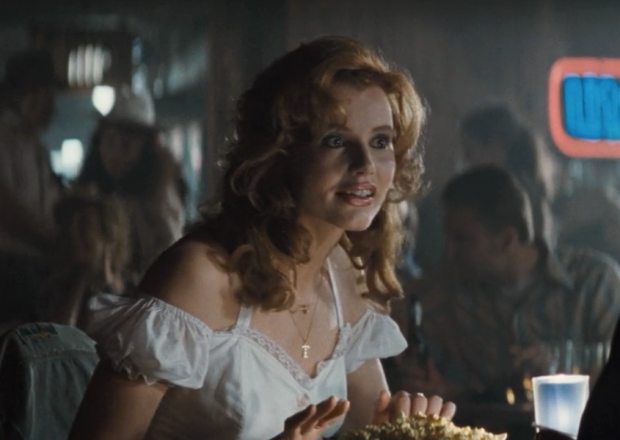
While this is not a movie with elaborate costumes, clothes do tell a powerful story on Thelma and Louise, accompanying character development and the change of direction and the so
You said you ‘n’ me was gonna get out of town and for once just really let our hair down. Well darlin’, look out ’cause my hair is comin’ down!
they become more and more natural, but more and more beautiful as it goes on and by the end… just these mythical looking creatures.
I almost wish we were butterflies and liv’d but three summer days – three such days with you I could fill with more delight than fifty common years could ever contain.
John Keats
Sometimes a print on a piece of silk makes you contemplate life.
Revisiting one of my favourite books this Africa Day
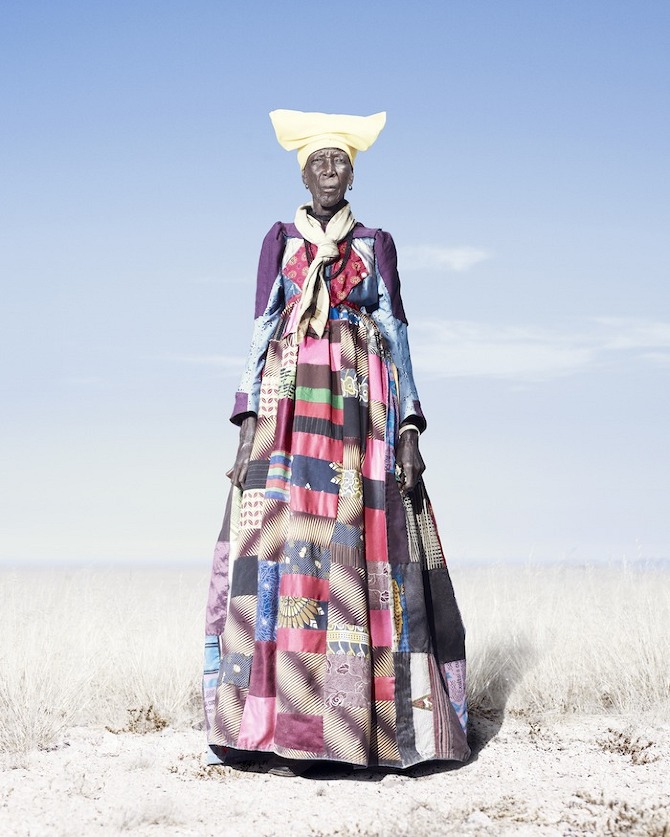
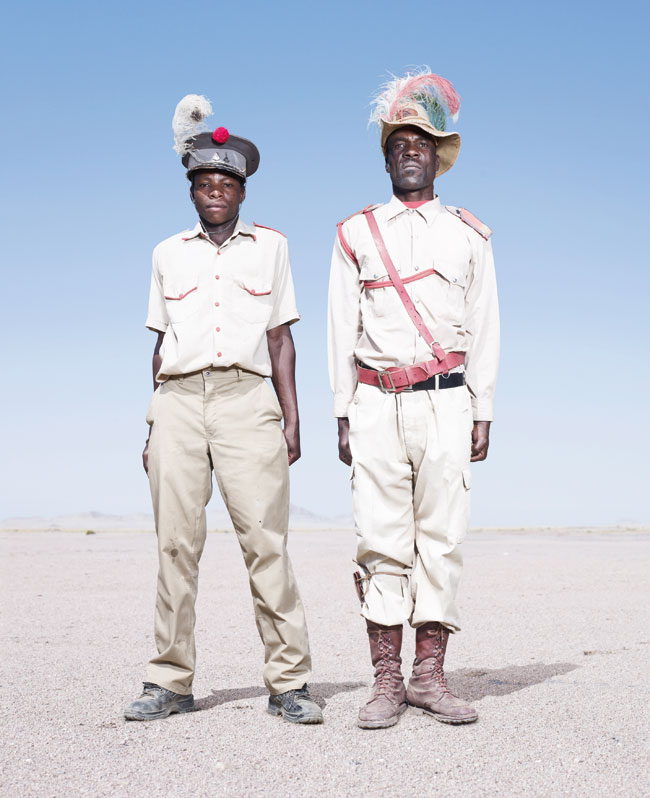
Jim Naughten’s wonderful book Conflict and Costume: The Herero Tribe of Namibia, tells the tale of the surviving descendants of the Herero whose 1904-1908 genocide at the hands of German colonialist is considered the first of the 20th century.
Each image, a portrait of Herero tribe members of Namibia, reveals a material culture that harkens the region’s tumultuous past: residents wear Victorian era dresses and paramilitary costume as a direct result and documentation of its early 20th century German colonization. Namibia’s borders encompass the world’s oldest desert. Bleak lunar landscapes, diamond mines, German ghost towns, rolling sea fogs, nomadic tribes and a hostile coastline littered with shipwrecks and whale skeletons comprise the region’s striking and haunting natural features. Namibia’s geography has witnessed a turbulent and little documented history of human settlement, upheaval and war within a particularly brutal period of European colonization.
The history of Herero clothing is extraordinary. Rhenish missionaries first introduced Victorian dress, which the tribe gradually accessorized by adding, for example, cow horn headdresses. Later, during the 1904 war with Namibia’s German colonisers, Herero tribe members claimed the military uniform of dead German soldiers.
Dressed in the costumes that have been appropriated from their colonial past, the men, women and children are taking part in a modern re-enactment of their peoples’ bloody history. The tribe’s now traditional costumes are seen by anthropologists as a fascinating subversion of their former rulers’ fashion, showing how the tribe survived a concerted effort by German colonialists to wipe them from the face of the earth.
Without Sicily, Italy creates no image in the soul: here is the key to everything.
Goethe
Costume Designer Piero Tosi. His work can be admired in luminous films by such directors as Luchino Visconti, Vittorio De Sica and Franco Zeffirelli. Tosi earned five Academy Award nominations during his career and an Academy Honory Award in 2013. His designs brought elegance, artistry, passion and, dare I say, a mastery of fantasmagoria and nostalgia, and even humour to neo-realist dramas, historical romances and farsical comedies, including Senso, Death in Venice (BAFTA Award for Best Costume Design), The Damned, La Traviata (BAFTA Award for Best Costume Design) and La Cage Aux Folles.
Martin Scorsese, who restored this 1963 classic to its former glory and brought it back to Cannes in 2010, has often referred to “The Leopard” as one of the five best films ever made, having live [d] with this movie every day of [his] life. One of director Luchino Visconti’s handful of masterpieces, the film features subtle, visual storytelling in a world of decaying opulence, with its “deeply measured tone … its use of vast spaces and also the richness of every detail.” .
As far as costume design goes, this is a true masterpiece. Tosi was born in Florence amid art, and studied at Florence’s Accademia di Belle Arti. Both his appreciation for art and his knowledge of art’s history as a living and breathing heritage is evident in the design of his costumes (Christian Esquevin)
The extraordinary, verging on obsessive, collaboration between Piero Tosi and Umberto Tirelli , the tailor whose fate led him to create not for men but their representations, created a magnificent work of art through costume. Something like 2,000 costumes were made for this film. Visconti was one of the most meticulous Italian directors, he loved historical accuracy and had a great attention to details. Tirelli often remembered him working together with the costume designers, picking the colours for the costumes, studying the silhouettes and the shapes, sampling the fabrics and checking upon the work made by the tailoring houses (Anna Battista).
The ball scene, where new and old Italy come face to face with each other, takes about one-third of the total length of the movie and took a whole month to film, involving around 200 people in 14 interconnected rooms. 400 costumes were made for this scene alone, the most celebrate of which is, of course, the magnificent organza ball gown worn by Claudia Cardinale /Angelica Sedara.
Il Gattopardo, an epic adaptation of Giuseppe de Lampedusa’s novel about an aristocratic Sicilian family’s adjustment to a changing way of life during the Risorgimento (1815-1871, the novel itself opens in 1860) is a tale of melancholy and change, a testimony of social avalanche, Art embodying History.
Those were the best days in the life of Tancredi and Angelica, lives later to be so variegated, so erring, against the inevitable background of sorrow. But that they did not know then; and they were pursuing a future which they deemed more concrete than it turned out to be, made of nothing but smoke and wind.
Giuseppe Di Lampedusa, The Leopard: A Novel
All Sicilian sensuality is a hankering for oblivion … that is the cause of the well-known time lag of a century in our artistic and intellectual life; novelties attract us only when they are dead.
Giuseppe Di Lampedusa, The Leopard: A Novel
Fabrizio and Jean Baptiste Greuze’s The Punished Son (1778)
Do you really think, Chevalley, that you are the first who has hoped to canalise Sicily into the flow of universal history? I wonder how many Moslem Imams, how many of King Roger’s knights, how many Swabian scribes, how many Angevin barons, how many jurists of the Most Catholic King have conceived the same fine folly; and how many Spanish viceroys too, how many of Charles III’s reforming functionaries! And who knows now what happened to them all! Sicily wanted to sleep in spite of their invocations; for why should she listen to them if she herself is rich, if she’s wise, if she’s civilized, if she’s honest, if she’s admired and envied by all, if, in a word, she is perfect?
Giuseppe Di Lampedusa, The Leopard: A Novel
If we want things to stay as they are, things will have to change
Giuseppe Di Lampedusa, The Leopard: A Novel
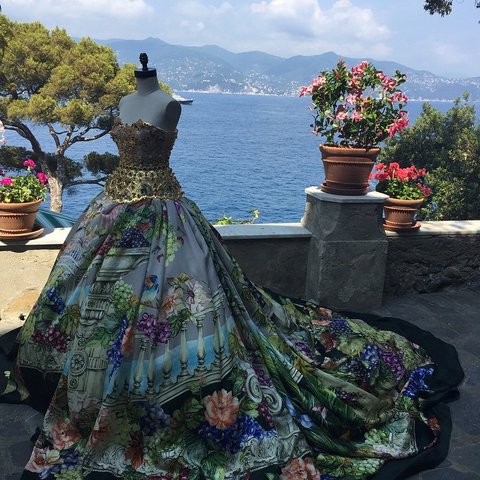
Dolce and Gabbana Alta Moda 2015
Everyone is either a fairy or princess.
Stefano Gabbana
Dolce and Gabbana Alta Moda 2015
Look at all this beauty, truth and emotion, created from nothing but words. Just words. How can you possibly spend your life not trying to do the same?
Giuseppe Di Lampedusa, The Leopard: A Novel
Tosi and Tirelli magnificently bring to life the glamorous, sensual and desperate characters in Lampedusa’s novel. This is also, a portrait of the “lost South” or as Jonathan Jones so eloquently put it Lampedusa’s Sicily is a place where the optimistic, progressive, rational forces of history as viewed in the 19th century – the march of liberal democracy and of socialism alike – get lost in baroque back streets at midnight. As a myth, as a fiction of history, The Leopard will continue to ensnare minds, and not only in Italy. Lampedusa’s despair is not so different from that of today’s world, with its shrunken political expectations. We are all Sicilians now.












 Stories from A Closet of Errors