
References
F. Scott Fitzgerald, This Side of Paradise


Perhaps home is not a place but simply an irrevocable condition.
James Baldwin
in time of daffodils(who know
the goal of living is to grow)
forgetting why,remember how
in time of lilacs who proclaim
the aim of waking is to dream,
remember so(forgetting seem)
in time of roses(who amaze
our now and here with paradise)
forgetting if,remember yes
in time of all sweet things beyond
whatever mind may comprehend,
remember seek(forgetting find)
and in a mystery to be
(when time from time shall set us free)
forgetting me,remember me
e. e. cummings
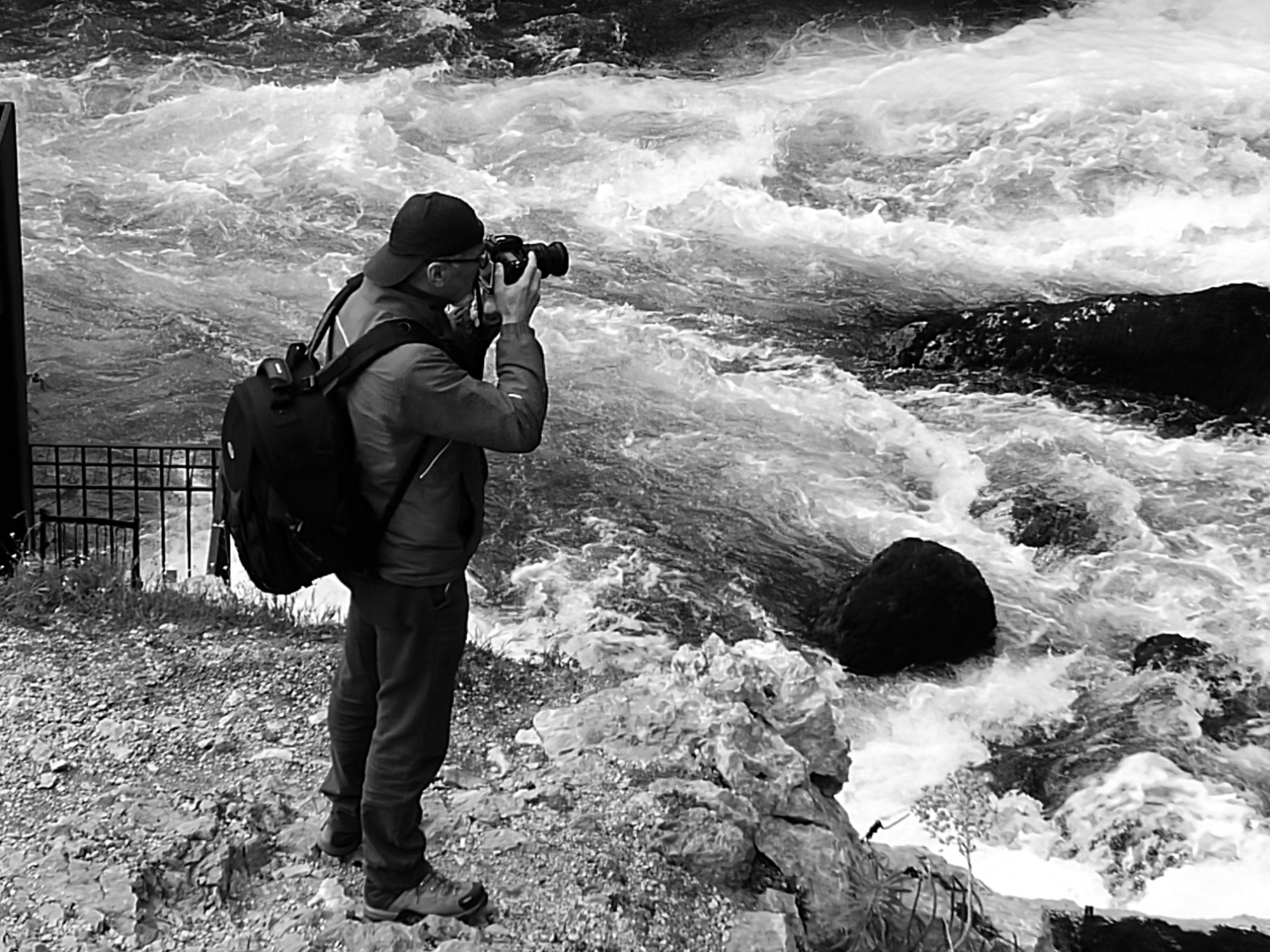
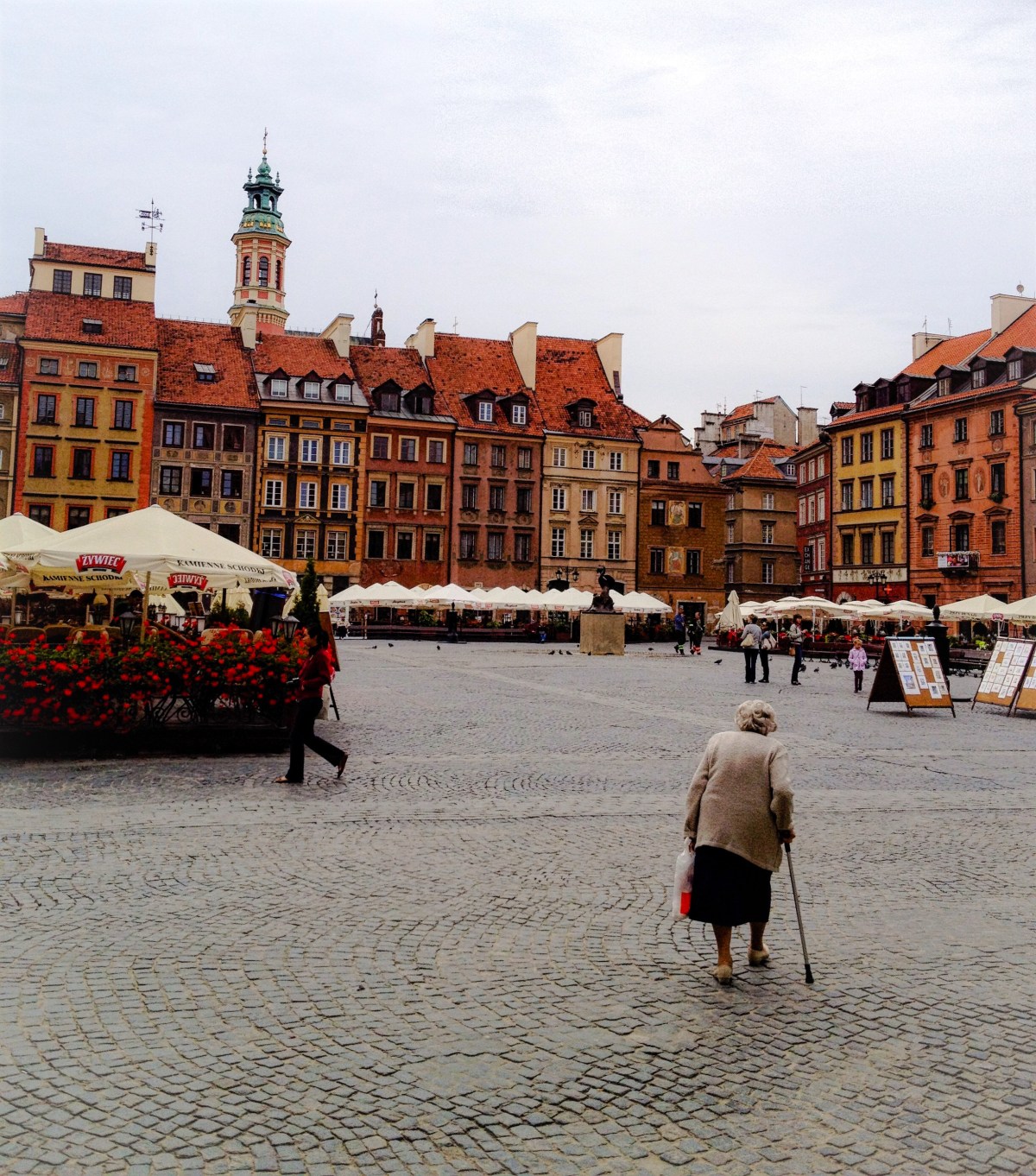
Photo: Warsaw, 2012
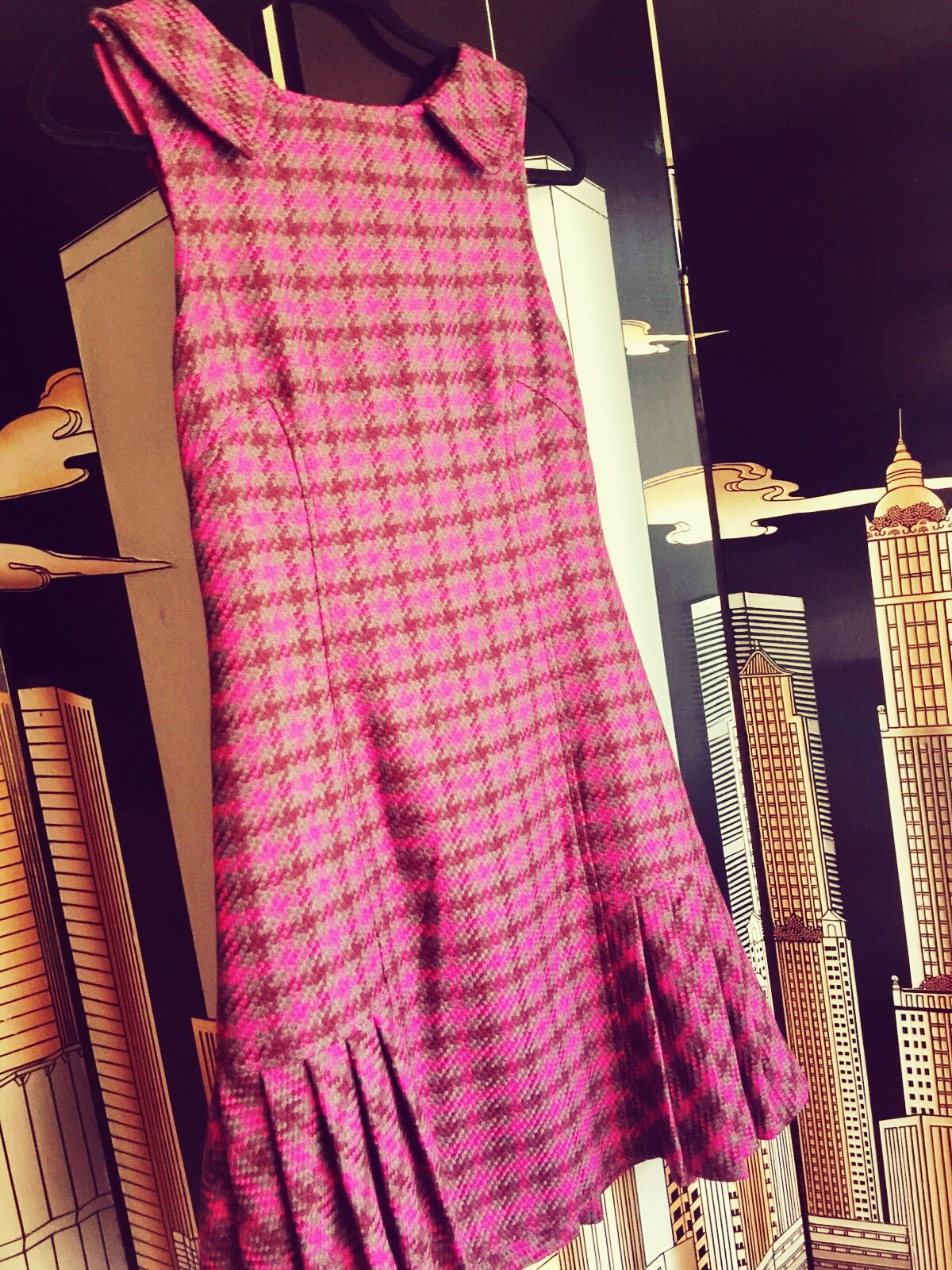
I wore this dress on Monday and the whole day I felt as if was in disguise. I thought I looked like a twenty first century flapper when I checked myself in the mirror before leaving the house, but the minute I got to work I looked as if I had borrowed the last available dress left in someone else’s closet. And that someone definitely didn’t have a lot in common with me. I didn’t buy this dress. It was a gift from my mum who probably never abandoned the hope that, in the right outfit, I would look like a pretty girl. This dress is too pink for me, it’s either too short for me or I’m too tall for it, I am also too old to pull something like this off. Not being a mother myself, I am left with a daughter’s perspective on this strange relationship that sometimes infantilizes me in order to, so it seems, avoid confronting the inevitability of time.
Mondays are never easy and I have a horrible cold and the medication is making me feel like I’m living underwater and the weight of every single thought is too much to even consider taking any kind of action.
TUESDAY
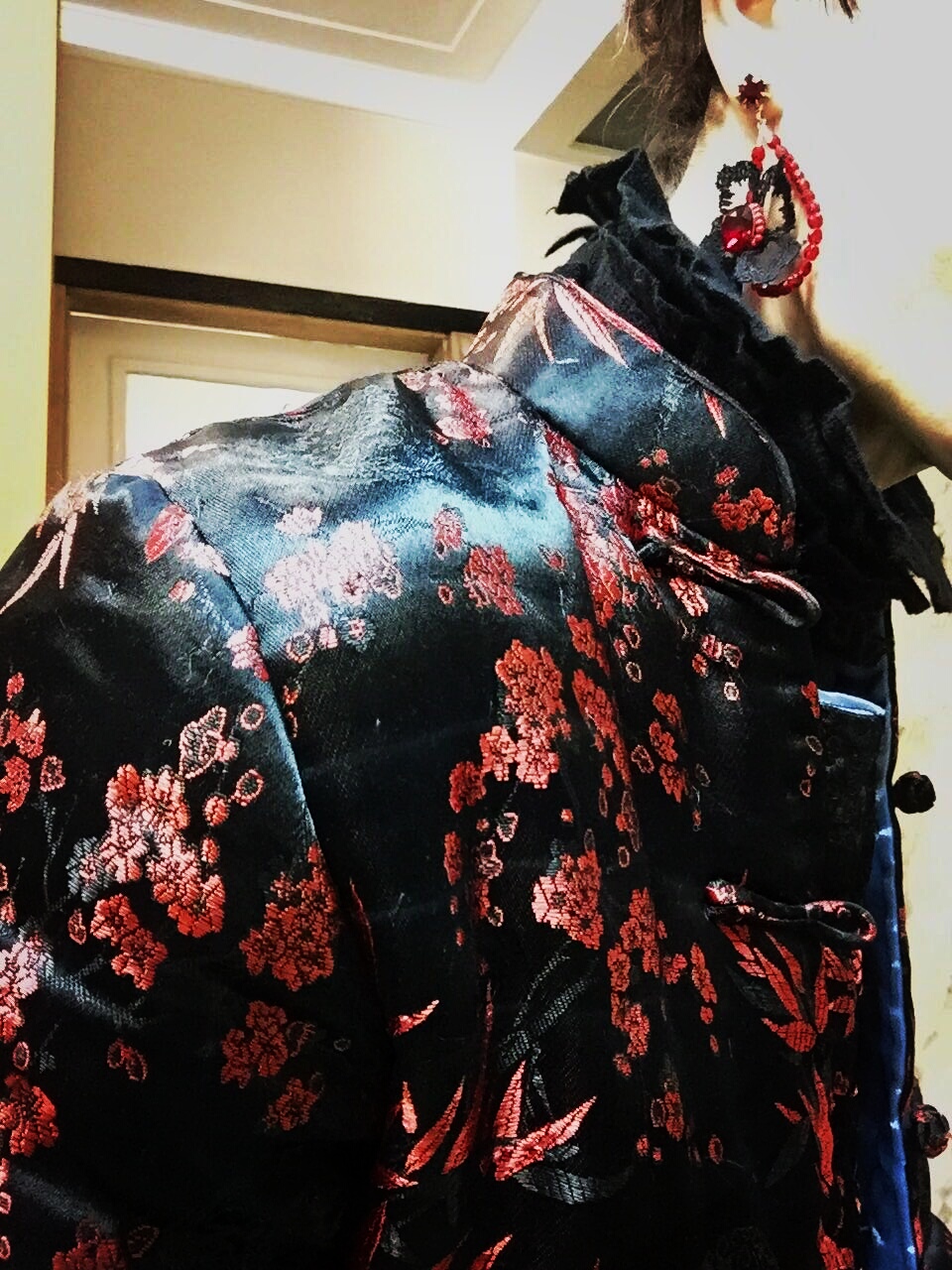
I bought this jacket in Vietnam in November 2014. A text message received while I was in Hanoi let me know that my great aunt had died. I was there for work and alone and while I can’t really say that I have always depended on the kindness of strangers, I have found that sometimes, strangers make the best friends and know exactly what to do and how to help.
Stray people brought together by chance
WEDNESDAY

I have a weak spot for chinoiserie and I absolutely adore these pants. I think I bought them some twenty years ago and they have never made it to the error category.
I felt a lot better today. After work we went to Java, the usual hang out before theater, for dinner. The TV was showing the aftermath of the Westminster attack. The coffee shop was crowded and we are all seating at an uncomfortable closeness. The gentleman next to me is wearing a brown jacket and turns his head often in my direction. Maybe he’s getting irritated at the proximity. No, he starts talking about the news. I try not to engage. I studied political science and I have no idea how to comment on the historical, sociological, or political contexts of what we are staring at. I find it difficult to rationalize barbarity. He’s British. He goes on about foreigners and political correctness. For twelve years he served in the Royal Navy, like his father before him. His eyesight started failing. He’s now a civilian. He was born in Cornwall and grew up in Scotland, now he lives in Manchester because he can’t afford to live in London. He’s been in Portugal for two weeks on vacation, this was his last night. He’s wearing a black t-shirt with some very graphic expression of discontent written in Afrikaans. I’ve never been a big fan of clothes that are too explicit in doing your talking for you. We have to go, the play starts at 9. He says goodbye kissing our hands and thanking us for the company and patience. Whatever was said, I realize I missed that accent and the blue eyed frankness I have lived with for four or so years of my life.
The play is a Portuguese – Belgian co-production spoken in French, Portuguese and Flemish with subtitles in English and Portuguese. I like the set and love the wardrobe when Anna Karenina is the woman inhabiting them and their actions. Still, it’s difficult to focus on anything either than the text. Forty years apart in Lisbon and Antwerp two couples fall out of love, question the normal life people manage to live and read Anna Karenina in French. One of the characters hasn’t read it. He actually thought about reading War and Peace but there were too many pages.
How she dies. It’s not supposed to be about this particular written death but about how literature changes or makes us change our lives. So the author says in a number of interviews.
But she did not take her eyes from the wheels of the second car. And exactly at the moment when the midpoint between the wheels drew level with her, she threw away the red bag, and drawing her head back into her shoulders, fell on her hands under the car, and with a light movement, as though she would rise immediately, dropped on her knees. And at the instant she was terror-stricken at what she was doing. ‘Where am I? What am I doing? What for?’ She tried to get up, to throw herself back; but something huge and merciless struck her on the head and dragged her down on her back
THURSDAY

Last week there was a promise of an early Summer that has vanished during this week as temperatures dropped some twenty degrees and the news reported closed schools because of the snow. Not in Porto. I miss my second ballet class of the week and go to a conference on culture and citizenship. Friends and experts come together to pay tribute to the Poet. To Poetry. There’s a painting exhibition in the room. There’s this painting, A homage to Gaugin, it’s called, and there’s this amazing figure of a woman that could also be a man painted in the warm colours that live in Tahiti. It keeps me from listening to most of what is being said.
FRIDAY

A lavender morning turned into a cold rainy afternoon. I took half the day off to seat at a open rehearsal of Macbeth at the national theater. They only started rehearsals on Monday so this is still the table-work phase of reading and exploring the text and the characters. There’s an English literature professor and expert in Shakespeare who has been invited to talk about the play, and the text, and the differences between the English original and the Portuguese translation. And there he was, academia at it’s very best, rethorical mighty with all its seductive power. And the words go on for five hours and I don’t feel tired or bored. There’s nothing more fascinating than being the witness to personal passions. Not to me, at least. The catastrophe of getting exactly what you want in life. Those who choose to loose everything and those who do. The fantasy of being whole and the prison it creates. And Sartre who could be very pedantic but also very intelligent.
We are left alone, without excuse. That is what I mean when I say that man is condemned to be free. Condemned, because he did not create himself, yet is nevertheless at liberty, and from the moment that he is thrown into this world he is responsible for everything he does.
In 2012 I did a course on Shakespeare at the University of Oxford. This was how I fell in love with Macbeth. My final essay was on the question of agency. My somewhat lazy conclusion stated that “Macbeth’s hamartia is not his ambition, as this is a character flaw, but his miscalculation of the personal consequences of assassinating Duncan and the inner torment that leads him on a murdering spree in the frantic desire for peace of mind. It is this tragic error that ultimately transforms his life in an empty mockery”. I’m often surprised and ashamed when reading what I have written.
SATURDAY

On Saturday I decided to revisit the rive gauche intellectual in me, ratty cashmere sweater and all.
Saturday is flamenco class day. I decided not to miss this one and take me and my cold for another session of trying to emulate Lola. It is not an easy, if at all possible, task to be a Lola. Either a fictional or a real one.
The rest of my Saturday is spent doing adult stuff, washing, and supermarket shopping, and other uninteresting errands. I sold a white Betty Barclay jacket. It’s going to Boise, Idaho. At the end of all this I go and see Ana present a book on American cuisine. I’m only there for moral support. Cookbooks are basically useless at my house.
It took five songs of the weird (I like to think about it as eclectic but I suspect it’s just weird) driving playlist on my iPod to drive home:

I suspect rive gauche intellectuals didn’t care much for glitter ballet flats. Shoes off. I’m not going out, I decide that watching This Property is Condemned on TV is a much better option.
SUNDAY

Daylight saving time began at 1 AM. Outside it still looks like Winter.
I go to the only cinema we have downtown, one of the two movie theaters that is not a multiplex. Popcorn free zone, what a bliss. The movie is Aquarius with Sonia Braga. Two and half hours lost, gone forever. Such a grand actress deserved a much better movie. Great soundtrack, though.
I get home to this
 My next door neighbour is a sweet Lady.
References
Tolstoy
Tennessee Williams
Aristotle
AUTORRETRATO
Espáduas brancas palpitantes:
asas no exílio dum corpo.
Os braços calhas cintilantes
para o comboio da alma.
E os olhos emigrantes
no navio da pálpebra
encalhado em renúncia ou cobardia.
Por vezes fêmea . Por vezes monja.
Conforme a noite. Conforme o dia.
Molusco. Esponja
embebida num filtro de magia.
Aranha de ouro
presa na teia dos seus ardis.
E aos pés um coração de louça
quebrado em jogos infantis.
Again I wish I could translate poetry without committing some kind of murder. I can’t.

This is the self-portrait of a bird in exile, whose arms know that they are wings trapped in a human body. Whose eyes migrate but never leave. A ship stranded by cowardice and abjuration. A Woman. Sometimes a female, sometimes a nun.

From night to day.

Strong, fragile, beautiful, talented and contradictory. They said. Very dark and very tender. A force of nature is the appropriate cliché. Unjust for someone who lived like a true original. In full. Strident in controversy, provocative and original, strong, excessive and forceful. Witch and Lark of the abolition of opposites.
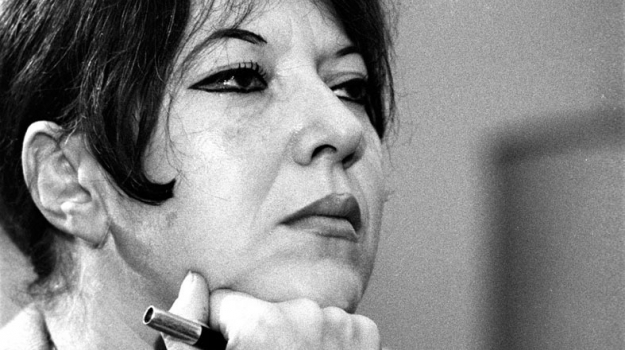
My words could never come close
a heart of china
broken in childish games

Era uma mulher inigualável. Nos caprichos, nos excessos, nas iras, nas premonições, nos exibicionismos, na sedução, na coragem, na esperança. Cantava, dançava, declamava, improvisava, discursava, polemizava como poucos entre nós alguma vez o fizeram, o somaram.
Fernando Dacosta
She was an unrivaled woman. In whims, in excesses, in anger, in premonitions, in exhibitionism, in seduction, in courage, in hope. She sang, danced, recited, improvised, discoursed, polemicized as few among us ever did and ever added.
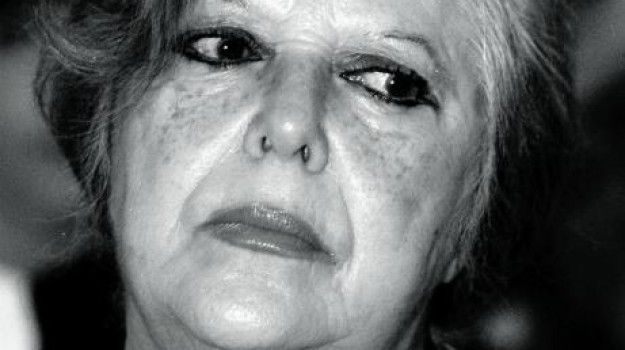
Acho que a missão da mulher é assombrar, espantar. Se a mulher não espanta… De resto, não é só a mulher, todos os seres humanos têm que deslumbrar os seus semelhantes para serem um acontecimento. Temos que ser um acontecimento uns para os outros. Então a pessoa tem que fazer o possível para deslumbrar o seu semelhante, para que a vida seja um motivo de deslumbramento. Se chama a isso sedução, cumpri aquilo que me era forçoso fazer.
Natália Correia, in Entrevista (1983)
I think a woman’s mission is to haunt, to amaze. If a woman does not amaze … Besides, it is not only the woman, all human beings have to dazzle their peers, they have to be an event. We have to be a momentous event for each other. So one has to do one’s best to dazzle one’s fellow human, so that life can be a cause of wonder. If this is called seduction, I accomplished what I had to.
References

Eyes blinded by the fog of things
cannot see truth.
Ears deafened by the din of things
cannot hear truth.
Brains bewildered by the whirl of things
cannot think truth.
Hearts deadened by the weight of things
cannot feel truth.
Throats choked by the dust of things
cannot speak truth.
Harold Bell Wright, The Uncrowned King
And yet, there is no amount of self help books, “keep it simple” formulas or declutter instructions that will tame the maximalist in me.
A euphemism for self-indulgence most probably.

What men call the shadow of the body is not the shadow of the body, but is the body of the soul.
Oscar Wilde, A House of Pomegranates
A Infância de Caim (The Childhood of Cain)
António Teixeira Lopes, 1890
Museu Nacional Soares dos Reis
10.06 am Train 122 to Lisbon
The woman wearing a green polyester dress and a fake fur jacket is a lawyer. She needs a plumber because the faucet in her bathroom is leaking. She hang up that call and is now talking to her friend Ritinha about her marriage and how taking confession at the Vatican with a Spanish priest has helped to cope and forgive even though she is still hurt. Maybe he cheated on her. She has decided to start her master’s degree. Maybe she will get to be a judge. She needs to work on her resume and then move to do a Doctorate, something on tax and fiscal law. Her friend has a better resume, it seems. Anyway, she wants to base her studies in practical cases so she doesn’t feel the pressure of the doctrine. Her son, Francisquinho stayed with her mother-in-law. Her husband António stayed in Porto. She doesn’t like to be alone. She is going to Coimbra to fix her diploma, the silver seal and the ribbons are missing. She had the diploma framed the minute she got it. She couldn’t resist. She hangs up. Her friend is probably busy.
12.30 pm
We have arrived at Santa Apolónia Station. The smart looking old gentleman seating across the corridor has a beautiful engraved cane. I offer to take his bag down. He tells me that the only good thing about growing old is the young people who are willing to help. He reassures me that he was young once.
1 pm blue line subway train
The lady wearing a tropical print maxi skirt is on the phone explaining she is late and that she has forgotten her check book. She will have to pay the deposit in cash.
1.20 pm Calouste Gulbenkian Museum
I register for the conference and buy the ticket to see the Almada Negreiros exhibition. I stop listening. Chance encounters and unexpected company bring out the chatterbox in me.
4 pm international congress on Fernando Pessoa
The session is on “Fernando Pessoa the classicist”. I seem to not really be listening to most of it. Athena magazine and the supreme art form. Inferior art is meant to please, average art should elevate you and the superior art sets you free. It makes your soul rise above everything that is narrow in life, by freeing you it goes beyond elevation which can only occur outside oneself. The supreme art frees you from within. Ricardo Reis and the classic form, syntactic analyses of five odes to a boy who is dead. Homoerotic poetry or simply a lyrical lament for the person that was and is no longer. Questions from the audience in academic conferences always tend to be transformed into frustrated presentations.
The beautiful blonde lady with flawless skin seating next to me comes to the conclusion that the more she searches for knowledge, the more she realizes that there’s just too much to be learnt.
5.30 pm coffee break
I run back to the exhibition room.I forgot to write down the references for some of the paintings. In a dark room Eros and Psyche shine from a rectangular stained glass panel. On the way out there’s a painting called “Family”. I have a replica bought at a jail art fair. It’s not very good, I just find it moving that it was painted by someone serving time in prison.
6 pm back at the conference hall
This is the session that made me travel today. Intellectual giants are still my superheroes.
Professor Eduardo Lourenço is 93. He is here, he says, as a ghost of himself. There is a new generation of experts who have the most admirable of qualities, they are alive and he had, for quite some time now, abdicated of giving presentations at events such as this one. But he came as “one of the victims of the fulgurating passage of that star, that absolute vampire who was Fernando Pessoa (…) because once the Pessoan Galaxy hits you, you are forever transfigured, blood and soul sucked out of you by the celestial vampire who bragged that he could be everything in every way”. And that makes him extraordinary and baffling. How can, Professor Gil, asks, one live with a shattered self? How is it that this person never sought to unify but could clearly understand himself and the world as parts without a whole, infinitely multiple. And the risk of madness, the divine folly of wanting to continuously devour everything, of becoming the interlocutor of everything by transforming even the most insignificant experience into an universal reaching reading of ourselves.
To feel everything in every way.
To feel everything excessively
7.50 pm the train will leave in 10 minutes
The man in scruffy blue overalls is telling the girl wearing a jersey in earthy tones that people now are very much attached to their pets because they know other people are going to be a disappointment. That is what’s wrong with the world. We are becoming irrational because of our egos and because of greed. We are losing our values, he says, we are losing our love for each other. And what happens when there’s no love? We live in terror, we loose ourselves. He has to go but before he does, he apologizes for his impassioned speech, “I can be a bit of a pain sometimes”.
10 pm we just left Coimbra. There’s never much talking in night trains, specially on a Friday.
Photo: Untitled, Almada Negreiros (1921) Watercolour on paper

To sit on rocks, to muse o’er flood and fell,
To slowly trace the forest’s shady scene,
Where things that own not man’s dominion dwell,
And mortal foot hath ne’er or rarely been;
To climb the trackless mountain all unseen,
With the wild flock that never needs a fold;
Alone o’er steeps and foaming falls to lean;
This is not solitude, ‘tis but to hold
Converse with Nature’s charms, and view her stores unrolled.
But midst the crowd, the hurry, the shock of men,
To hear, to see, to feel and to possess,
And roam alone, the world’s tired denizen,
With none who bless us, none whom we can bless;
Minions of splendour shrinking from distress!
None that, with kindred consciousness endued,
If we were not, would seem to smile the less
Of all the flattered, followed, sought and sued;
This is to be alone; this, this is solitude!
George Gordon Byron
Photo: Flying to Poznan, June 2016
Casati was born Luisa Adele Rosa Maria Amman on January 23, 1881
Determined to become a “living work of art”, she lived her life as a reaction to her horror of the mundane, crafting herself into an otherworldly creature whose image was her voice.

An outsized personality, hers was a life lived in performance.

She was in herself and in her creations an unforgettable spectacle, and although by the time of her demise she had ceased to live a gilded existence, her legacy was not about to fade away

But life as performance seems to bear the ingredients of tragedy. As described by Jean Cocteau,
As soon as she came out of her dressing room, the Marquise Casati received the applause usually given to a famous tragedian at her entry to the stage. It remained to act the play. There was none. This was her tragedy.
Is it the common choice of those who don’t feel that they belong or are seen (or feel themselves to be) as inadequate to choose being the performance of self over being oneself?

Age cannot wither her, nor custom stale her infinite variety
William Shakespeare
Anthony and Cleopatra
References
An Ode to the Singular Marchesa Luisa Casati
Anarchists of Style: Marchesa Luisa Casati
Marchesa Casati Goth, Glamorous and Wild
http://www.vogue.com/fashion-shows/spring-1998-couture/christian-dior
Costume Designer: Pierre-Jean Larroque. César Best Costume Design (Meilleurs costumes)
I did not see this movie when it came out, I’ve watched it on TV on Christmas Eve. As with Florence Foster Jenkins (2016) , Marguerite is also inspired by the life of the “world’s worst opera singer“. While Stephen Frears‘ film (that I did not see) is set in 1940s New York, director Xavier Gianolli, tells Marguerite’s story in Paris during the Golden Twenties. Since the 20s are my “in the wrong place at the wrong time” period in history, this little detail makes all the difference. Not only because Pierre-Jean Larroque’s period costumes are exquisite but also because the story benefits from the social, cultural and artistic context of European avant-gardism.

This is a story of passion without talent. Not of a simple love of music but of a vital need to express that love. The Baroness Marguerite Dumont loves opera and wants to be loved by her cheating husband through her talent as a venerated soprano, creating a dream world enabled by the butler / photographer Madelbos and her own wealth, pleasant disposition and childlike enthusiasm that prevent everyone around her from telling her how excruciatingly bad she is.


Marguerite creates a dream world helped by Madelbos, the butler, who protects her from the harsh reviews and mockeries of the outside world but also turns her and the elaborate photo shoots of delusional Diva roles into his own personal artistic project. For that he is willing to let her die and this was, for me, the darkest side of the movie. While this is a thoroughly beautiful and inspirational look at the nature of art and the value of a dream it is also a bitter reflection on the use of others as the object / subject of that art.

While Florence Foster Jenkins might have never known just how terrible she was, Marguerite does get to know and that ends up not making Life possible anymore.

References
I’m writing a new book about beauty. I decided to do it after reading an interview with Botho Strauss. When asked what he misses, Botho Strauss answered: “beauty”. He didn’t say anything else – I miss beauty, and I got it. So then I thought, I’ll write a book about beauty.
“But the beauty is in the walking — we are betrayed by destinations.” — Gwyn Thomas
I would not want to know a person who isn’t offended by aspects of this film, but I would be equally bored by an individual who would casually dismiss the film itself.
Costume Designer Melinda Eshelman
This is not an obvious choice as far as fashion / style inspiration goes, nor does it fall (apparently) in a film genre I particularly appreciate. Not a conventional (romantic) vampire movie, The Addiction seems to depict “vampires” in an over realistic manner as intellectual drug addicts in a grungy 90s New York City.

An explicit metaphor (if that’s a thing) for heroin addiction and its moral and physical decaying results, this is also a film that uses “the vampire as a metaphor for intellectual hubris in the face of systemic sinfulness in the world”.[*] Having practically been born into academia and having spent all my life in it, this is what strikes me as both inspiring and scary in The Addiction.
Suitably blood-festooned vampire flick (although the word vampire is never mentioned). Secondly, it operates as a philosophical and religious reflection on human evil and redemption and finally as an amusing take on certain aspects of university life, probably best appreciated by those directly involved in that venerable institution.
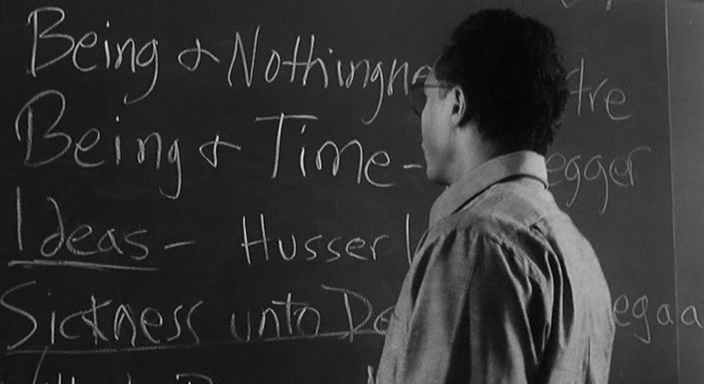
Kathleen (Lili Taylor) is a Philosophy doctoral student who transforms into a vampire / undead/ immortal after being bitten by the stylish Casanova ( Annabella Sciorra) because she, the victim, could not stand up to her sleek aggressor who specifically tells her: “Tell me to leave you alone”and begins “a slow transition from theoretical dependency to literal acts of horror and extreme physical addiction.” [*] Succumbing to her addiction, Kathleen neglects her thesis as she falls deeper into ennui until meeting Peina (Christopher Walken), who with the superiority of the recovering addict turns into an impromptu supervisor, sucking all her blood before giving her a reading list. “Read the books, Sartre,Beckett, who do you think they are talking about?”
I have felt the wind on the wing of madnessBaudelaire

By making the force of Kathleen’s appetite for blood, and an altering sense of moral perspective a parallel to a developing thesis, St John and Ferrara enable a wry, reflexive commentary on philosophy in action. As well as allowing a PhD student to take a rare leading role in a feature narrative (albeit made more exciting by vampirism), The Addiction is an ambitiously intellectual genre film, and a comic satire on intellectualism itself in its literalization of theory, as Kathleen both consumes her supervisor and eventually the academic community.
The University, the institution “among the precious things that can be destroyed “, has changed a lot since 1995. I’m not quite sure if the institution transformed into an enabler of transversal skills through, more or less fast tracks, and in the process condemning learners to a life of follow up courses and debt (in some countries) is still the place of never ending theories trying to rationalize the unfathomable. Or maybe it’s just “all theory and philosophy until someone gets bit”
To face what we are in the end, we stand before the light and our true nature is revealed. Self-revelation is annihilation of self.
P.S. In its neo noir aesthetic, this is, of course, a film that appeals to me with all the its different layers of black. The invisible, the evil, the academic, the existentialist, the transgressive, the bohemian, the absolute black.
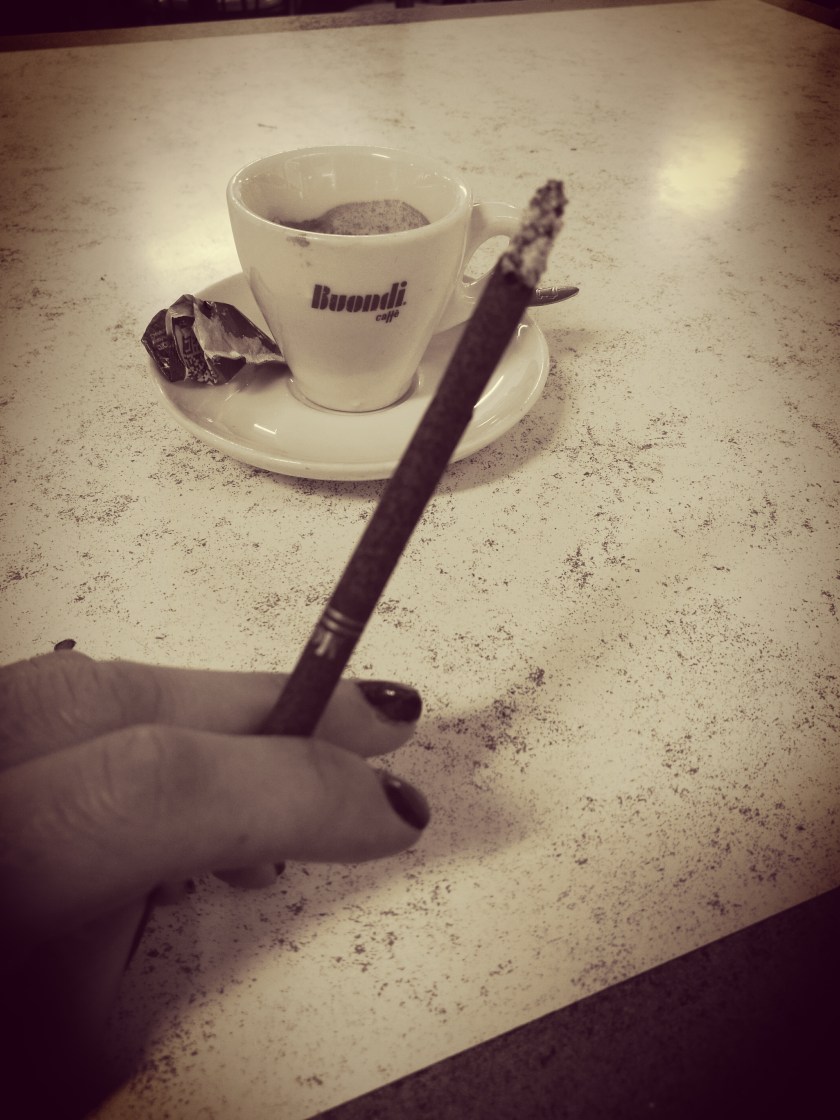
A nasty, proscribed habit that has had the upside of connecting me to like-minded social pariahs during coffee breaks.


 Stories from A Closet of Errors