In a collection that’s grown to nearly 200 pairs (I couldn’t write on budgeting even if I was paid to do it), choosing a favorite seems almost unfair although not difficult.
When I look across what I wished was a carefully curated kingdom of footwear but it’s probably just a sign of some kind of derangement , my eyes always land on the same pair: my custom Converse All Stars emblazoned with Walt Whitman’s timeless words, “resist much, obey little.”
The customization process was simple enough—Converse’s website, a font choice, a color scheme that wouldn’t overshadow the message. But the impact was anything but simple.
Whitman’s phrase—tucked into his poem “Caution”—spoke to something essential in me. A reminder that blind conformity is the enemy of growth. That questioning authority isn’t rebellion for rebellion’s sake, but a necessary component of being and feeling alive.
“Resist much, obey little, Once unquestioning obedience, once fully enslaved, Once fully enslaved, no nation, state, city of this earth, ever afterward resumes its liberty.”
I received them in April 2024. In May I took them to New Orleans—my soul city. There’s something poetic about first breaking in shoes dedicated to resistance in a place that has itself resisted time, tragedy, and homogenization. Walking as if dancing, feeling the rhythm of this marvellous city, breathing music from morning to night, watching the white canvas collect the character of a city that refuses to surrender its identity—it felt like a perfect baptism for both the shoes and for me. I always feel more alive in New Orleans. I always feel I get to be myself anew.
They carried me through heartbreak in Greece, they were with me in Wembley to celebrate life with a friend that took me to see Bruce Springsteen and 60 thousand people whit hungry hearts, they got to see Ian Astbury who no longer is my teenage crush but can still stir something when singing about paradises in shattered dreams. They take me to work when I’m feeling disappointed and a bit defiant.
They remind me that authentic self-expression isn’t always comfortable, but it’s always worthwhile. That small acts of personal courage accumulate into a life of integrity. That sometimes the loudest statements are made in the quietest ways. That resistance sometimes it’s as simple as a daily choice to live by your own compass.
There’s something comforting about the idea that certain events or connections are “meant to be” – that there’s some larger pattern or purpose to our lives. Many people find meaning in interpreting significant events as part of a larger plan.
On the other hand, I’m drawn to the perspective that we have genuine agency in shaping our lives, and that the future isn’t predetermined. There’s something powerful about the idea that our choices and actions genuinely matter in determining what happens.
Some philosophical traditions try to reconcile these views – suggesting that perhaps certain broad patterns might be destined while specific details remain under our control, or that destiny might operate at a higher level while still allowing for free choice within certain parameters.
I would say I don’t believe in fate but, I’m Portuguese….
Fado, as a music genre, is deeply tied to the Portuguese concept of saudade—a mix of longing, nostalgia, and fate. The very word “Fado” comes from the Latin fatum, meaning “fate” or “destiny,” reflecting the idea that life’s joys and sorrows are inescapable.
Even if you don’t fully believe in fate, Fado embodies a cultural perspective where destiny plays a role in shaping human experiences—especially in love, loss, and hardship. The music suggests that some emotions and events are inevitable, but at the same time, Fado is an expression of personal agency, as singers pour their souls into shaping the narrative.
Portuguese culture carries a certain introspective melancholy—not just in Fado but also in literature, poetry, and even the way history is remembered. There’s a balance between accepting sorrow as part of life and finding beauty in it.
Saudade and Fado are deeply intertwined with Portuguese history, emerging from and reflecting the nation’s unique historical experiences.
Portugal’s identity was profoundly shaped by the Age of Discoveries (15th-16th centuries), when this small nation became a global maritime empire. This period created a culture of separation and longing – sailors and explorers left home for years or forever, families were torn apart, and communities lived with constant absence. Saudade developed as an emotional response to this collective experience of separation.
The economic structure of this maritime empire meant Portugal was often looking outward rather than developing internally. When ships didn’t return or imperial ventures failed, this created a cultural pattern of anticipation followed by disappointment – another dimension of saudade.
After this golden age came Portugal’s long decline – the loss of independence to Spain (1580-1640), the devastating Lisbon earthquake of 1755, the Napoleonic invasions, the loss of Brazil, and the political turmoil of the 19th and early 20th centuries. This historical arc from glory to struggle embedded a sense of lost grandeur in Portuguese cultural consciousness.
Fado emerged in the early 19th century primarily in working-class urban neighborhoods of Lisbon, coinciding with a period of national difficulty. It became a musical expression of this complex historical experience – not just personal longing but a collective cultural memory of past greatness contrasted with present difficulties.
During the Salazar dictatorship (1933-1974), this backward-looking tendency was sometimes exploited – the regime used a sanitized version of Fado and the concept of saudade in its propaganda. Yet authentic Fado remained a vital way for common people to express their emotional relationship with fate and history.
Eduardo Lourenço described Portugal as suffering from “hyperidentity” – an excessive preoccupation with national identity and destiny based on a mythologized past. Saudade and Fado became cultural spaces where this complex relationship with history could be emotionally processed rather than just intellectually analyzed.
This historical context helps explain why Fado approaches fate emotionally rather than philosophically – it emerged as a way for people to express and make sense of their lived historical experience rather than to theorize about it.
A lot of musical landscapes could exemplify this, I chose my favorite. No Teu Poema / In your Poem. A magnificent poem written by José Luís Tinoco , first sang by Carlos do Carmo in 1976, and here in my absolute favorite version by Amor Electro. Not Fado as such but the melancholy is still there.
This is a beautiful example of how the Portuguese poetic tradition captures both resignation and resistance. The lyrics acknowledge pain, struggle, and fate (a sina de quem nasce fraco ou forte), but they also hold space for courage (o passo da coragem em casa escura), hope (a esperança acesa atrás do muro), and an open future (um verso em branco à espera do futuro). A blank verse without measure exists. It suggests that within fate’s poem, there are still unwritten spaces. These are moments of possibility within destiny’s framework.
Perhaps most powerful is “A dor que sei de cor, mas não recito” (The pain I know by heart, but do not recite). This suggests that fate’s pain is so deeply internalized that it need not be explained or philosophized about—it simply exists as emotional knowledge.
For me, this song beautifully captures how Fado approaches fate—not by explaining why things happen, but by emotionally inhabiting the experience of living within destiny’s constraints while finding both beauty and dignity in that condition.
It’s like life is shaped by forces beyond our control—fate, history, circumstance—but within that, there’s still the individual’s voice, the choice to fight, to persist, or to find meaning. Do you feel like this duality is part of your own outlook on life?
No teu poema Existe um verso em branco e sem medida Um corpo que respira, um céu aberto Janela debruçada para a vida
No teu poema Existe a dor calada lá no fundo O passo da coragem em casa escura E aberta, uma varanda para o mundo
Existe a noite O riso e a voz refeita à luz do dia A festa da senhora da agonia E o cansaço do corpo que adormece em cama fria
No teu poema Existe o grito e o eco da metralha A dor que sei de cor mas não recito E os sonos inquietos de quem falha
No teu poema Existe um cantochão alentejano A rua e o pregão de uma varina E um barco assoprado à todo o pano
Existe a noite O canto em vozes juntas, vozes certas Canção de uma só letra e um só destino a embarcar O cais da nova nau das descobertas
Existe um rio A sina de quem nasce fraco, ou forte O risco, a raiva a luta de quem cai ou que resiste Que vence ou adormece antes da morte
No teu poema Existe a esperança acesa atrás do muro Existe tudo mais que ainda me escapa E um verso em branco à espera Do futuro
In your poem There is a blank verse, boundless and free A body that breathes, an open sky A window leaning into life
In your poem There is silent pain deep within The step of courage in a darkened home And open, a balcony to the world
There is the night Laughter and a voice remade by daylight The feast of Our Lady of Agony And the weariness of a body That falls asleep in a cold bed
In your poem There is the cry and the echo of gunfire The pain I know by heart but never recite And the restless sleep of those who fail
In your poem There is an Alentejan chant The street and the call of a fishmonger And a ship blown forward at full sail
There is the night The song in voices joined, voices sure A tune with just one word, one shared fate Embarking from the dock Of a new ship of discoveries
There is a river The destiny of those born weak, or strong The risk, the rage, the struggle Of those who fall or those who resist Who triumph or fall asleep before death
In your poem There is hope burning beyond the wall There is everything else I cannot yet grasp And a blank verse waiting For the future
On Saturday I went to see Pablo Larraín’s Maria with a a friend. My friend cried at the end of the movie. Surprisingly ( to me), I didn’t. I am not quite sure I liked it. Angelina Jolie presumably excels as the tragic Diva; Massimo Cantini Parrini’s costume design was impeccable, as it should, since the source material was already extraordinary as he acknowledges in this interview to Harper’s Bazaar:
Working on the costumes for Maria Callas was not that difficult in terms of finding or drawing inspiration, as Maria Callas was a diva and she had been interviewed and photographed by so many different journalists and people. But beyond the most iconic photographs that we had all seen sooner or later of Maria Callas, I was also able to dig deeper and deeper in my research to find other pictures of where she was portrayed at homes of friends, dining out—a number of events that were not typically those linked to her professional life. That was a great inspiration, and it allowed me to imagine and create her wardrobe, which spans throughout the ’50s, ’60s, and ’70s.
Costume design in María not only transforms Jolie into La Divina, it also serves as a visual metaphor for the film’s meditation on artistry, identity, and transformation. Through María Callas’ wardrobe, Larraín and Massimo Cantini Parrini articulate the tension between art as a living, breathing force and art as a frozen, ornamental relic
Callas was an artist shaped by both her voice and her image. Her costumes reflect this duality. Onstage, she is adorned in grand, operatic gowns. These gowns are heavy with history, as if carrying the weight of her own myth. These pieces emphasize how she became an icon, a living masterpiece. But offstage, her wardrobe shifts to softer, more intimate attire, revealing the woman beneath the legend. The contrast suggests that while the world sees only the diva, Callas herself wrestles with her own identity beyond the stage.
In her later years, Callas’ wardrobe takes on a different role. The extravagant fashion—high collars, structured silhouettes, luxurious fabrics—becomes almost like a museum exhibit. It serves as a way of preserving an identity that is slipping away. Even as her voice fades, her costumes remain striking. They seem like the last remnants of the persona she spent a lifetime constructing.
As Callas grapples with the loss of her voice, her costumes become more muted, understated—less fireworks, more elegy. The colors may darken, the embellishments may soften, mirroring the internal shift from performance to reflection.
A very long introduction to answer that if I could be someone else for a day, I would choose to be this kind of genius. Not the one shown in the movie. While not everyone knows what it’s like to command an opera house or possess extraordinary talent, we all know and experience, in very different measures, the personal side of decline.
You are born an artist or you are not. And you stay an artist, dear, even if your voice is less of a fireworks.
To be able to experience for one day what it would feel like having lightning running through your veins, knowing that every note you produce is pure artistic truth. The sheer physical and emotional power required to project that voice, to inhabit roles like Tosca or Norma so completely that the boundary between performance and reality almost disappears…
To know not adoration but to live with the certainty that your extraordinary gift has made a difference in the world through beauty.
Now, I am the same age as Callas was when she died and realize that I really wished I could be myself everyday even if there are so many more spectacular lives than my own.
If you could be someone else for a day, who would you be, and why?
While Socrates emphasized reflection as crucial to a meaningful life, there needs to be something substantive to reflect upon. Pure contemplation without lived experience could become a kind of hollow philosophical exercise.
There’s a point where self-reflection can spiral into a kind of paralytic introspection or self-commiseration.
When examination turns into rumination, we find ourselves in an echo chamber of our own thoughts. This detaches us from the vitality of direct experience. Excessive self-examination can also drain experiences of their natural meaning and immediacy.
Yet, I wonder if the issue isn’t with examination itself, but with its nature and purpose. There’s a difference between examination that enriches our engagement with life – helping us understand our patterns, make better choices, appreciate moments more fully – and examination that becomes a form of self-absorbed withdrawal from life.
A little more sun – I’d have been embers,
A little more blue – I’d have been beyond.
To reach it, I lacked the stroke of wings…
If only I had stayed beneath…

Wonder or peace? In vain… All faded
In a vast, deceitful sea of foam;
And the grand dream awakened in mist,
The grand dream – oh pain! – almost lived…

Almost love, almost triumph and flame,
Almost the beginning and end – almost expansion…
But in my soul, everything spills out…
And yet nothing was mere illusion!

Everything had a start… and all went astray…
– Oh, the pain of being – almost, endless pain…
I failed others, failed myself,
A wing that entwined but didn’t fly…

Moments of soul that I squandered…
Temples where I never raised an altar…
Rivers I lost without leading to the sea…
Yearnings that passed but I never held…

If I wander, I find only traces…
Gothic arches toward the sun – I see them closed;
And hands of heroes, without faith, cowardly,
Set bars over the precipices…

In a diffuse impulse of despair,
I began everything and possessed nothing…
Today, of me, only disillusion remains,
Of the things I kissed but never lived…

A little more sun – and I’d have been embers,
A little more blue – and I’d have been beyond.
To reach it, I lacked the stroke of wings…
If only I had stayed beneath…

(AI translation)

Here's the original poem, Quase by Mário de Sá Carneiro:


Um pouco mais de sol – eu era brasa,
Um pouco mais de azul – eu era além.
Para atingir, faltou-me um golpe de asa…
Se ao menos eu permanecesse aquém…

Assombro ou paz? Em vão… Tudo esvaído
Num grande mar enganador de espuma;
E o grande sonho despertado em bruma,
O grande sonho – ó dor! – quase vivido…

Quase o amor, quase o triunfo e a chama,
Quase o princípio e o fim – quase a expansão…
Mas na minh’alma tudo se derrama…
Entanto nada foi só ilusão!

De tudo houve um começo … e tudo errou…
– Ai a dor de ser – quase, dor sem fim…
Eu falhei-me entre os mais, falhei em mim,
Asa que se enlaçou mas não voou…

Momentos de alma que, desbaratei…
Templos aonde nunca pus um altar…
Rios que perdi sem os levar ao mar…
Ânsias que foram mas que não fixei…

Se me vagueio, encontro só indícios…
Ogivas para o sol – vejo-as cerradas;
E mãos de herói, sem fé, acobardadas,
Puseram grades sobre os precipícios…

Num ímpeto difuso de quebranto,
Tudo encetei e nada possuí…
Hoje, de mim, só resta o desencanto
Das coisas que beijei mas não vivi…

Um pouco mais de sol – e fora brasa,
Um pouco mais de azul – e fora além.
Para atingir faltou-me um golpe de asa…
Se ao menos eu permanecesse aquém…
Yes, that “agony of the almost” is the heart of what makes this poem so powerful and painful. Sá-Carneiro captures something uniquely torturous about consciousness – not just the pain of failure, but the specific suffering that comes from knowing you came close and fell short. All the intention was there – just not the final decisive action. It’s the difference between never having talent and having talent you squandered.
There’s also something especially modern about this kind of suffering. In earlier times, one’s path might have been more predetermined by circumstances. But now, we face a growing burden of choice and possibility. This makes the failure to realize potential feel like a personal shortcoming instead of an external limitation.
And, again, the same question, is the unlived life worth examining? Awareness itself can be a curse. As Sá-Carneiro, we don’t just lament missed opportunities, but also knowing about them – and wish we “had stayed beneath.” Self-reflection does have a potential to become self-commiseration – when awareness of what could have been overwhelms and paralyzes rather than motivates. And we stay trapped between worlds – neither fully engaged in life nor able to transcend it (“To reach it, I lacked the stroke of wings…”)
If, as Joan Didion wrote “We are well advised to keep on nodding terms with the people we used to be, whether we find them attractive company or not”, we might as well learn how to come to terms with the people we did not become.
References Adam Phillips, Missing Out: In Praise of the Unlived Life
If there was a biography about you, what would the title be?
when I remained true to myself and moved closer to becoming the person I aspire to be.
when I was able to connect to someone and was genuinely interested in what they had to say
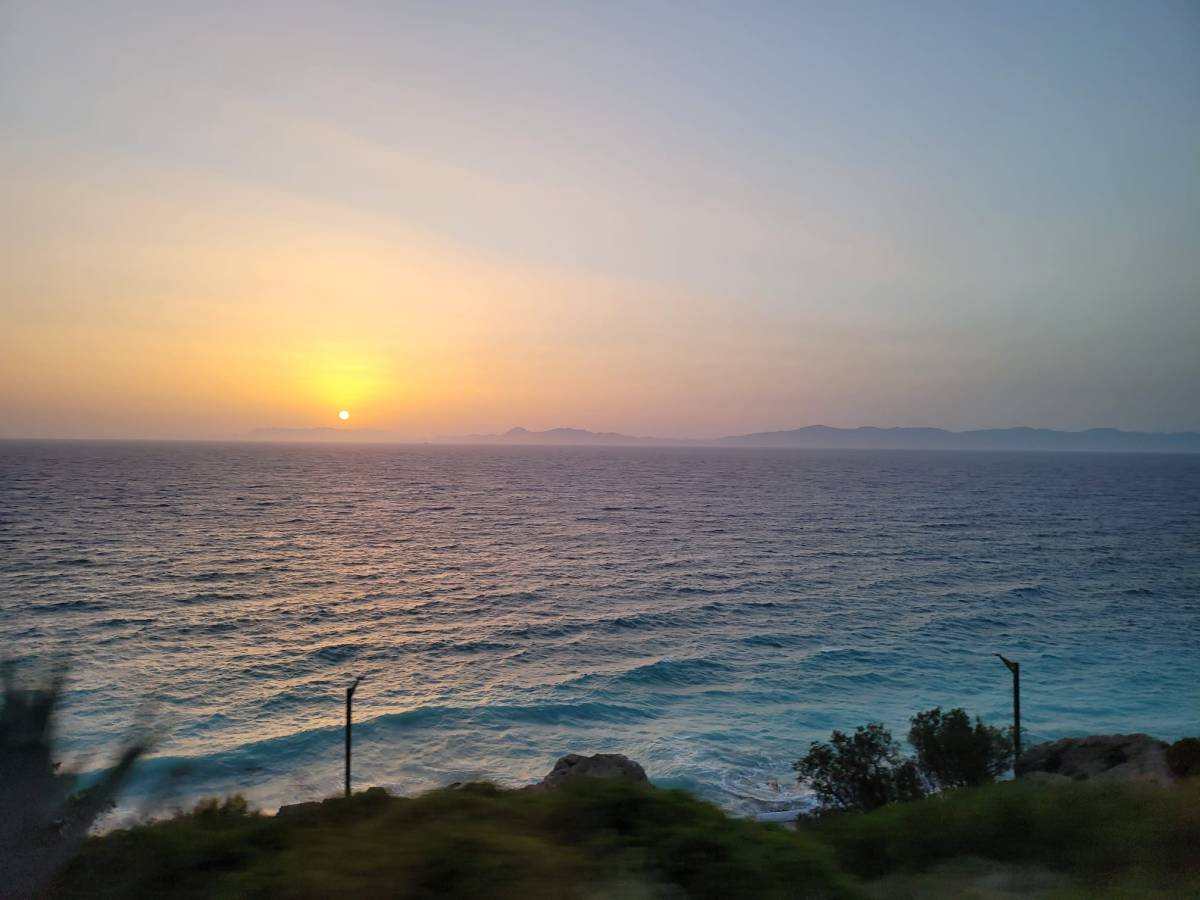
And it would always be a summer day, suspended in timeless radiance—no beginning, no end. Just the feeling of endless warmth and light, a moment stretched into infinity.
Here, in this eternal instant, warmth becomes more than temperature—it is a sensation that permeates skin, memory, and imagination.
No clock measures these moments. No shadow hints at morning or evening. There is only this: pure, uninterrupted radiance. A day that is not a day, but a feeling—boundless, perfect, suspended between breath and memory, where time loses all meaning and only sensation remains.
On a perfect day at the perfect time, when those beautiful colors combine, I’ll be wide awake, I’ll be living free cause that perfect feeling is inside of me
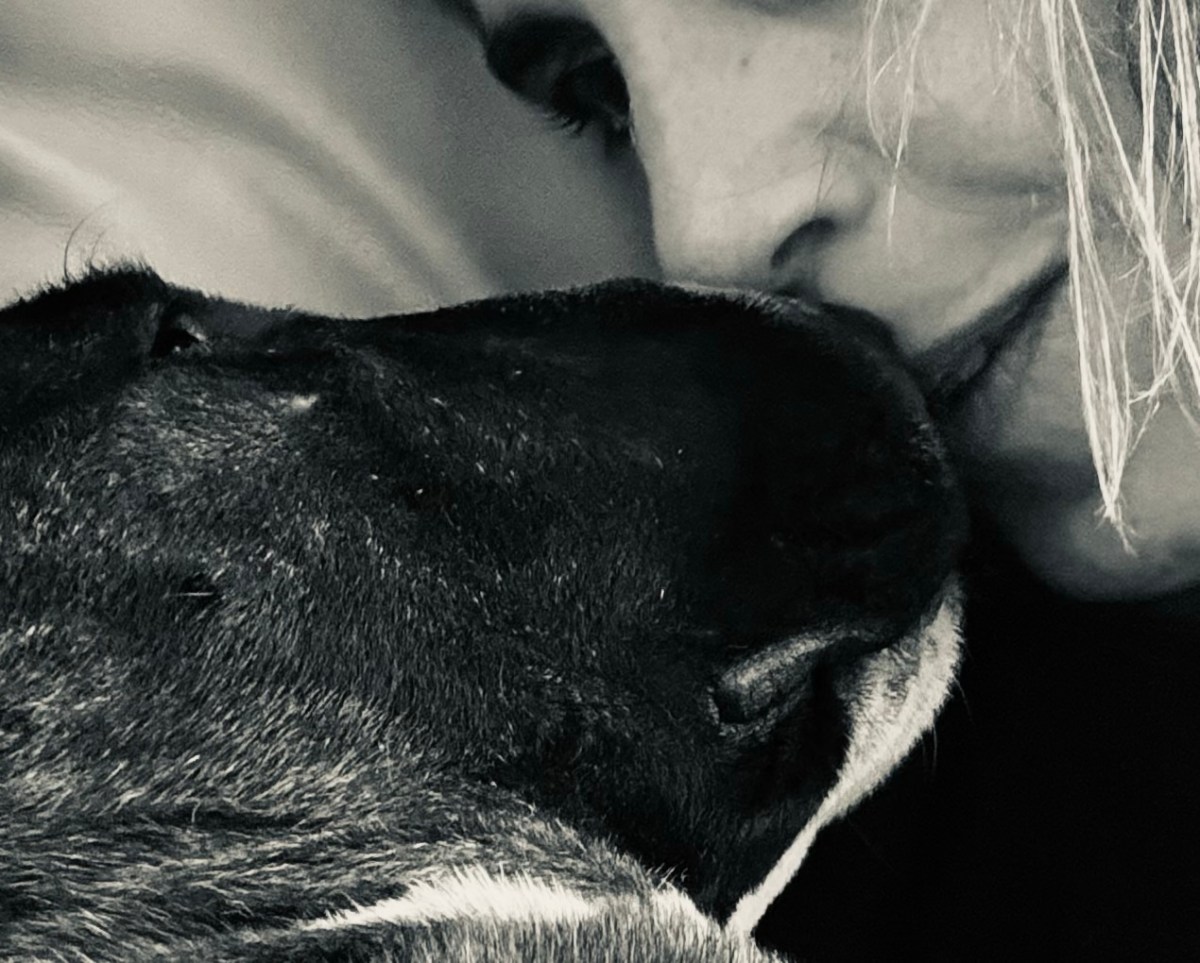
that he has an uncanny ability to know exactly what I need and that he has been the reason to keep going on for the past four years, that even though he’s not able to read, he has written his love into every little detail of my day to day.
If you could make your pet understand one thing, what would it be?





 Stories from A Closet of Errors