There is a point when tears don’t work


There were days I wanted out.
But then You would go and do things
like dive into the Vancouver ocean,
big brilliant cliché poem that You are,
water rolling off Your back
as You swam toward a sunset
that hung like a sacred recipe painted
all the way around Your holy head.
And then there were the ways You caught me
moving back into my cave where the wheels turn,
same wheels that drove You off.
I should have told You
before talking in terms of Forever
that any given day wears me out and works me sour,
that there are nights when the sky is so clear
I stand obnoxious underneath it
begging for the stars to shoot at me
just so I can feel at Home.
What’s left of You now is a shrine
built from the pieces I kept of Your presence,
Your incredible stretch of presence.
It sits in Our room like a sandpiper
cross-legged and crying,
remembering the night we met
and the day You left, and the Light
shifting in between.
By the side of it stands a picture of the poem where I promised,
“You will never have another lonely holiday.”
The words “I Promise” and “Forever”
begged me not to use them
but sometimes I don’t listen to God,
so You can imagine how much it hurt
to let Your last birthday pass
with no word. August 3rd.
You weren’t the only one comin’ up lonesome.
Listen, if I had to make a list
of everything everywhere

and I mean everything… everywhere –
the very last to-do on that infinite list of
every – single – thing – would be – to hurt You,
so I need You to know
that in an attempt to keep my promise
I did write a letter to You on Your birthday.

It was covered in stickers of flock-printed stars,
choir claps, and a bonfire of buttercups stuck in the air,
but when I finally drew enough courage
to send You all the Love in the World
my hand snapped off in the mailbox
from clenching.
It was returned to me with a gospelstitch, a hope stamp
and a note etched into the palm I had to pry open
with the pressure of pitching doves
reminding me
we agreed to let each other go.
There is a point when tears don’t work
to wash things away anymore.
Grabbing for breath has now broken my fingers.
I miss You so much some days
that I beg for the airplane to crash
with just enough time in the freefall
for scribbling “I Love You” across my chest.
That way – when they find my burning breast plate –
they will tell You how the very last thing I did with my life
was call out Your name.
A. R. L.
I know You’re momma didn’t raise no sissy,
so it’s best if I believe
that You’ve bounced back and been born again,
but in the bottom left corner of dreams
in the dark spot
where it gets windy and hollow
I can still see you flailing,
eating knuckle cake,
full torque and tender,
heart pounding from being pulled under,
feet bleeding from bracing for endings,
tongue dying to curse Forever
because promises murder us backwards
when people like me don’t keep them.
And sure, we all deserve absolution,
but especially You. You and Faith,
You’ve got the same hungerpunch,
same song
still rising off the watertrain running through the laws
of a moon dead set on daylight
digging marbles from the trees
in a Love not scared to make no sense
and monkey enough to see
the same devastating reason for living this life
My Giant
Saint
Everything
I promise You
Forever
these words have buckled my lips
so far back to the beginning
that I am now allowed only
Today,
so from my snap-chested heart spraying
fully flying
sending out the birds:
Today I stop believing in words.
Today all my visions converted to blurs
like the night We saw the Light
and I could not shut up
but I swear I was feelin’ silence.

Giant Saint Everything, by Buddy Wakefield

I lose it all the time

The track of time

I lose track of time—not just the hours in a day, but the architecture of time itself. Days blur into weeks, weeks into months, and suddenly I’m looking back at years that feel like they happened to someone else, in some other lifetime I can barely access. It’s not simply forgetting; it’s a deeper disorientation, an inability to place the events of my life on any coherent timeline.

This temporal blindness has been building gradually, like fog rolling in so slowly you don’t notice until the familiar landmarks of memory have disappeared. Most of my days feel interchangeable now, lacking the distinct markers that once helped me navigate the story of my own life. Without these anchors, time becomes elastic and strange—months can feel like weeks, years like months, and recent events feel ancient while distant memories seem immediate.

But some moments still cut through the haze with startling clarity. Travel creates these temporal anchors naturally—the sensory richness of new places, disrupted routines, the way my brain has to pay attention when everything is unfamiliar. So do moments of intense freedom and comfort, those rare times when I feel most myself, when social expectations fall away and I’m doing exactly what I want without compromise. And certain people, too, become markers in time—those who draw out different parts of me or create space for conversations that feel like they matter.

What strikes me about these clear moments is their common thread: they’re all times when I feel fully alive and present, when I’m engaged rather than going through motions. They represent pockets of authentic experience in an otherwise routine existence. The tragedy isn’t that I can’t remember what happened—it’s that so much of what happens doesn’t feel worth remembering.

Perhaps the gradual erosion of temporal landmarks isn’t just about aging or the sameness imposed by modern life. Maybe it’s about how rarely we allow ourselves to be fully present, how infrequently we create conditions for the kind of aliveness that makes moments stick. Time may not actually be speeding up—we might just be sleepwalking through most of it, leaving behind a wake of forgettable days that our minds, quite reasonably, choose not to preserve.

The solution isn’t necessarily to manufacture constant novelty or drama. But recognizing what makes certain moments memorable—travel, freedom, meaningful connection—might offer clues about what our minds need to start forming temporal anchors again. Even small acts of presence and intention might help distinguish one day from another. They create the kind of memories that come with their time signatures intact.

A good day

We are nothing more
than the time we have left,
walking toward the oblivion
we will become.

It's harsh, but that's the way it is.

The rest is just literature.

The best thing
is not to think about it too much:
keep walking,
drink coffee, fall in love,
watch the rain...

Karmelo C. Iribarren (my own attempted translation)

Monday poetry is late, again, so am I for most things

Not the shadow of the past nor the shadow of the future

“Have you also learned that secret from the river; that there is no such thing as time?” That the river is everywhere at the same time, at the source and at the mouth, at the waterfall, at the ferry, at the current, in the ocean and in the mountains, everywhere and that the present only exists for it, not the shadow of the past nor the shadow of the future.

Herman Hesse, Siddhartha 

I’d rather stop

IMG_0275

This is not a good photo. I couldn’t get out of the car and attempt a proper photo, the letter box stands right by a traffic light and words on walls and urban equipments tend to vanish quickly, so you get them when you spot them.

Pause and reflect on the [your / mine]  path 

That’s how it reads to me. That’s what’s lacking, the time to stop and try to see the direction.

Words move, music moves

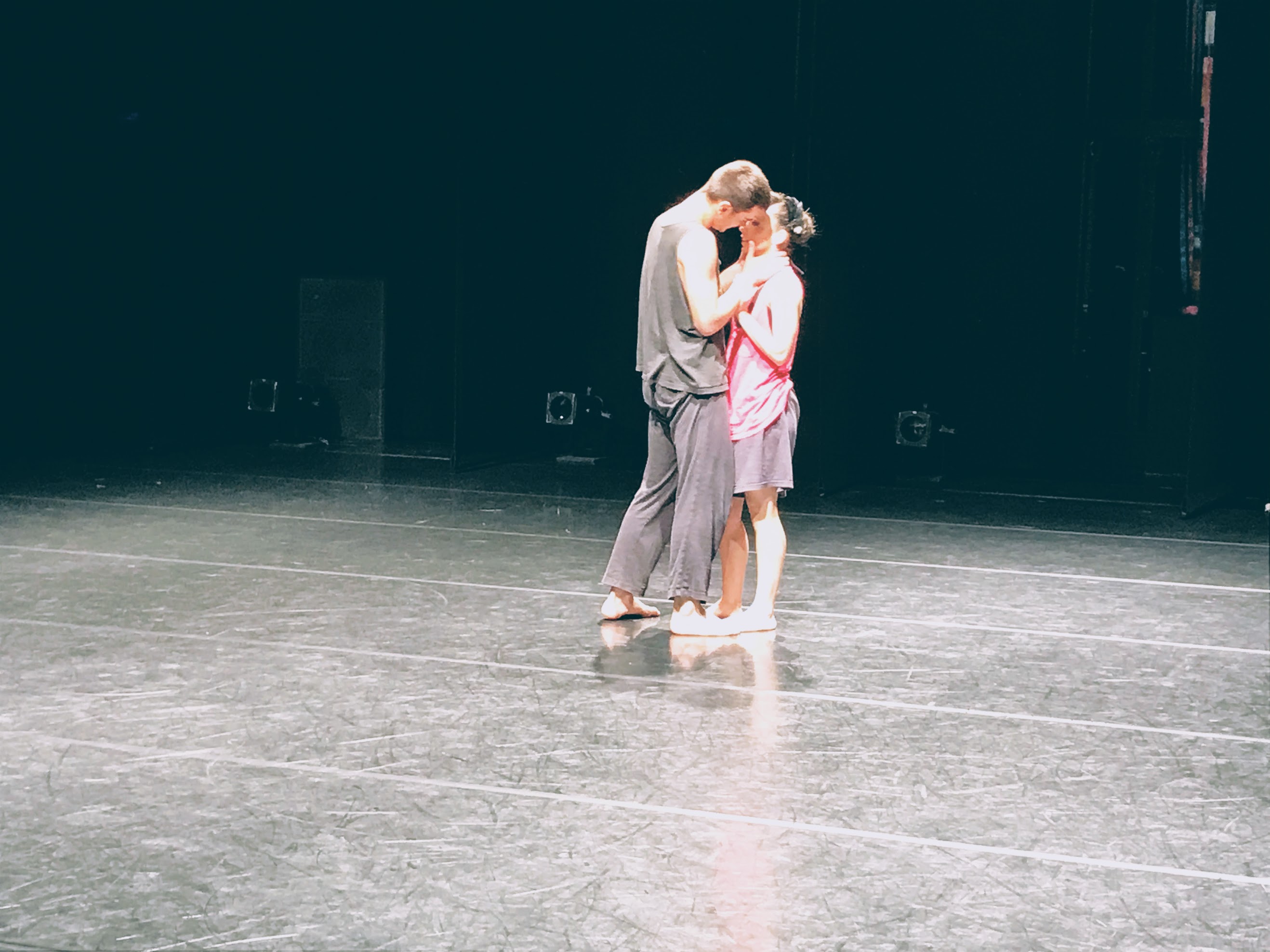
rehearsal

Only in  time

Photo: Gianmarco and Jennifer from the Opus Ballet Compagnia rehearsing in Porto, June 2017

References: T.S. Eliot, Four Quartets, Burnt Norton (1935)

Memory, hither come, And tune your merry notes


After a nervous smartphone breakdown, the cloud has been generous enough to give me back some pieces of what it seems to have been my recent life.

References

Memory, hither come by William Blake