’T is you that are the music, not your song. The song is but a door which, opening wide, Lets forth the pent-up melody inside, Your spirit’s harmony, which clear and strong Sing but of you. Throughout your whole life long Your songs, your thoughts, your doings, each divide This perfect beauty; waves within a tide, Or single notes amid a glorious throng. The song of earth has many different chords; Ocean has many moods and many tones Yet always ocean. In the damp Spring woods The painted trillium smiles, while crisp pine cones Autumn alone can ripen. So is this One music with a thousand cadences.
I can’t find a definitive answer. There are some genres—just a few—that don’t speak to me, but almost all music transforms the often banal rhythms of everyday life into something cinematic and wonderful.
I like to think that I’ve got this incredible range that spans from the raw power of punk to the grandiose drama of opera, the passionate intensity of flamenco to the groove mastery of Prince’s funk.
I am drawn to music that has intensity and emotional authenticity. This could be delivered through a screaming guitar, a soaring aria, or Prince’s unmistakable groove. I suppose these seemingly different genres all share that transformative cinematic quality. Each one paints everyday life with bold, dramatic strokes – just in very different colors.
Despite all critical advice, I have finally decided to watch Joker: Folie à Deux and actually liked it.
“Joker: Folie à Deux” succeeds brilliantly, in my opinion, in presenting music not as traditional Broadway spectacle, but as something far more intimate and psychologically honest—the way a real person might slip into musical response when processing their world. The film uses its musical sequences to show how characters experiencing mental illness might perceive reality, with songs emerging organically from their psychological states rather than as theatrical showstoppers.
This approach places the film in fascinating company with movies like “All That Jazz” and “Dancer in the Dark,” where musical elements emerge from psychological necessity rather than theatrical convention.
Lars von Trier’s Dancer in the Dark (2000) is a heart-wrenching musical drama that uses music as a form of escapism for its protagonist, Selma (Björk), a factory worker who is slowly losing her sight. Selma’s internal soundtrack is a series of elaborate musical numbers that she imagines to escape the harsh realities of her life.
The film’s musical sequences are starkly different from its grim, handheld-camera visuals. When Selma sings, the world around her transforms into a vibrant, dreamlike stage, filled with synchronized dancers and sweeping orchestration. These moments are not just fantasies; they are Selma’s way of coping with her struggles and finding beauty in an otherwise bleak existence.
What makes Dancer in the Dark so powerful is the contrast between Selma’s internal soundtrack and the external world. The music is a refuge, a place where she can momentarily forget her pain. However, as the film progresses, the line between her fantasies and reality begins to blur, leading to a devastating climax.
In All That Jazz, music isn’t just a backdrop—it’s the heartbeat of Joe Gideon’s world. The film uses musical numbers as a way to externalize Joe’s thoughts, fears, and desires. These sequences are often surreal, blending fantasy and reality in a way that mirrors Joe’s fragmented state of mind.
One of the most striking aspects of the film is how it uses music to explore Joe’s inner conflicts. For example, the recurring song “Take Off With Us” from the fictional musical Joe is directing becomes a metaphor for his own life—glamorous on the surface but deeply chaotic underneath. The musical numbers are often grandiose and theatrical, reflecting Joe’s larger-than-life personality and his tendency to escape into his art rather than confront his personal demons.
The film’s climax, set to the song “Bye Bye Life,” is a masterful use of music as an internal soundtrack. As Joe lies on his deathbed, he imagines a final, elaborate performance where he bids farewell to his loved ones and his own life. This sequence is both heartbreaking and exhilarating, as it captures Joe’s acceptance of his mortality while celebrating his passion for performance. The music here isn’t just a narrative device; it’s a window into Joe’s soul, revealing his regrets, his pride, and his ultimate surrender.
Like Bob Fosse’s semi-autobiographical exploration of a mind fracturing into musical fragments, “Joker” uses music both as a representation of psychological breaking and as an attempt to make sense of a fractured self.
What makes “Joker: Folie à Deux” particularly compelling is its critical examination of how audiences consume and destroy the very authenticity they claim to seek. Arthur’s relationship with his audience is fundamentally parasitic—they don’t see him as a person, but as a performance, a symbol, or a projection of their own desires. Even his most intimate musical moments become public spectacle, transforming personal expression into consumable entertainment.
This stands in stark contrast to David Lynch’s “Wild at Heart,” where Sailor’s Elvis channeling serves a completely different function. When Nicolas Cage’s Sailor breaks into Elvis, he’s not seeking validation—he’s expressing something essential about himself that can’t be contained in normal conversation. His musical moments are defiantly authentic, performed for himself and Lula while remaining beautifully unconcerned with audience approval.
The difference is crucial: Sailor tries to explain who he is but ultimately doesn’t need the audience’s approval, while Arthur is trapped in the tragic paradox of only being allowed to exist as what people think he is. In “Wild at Heart,” performance becomes liberation; in “Joker,” it becomes another form of confinement.
Both films explore the concept of shared reality, but they reach opposite conclusions about its power. Sailor and Lula’s relationship in “Wild at Heart” can be understood as a kind of folie à deux—a shared delusion—but it’s ultimately the fairy tale reinterpretation that wins out. Their shared fantasy world isn’t madness; it’s a shield against the real madness surrounding them. Their love story becomes a survival mechanism, with their heightened, stylized worldview protecting them from genuine grotesquerie.
“Joker: Folie à Deux,” however, suggests that shared musical reality is ultimately illusory. By the end, there’s the devastating recognition that nothing was truly shared—just parallel solitudes briefly overlapping before dissolving into the resigned acceptance of “That’s Life.”
Most of us also turn to internal soundtracks to help us process emotions, express what we can’t verbalize, and transform mundane moments into something more meaningful. Whether consciously or not, we live with our own ongoing musical theater—often of questionable taste—that helps us make sense of our daily experiences.
The key difference between healthy and destructive musical thinking lies in agency and authenticity. When our internal soundtracks serve genuine self-understanding rather than performance for others’ consumption, they become tools for emotional navigation rather than traps of external expectation.
David Lynch’s work consistently championed individual authenticity against societal norms, seeing personal expression as a sacred, almost magical force capable of transforming reality through sheer commitment to one’s authentic self.
This offers a hopeful counterpoint to “Joker’s” more pessimistic view of how individual authenticity can be crushed under the weight of public perception and media consumption. Where Lynch sees individual expression as liberating, “Joker” presents it as tragically vulnerable to commodification and distortion.
Perhaps the most honest approach to our internal musical theater is to embrace it with both commitment and humor—acknowledging its questionable taste while recognizing its genuine power to help us navigate life’s complexities. We can choose to be more like Sailor, using our personal soundtracks as tools for authentic self-expression, or risk becoming like Arthur, trapped by others’ expectations of our performance.
Music isn’t just entertainment—it’s a fundamental way humans process reality, express emotion, and connect with both ourselves and others. Whether it becomes a source of liberation or confinement depends on whether we’re performing for ourselves or for an audience that may never truly see us.
In the end, we’re all living with our own internal musical theater. The question isn’t whether this is normal or healthy—it’s whether we can maintain agency over our own soundtrack while staying true to the complex, sometimes ridiculous, often beautiful music of being human.
A Personal Note: The Power of the Snakeskin Jacket
After watching “Wild at Heart,” (for the first time) I was so moved by Sailor’s unapologetic authenticity—his commitment to being exactly who he was, snakeskin jacket and all—that I convinced my mother to buy me my own snakeskin jacket. It wasn’t about cosplay or imitation; it was about understanding that sometimes we need external symbols of our internal commitment to authenticity.
Like Sailor’s jacket, which he describes as “a symbol of my individuality and my belief in personal freedom,” my jacket became a reminder that it’s possible to navigate the world on your own terms, with your own soundtrack, regardless of what others might think. Sometimes the most profound cinematic experiences aren’t just about understanding characters—they’re about finding the courage to become more authentically ourselves.
That jacket still hangs in my closet, a tangible reminder that the best films don’t just entertain us—they give us permission to live more boldly, more musically, and more true to our own questionable-taste internal theater.
Probably jeans and t-shirt but i would be very worried because this would mean the world had turned into a very dark place.
The relationship between fashion and totalitarianism reveals itself in how authoritarian regimes consistently target personal expression through dress. Consider how the Nazis required Jewish people to wear identifying badges, or how Mao’s China pushed everyone toward identical blue and gray uniforms. These weren’t just practical policies – they were deliberate erasures of individuality that made dissent and difference immediately visible.
Totalitarian systems understand that clothing is one of our most intimate forms of daily self-expression. When you control what people wear, you’re not just regulating fabric and color – you’re regulating identity itself. The uniform becomes a constant reminder of the state’s power over the most basic aspects of personal choice. It eliminates the small daily acts of creativity and self-determination that keep individual spirit alive.
Fashion, even in its most mundane forms, represents a kind of micro-democracy. When you choose your morning outfit, you’re making decisions about how you want to present yourself to the world, what mood you’re in, what activities you’re planning, even what weather you’re expecting. These tiny choices accumulate into a larger sense of agency and personal autonomy.
Authoritarian regimes also weaponize dress codes to create and enforce social hierarchies. The Khmer Rouge’s black pajama uniforms weren’t just about conformity – they were about breaking down previous social distinctions and creating a new order where only party loyalty mattered. Similarly, school uniform policies in their most extreme forms can prefigure more serious restrictions on personal freedom.
Perhaps most insidiously, fashion control works because it feels so trivial that resistance seems petty. Who wants to die on the hill of wearing colorful socks? Yet history shows us repeatedly that these “small” freedoms often serve as canaries in the coal mine. When societies begin restricting personal expression in dress, it’s frequently a precursor to much more serious erosions of liberty.
The psychological impact runs deep too. Getting dressed each morning is an act of self-creation, a daily ritual where we compose ourselves for the world. Remove that choice, and you’ve damaged something fundamental about human dignity and self-worth. The enforced sameness creates a kind of learned helplessness that extends far beyond clothing.
The relationship between fashion and totalitarianism becomes even more chilling when we examine its manifestations across history, literature, and film. These examples reveal how clothing control operates as both symbol and instrument of oppression.
Historical Examples
The interwar period saw a proliferation of “shirt movements” across Europe Shirt Movements in Interwar Europe: a Totalitarian Fashion – fascist groups that expressed their ideology through colored uniforms. Hitler’s Brown Shirts, Mussolini’s Black Shirts, and Franco’s Blue Shirts weren’t just practical clothing but visual manifestos of authoritarian identity. These uniforms served multiple purposes: they created instant group identification, intimidated opponents, and transformed political rallies into military-style displays of power.
Nazi Germany provides perhaps the most systematic example of fashion as totalitarian control. The regime didn’t just require Jews to wear yellow stars – it regulated clothing across society. The Hitler Youth had specific uniforms that emphasized conformity and militaristic values. Women were encouraged to abandon cosmetics and “foreign” fashions in favor of traditional German dress that supported Nazi ideals of motherhood and racial purity.
In Mao’s China, the blue and gray “Mao suits” became virtually mandatory, erasing centuries of Chinese sartorial tradition. During the Cultural Revolution, wearing anything remotely Western or colorful could mark you as a counter-revolutionary. The uniformity wasn’t accidental – it was designed to eliminate visual markers of class, regional identity, and individual taste.
Literary Explorations
George Orwell’s “1984” remains the most powerful literary examination of totalitarian clothing control. In Big Brother’s regime, Winston Smith lives “a sordid dehumanized life devoid of all the traditional sources of happiness” Slavery in Modern Clothing in Orwell’s 1984 – Crisis Magazine, and clothing plays a crucial role in this dehumanization. The Party members wear identical blue overalls, while the telescreen constantly monitors even the most private moments of dressing. Julia’s small act of rebellion – wearing makeup and fixing her hair – becomes a revolutionary gesture precisely because it asserts individual identity against the state’s demand for uniformity.
Margaret Atwood’s “The Handmaid’s Tale” uses clothing as a central metaphor for totalitarian control. The red robes and white bonnets of the handmaids aren’t just uniforms but symbols of reduced humanity – they transform women into walking wombs while stripping away personal identity. The color coding extends throughout Gilead society: blue for wives, green for marthas, creating a visual hierarchy that makes resistance immediately visible.
Ray Bradbury’s “Fahrenheit 451” explores how even subtle conformity in dress reflects deeper intellectual conformity. The firefighters’ uniforms with their salamander symbols and the identical leisure wear of the general population mirror the mental uniformity the state seeks to impose.
Cinematic Representations
Film has powerfully visualized fashion’s role in totalitarian control. Fritz Lang’s “Metropolis” (1927) presciently showed how clothing could divide society into rigid castes – the identical work clothes of the underground laborers versus the elegant fashions of the surface elite.
More recent films like “The Hunger Games” series use fashion as a central element of totalitarian critique. The Capitol’s obsession with extreme, ever-changing fashion contrasts sharply with the drab, practical clothing of the districts, illustrating how fashion can become both a tool of oppression and a symbol of decadent excess.
“V for Vendetta” demonstrates how uniform iconography can be reclaimed as resistance – the Guy Fawkes masks transforming anonymous conformity into anonymous rebellion.
Subtler Controls
The most insidious examples often involve seemingly voluntary conformity. Corporate dress codes, school uniforms, and social pressure to dress “appropriately” can prefigure more serious restrictions. Even democratic societies wrestle with how much clothing choice to allow – from debates over religious dress to workplace appearance standards.
The psychological impact appears consistently across these examples. When totalitarian systems control clothing, they’re not just regulating fabric – they’re conditioning minds to accept that the most intimate daily choices aren’t really choices at all. The person who accepts that the state can dictate their morning wardrobe has already surrendered a crucial piece of mental autonomy.
What makes these historical, literary, and cinematic examples so disturbing is how they reveal the progression from small restrictions to total control. It starts with “reasonable” regulations – safety, unity, tradition – and gradually expands until the very concept of personal choice in appearance becomes foreign. The uniform becomes not just what you wear, but who you are.
There are books that entertain us, books that educate us, and then there are books that find us exactly when we need them most. For me, that book was “Les Malheurs de Sophie” by Comtesse de Ségur—a slim volume about a mischievous little French girl whose disasters somehow made perfect sense to a kid who never quite fit the mold.
Sophie was gloriously, unapologetically flawed. She cut her own hair with disastrous results. She melted her favorite wax doll into puddles. She fed her goldfish bread until they died, convinced she was being kind. She broke things, lost things, and approached the world with a curiosity that invariably led to chaos.
Reading about Sophie’s misadventures felt like looking into a mirror—not because I was destructive, but because I recognized that particular brand of being misunderstood. Sophie’s logic made sense to her, just as my own odd thoughts and interests made sense to me. The adults in her world sighed and shook their heads, much like the grown-ups in mine did when I asked too many questions or got excited about things other kids found boring.
What struck me most wasn’t Sophie’s misbehavior, but her earnestness. She wasn’t trying to be difficult—she was genuinely trying to figure out how the world worked, often with spectacularly wrong conclusions. Her attempts at helpfulness backfired. Her creative solutions created bigger problems. Sound familiar to anyone who’s ever felt like they’re speaking a different language than everyone else?
Comtesse de Ségur didn’t write Sophie as a cautionary tale or a perfect little angel. She wrote her as a real child—impulsive, curious, sometimes selfish, often confused, but fundamentally good-hearted. For a kid who felt like their own thoughts and reactions were somehow “wrong,” Sophie was revolutionary. Here was a character who made mistakes not out of malice but out of a different way of seeing the world.
Yes, “Les Malheurs de Sophie” was written as a moral tale for children, complete with consequences for poor choices. But what I absorbed wasn’t the moralizing—it was the acceptance. Sophie was loved despite her flaws. Her stepmother, Madame de Réan, was patient and kind. Even when Sophie’s plans went awry, she wasn’t rejected or labeled as “difficult.” She was guided, corrected, and most importantly, understood.
This was radical for a child who often felt like an inconvenience, whose questions were too complex, whose interests were too intense, whose emotional reactions seemed too big for the situations that prompted them. Sophie’s world had room for misfits. It suggested that being different wasn’t a character flaw to be fixed, but simply another way of being human.
Sophie stumbled through her childhood making mistake after mistake, but she was never written off. Her curiosity, even when it led to disaster, was treated as a fundamental part of who she was.
For kids who feel like they’re always getting it wrong—who are too loud or too quiet, too interested in the wrong things, too sensitive or not sensitive enough—Sophie’s story offers a different narrative. It says that the children who don’t fit neatly into expected boxes aren’t broken; they’re just Sophie-shaped instead of conventional-shaped, and that’s perfectly fine.
Sometimes the books that save us aren’t the ones with grand adventures or profound wisdom. Sometimes they’re the quiet stories about girls who cut their own hair badly and love too hard and make beautiful messes of simple tasks. Sometimes they’re about finding yourself in a character who proves that being odd isn’t a failing—it’s just another way of being wonderfully, complexly human.
Years later, I discovered that Sophie’s story had found another voice entirely. Clarice Lispector’s “Os Desastres de Sofia” deliberately borrows its title from the Comtesse de Ségur’s work, creating a literary dialogue across centuries and cultures. But where Ségur’s Sophie was a child navigating social expectations through innocent mischief, Lispector’s Sofia embodies something far more complex—the devastating intensity of a nine-year-old girl who terrorizes her teacher not out of malice, but out of a desperate, unconscious attempt to wake him up to life itself.
Lispector’s Sofia sits in the back row, speaks loudly, stares defiantly, and disrupts her teacher’s lessons with the same earnest confusion that characterized her French predecessor. But this Sofia operates on a deeper psychological level—she acts “moved by a binary impulse of rage and love, in the confused hope of awakening him to life”. She sees through to her teacher’s cowardice, his retreat from living, and her child’s wisdom compels her to try to save him, even though she doesn’t understand what she’s doing or why.
The parallel between these two Sofias reveals something profound about the archetype of the misfit child. Both represent children whose inner logic operates differently from social expectations, but where Ségur’s Sophie learns to conform, Lispector’s Sofia remains uncompromisingly true to her authentic self, even when it leads to psychological devastation. The Brazilian Sofia’s story ends not with moral lessons learned, but with the recognition that some kinds of wisdom—the kind that sees too clearly—come at a terrible price.
Reading Lispector’s take on Sofia later in life illuminated something I hadn’t fully grasped as a child: that the discomfort other people feel around “difficult” children isn’t always about the child’s behavior—it’s often about the truths the child unconsciously exposes. Both Sofias, in their different ways, hold up mirrors that adults find uncomfortable to look into.
This literary conversation between the two Sofias suggests that the experience of being an outsider child isn’t just about personal struggle—it’s about carrying a different kind of perception that the world both needs and resists. The French Sophie learns to channel her uniqueness into acceptable forms; the Brazilian Sofia shows us what happens when that channeling fails, when the child’s vision remains too pure, too uncompromising.
For those of us who grew up feeling like we saw the world through a different lens, both Sofias offer validation: the first showing us we can belong while remaining ourselves, the second honoring the parts of us that perhaps never quite learned to fit, that remained forever a little too intense, a little too perceptive, a little too willing to speak uncomfortable truths.
Summer, 1992. I was leaving my boyfriend’s house to head home. The night air held that particular warmth of early summer evenings—the kind that makes you believe everything is possible. I imagine I was thinking about England, where I’d soon be studying. Perhaps I was daydreaming about the perfect life that seemed to be unfolding before me. It was full of love. I was utterly in love.
And then, nothing.
The next moment in my memory is waking up in a hospital bed, looking at a woman I couldn’t recognize—my own mother. They tell me I flew 80 meters across the street when the car hit me. The driver never stopped. Never looked back to see the aftermath of their impact, both the physical body they’d broken and the future they’d altered.
I’ve had to reconstruct this night through police reports and courtroom testimonies. Witnesses described what I cannot remember. It’s disorienting to have such a significant moment of your life exist only in the accounts of strangers. It’s as if the narrative of my life has a tear in it, edges that don’t quite meet.
This was the summer before England. Before university. Before what should have been the beginning of everything.
What followed was not the perfect life I had meticulously planned. Looking back now, I see how that night became the first domino in a long sequence of self-destruction. The person who flew across that street never quite landed. Or perhaps she landed as someone else entirely.
I’ve spent years trying to understand why surviving led to destroying. Was it the traumatic brain injury altering something fundamental in my decision-making? Was it the brush with mortality that made me reckless? Or was it simpler than that—the realization that control is an illusion, that perfect lives don’t exist, that plans are just elaborate wishes?
The driver who hit me took many things. My memories of that night. My sense of safety. My trajectory. But perhaps the most significant thing they took was my belief in the orderly progression of life—that good choices lead to good outcomes, that we are the architects of our futures.
I’ve come to understand something else in the years since. That perfect life I thought I was destroying after the accident? It was never real. It was never possible. It existed only in the mind of a young woman who hadn’t yet learned that life isn’t a straight line but a series of collisions—some literal, some figurative—that push us in unexpected directions.
Sometimes I wonder who I would have become without that night. Would the perfect life have unfolded as planned? Or would some other moment have become my pivot point?
These questions have no answers. There is only this life—the one that began again in a hospital bed, looking at a mother I couldn’t recognize, piecing together a new understanding of myself from the fragments that remained.
It wasn’t the summer I expected. It wasn’t the life I planned. No bones were broken but something else was shattered.
Hit and run
More than silence was needed, what was needed was at least a screaming fit, a nervous breakdown, a fire, doors slamming, a rushing about. But you said nothing, you wanted to cry, but first you had to straighten up your hair, you asked me the time, it was 3 p.m., I don’t remember now which day, maybe a day when it was I who was dying, a day that had begun badly, I had left the keys in the lock on the inside of the door, and now there you were, dead (dead and even looking dead!), gazing up at me in silence stretched out on the road, and no one asked a thing and no one spoke aloud.
I first found this poem while browsing books at a FNAC store in downtown Porto. It stuck with me because, while in high school, a colleague was run over. Another girl and I called a friend who lived near her family (pre-cell phone era). He went to get her mum and meet us at the hospital. When they finally arrived, this boy was furious. The girl’s mother had told him to wait while she did her hair and makeup.
Art has long been regarded as a vessel for truth, transcending mere aesthetics to probe the depths of human experience. For Hegel, art is a stage in the unfolding of the Absolute Spirit, rendering abstract truths sensuously intelligible. Harold Bloom, in Take Arms Against a Sea of Troubles, positions poetry as a shield against existential despair, a means of self-creation in the face of chaos. This essay explores how poetry, as an art form, bridges Hegel’s universal truth and Bloom’s individual salvation, arguing that poetry uniquely mediates between collective human consciousness and personal revelation.
Hegel’s philosophy situates art within the dialectical journey of the Absolute Spirit toward self-realization. In his Lectures on Aesthetics, he posits that art’s purpose is to “unfold the truth” by embodying spiritual ideals in material forms. Unlike philosophy, which abstracts truth into concepts, art makes truth palpable through imagery, sound, and narrative. Poetry, as the highest form of verbal art, synthesizes the concrete and the abstract, using language to evoke both emotion and intellect. For Hegel, great poetry—such as Greek tragedy or Shakespearean drama—captures the spirit of its age, reflecting societal values and conflicts. The truth here is historical and collective, a manifestation of humanity’s evolving self-awareness.
Bloom’s Take Arms Against a Sea of Troubles shifts the focus inward, framing poetry as a tool for individual survival. Drawing on Shakespeare’s Hamlet (“take arms against a sea of troubles”), Bloom argues that poetry equips readers to confront suffering and mortality. Through close engagement with canonical poets—from Milton to Whitman—readers forge their own identities, resisting the “anxiety of influence” by internalizing and reinterpreting poetic voices. For Bloom, truth is not universal but existential; it emerges in the interplay between reader and text, offering solace and self-knowledge. Poetry becomes a “mirror turned lamp,” illuminating the reader’s inner world while reflecting shared human struggles.
Hegel and Bloom converge in their belief that art reveals truths inaccessible to pure reason, but they diverge in scope. Hegel’s truth is teleological, part of humanity’s collective march toward freedom. Bloom’s is intimate, a dialogue between solitary reader and text. Yet poetry bridges these realms. Consider Wordsworth’s Tintern Abbey: Hegel might laud its embodiment of Romanticism’s spirit, while Bloom would emphasize its therapeutic role in reconciling memory and loss. Similarly, Emily Dickinson’s condensed verses distill metaphysical inquiries into personal lyricism, satisfying Hegel’s demand for sensuous form and Bloom’s call for existential courage.
Poetry’s power lies in its duality. It transforms abstract truths (Hegel’s “Absolute”) into visceral imagery, while inviting readers to project their lived experiences onto its language (Bloom’s “self-creation”). A Shakespearean sonnet about time’s passage speaks both to Renaissance cosmology and a modern reader’s fear of mortality. This duality ensures poetry’s endurance: it is both a cultural artifact and a personal companion.
Hegel and Bloom, though separated by centuries and aims, collectively affirm poetry’s role as a mediator of truth. For Hegel, it is a historical force; for Bloom, a lifeline. Together, they illustrate how poetry transcends its form to become a space where universal and personal truths coexist. In an age of fragmentation, poetry remains vital—not merely as a relic of the spirit’s journey, but as a living dialogue between the self and the sublime. As long as humans seek meaning in chaos, poetry will endure as both witness and weapon, unfolding truths that philosophy cannot touch and solace that history cannot provide.
Disclaimer: not really jotting down the first thing that comes to mind, practicing for a speech next week
If you don’t know the kind of person I am and I don’t know the kind of person you are a pattern that others made may prevail in the world and following the wrong god home we may miss our star.
For there is many a small betrayal in the mind, a shrug that lets the fragile sequence break sending with shouts the horrible errors of childhood storming out to play through the broken dyke.
And as elephants parade holding each elephant’s tail, but if one wanders the circus won’t find the park, I call it cruel and maybe the root of all cruelty to know what occurs but not recognize the fact.
And so I appeal to a voice, to something shadowy, a remote important region in all who talk: though we could fool each other, we should consider— lest the parade of our mutual life get lost in the dark.
For it is important that awake people be awake, or a breaking line may discourage them back to sleep; the signals we give—yes or no, or maybe— should be clear: the darkness around us is deep.
Other than The Stranger by Albert Camus that I have first read when I was 12 and had to re-read years later, for obvious reasons, I do not tend to return to books I’ve already read unless I’m reading for work.
Published in 1999, this prescient work examines themes that have only grown more relevant: the fragility of memory, the construction of identity, and our desperate attempts to escape emotional pain.
The unnamed protagonist works as a traveling salesman for a corporation that manufactures and distributes memory-erasing drugs. He traverses a near-future landscape of international cities—Tokyo, Barcelona, Los Angeles—selling his wares to those desperate to forget traumas, heartbreaks, and regrets. As he helps others erase their pasts, he increasingly samples his own product, gradually eroding his own identity in the process.
What makes Loriga’s narrative particularly compelling is how it positions memory erasure not as science fiction but as a logical extension of our pharmaceutical culture. The protagonist doesn’t view himself as peddling something extraordinary, but rather as providing a service comparable to antidepressants or sleep aids—just another chemical solution to human suffering.
The novel poses a profound question: If we are, essentially, the sum of our memories, what happens when we selectively delete parts of our past? The protagonist’s steady deterioration as he abuses memory-erasing drugs illustrates the devastating consequences. Without the anchoring force of his personal history, he drifts through existence as a hollow shell, unable to form meaningful connections or understand his own desires and fears. Loriga’s spare prose mirrors the protagonist’s fractured psyche, leaving readers to question: If we erase our pain, what remains of our humanity?
At its core, Tokyo Doesn’t Love Us Anymore is a meditation on memory’s role in shaping identity. Loriga asks: Are we more than the sum of our experiences? The novel’s dystopia isn’t ruled by tyrants but by a collective yearning to numb the soul. Memorama, the drug, becomes a metaphor for modern escapes—social media, substances, consumerism—that promise freedom but deliver alienation.
Tokyo is both setting and symbol. Loriga paints it as a glittering ghost town, where skyscrapers pulse with artificial light but human connection flickers out. The protagonist wanders through love hotels, karaoke bars, and rain-soaked alleyways, each locale steeped in loneliness. Unlike the chaotic vitality of real-world Tokyo, this city feels like a screensaver—vivid yet void. It’s a backdrop that recalls Blade Runner’s dystopia but feels eerily adjacent to our tech-saturated present.
Our salesman is no hero. He’s a hollow man, a mirror for the reader’s complicity in systems of escape. His internal monologue—terse, fragmented—reveals a soul gasping for meaning. When he muses, “I sell what I need most,” we glimpse Loriga’s critique of capitalism’s cycle of creation and consumption. The character’s anonymity amplifies his universality: he could be anyone, anywhere, trading fragments of self for fleeting peace.
In 2025, as AI filters our realities and “digital detox” enters the lexicon, Tokyo Doesn’t Love Us Anymore reads like a prophecy. It challenges us to ask: What do we lose when we prioritize comfort over growth? The novel doesn’t offer answers but lingers like a phantom limb, reminding us that pain and joy are inseparable threads in the fabric of self.
Ray Loriga’s book is not a love letter to Tokyo but a requiem for the modern soul. It’s a slim, sharp novel that cuts deeper with each read, leaving readers to wonder: Would I take the pill? As you close the book, Tokyo’s neon fades, but the question remains, glowing in the dark.
In Federico Fellini’s masterpiece “La Dolce Vita” (1960), the protagonist Marcello Rubini wanders through a decadent Rome, encountering various women who represent different facets of desire, connection, and modern existence. Among these characters, two stand in fascinating contrast to each other: Sylvia, the exuberant American starlet, and Maddalena, the wealthy, world-weary heiress.
Sylvia, portrayed with iconic flair by Anita Ekberg, embodies pure enthusiasm for life. Her character arrives in Rome like a force of nature, commanding attention and transforming the ancient city into her personal playground. The famous Trevi Fountain scene captures her essence perfectly—wading into the water with childlike wonder while fully dressed in an evening gown, beckoning Marcello to join her in this spontaneous celebration of being alive.
What makes Sylvia so captivating is her unfiltered joy. She moves through the world with an almost supernatural confidence, unconcerned with social conventions or consequences. When she climbs the stairs of St. Peter’s Basilica, dances in nightclubs, or pets kittens in an empty apartment, she does so with complete presence in the moment. She represents a kind of freedom that seems increasingly elusive in modern society—the freedom to experience pleasure without cynicism.
Sylvia’s appeal is immediate, visceral, and larger than life. She is the embodiment of spectacle in a film that is itself concerned with spectacle. Yet her character remains somewhat untouchable, a fantasy that can be approached but never fully possessed.
In stark contrast stands Maddalena, played with nuanced perfection by Anouk Aimée. Where Sylvia bursts with emotion, Maddalena presents a cool, composed exterior. Her elegance isn’t performative but ingrained—the natural result of someone who has seen all there is to see in Rome’s high society and found it wanting.
Maddalena navigates the night with a detached awareness that makes her all the more alluring. She’s not impressed by the trappings of wealth and fame because they are her everyday reality. Instead, she seeks authentic connection in a world of artifice, most memorably in the scene where she and Marcello communicate through the echo chambers of a flooded basement in a ruined aristocratic villa—a perfect metaphor for the distance that exists even in their moments of intimacy.
Her world-weariness isn’t simply cynicism but a form of wisdom. She understands the hollowness of “la dolce vita” because she has lived it fully. This knowing perspective gives her character depth and complexity that contrasts with Sylvia’s more straightforward exuberance.
The appeal of both characters creates an internal conflict familiar to many of us. Do we embrace life with Sylvia’s abandon, diving headfirst into experiences without reservation? Or do we move through the world with Maddalena’s sophisticated detachment, protecting ourselves from disappointment while seeking deeper meaning?
Fellini doesn’t present one approach as superior to the other. Instead, he uses these characters to illustrate the tensions of modern existence. Marcello is pulled between these poles throughout the film—between passion and detachment, innocence and experience, spontaneity and reflection. He does seem to reject flat out the emotional stability offered by Emma whose “sticky, maternal love” he despises.
What makes these characters so enduring is that they represent more than just different types of feminine appeal. They embody different philosophies of living, different responses to a world that simultaneously offers too much and not enough. Sylvia’s enthusiasm and Maddalena’s coolness aren’t just personality traits but strategies for navigating a changing society.
I would be Sylvia in the days I want to live as a fleeting dream, a force of nature that dazzles but never truly belongs. This is, I suppose, the luxury of anonymity. When we are the foreigner, no one really has any reference on how and who we are. Therefore, they have no idea on how we are supposed to be.
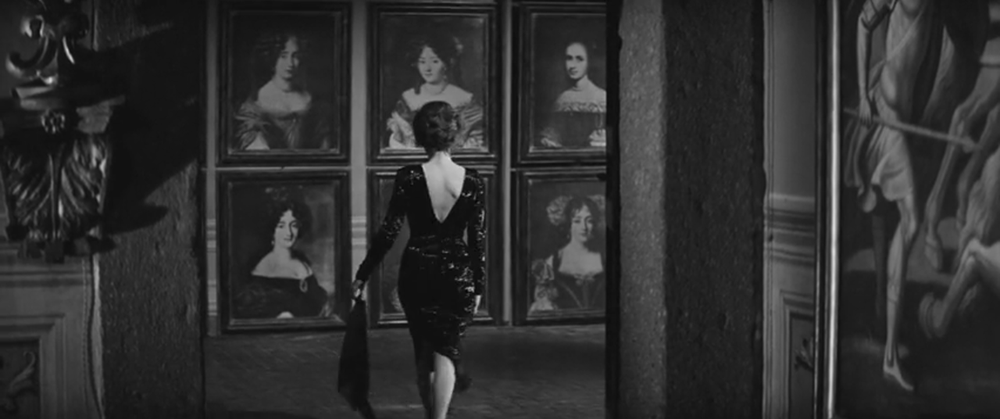
While Sylvia is the unattainable fantasy, Maddalena mirrors Marcello’s existential drift. She’s just as lost, but with a sharper self-awareness. A proud and typical GenX I, and most probably a lot of others reared on post punk and goth influences, resonate with depth, complexity, and the ache of searching for meaning in a world that feels hollow and could, thus, more easily be Maddalena.
Anouk Aimée plays her with this devastating coolness—luxury draped over emptiness. She craves love but sabotages ii. She’s too disillusioned to hope, yet too alive to stop searching. Fellini frames her suffering with such deliberate elegance that her loneliness becomes inseparable from her glamour. But this isn’t mere vanity—it’s a survival tactic, a way to exert control over the void.
Sylvia: Life as spectacle, pure dolce vita (the Trevi Fountain scene = ecstatic but fleeting).
Maddalena: Life as introspection, the aftermath of indulgence. She’s what happens when the party ends.
Fellini’s Contrast: Sylvia is myth; Maddalena is reality. One is adored, the other understood (sort of)—which is more tragic?
Ah, the young girl at the beach—Fellini’s silent, enigmatic coda to La Dolce Vita. She’s the film’s great unanswered question, a glimmer of purity in a world of exhausted decadence. A waitress from the seaside café (played by Valeria Ciangottini), unnamed, barely speaking. Marcello meets her earlier when she shyly asks for his autograph. Unlike the jaded socialites and performers, she’s untouched by Rome’s corruption. Her white dress mirrors Sylvia’s, but without the erotic charge—it’s virginal, almost angelic.
She waves, but it’s ambiguous—is it farewell, or an invitation? The sea (a classic symbol of renewal) separates them. She calls to him across the water, but he can’t hear her (or won’t). Her words are lost in the wind—Fellini’s metaphor for Marcello’s spiritual deafness. She is the irreversible loss of one’s own innocence, not through fate, but through a thousand small surrenders.
I have tried but, I am not a morning person. I tend to be a person who lingers. I tend to wake up three hours before I am due to arrive at work. This is somewhat ridiculous. I live 15 km away. I once told my therapist this because I thought it was a sign of my inability to focus. He called me a social dilettante. I think it was meant as an insult. I didn’t take it as one. In my mind, I’m just resisting the urge to be a productive worker/consumer/tax-payer.
I wasn’t meant for reality, but life came and found me
Of course I manage to work and be some sort of productive member of society, I manage to take care of myself, pay the bills and everything else I am supposed to be doing. Next time around, I might be part of some 5 am club, I might be the bright eyed morning person who reads, meditates and writes and still has time to exercise before heading out the door. For now, I manage to read the news and loose track of time. Every single morning.
And there are many whose dullness and sameness of life is not what they wanted for their life, nor the result of not having wanted any life, but just a dulling of their own self-awareness, a spontaneous irony of the intellect.
I sometimes think that the decision of living with two dogs was a sort of an unconscious attempt to ground myself and feel responsible towards other living beings. It has worked for the past 5 years.
I’ve never had a knack for the active life. I’ve always taken wrong steps that no one else takes; I’ve always had to make an effort to do what comes naturally to other people. I’ve always wanted to achieve what others have achieved almost without wanting it. Between me and life there were always sheets of frosted glass that I couldn’t tell were there by sight or by touch; I didn’t live that life or that dimension. I was the daydream of what I wanted to be, and my dreaming began in my will: my goals were always the first fiction of what I never was.
Some people enter a room like a storm; others radiate calm. Their “frequency” alters the space around them.
Do you rush? Linger? Dance while cooking? Your cadence reveals inner worlds.
The words you choose
Favorite phrases, slang, or even silences—words betray your history, humor, and heart.
How you frame experiences—a scientist might describe love as chemistry; a poet, as a wildfire. The specific vocabulary, phrases, and metaphors someone gravitates toward creates a verbal fingerprint. I’ve noticed how certain people have signature expressions or ways of framing ideas that immediately identify them, even in writing
How you treat others
The small kindnesses or thoughtlessness, who we make time for, how we respond to vulnerability or need – these interactions form patterns that define us. Some people consistently elevate others, while some drain energy from every room.
Your memory
It’s not just what we remember, but how we remember, what we forget, and how those memories reshape us over time. As Oliver Sacks said “Memory is dialogic and arises not only from direct experience but from the intercourse of many minds. […] It is a form of storytelling that goes on in the mind and never stops. […] Our memories are, in the end, a shifting, vanishing, mutating thing, a mirage of unreliable glimpses.” We don’t just have memories; we curate them, unconsciously editing our past to make sense of our present.
Your contradictions
Some people manage to be elegant yet unsettling, cool yet chaotic, polished but always a little off.
Each of us is an entire society, a whole neighborhood of Mystery; it is fitting that we at least make the life of this neighborhood elegant and distinguished, that in the celebrations of our sensations there be refinement and decorum, and that, because it is sober, there be courtesy in the banquets of our thoughts.












 Stories from A Closet of Errors