

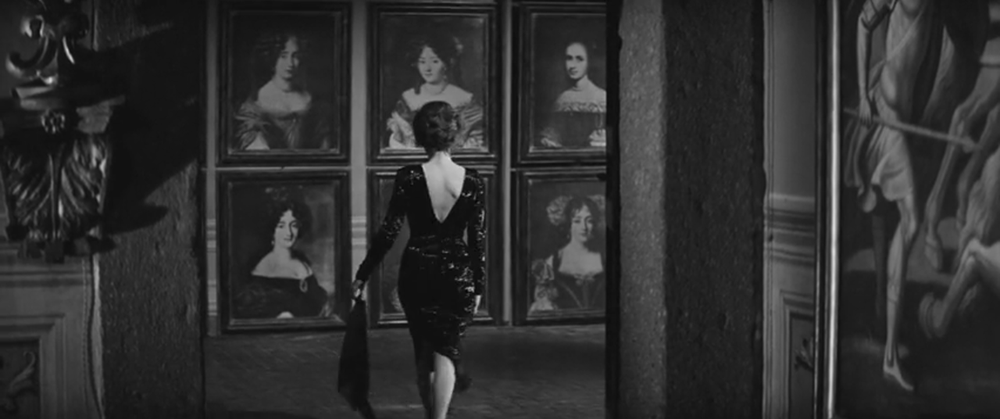
In Federico Fellini’s masterpiece “La Dolce Vita” (1960), the protagonist Marcello Rubini wanders through a decadent Rome, encountering various women who represent different facets of desire, connection, and modern existence. Among these characters, two stand in fascinating contrast to each other: Sylvia, the exuberant American starlet, and Maddalena, the wealthy, world-weary heiress.
Sylvia, portrayed with iconic flair by Anita Ekberg, embodies pure enthusiasm for life. Her character arrives in Rome like a force of nature, commanding attention and transforming the ancient city into her personal playground. The famous Trevi Fountain scene captures her essence perfectly—wading into the water with childlike wonder while fully dressed in an evening gown, beckoning Marcello to join her in this spontaneous celebration of being alive.
What makes Sylvia so captivating is her unfiltered joy. She moves through the world with an almost supernatural confidence, unconcerned with social conventions or consequences. When she climbs the stairs of St. Peter’s Basilica, dances in nightclubs, or pets kittens in an empty apartment, she does so with complete presence in the moment. She represents a kind of freedom that seems increasingly elusive in modern society—the freedom to experience pleasure without cynicism.
Sylvia’s appeal is immediate, visceral, and larger than life. She is the embodiment of spectacle in a film that is itself concerned with spectacle. Yet her character remains somewhat untouchable, a fantasy that can be approached but never fully possessed.
In stark contrast stands Maddalena, played with nuanced perfection by Anouk Aimée. Where Sylvia bursts with emotion, Maddalena presents a cool, composed exterior. Her elegance isn’t performative but ingrained—the natural result of someone who has seen all there is to see in Rome’s high society and found it wanting.
Maddalena navigates the night with a detached awareness that makes her all the more alluring. She’s not impressed by the trappings of wealth and fame because they are her everyday reality. Instead, she seeks authentic connection in a world of artifice, most memorably in the scene where she and Marcello communicate through the echo chambers of a flooded basement in a ruined aristocratic villa—a perfect metaphor for the distance that exists even in their moments of intimacy.
Her world-weariness isn’t simply cynicism but a form of wisdom. She understands the hollowness of “la dolce vita” because she has lived it fully. This knowing perspective gives her character depth and complexity that contrasts with Sylvia’s more straightforward exuberance.
The appeal of both characters creates an internal conflict familiar to many of us. Do we embrace life with Sylvia’s abandon, diving headfirst into experiences without reservation? Or do we move through the world with Maddalena’s sophisticated detachment, protecting ourselves from disappointment while seeking deeper meaning?
Fellini doesn’t present one approach as superior to the other. Instead, he uses these characters to illustrate the tensions of modern existence. Marcello is pulled between these poles throughout the film—between passion and detachment, innocence and experience, spontaneity and reflection. He does seem to reject flat out the emotional stability offered by Emma whose “sticky, maternal love” he despises.
What makes these characters so enduring is that they represent more than just different types of feminine appeal. They embody different philosophies of living, different responses to a world that simultaneously offers too much and not enough. Sylvia’s enthusiasm and Maddalena’s coolness aren’t just personality traits but strategies for navigating a changing society.
I would be Sylvia in the days I want to live as a fleeting dream, a force of nature that dazzles but never truly belongs. This is, I suppose, the luxury of anonymity. When we are the foreigner, no one really has any reference on how and who we are. Therefore, they have no idea on how we are supposed to be.
While Sylvia is the unattainable fantasy, Maddalena mirrors Marcello’s existential drift. She’s just as lost, but with a sharper self-awareness. A proud and typical GenX I, and most probably a lot of others reared on post punk and goth influences, resonate with depth, complexity, and the ache of searching for meaning in a world that feels hollow and could, thus, more easily be Maddalena.
Anouk Aimée plays her with this devastating coolness—luxury draped over emptiness. She craves love but sabotages ii. She’s too disillusioned to hope, yet too alive to stop searching. Fellini frames her suffering with such deliberate elegance that her loneliness becomes inseparable from her glamour. But this isn’t mere vanity—it’s a survival tactic, a way to exert control over the void.
- Sylvia: Life as spectacle, pure dolce vita (the Trevi Fountain scene = ecstatic but fleeting).
- Maddalena: Life as introspection, the aftermath of indulgence. She’s what happens when the party ends.
- Fellini’s Contrast: Sylvia is myth; Maddalena is reality. One is adored, the other understood (sort of)—which is more tragic?
Ah, the young girl at the beach—Fellini’s silent, enigmatic coda to La Dolce Vita. She’s the film’s great unanswered question, a glimmer of purity in a world of exhausted decadence. A waitress from the seaside café (played by Valeria Ciangottini), unnamed, barely speaking. Marcello meets her earlier when she shyly asks for his autograph. Unlike the jaded socialites and performers, she’s untouched by Rome’s corruption. Her white dress mirrors Sylvia’s, but without the erotic charge—it’s virginal, almost angelic.
She waves, but it’s ambiguous—is it farewell, or an invitation? The sea (a classic symbol of renewal) separates them. She calls to him across the water, but he can’t hear her (or won’t). Her words are lost in the wind—Fellini’s metaphor for Marcello’s spiritual deafness. She is the irreversible loss of one’s own innocence, not through fate, but through a thousand small surrenders.
 Stories from A Closet of Errors
❤️💕
LikeLiked by 1 person
Wonderful ♥️
LikeLiked by 1 person
Thank you!
LikeLike