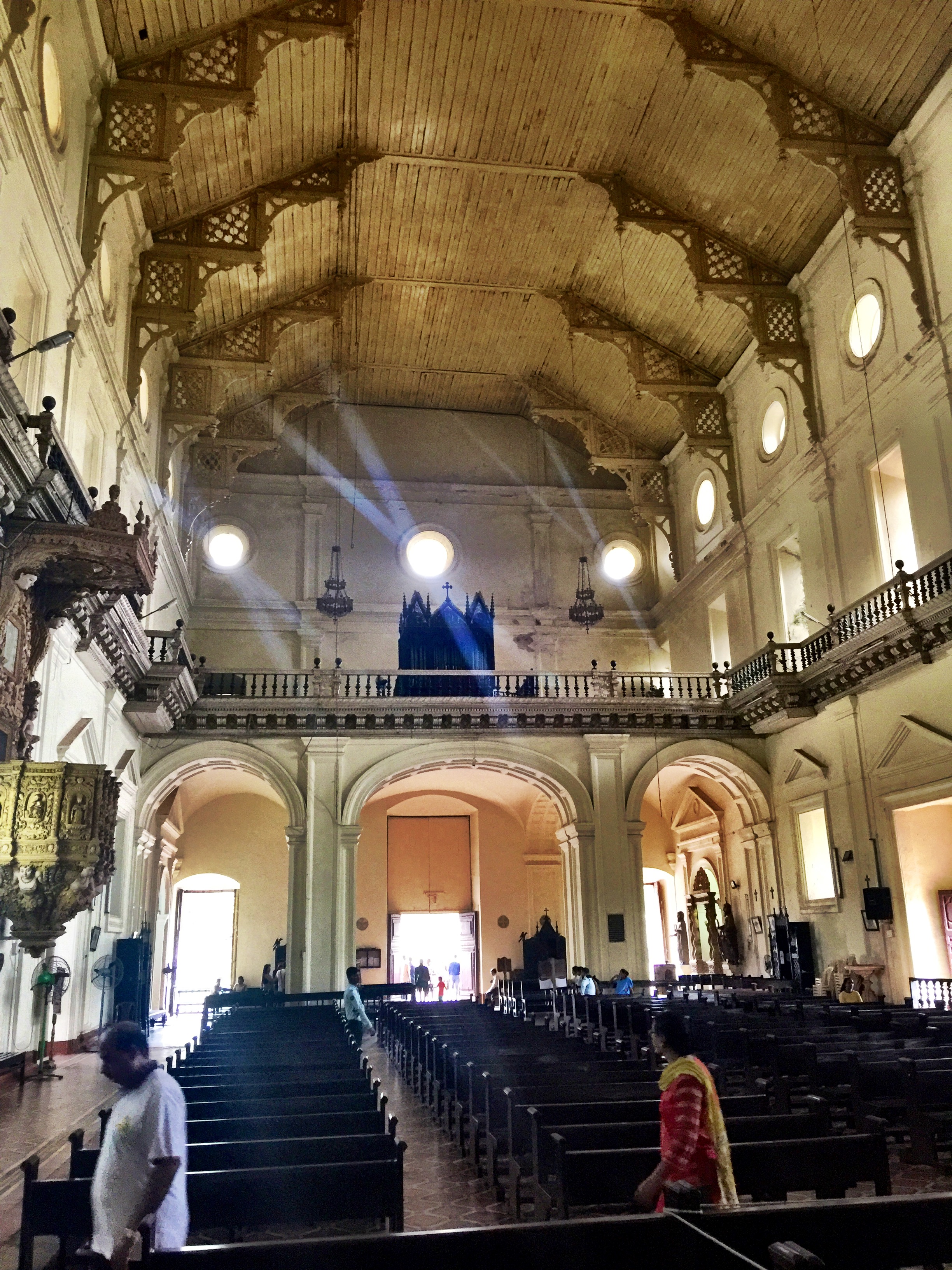
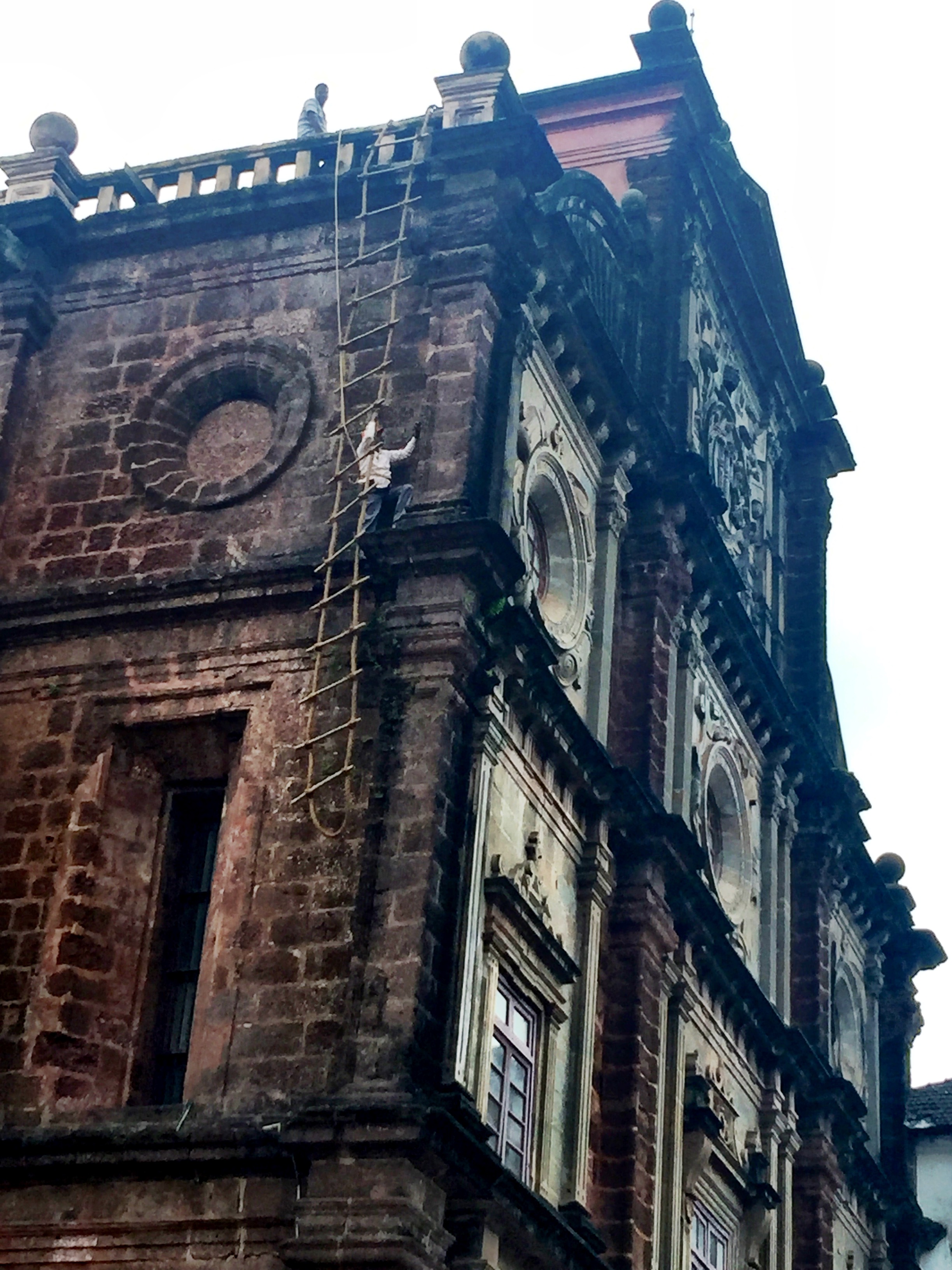
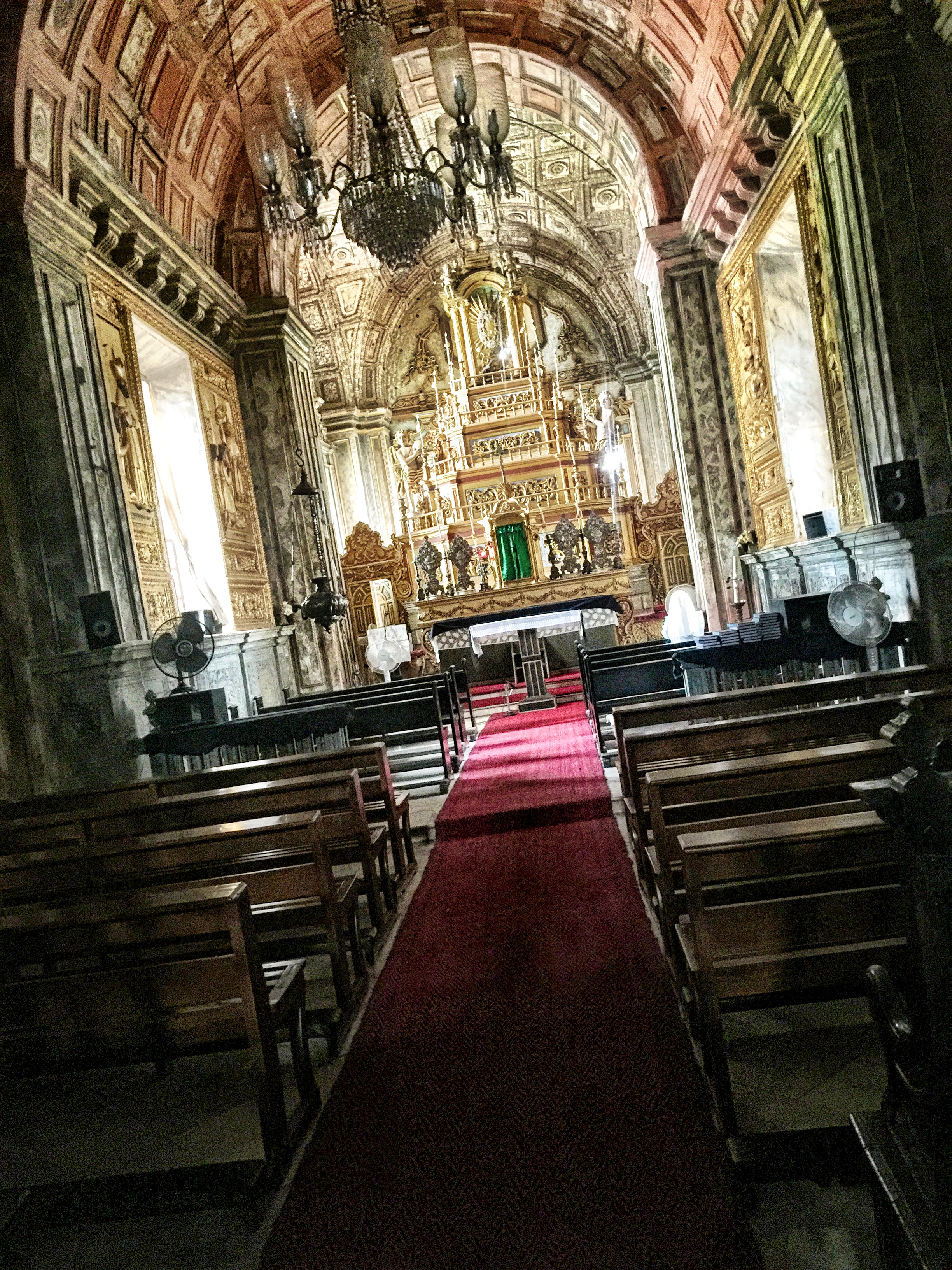
This is my first trip to India. I spent two and half days in Kochi in the state of Kerala, site of the death of Vasco da Gama who had arrived in Calicut (now Kozhikode) 26 years before. In 1510, led by Afonso de Albuquerque, the Portuguese conquered Goa and here they stayed until December 19 1961. I spent two days here, fulfilling what has been a dream ever since I was a kid. To visit Goa.
And while trying to fight whatever is left of my jet lag self, I am trying to both understand where I am beyond the imaginary place of countless life fantasies and the real place. This is, of course, an absolutely delusional ambition. How could I ever understand anything in two overwhelming days.
I always felt History was not easy to explain. Not even to thode who share it with you. There’s always a sense of invaders guilt at the back of my mind and then people tell me ” you should come to Iran and see the Portuguese fort in Hormuz” or ” you really need to come to Sri Lanka and see the Galle Fort” or maybe go to Thailand or Oman or Indonesia. And then I realize there’s nothing to be explained. It’s a common memory .
The minute I got in the car for a tour of Goa, the guide starts talking about Augustinian and Jesuit churches and nuns baking Bebinca, and reliquaries and Saint Francis Xavier and how much knowledge came together in the XV century to make all those churches and forts rise and still stand.
It is impossible, for me at least, not to feel that those stones and paintings and that relic are part of who I am. They are my cultural DNA.
The next day I decide to walk on my own through Fontainhas, the Latin Quarter of Panjim and get lost, as I normally do. Since I have no wifi I ask the girl carrying her dry cleaning carefully wrapped in newspaper where June 18 street is. She walks with me because she is going that way. Where are you from, she asks. I tell her.
Eu também falo português (I also speak Portuguese) she tells me.
This is my unfinished journey. Where my sense of belonging comes from.
The fear of the empty space, most times understood as “ridiculous to the excess”.
Fantasy, abandoned by reason, produces impossible monsters; united with it, she is the mother of the arts and the origin of marvels. Francisco Goya
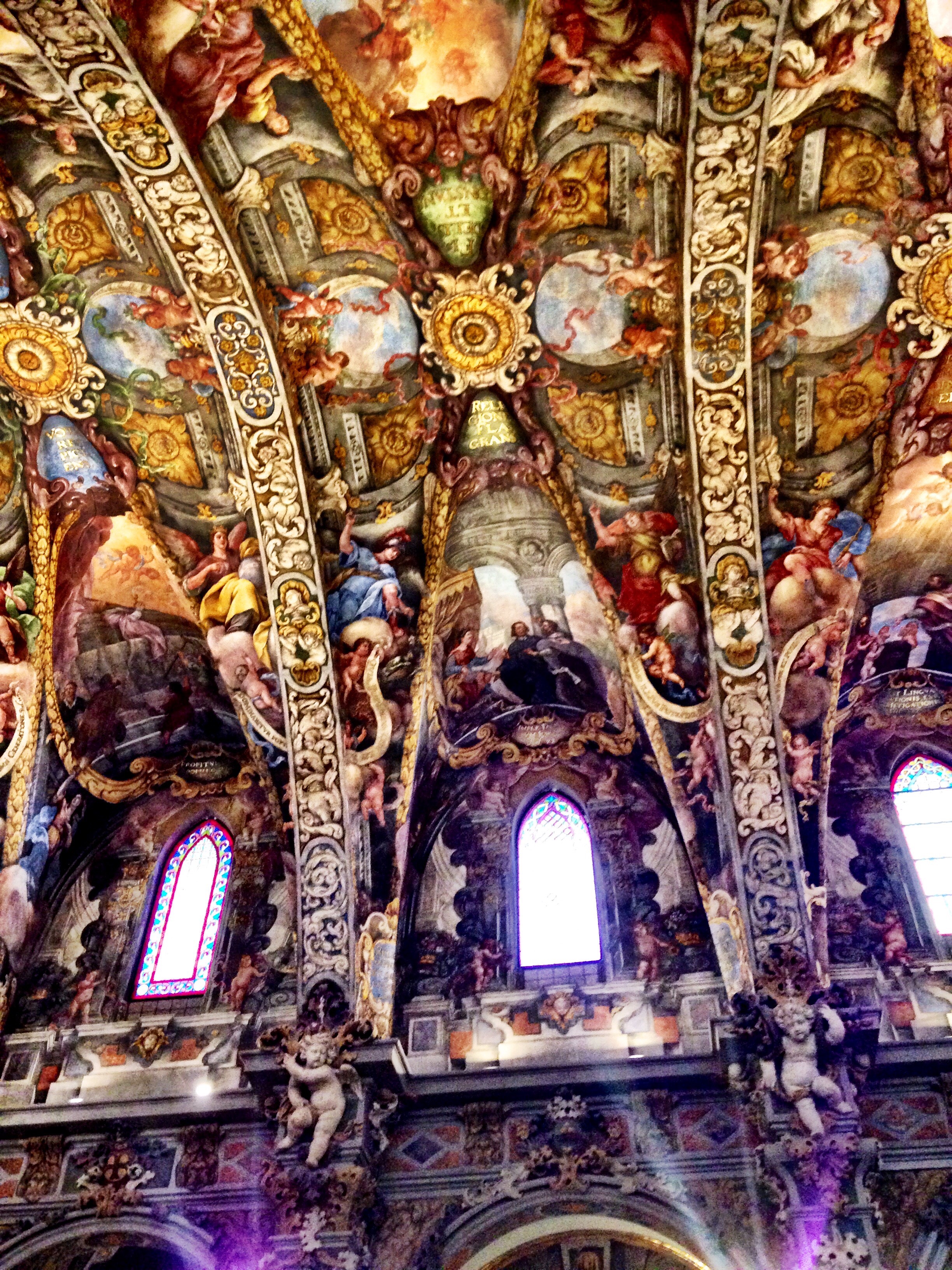
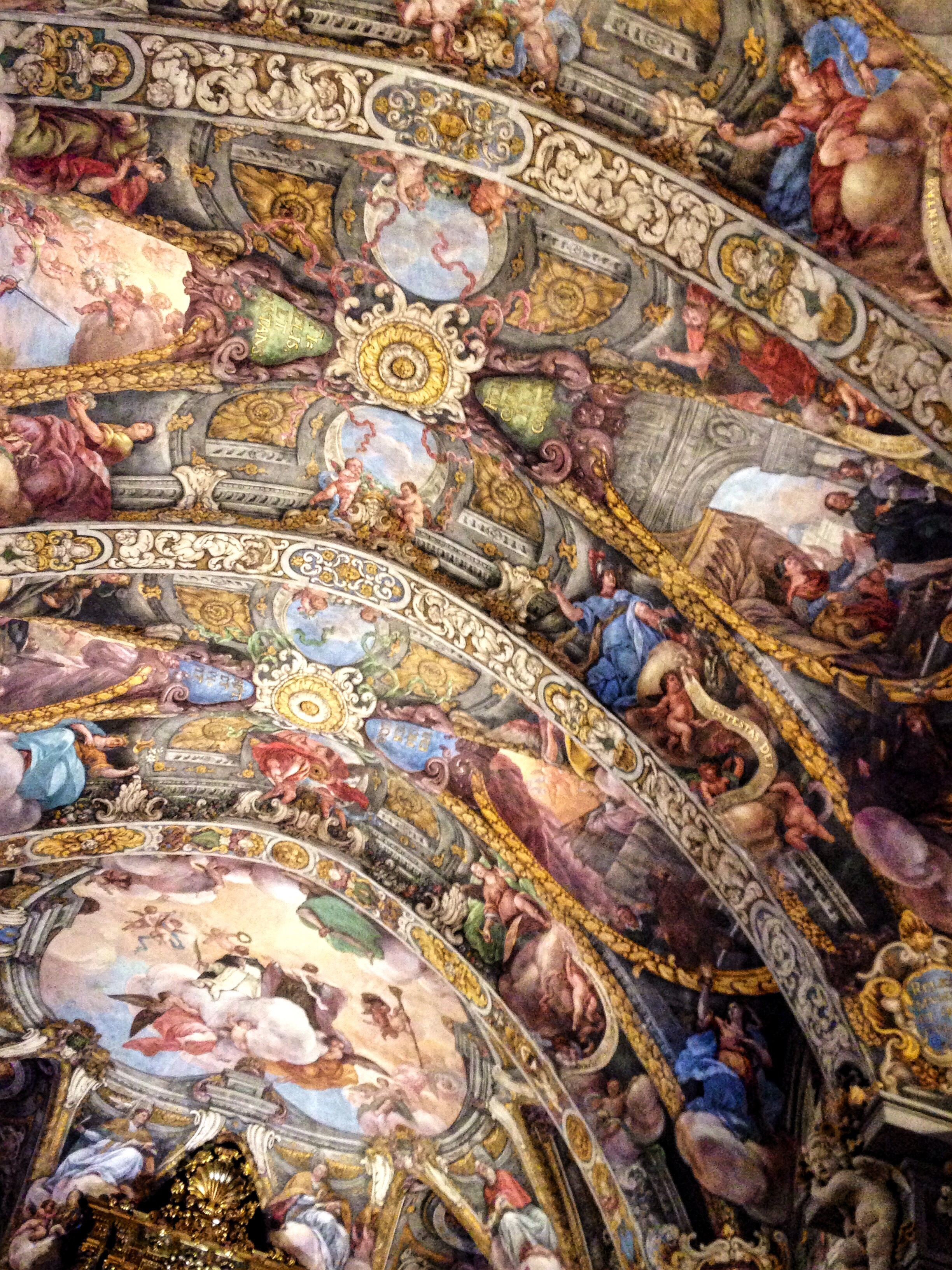
Historically understood as an expression of Catholic Anti-Reformation propaganda, Baroque art is normally understood as lacking the reason and discipline associated with neoclassicism and the sophistication of more refined mannerism styles. In the 17th century, Baroque emerges in Europe as an extravagant, impetuous reaction against religious wars, the Reformation and the Counter Reformation, The 30 Years War, economic crisis and other ills and plagues form its historical backdrop. Going beyond the balanced and orderly representation of the world, it is an aesthetic of distortion, deception, complexity, and over-elaboration: the novel inside the novel (Don Quijote [1605 and 1615]), theater inside the theater (Hamlet [c1601]), the painting inside the painting (Velázquez’s Las Meninas [1656] ), mirrors inside mirrors, etc. An emotional response to emptiness and disenchantement.
Leonardo da Vinci’s simplicity as the ultimate sophistication has become the norm in a society overwhelmed my the amount of visual information and material possessions that seem to clutter our minds and dominate our living spaces The claustrophobic in me has tried often times to convert to the minimalist / sophisticated imperative with no success. The maximalist in me can’t resist the emotional drama, radical spirit and aesthetic vertigo of the horror vacui.
I spent most of the last month of June traveling and had the privilege of spending a few days in Valencia and of visiting the fabulous L’Iber, Museo de los soldaditos de plomo (Museum of Toy Soldiers). Housed in the magnificent, gothic style Palace of Malferit, once the residence of Don Juan Brizuela y Artés de Albanell, master of Alcolecha, and becoming, from 1690, the residence of the Marquis of Malferit, whose third holder, Salvador Roca y Pertusa Malferit, was made one of the “Grandees of Spain” by Carlos IV in 1803, L’Iber, holding 95.000 pieces and counting, is much more than the largest toy soldier museum in the world. As it often happens with places and spaces that make you believe that magic is real, L’Iber is the dream turned into reality of Álvaro Noguera Giménez, one of the founders of the Spanish newspaper El País, whose passion for shrunken treasures and private collection of miniatures made the museum a reality.
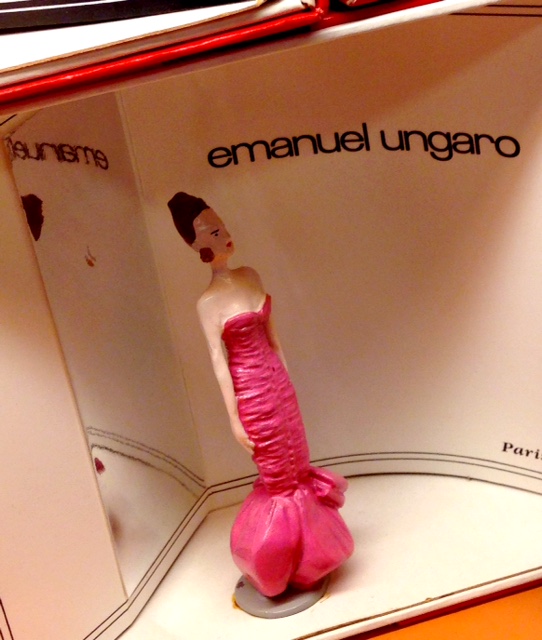
I had, unfortunately, a very limited time to visit L’Iber but was lucky enough to have someone call my attention to the “Fashion History” corner from which I had to be dragged from. My photos do not make any justice either to the museum collection or to the precious work of the Pixi atelier.
Poiret 1911
Created by Alexis Poliakoff , son of the painter Serge Poliakoff, second assistant to Claude Chabrol, Jacques Rivette and Jean-Luc Godard, painter, sculptor and master of a magic world of miniatures and lead figurines, Pixi was, from the beginning a revolutionary in the world of toy soldiers and lead figures dominated by army and war themes. Miniature soldier figurines found in Egyptian tombs have been dated to 2500 BC and were created for ritual purposes and not as playthings. Similarly, across Medieval Europe, generals and monarchs had miniature armies crafted for them in silver, porcelain, or wood for use during war-strategy sessions and only in the 18th century started being used as toys for the children of the affluent European aristocracy, evolving as toys throughout the 19th and 20th century and as objects of passion and fervent collections.
Rochas, 1934
From African Art to iconic cartoon and graphic novels characters and never forgetting the apparent triviality of our everyday life, Pixi has miniaturized everything and it’s Arts of Fashion: Haute Couture collection, that has me bound to the promise of going back to Valencia just to spend time at L’Iber, is truly a wonderful army of “fashion toy soldiers”.
Even though it has been coined to depict an economics concept, the phrase “small is beautiful” seems, in the words of John Mack, to be true. “Small is, indeed, very often, and by common consent, beautiful”. All miniatures result from technology and they achieve their “effect via the enchantment cast by [their] technical means, the manner of [their] coming into being, or rather, the idea one forms of [their] coming into being”.
All miniatures seem to have intrinsic aesthetic quality — and from what should they draw this constant virtue if not from the dimensions themselves?
The “diminutive tactility” of miniatures and their magnetic powers of fascination, allow us, even if we are not the intended audience or actor of a certain reality, to form our own constructions of reality. For Lévi-Strauss, “all works of art partake of the nature of miniatures or scale models (…) a work of art is a universe in miniature” one that lets us experience “a world in a grain of sand“.
I’m standing at the entrance of the room checking Caetano Veloso get on stage for the technical rehearsal of this evening’s show. And this is actually happening. Tropicália, one of the founding songs of the movement, echoes in the empty room and Caetano’s voice seems to hold me in a hug.
I grew up listening to Brazilian music, not specifically to Caetano whose music I only discovered in my 20s, but to the amazing voices of Elis Regina, to the powerful words of Chico Buarque and the outrageous performances of Ney Matogrosso. That music, those words, have functioned as my citizenship, like a deeper connection to a language that even though it’s my native language, I have never managed to master in an elegant way but could, none the less, substitute my passport.
I was not born in 1967, my generation didn’t actually have to create a revolution, we were born in the aftermath of insurrection and before red carnations took to the streets.
Brazil, a country I traveled to for the first time when I was 9, meant as a cliché, samba, beach and a carefree existence. Caetano’s songs showed me something else. A country that can hold the entire world in both its glory and its misery. I started paying attention to the music that makes you want to get up and celebrate life through dancing and to the words that make you stand still and think. Last time I was in Brazil was in 2000 while the celebrations for its 500 years of postcolonial history were underway. Walking through the streets of Salvador all the way up to a candomblé house made me feel thankful for paying attention. That’s where the music materialized itself, in the Roma Negra.
From Porto Seguro and Salvador, the journey ended in Rio de Janeiro and I could still hear the words, who hasn’t felt the swing of Henri Salvador. We were stayingin Copacabana and took the bus to the Flamengo neighborhood to see the Carmen Miranda Museum on an amazing journey through scandalous platform shoes and outrageous costumes and jewelry. A dream closet. In all her esthetic exaggeration, the adopted icon of tropicalism was a true precursor, taking it all in, who she was, who others thought she was, Europe, America and the tropics in one flamboyant persona.
Oswald’s anthropophagy, the solution to the problem of identity, the antidote to having your mind chained to labels and to grim values of behavior and morality. Thoroughly thought anarchy and cultural eclecticism, helas, flamboyance as a beautiful form of resistance.
Movements become dated and even our music heroes get old but this evening, the Coliseu sang Tieta to the ones that still shine brighter than a million suns and Gilberto Gil, all dressed in white, danced. And I have no films, photos or recordings and yet it will be registered forever.
References
Photo cover to Tropicália ou Panis et Circencis by Mário de Andrade
All is left from the luggage label on my beautiful US Trunk Company of Fall River Massachusetts was enough to find out that it sailed eastbound from New York to Lisbon in May 1921. I bought it at a charity shop and the lady working there was thrilled that she was selling “something as old as the Titanic”. I was overwhelmed by all the imaginary stories going on in my mind. Now it doesn’t go anywhere. I use it as a side table and as storage for vintage dresses.
My grandmother’s wooden chest was the first piece of my small collection. It went to Angola with her in 1951 and came back to Portugal carrying the rests of a life left behind. The small leather suitcase on top was her father’s. My aunt gave it to me because I have a reputation of wanting everything that is old a no one else really wants anymore. The bigger one was bought at a flea market and belonged to someone who used to vacation in Sintra.
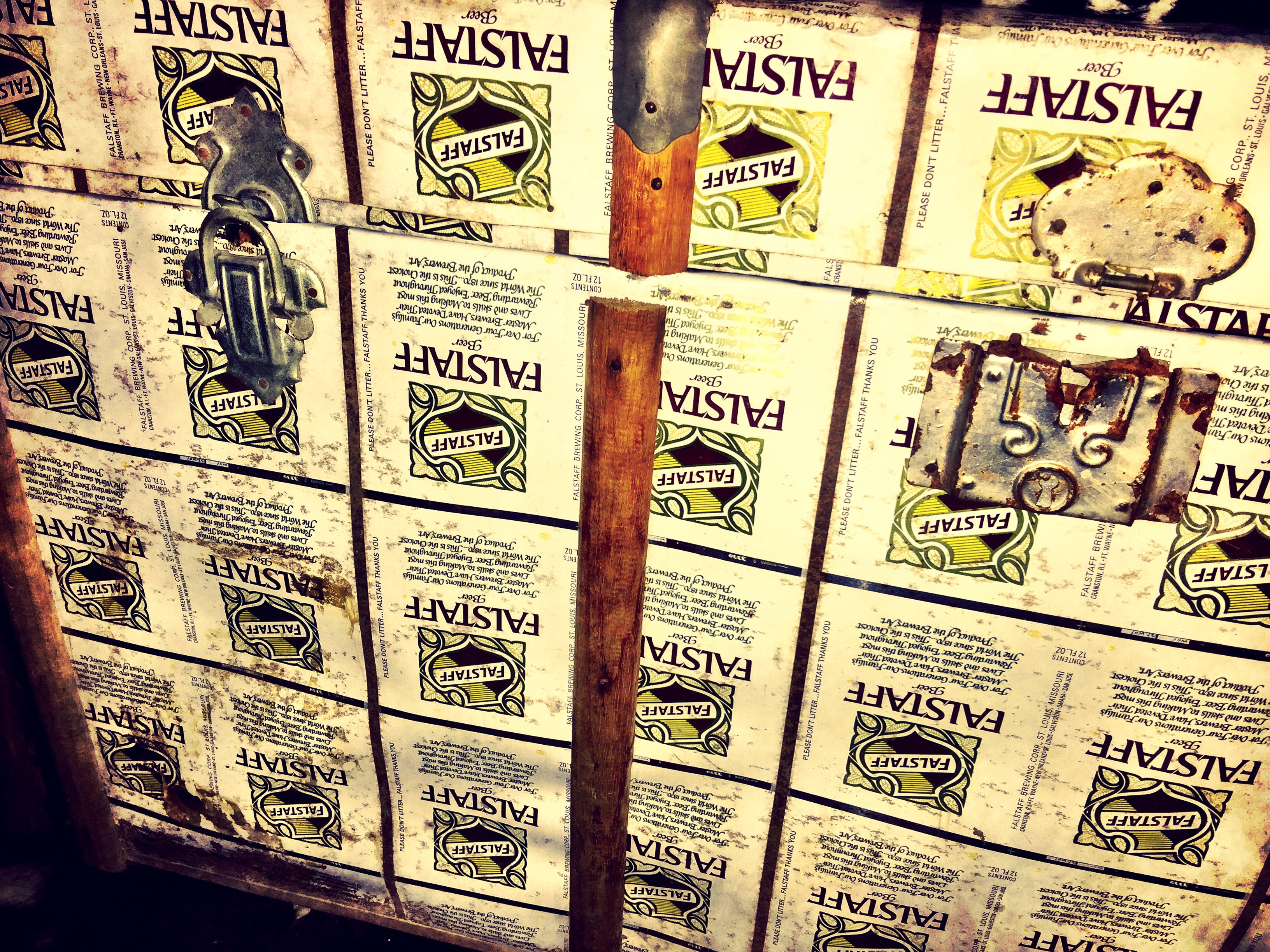
My great aunt died when I was traveling in Vietnam. After coming back I helped my mother and her sister with sorting out all her things. This Falstaff beer tin trunk was hers. The label inside says “Onil, Angola suitcases for the world that travels”.
I had never before realized that other people’s luggage is also part of my emotional baggage.
Pingbacks are easy! Just copy and paste the code below into the HTML tab of your post editor and you should be all set.
Please note that sometimes it takes a little while for your post to show up in our grid.
“I must be a mermaid, Rango. I have no fear of depths and a great fear of shallow living.”
Anaïs Nin, “The Four-Chambered Heart.”
Oddly enough, a “great fear of shallow living” has also been somewhat responsible for the unmanageable size of my closet. Although an obsessive interest on clothes would probably point towards a very shallow living indeed, I have always seen clothes as a way to connect to my true (deep) self even when this self is busy living in imaginary spaces.
I could not have been a famous fashion designer (I’ve played briefly with this idea when I was 17 or 18) as claimed by Ms. Nin but, like her, my problem also seems to be that “my imagination created [and still creates] costumes that did not fit my simple life”. I do love clothes far more than I like fashion. I love their power to “evoke the fairy tale” and I’m still not ready to start “dressing more simply”, I took the first step in putting my Closet of Errors out there not as an exercise on downsizing but as a way of dealing with my own stories and letting the ones that were already lived go and find new lives.
Writing about Anaïs Nin’s “Fractured Identity as Read through Fashion“,Tove Hermanson notes that [she] “grappled with complex self-identity issues that were revealed in her sartorial selections as much as her overtly philosophical prose. It’s unclear if Nin herself realized the extent to which she used fashion to act out her desires: to glamorize herself and seduce, and alternately to conceal and protect herself.” That’s how, I suppose, it all starts. More than a sign of individuality, clothes help to overcome your own insecurities by living the life of the character that more resembles what you have dreamt for yourself.
Someone once told me that I had lots of clothes and a ton of shoes because I didn’t think I was beautiful enough on my own. I remember taking that as an insult. Not anymore. I am now able to have fun with all that I’ve collected everything remains, as Ms. Nin would put it ” very symbolical” and my clothes still have “first of all, a poetic significance: colours for certain occasions, evocations of other styles, countries (Spanish flavour, Moroccan touches, etc.)” and are, of course “a sign of individuality”. More than I would probably like to admit, I still “[want] striking clothes which [distinguish] me from other women. “
When I was growing up Anaïs was just the name of a Cacharel perfume that I was lucky enough to have my mum buy for me. I still recall the ethereal commercial on TV that made you dream of becoming this wonderfully romantic creature. Today, after actually having read some of the diaries, I still see Anaïs as this unattainable ideal of being both the author and the character.
I was 12 when me and my brother who was 10, decided to go to the movies and watch this to “kill some time”. We are not little precocious geniuses so we did not understand that ”
Even so, and as futile as it may seem, the movie made an impression on me because of the sailor outfits (it did, after all, won the Oscar for Best Costume Design in 1984; check Marik Vos’ costume sketches at The Criterion Collection). This movie, also a contest “between magic and dull diurnal reality” was in part responsible for this Laura Ashley dress in my closet. I suspect that also watching Upstairs, Downstairs, reading “Os Desastres de Sofia” (Les Malheurs de Sophie [Sophie’s misfortunes]) and a later fixation on Brideshead Revisited had something to do with it. A dress symbolizing and imagined childhood.

















 Stories from A Closet of Errors