
Two things we must therefore root out: fear of distress in the future and the memory of distress in the past. The one concerns me no longer. The other concerns me not yet.
Seneca
Made with Gemini
Two things we must therefore root out: fear of distress in the future and the memory of distress in the past. The one concerns me no longer. The other concerns me not yet.
Seneca
Made with Gemini
Leucon, no one’s allowed to know his fate,
Not you, not me: don’t ask, don’t hunt for answers
In tea leaves or palms. Be patient with whatever comes.
This could be our last winter, it could be many
More, pounding the Tuscan Sea on these rocks:
Do what you must, be wise, cut your vines
And forget about hope. Time goes running, even
As we talk. Take the present, the future’s no one’s affair.
Horace, Ode I. 11, translated by Burton Raffel, from The Essential Horace
I would quit my job, sell my house and set out for Ithaka because I think I belong to that sea
If I were guaranteed not to fail… I think I’d attempt to be honest with myself. To understand why certain songs make me cry, what wound keeps resurfacing in different masks, what version of myself I’m most afraid to become.
Maybe the fear isn’t really about failing, but about what succeeding would mean. About choosing the untethered life over the anchored one.
As you set out for Ithaka
hope your road is a long one,
full of adventure, full of discovery.
Laistrygonians, Cyclops,
angry Poseidon—don’t be afraid of them:
you’ll never find things like that on your way
as long as you keep your thoughts raised high,
as long as a rare excitement
stirs your spirit and your body.
Laistrygonians, Cyclops,
wild Poseidon—you won’t encounter them
unless you bring them along inside your soul,
unless your soul sets them up in front of you.

Hope your road is a long one.
May there be many summer mornings when,
with what pleasure, what joy,
you enter harbors you’re seeing for the first time;
may you stop at Phoenician trading stations
to buy fine things,
mother of pearl and coral, amber and ebony,
sensual perfume of every kind—
as many sensual perfumes as you can;
and may you visit many Egyptian cities
to learn and go on learning from their scholars.

Keep Ithaka always in your mind.
Arriving there is what you’re destined for.
But don’t hurry the journey at all.
Better if it lasts for years,
so you’re old by the time you reach the island,
wealthy with all you’ve gained on the way,
not expecting Ithaka to make you rich.

Ithaka gave you the marvelous journey.
Without her you wouldn't have set out.
She has nothing left to give you now.

And if you find her poor, Ithaka won’t have fooled you.
Wise as you will have become, so full of experience,
you’ll have understood by then what these Ithakas mean

Ithaka By C. P. Cavafy
Sometimes the fantasy of guaranteed success lets us see what we really want, even if we have to walk toward it without guarantees.
The possible answers: the present, listening to people and hearing what they mean, breathing, the pause, the silence, the impulses, the consequences, the tunnel I was getting in, not realizing I was that long dark corridor, the time, the good advice, the false one, that attention to details make no sense if you are not living in them.
Do not want, Lídia, to build in the ‘space
Odes de Ricardo Reis . Fernando Pessoa.
What future figures, or promise you
Tomorrow. Fulfill yourself today, not ‘waiting.
You yourself are your life.
Do not be destined, you are not future.
Who knows if, between the cup you empty,
And she’s filled up again, no luck
Interposes the abyss?
———————————
Não queiras, Lídia, edificar no espaço
Que figuras futuro, ou prometer-te
Amanhã. Cumpre-te hoje, não esperando.
Tu mesma és tua vida.
Não te destines, que não és futura.
Quem sabe se, entre a taça que esvazias,
E ela de novo enchida, não te a sorte
Interpõe o abismo?
References
“In any case, there was only one tunnel, dark and lonely, mine, the tunnel in which I had spent my childhood, my youth, my whole life. And in one of those transparent lengths of the stone wall I had seen this girl and had gullibly believed that she was traveling another tunnel parallel to mine, when in reality she belonged to the broad world, to the world without confines of those who do not live in tunnels (…)”
I can whistle almost the whole of the Fifth Symphony, all four movements, and with it I have solaced many a whining hour to sleep. It answers all my questions, the noble, mighty thing, it is “green pastures and still waters” to my soul. Indeed, without music I should wish to die.
Edna St. Vincent Millay letter to Allan Ross MacDougall
To imagine existence without music might be biologically possible but it would be emotionally smaller. Music operates on a frequency that bypasses the intellect and speaks directly to something primal within us. Unlike spoken language, which divides us into linguistic communities, music creates a universal grammar of emotion. A minor key can evoke melancholy in a child who has never learned the word “sadness.” A triumphant major chord can lift spirits across cultures, generations, and personal circumstances. This universality suggests that music doesn’t merely accompany human experience—it is woven into the fabric of consciousness itself.
Music, uniquely among the arts, is both completely abstract and profoundly emotional. It has no power to represent anything particular or external, but it has a unique power to express inner states or feelings. Music can pierce the heart directly; it needs no mediation. One does not have to know anything about Dido and Aeneas to be moved by her lament for him; anyone who has ever lost someone knows what Dido is expressing. And there is, finally, a deep and mysterious paradox here, for while such music makes one experience pain and grief more intensely, it brings solace and consolation at the same time. (Oliver Sacks, Musicophilia: Tales of Music and the Brain )
When we consider a world stripped of this universal language, we imagine not just silence, but a profound disconnection from our own emotional landscape.
First dances, lullabies, funeral hymns, graduation marches—these melodies become the soundtrack to our most significant moments. They don’t merely accompany these experiences; they preserve them in a form more vivid than photographs, more immediate than written words. A few notes can transport us instantly across decades, reconstructing not just the memory but the emotion of a moment with startling clarity.
Without music, our memories would lose this dimensional quality, the emotional peaks and valleys of our lives would lack their soundtrack, making the landscape of personal history less navigable, less meaningful.
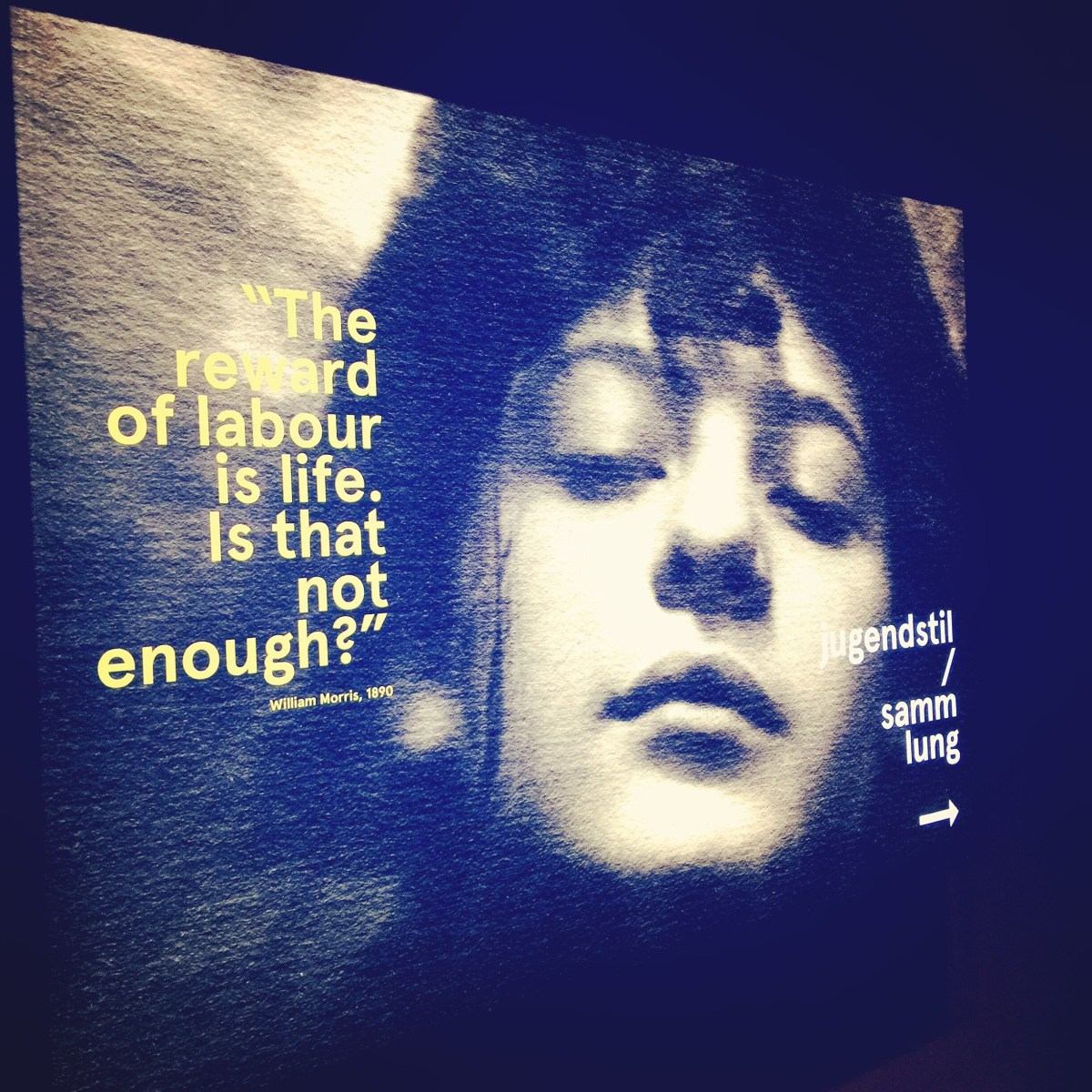
Even beyond its role in significant moments, music provides the rhythm that makes daily existence bearable, even beautiful. Work songs have existed in every culture because they transform labor from mere drudgery into something approaching art. The person who whistles Beethoven during difficult hours understands that music doesn’t change circumstances—it changes our relationship to circumstances. It provides the cadence that makes the unbearable bearable, the monotonous meaningful.
Consider the silence that would replace this constant, subtle soundtrack.
That life without music would not be worth living might initially seem hyperbolic. However, it points to a deeper truth about being human, we don’t merely survive on bread alone—we require beauty, meaning, connection, and transcendence. Music provides all of these simultaneously. It is the art form that most directly addresses our need for both individual expression and communal belonging, for both intellectual stimulation and emotional release.
Life may be technically possible without music, but it would be missing a profound transformation: the ability to turn time into beauty. Music does not change the fact that hours pass, that we suffer, or that we long for what is lost. But it alters how we inhabit those hours, how we carry that suffering, and how we hold on to memory. In this way, music does not merely decorate time — it redeems it. And in that redemption lies its deepest necessity.
If I should ever die, God forbid, let this be my epitaph:
THE ONLY PROOF HE NEEDED
FOR THE EXISTENCE OF GOD
WAS MUSICKurt Vonnegut, A Man Without a Country
P.S. I read this today:
As a graduate student, I cared for my grandmother, who was a big fan of Ozzy’s band Black Sabbath herself. Any time we went anywhere, we put on our playlist and sang along. When, during the Covid-19 pandemic, I cut off part of my fingertip and lost access to my campus library, I had Ozzy in my ear for much-needed heavy metal pep talks as I took my PhD qualifying exams.
And when I lost both my grandmother and my California home the following year, I still had Ozzy. His music was the score as I finished my dissertation from my parents’ basement and landed my dream job at Iowa Wesleyan University. Through the submission of my dissertation and driving nearly 1,200 miles across the country to start my new job, I listened to the Blizzard of Ozz album.
I was ten when my mum gave me that glossy brown journal—Marie Antoinette’s young face gazing from the cover, complete with a tiny lock and key to guard my secrets. I wrote constantly in those early days. Daily events, conversations, how words made me feel, news that somehow seemed to matter to my small world. But mostly, I wrote to figure out who I was.
Childhood comparisons had done their damage early. I’d grown used to being measured against other kids, which sent me down a particular path: constantly crafting personas that might be more palatable, more admirable, simply *better* than whoever I actually was. Looking back at those early diaries now, they read like character studies—as if I was unconsciously preparing for a writing career that never materialized, disappointing what seemed to be my father’s brightest hopes for me.
Decades later, I still turn to writing for the same reason: to make sense of myself. Getting older, it turns out, didn’t automatically make me more adjusted to the world. If anything, the questions have gotten more complex, the contradictions more pronounced. The temptation to reinvent myself—to create yet another, better version—remains surprisingly strong.
I know what you’re thinking. *Have you tried therapy?* Yes, I’m in therapy. Not with a particularly strong sense of purpose or dramatic results, but I’m there, showing up, trying to untangle the same threads I’ve been pulling at since I was ten years old with a locked diary.
There’s something both comforting and unsettling about this consistency—that the fundamental questions haven’t changed, only deepened. Who am I when I’m not performing? What parts of myself am I still hiding, even from me? And perhaps most importantly: Is the search itself the point, or am I still waiting to arrive at some final, polished version of myself?
The journal pages don’t keep filling up anymore. I mostly struggle to find the time and the energy. What still keeps me connected to writing is the mechanics and tools. I still enjoy handwriting and pens.
There is no greater agony than bearing an untold story inside you.
Maya Angelou, l Know Why the Caged Bird Sings

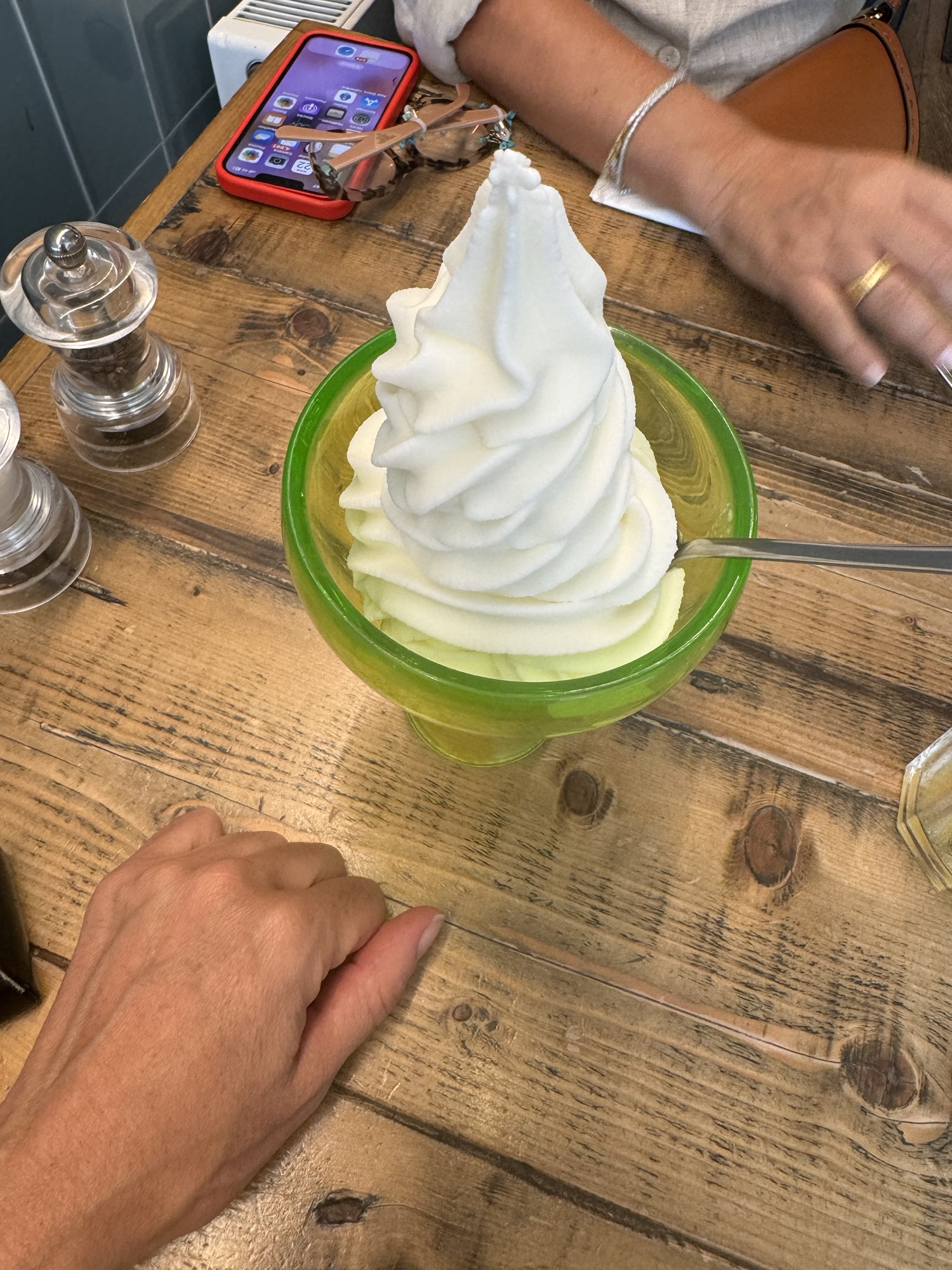
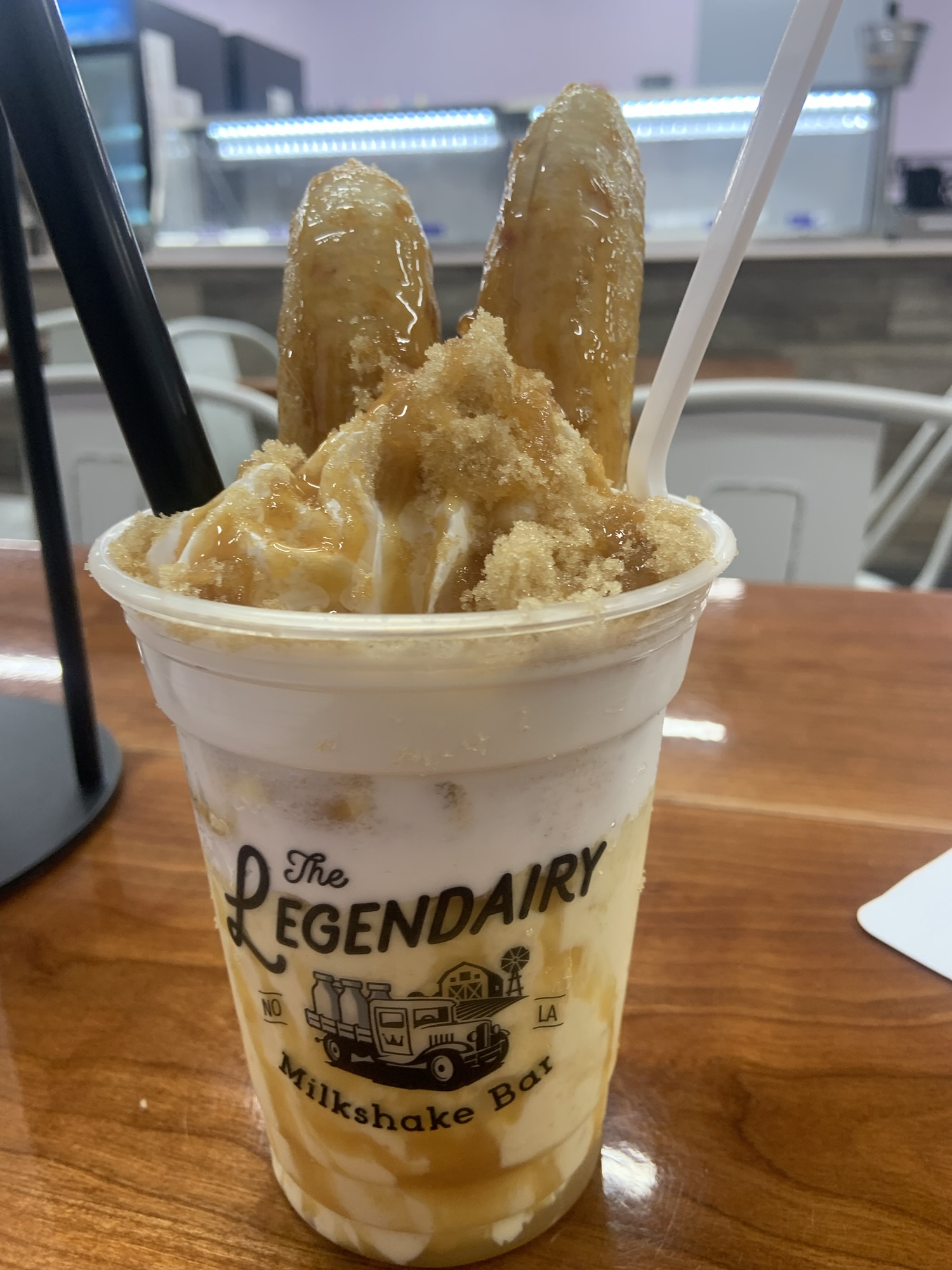
It wouldn’t matter if I got to a hundred picnics in after years; they wouldn’t make up for missing this one. They’re going to have boats on the Lake of Shining Waters—and ice cream, as I told you. I have never tasted ice cream. Diana tried to explain what it was like, but I guess ice cream is one of those things that are beyond imagination.
L.M. Montgomery, Anne of Green Gables (Chapter XIII)






Call the roller of big cigars,
The muscular one, and bid him whip
In kitchen cups concupiscent curds.
Let the wenches dawdle in such dress
As they are used to wear, and let the boys
Bring flowers in last month's newspapers.
Let be be finale of seem.
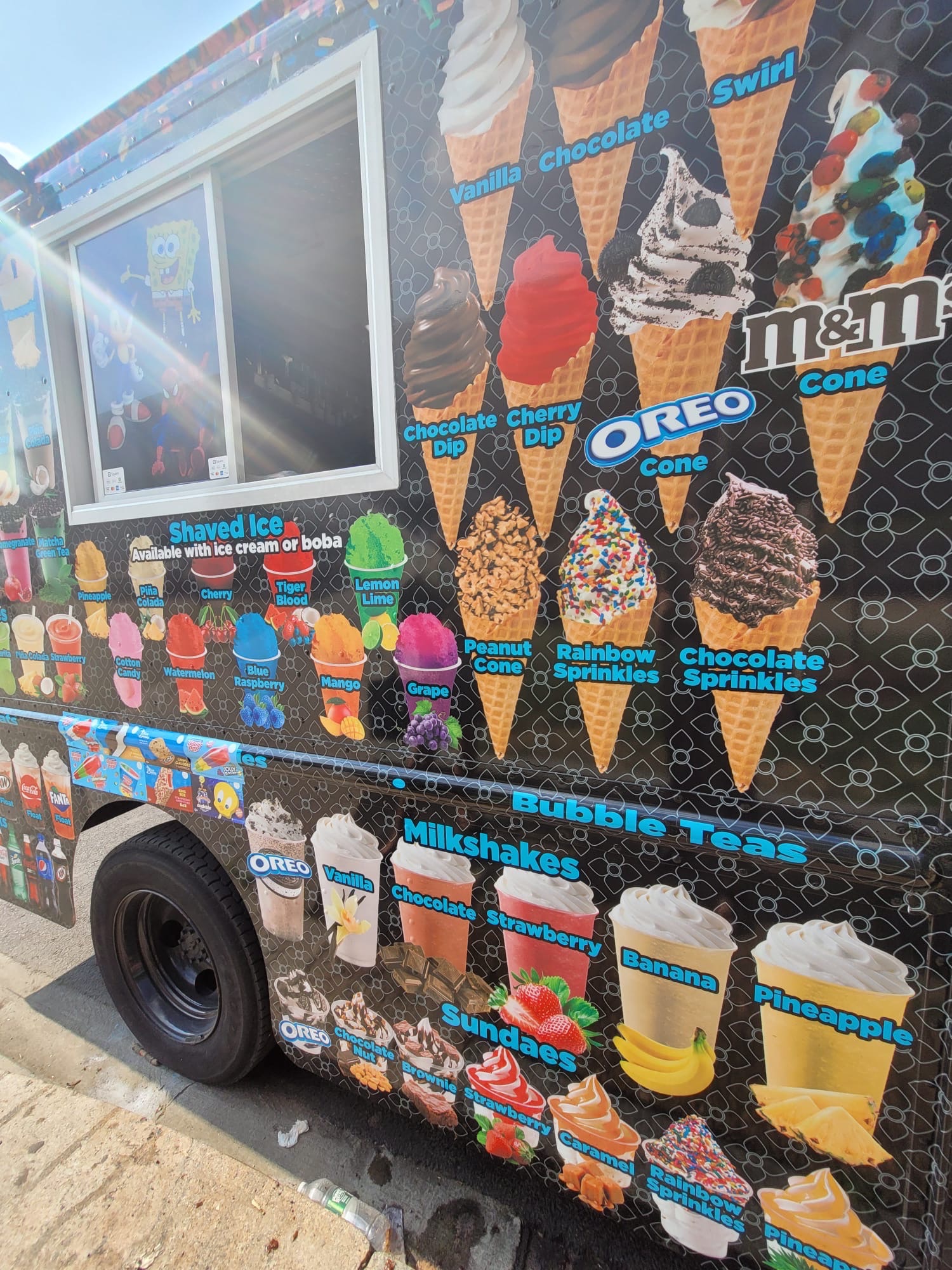
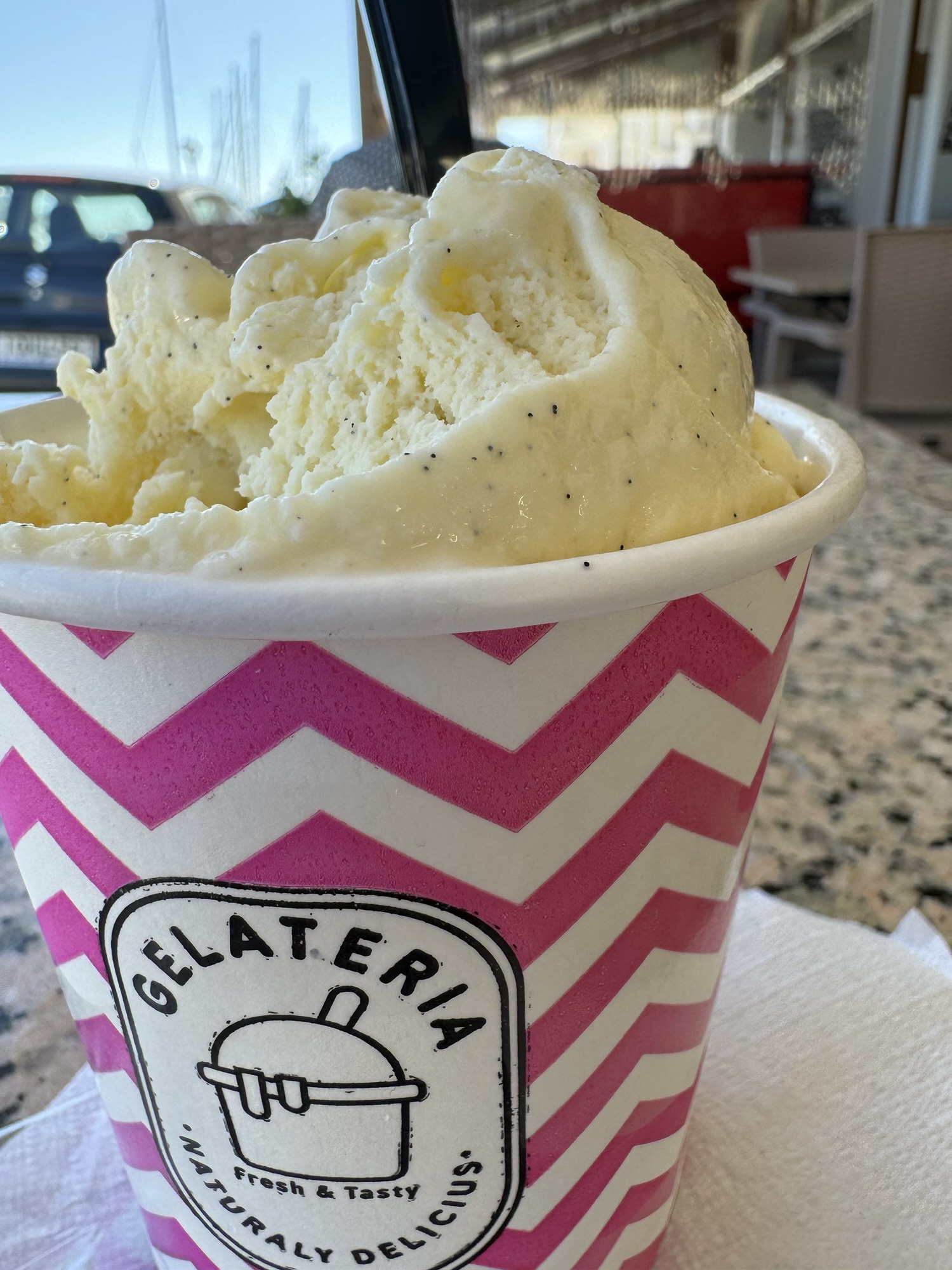
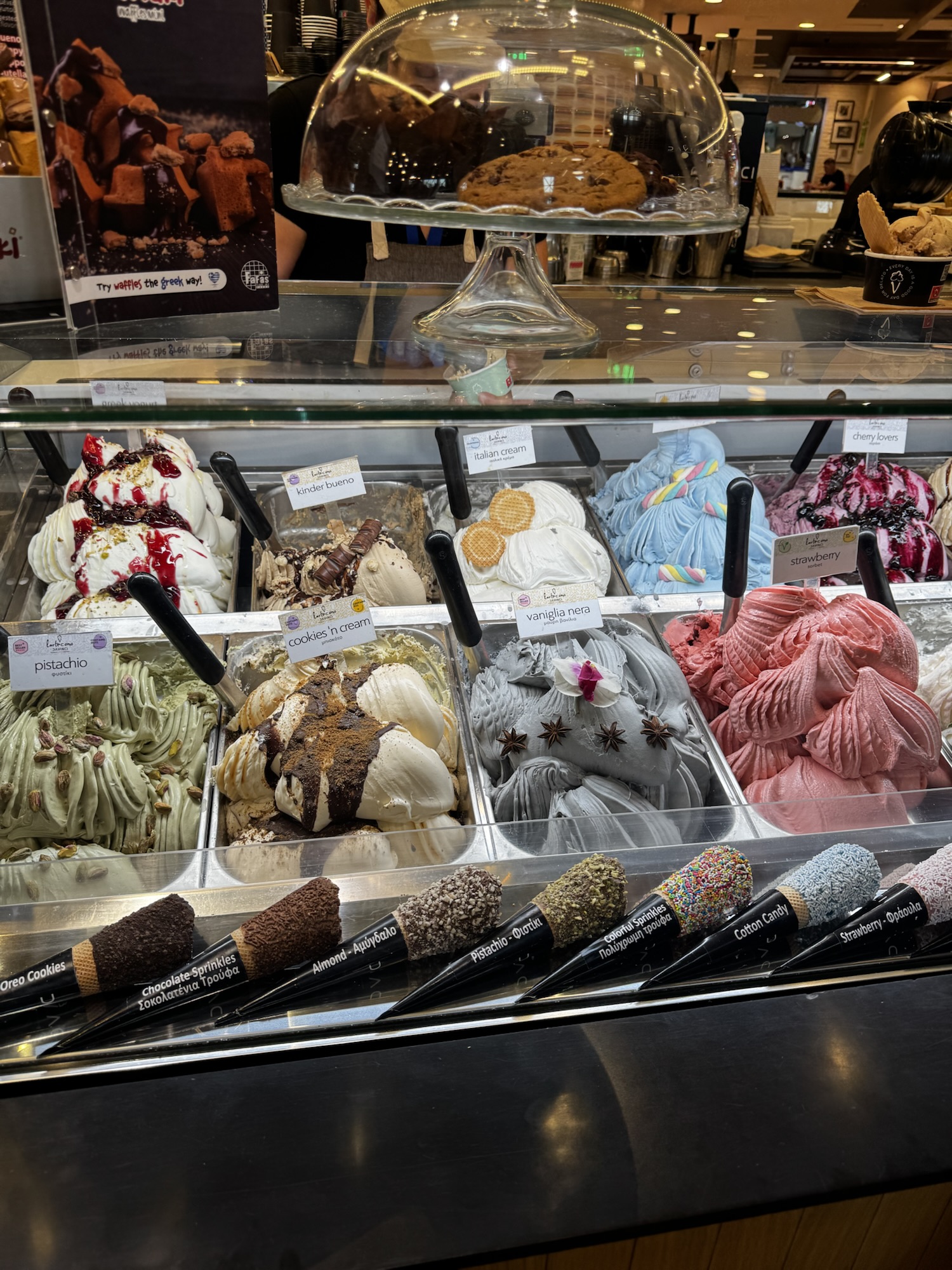
The only emperor is the emperor of ice-cream.

Take from the dresser of deal,
Lacking the three glass knobs, that sheet
On which she embroidered fantails once
And spread it so as to cover her face.
If her horny feet protrude, they come
To show how cold she is, and dumb.
Let the lamp affix its beam.
The only emperor is the emperor of ice-cream.

Wallace Stevens, The Emperor of Ice-Cream
’T is you that are the music, not your song.
Amy Lowell
The song is but a door which, opening wide,
Lets forth the pent-up melody inside,
Your spirit’s harmony, which clear and strong
Sing but of you. Throughout your whole life long
Your songs, your thoughts, your doings, each divide
This perfect beauty; waves within a tide,
Or single notes amid a glorious throng.
The song of earth has many different chords;
Ocean has many moods and many tones
Yet always ocean. In the damp Spring woods
The painted trillium smiles, while crisp pine cones
Autumn alone can ripen. So is this
One music with a thousand cadences.
I can’t find a definitive answer. There are some genres—just a few—that don’t speak to me, but almost all music transforms the often banal rhythms of everyday life into something cinematic and wonderful.
I like to think that I’ve got this incredible range that spans from the raw power of punk to the grandiose drama of opera, the passionate intensity of flamenco to the groove mastery of Prince’s funk.
I am drawn to music that has intensity and emotional authenticity. This could be delivered through a screaming guitar, a soaring aria, or Prince’s unmistakable groove. I suppose these seemingly different genres all share that transformative cinematic quality. Each one paints everyday life with bold, dramatic strokes – just in very different colors.
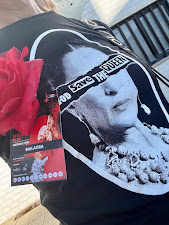
Probably jeans and t-shirt but i would be very worried because this would mean the world had turned into a very dark place.
The relationship between fashion and totalitarianism reveals itself in how authoritarian regimes consistently target personal expression through dress. Consider how the Nazis required Jewish people to wear identifying badges, or how Mao’s China pushed everyone toward identical blue and gray uniforms. These weren’t just practical policies – they were deliberate erasures of individuality that made dissent and difference immediately visible.
Totalitarian systems understand that clothing is one of our most intimate forms of daily self-expression. When you control what people wear, you’re not just regulating fabric and color – you’re regulating identity itself. The uniform becomes a constant reminder of the state’s power over the most basic aspects of personal choice. It eliminates the small daily acts of creativity and self-determination that keep individual spirit alive.
Fashion, even in its most mundane forms, represents a kind of micro-democracy. When you choose your morning outfit, you’re making decisions about how you want to present yourself to the world, what mood you’re in, what activities you’re planning, even what weather you’re expecting. These tiny choices accumulate into a larger sense of agency and personal autonomy.
Authoritarian regimes also weaponize dress codes to create and enforce social hierarchies. The Khmer Rouge’s black pajama uniforms weren’t just about conformity – they were about breaking down previous social distinctions and creating a new order where only party loyalty mattered. Similarly, school uniform policies in their most extreme forms can prefigure more serious restrictions on personal freedom.
Perhaps most insidiously, fashion control works because it feels so trivial that resistance seems petty. Who wants to die on the hill of wearing colorful socks? Yet history shows us repeatedly that these “small” freedoms often serve as canaries in the coal mine. When societies begin restricting personal expression in dress, it’s frequently a precursor to much more serious erosions of liberty.
The psychological impact runs deep too. Getting dressed each morning is an act of self-creation, a daily ritual where we compose ourselves for the world. Remove that choice, and you’ve damaged something fundamental about human dignity and self-worth. The enforced sameness creates a kind of learned helplessness that extends far beyond clothing.
The relationship between fashion and totalitarianism becomes even more chilling when we examine its manifestations across history, literature, and film. These examples reveal how clothing control operates as both symbol and instrument of oppression.
Historical Examples
The interwar period saw a proliferation of “shirt movements” across Europe Shirt Movements in Interwar Europe: a Totalitarian Fashion – fascist groups that expressed their ideology through colored uniforms. Hitler’s Brown Shirts, Mussolini’s Black Shirts, and Franco’s Blue Shirts weren’t just practical clothing but visual manifestos of authoritarian identity. These uniforms served multiple purposes: they created instant group identification, intimidated opponents, and transformed political rallies into military-style displays of power.
Nazi Germany provides perhaps the most systematic example of fashion as totalitarian control. The regime didn’t just require Jews to wear yellow stars – it regulated clothing across society. The Hitler Youth had specific uniforms that emphasized conformity and militaristic values. Women were encouraged to abandon cosmetics and “foreign” fashions in favor of traditional German dress that supported Nazi ideals of motherhood and racial purity.
In Mao’s China, the blue and gray “Mao suits” became virtually mandatory, erasing centuries of Chinese sartorial tradition. During the Cultural Revolution, wearing anything remotely Western or colorful could mark you as a counter-revolutionary. The uniformity wasn’t accidental – it was designed to eliminate visual markers of class, regional identity, and individual taste.
Literary Explorations
George Orwell’s “1984” remains the most powerful literary examination of totalitarian clothing control. In Big Brother’s regime, Winston Smith lives “a sordid dehumanized life devoid of all the traditional sources of happiness” Slavery in Modern Clothing in Orwell’s 1984 – Crisis Magazine, and clothing plays a crucial role in this dehumanization. The Party members wear identical blue overalls, while the telescreen constantly monitors even the most private moments of dressing. Julia’s small act of rebellion – wearing makeup and fixing her hair – becomes a revolutionary gesture precisely because it asserts individual identity against the state’s demand for uniformity.
Margaret Atwood’s “The Handmaid’s Tale” uses clothing as a central metaphor for totalitarian control. The red robes and white bonnets of the handmaids aren’t just uniforms but symbols of reduced humanity – they transform women into walking wombs while stripping away personal identity. The color coding extends throughout Gilead society: blue for wives, green for marthas, creating a visual hierarchy that makes resistance immediately visible.
Ray Bradbury’s “Fahrenheit 451” explores how even subtle conformity in dress reflects deeper intellectual conformity. The firefighters’ uniforms with their salamander symbols and the identical leisure wear of the general population mirror the mental uniformity the state seeks to impose.
Cinematic Representations
Film has powerfully visualized fashion’s role in totalitarian control. Fritz Lang’s “Metropolis” (1927) presciently showed how clothing could divide society into rigid castes – the identical work clothes of the underground laborers versus the elegant fashions of the surface elite.
More recent films like “The Hunger Games” series use fashion as a central element of totalitarian critique. The Capitol’s obsession with extreme, ever-changing fashion contrasts sharply with the drab, practical clothing of the districts, illustrating how fashion can become both a tool of oppression and a symbol of decadent excess.
“V for Vendetta” demonstrates how uniform iconography can be reclaimed as resistance – the Guy Fawkes masks transforming anonymous conformity into anonymous rebellion.
Subtler Controls
The most insidious examples often involve seemingly voluntary conformity. Corporate dress codes, school uniforms, and social pressure to dress “appropriately” can prefigure more serious restrictions. Even democratic societies wrestle with how much clothing choice to allow – from debates over religious dress to workplace appearance standards.
The psychological impact appears consistently across these examples. When totalitarian systems control clothing, they’re not just regulating fabric – they’re conditioning minds to accept that the most intimate daily choices aren’t really choices at all. The person who accepts that the state can dictate their morning wardrobe has already surrendered a crucial piece of mental autonomy.
What makes these historical, literary, and cinematic examples so disturbing is how they reveal the progression from small restrictions to total control. It starts with “reasonable” regulations – safety, unity, tradition – and gradually expands until the very concept of personal choice in appearance becomes foreign. The uniform becomes not just what you wear, but who you are.
Not quitting started feeling as a plan.
He scribbles some in prose and verse,
And now and then he prints it;
He paints a little, — gathers some
Of Nature’s gold and mints it.
He plays a little, sings a song,
Acts tragic roles, or funny;
He does, because his love is strong,
But not, oh, not for money!
He studies almost everything
From social art to science;
A thirsty mind, a flowing spring,
Demand and swift compliance.
He looms above the sordid crowd—
At least through friendly lenses;
While his mamma looks pleased and proud,
And kindly pays expenses.
The Dilettante: A Modern Type by Paul Laurence Dunbar
I do pay all my own expenses
If you don’t know the kind of person I am
and I don’t know the kind of person you are
a pattern that others made may prevail in the world
and following the wrong god home we may miss our star.
For there is many a small betrayal in the mind,
a shrug that lets the fragile sequence break
sending with shouts the horrible errors of childhood
storming out to play through the broken dyke.
And as elephants parade holding each elephant’s tail,
but if one wanders the circus won’t find the park,
I call it cruel and maybe the root of all cruelty
to know what occurs but not recognize the fact.
And so I appeal to a voice, to something shadowy,
a remote important region in all who talk:
though we could fool each other, we should consider—
lest the parade of our mutual life get lost in the dark.
For it is important that awake people be awake,
or a breaking line may discourage them back to sleep;
the signals we give—yes or no, or maybe—
should be clear: the darkness around us is deep.
A Ritual To Read To Each Other by William Stafford
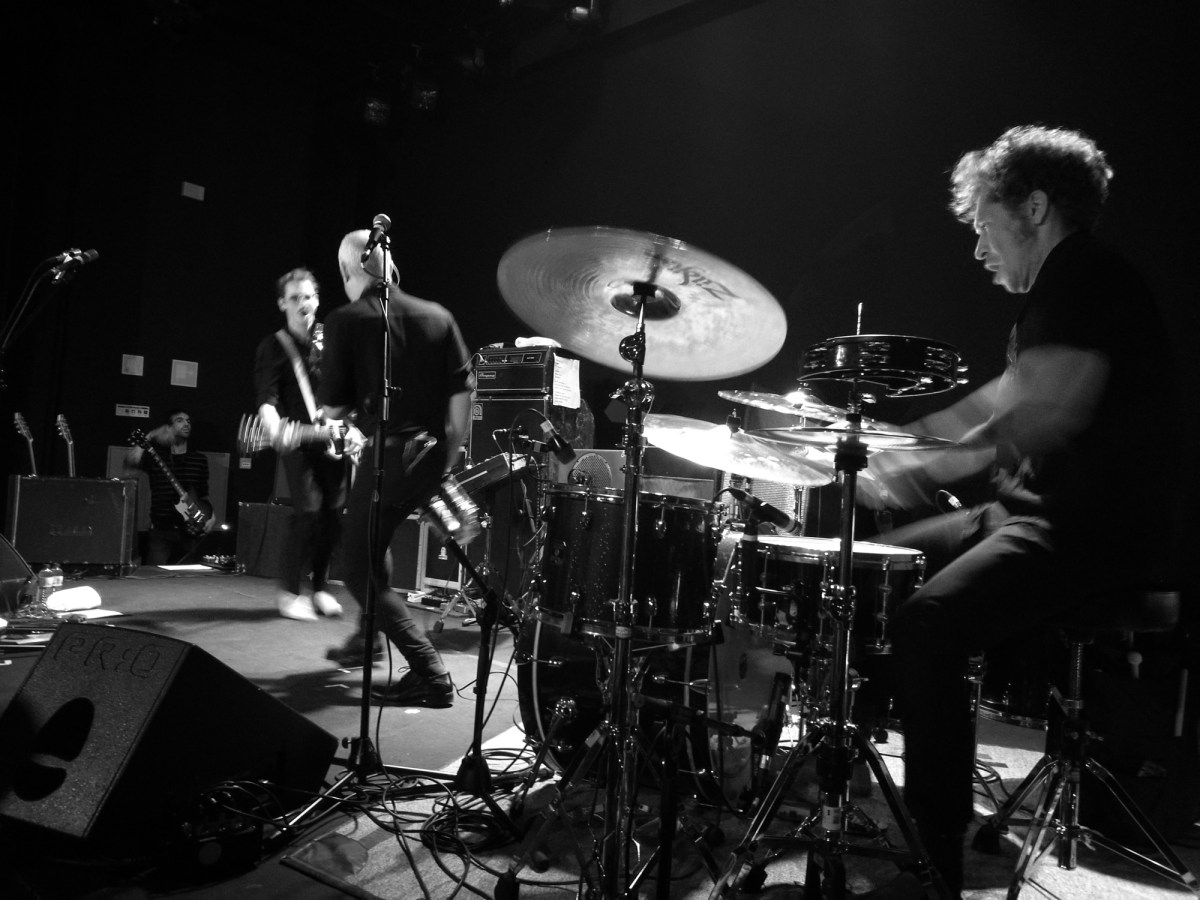
I have also learned to appreciate The Doors , Joy Division, David Sylvian, The Cocteau Twins and Nick Cave. Extreme music eclecticism germinated.
One house has become all penance,
the other indulgence.
You struggle to resist
what has grown to feel illicit,
an appetite, threatening obsession,
for delectation.
What grows on trees tastes unfinished,
an imitation of artifice.
What court determined
that sweetness be earned?
Some chef with too much power
once called mixing salt and sugar
a form of barbarism.
His decree, like any fashion,
should have evaporated,
but someone recorded it,
so centuries, a continent, away,
your whole body hesitates
to sweeten, even slightly,
chicken soup or broccoli.
There’s enough complication
in houses, in nations.
His laws are as good as blue.
The offender isn’t you.
By Adrienne Su
They turn the water off, so I live without water,
they build walls higher, so I live without treetops,
they paint the windows black, so I live without sunshine,
they lock my cage, so I live without going anywhere,
they take each last tear I have, I live without tears,
they take my heart and rip it open, I live without heart,
they take my life and crush it, so I live without a future,
they say I am beastly and fiendish, so I have no friends,
they stop up each hope, so I have no passage out of hell,
they give me pain, so I live with pain,
they give me hate, so I live with my hate,
they have changed me, and I am not the same man,
they give me no shower, so I live with my smell,
they separate me from my brothers, so I live without brothers,
who understands me when I say this is beautiful?
who understands me when I say I have found other freedoms?

I cannot fly or make something appear in my hand,
I cannot make the heavens open or the earth tremble,
I can live with myself, and I am amazed at myself, my love,
my beauty,
I am taken by my failures, astounded by my fears,
I am stubborn and childish,
in the midst of this wreckage of life they incurred,
I practice being myself,
and I have found parts of myself never dreamed of by me,
they were goaded out from under rocks in my heart
when the walls were built higher,
when the water was turned off and the windows painted black.
I followed these signs
like an old tracker and followed the tracks deep into myself,
followed the blood-spotted path,
deeper into dangerous regions, and found so many parts of myself,
who taught me water is not everything,
and gave me new eyes to see through walls,
and when they spoke, sunlight came out of their mouths,
and I was laughing at me with them,
we laughed like children and made pacts to always be loyal,
who understands me when I say this is beautiful?

Who Understands Me but Me by Jimmy Santiago Baca
Most people, and I am, obviously, most people as well, don’t fully understand how much their perception of reality is shaped by their own emotions, biases, and past experiences. The line between “knowing” and “feeling” is far blurrier than we often acknowledge. Much of what we consider “knowledge” is deeply entangled with emotion, intuition, and social conditioning. This is why debates over facts can feel so personal. They can even seem existential.
Accepting that much of what we “know” is provisional, socially shaped, or emotionally charged is the first step toward clearer thinking. But, at times, taking this first step just feels too much of an effort.
The first principle is that you must not fool yourself—and you are the easiest person to fool.
References
by RICHARD P. FEYNMAN
Some remarks on science, pseudoscience, and learning how to not fool yourself. Caltech’s 1974 commencement address.
Dear Nadine,
I haven’t written letters in so long that I’m not quite sure how to do this.
If you have made it as far into the future, I suppose you have managed to survive the anxiety and anger you were feeling when everything around you defied a logical explanation. Maybe you have learned that things are not as extreme as you perceive them. Although, being a Leo, I’m intrigued how you have managed to curb your tendency to overreact.
If you have made it as far into the future, I hope you have outgrown therapy or, at least, have found a therapist that does not seem to need help more than you do and, managed to open up and allowed yourself to be helped.
If you have made it as far into the future, I hope you danced as much and often as you could and that you have managed to read all the books you wanted to read and kept your to read pile always high.
If you made it as far into the future, I hope you have understood how to deal with the pain of losing loved ones and that you have kept your friends close by. I hope that living alone has not been too much of a burden and that you have enjoyed your freedom.
If you made it this far into the future, I guess you have mastered your horrible tendency to procrastinate. Maybe you followed through with all your plans and are now living in some Greek island surrounded by blue.
I hope you have always carried with you all the songs that have helped life make sense and that your inner soundtrack keeps growing.
I hope you have not gotten lost inside yourself. I hope you still remember.
I hope you have kept the passion and that you have not become indifferent to people, to beauty. I hope you still believe that elegance is a form of resistance.
I hope you have never stayed quiet in the face of injustice, that you have helped others and, that your world is much better than the one right now. I hope you haven’t given in.
I hope you have owned your choices and that you have always insisted on being the Sun and never a black hole.
Even if you do not look like the AI projected version of yourself, I hope your eyes keep showing that your name is Hope instead of impossible.
I hope you still like poetry even if you have never managed to write a single line of verse.
Dear future self
By JP Howard

If  I should ever forget you,
this is my love note to you

You were loved
You were somebody’s lover
You were loving
You held parts of all the women you loved,
somewhere deep in your generous heart

You were heartbroken
You were a heartbreaker too, girl
Sometimes you were heartache
Your heart never grew heavy though,
I remember that about you

You were silly
You were giggles
You were somebody’s Mama
You always wanted to be a Mama
Mama was the greatest title you ever had

You were jealous as fuck
You were selfish
You were sad
You held other folks’ sadness,
especially Mama’s sadness
You buried that deep in our heart

You were swag girl
Leo charm and confidence
Couldn’t nobody crack you up
as much as yourself

You were cute and you were vain
You wore lipstick under your mask
during a pandemic
because you were cute and you were vain

You loved your family
Your lover loved you for decades
Sometimes you would ask yourself,
How I get so lucky, girl?

You loved people
You were at home on a stage in front of a mic,
sitting with community in a circle,
or talking one on one with a friend
for hours on end in a coffee shop

You were a poet
You are a poet
This is your love poem to yourself, Juliet
References
Henry the V, Act 2, scene 4
As most people, I own too many things. I could, obviously, live without most of the things I have. And I have tried, once when I was moving to a new flat, I gave away most of my possessions. This was, in some way, liberating although I’m not quite sure if I was trying to set myself free or was just to lazy to take everything with me.
I often read (diagonally)the good advices on decluttering and while browsing through this “Letting Go of Sentimental Objects Is Hard. Here’s How to Start.”, this caught my attention:
He eventually realized that he was clinging to things that reminded him of people, places and experiences from his past.
“I wanted to make room for my future,”
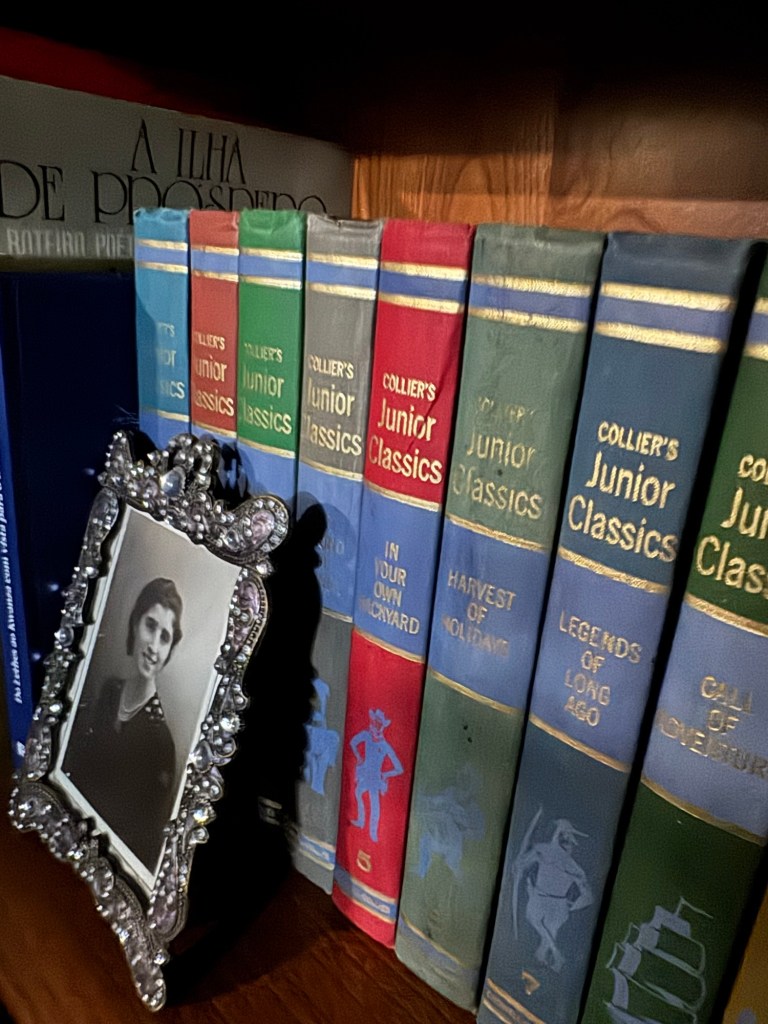
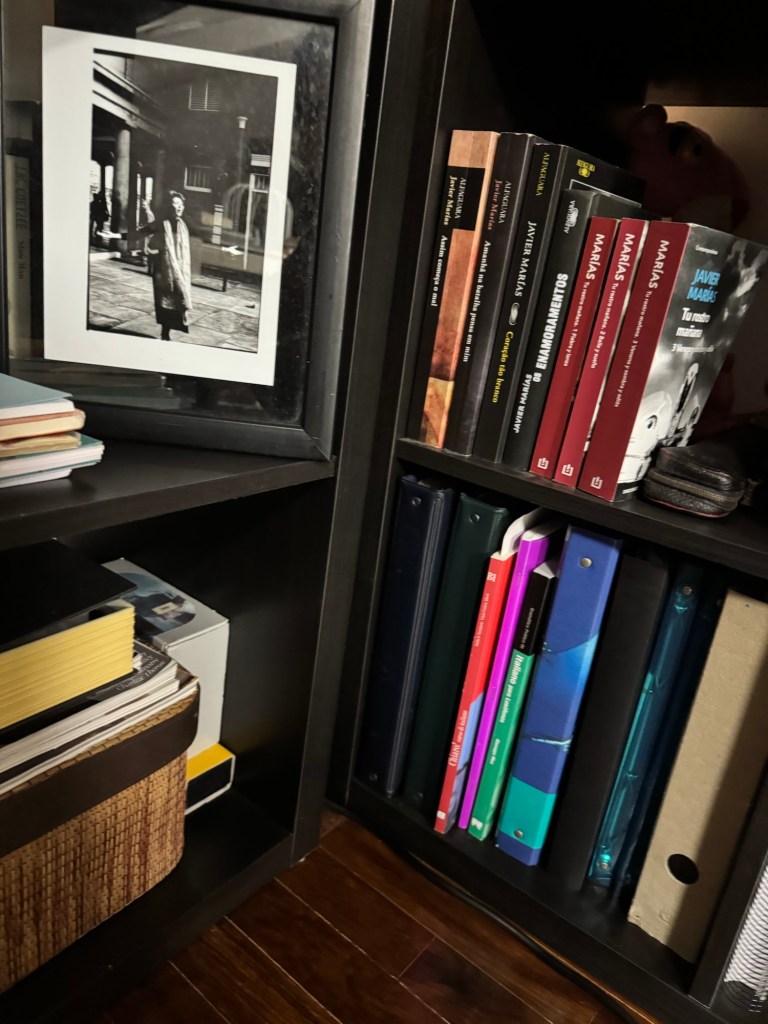
From house move to house move I always kept steam trunks, books, photos, my grandmother’s wedding blouse and her dresses, the cake figurine of her wedding (1949) cake my great aunt wedding dress, my grandfather”s camera and photometer, birthday cards, note written by friends, sketches made by friends who have, unfortunately, died, theatre and concert tickets, my journals, my first pair of shoes bronzed in South Africa, teddy bears, notebooks and pens and pencils.
Learning to love differently is hard,
love with the hands wide open




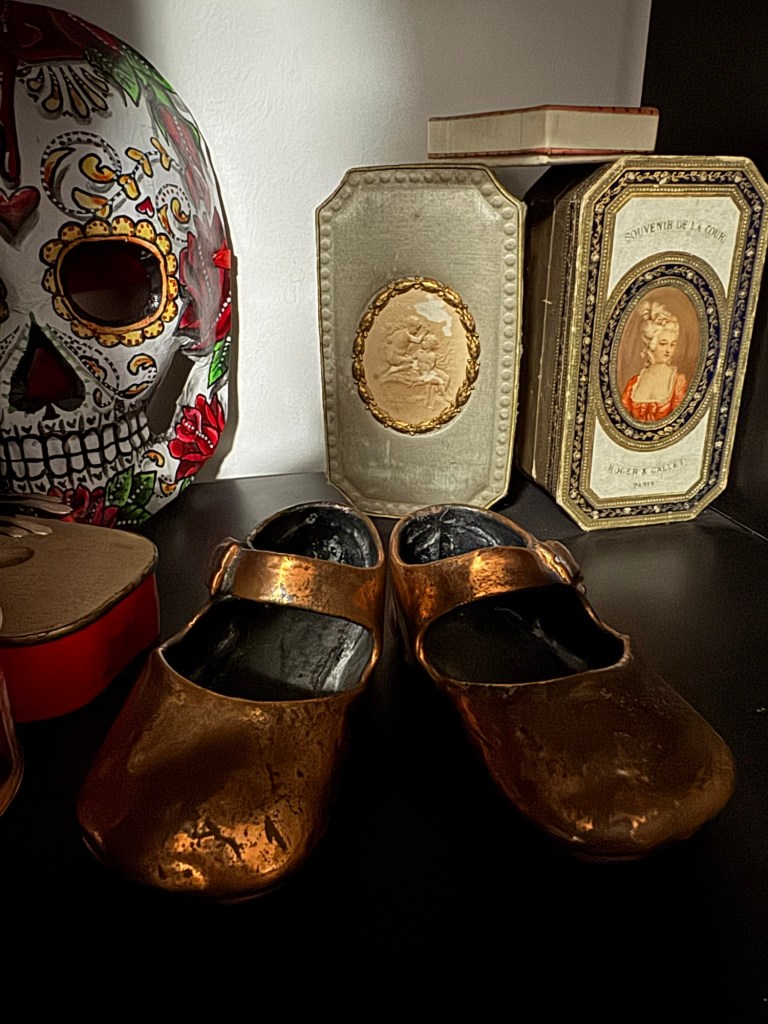


I suppose this answers the question, What are three objects you couldn’t live without? I just can’t bring them down to three.
I know “our memories live inside us, not in our things” but I still feel there’s a beautiful thread connecting everything I’ve kept to my personal history, relationships, and creative life. They are tangible links to my ancestry.
I’ve kept things that embody memory, relationship, and meaning rather than items of mere convenience or fleeting value. For some, they’re probably just clutter anyway. For me, these objects help tell the story of who I am and of the life of those who came before me. I have a hard time imagining a future without room for the past.
References: To have without holding by Marge Piercy




 Stories from A Closet of Errors