No one thinks he’s going to die in the mirror. But sometimes it happens.

Narcissus

Once I was half flower, half self,

That invisible self whose absence inhabits mirrors,

That invisible flower that is always inwardly,

Groping up through us, a kind of outswelling weakness,

Yes once I was half frail, half glittering,

Continually emerging from the store of the self itself,

Always staring at rivers, always

Nodding and leaning to one side, I came gloating up,

And for a while I was half skin half breath,

For a while I was neither one thing nor another,

A waterflame, a variable man-woman of the verges,

Wearing the last self-image I was left with

Before my strenth went down down into the darkness

For the best of the year and lies crumpled

In a clot of sleep at the root of nothings all

Alice Oswald

Post inspired by Eduardo Lourenço’s interview (in Portuguese)

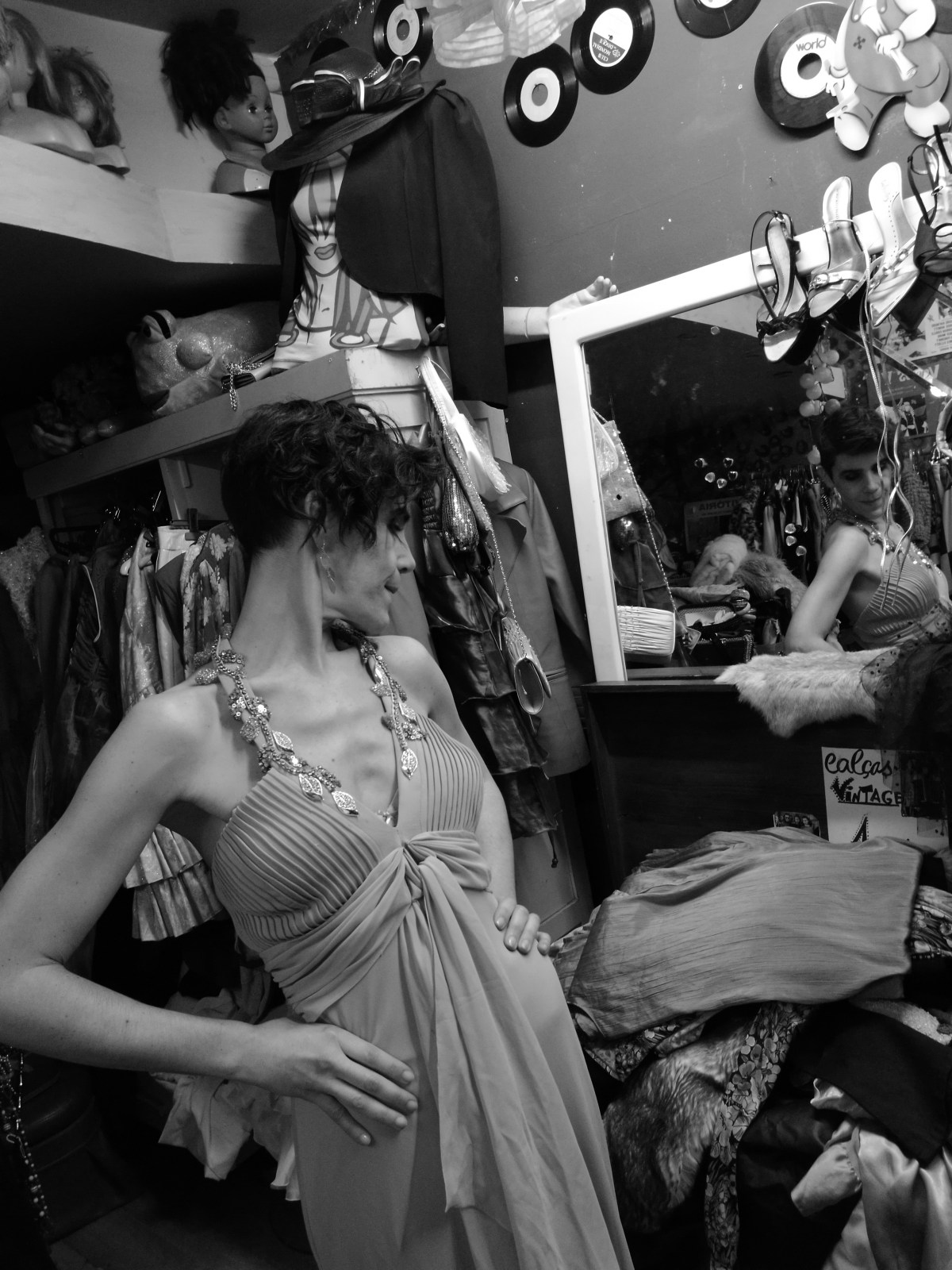
Photo: Me, myself and I by F.M.

It’s only human

Our century is so shallow, its desires scattered so widely, our knowledge so encyclopedic, that we are absolutely unable to focus our designs on any single object and hence, willy-nilly, we fragment all our works into trivia and charming toys. We have the marvellous gift of making everything insignificant.

Nikolai Gogol (1809 – 1852)

Shallow

something happening

mon

Coffee is a lot more than just a drink; it’s something happening. Not as in hip, but like an event, a place to be, but not like a location, but like somewhere within yourself. It gives you time, but not actual hours or minutes, but a chance to be, like be yourself, and have a second cup.

Gertrude Stein, Selected Writings

Trying to remember Ithaka

M. bought this dress Monday morning (my time zone) and the rest of my day was spent trying to remember what seemed to have been long forgotten.

I can’t remember the last time I wore this dress, but I am sure I wore it during a chilly evening in the summer of 1997 at a concert in Montemor‘s castle. I remember who was with me and the theory that “villages with medieval castles are always cold” but I could not remember who was playing.

Trying to dig up something that you have forgotten to remember from the pre-internet era is not always easy. I tried to google what I did remember. The same artist was also a photographer who, probably in the same year, had an installation called “I could write a book” at Galeria Zé dos Bois in Lisbon.  Inspired by the famous jazz standard, specifically by Dinah Washington’s rendition of it (1955), the installation featured an unmade bed, photos and diary entries and little notes from the time the author lived, in love, in Tokyo because if someone had asked him, he could have written a book.

If they asked me, I could write a book
About the way you walk, and whisper, and look
I could write a preface
On how we met
So the world would never forget

But I did forget and, as the day progressed I felt more and more irritated at not being able to recall the name. Probably C. went with me to Lisbon so I decided to send an email explaining my quasi existential doubt of the day. He thought it was absurd and called me. He had no recollection whatsoever of such installation he most probably did go but couldn’t remember. We also saw this same guy at Labirintho, I said. Remember that? We went with another friend who got drunk and almost in trouble. Remember that? I even remember where we had parked the car and that we drove away and Cake’s Fashion Nugget was playing. He could not remember anything at all. It seems like we have done really interesting stuff together in the 90s, though.

By 8 pm I could recall some Greek connection and my Google search was “Californian musician, Greek ancestry, living in Lisbon in the 90s”. There it was an article about “the greatest Portuguese talents of the 90s”, about the great “unknown”, groundbreaking talent of Portuguese Pop/Rock and the growing popularity of Dance and Hip-Hop scenes. Finally Darin Pappas, aka Ithaka Darin Pappas aka Korvowrong and the album “Stellafly”, the most powerful and consistent national registry edited in 1997. That might help explain why I seemed to have travelled across the country to hear him even if now it doesn’t really make much sense.

But then again, C.P. Cavafy’s IthaKa is the conclusion that it’s never about getting there but always about the search, as long as you understand what the Ithakas mean.

As you set out for Ithaka
hope the voyage is a long one,
full of adventure, full of discovery.
Laistrygonians and Cyclops,
angry Poseidon—don’t be afraid of them:
you’ll never find things like that on your way
as long as you keep your thoughts raised high,
as long as a rare excitement
stirs your spirit and your body.
Laistrygonians and Cyclops,
wild Poseidon—you won’t encounter them
unless you bring them along inside your soul,
unless your soul sets them up in front of you.
 
Hope the voyage is a long one.
May there be many a summer morning when,
with what pleasure, what joy,
you come into harbors seen for the first time;
may you stop at Phoenician trading stations
to buy fine things,
mother of pearl and coral, amber and ebony,
sensual perfume of every kind—
as many sensual perfumes as you can;
and may you visit many Egyptian cities
to gather stores of knowledge from their scholars.
 
Keep Ithaka always in your mind.
Arriving there is what you are destined for.
But do not hurry the journey at all.
Better if it lasts for years,
so you are old by the time you reach the island,
wealthy with all you have gained on the way,
not expecting Ithaka to make you rich.
 
Ithaka gave you the marvelous journey.
Without her you would not have set out.
She has nothing left to give you now.
 
And if you find her poor, Ithaka won’t have fooled you.
Wise as you will have become, so full of experience,
you will have understood by then what these Ithakas mean.

C.P. Cavafy, Collected Poems. Translated by Edmund Keeley and Philip Sherrard


I texted the name and sent it to C. “wtf, who remembers that” was the answer. Right.

Now, the material trigger for all this is on its way to another hemisphere and I hope it will continue to inspire random thoughts, impromptu travels, silly theories and becomes someone else’s story.

I am full of questions

This poem had the human contribution of Ursula Andkjær Olsen, and my intervention while sort of dancing with an old book with a black question mark on the cover but, is was composed by the Turn on Literature Machine.

After a week of immersion into the depths of Electronic Literature I am none the wiser. I am left with questions.

Our phones can speak to us (just as a human would). Our home appliances can take commands (just as a human would). Our cars will be able to drive themselves (just as a human would). What does “human” even mean?

Now they are people

And I’m in awe of all the possibilities of moving within words of seeing them transform into a physical experience. But still.


References

If an Algorithm Wrote This, How Would You Even Know?

Feathered

Hope is the thing with feathers 

That perches in the soul, 

And sings the tune without the words, 

And never stops at all, 


And sweetest in the gale is heard;         

And sore must be the storm 

That could abash the little bird 

That kept so many warm. 


I’ve heard it in the chillest land, 

And on the strangest sea;        

Yet, never, in extremity, 

It asked a crumb of me.


Hope is the thing with feathers (254)

Emily Dickinson, 1830 – 1886


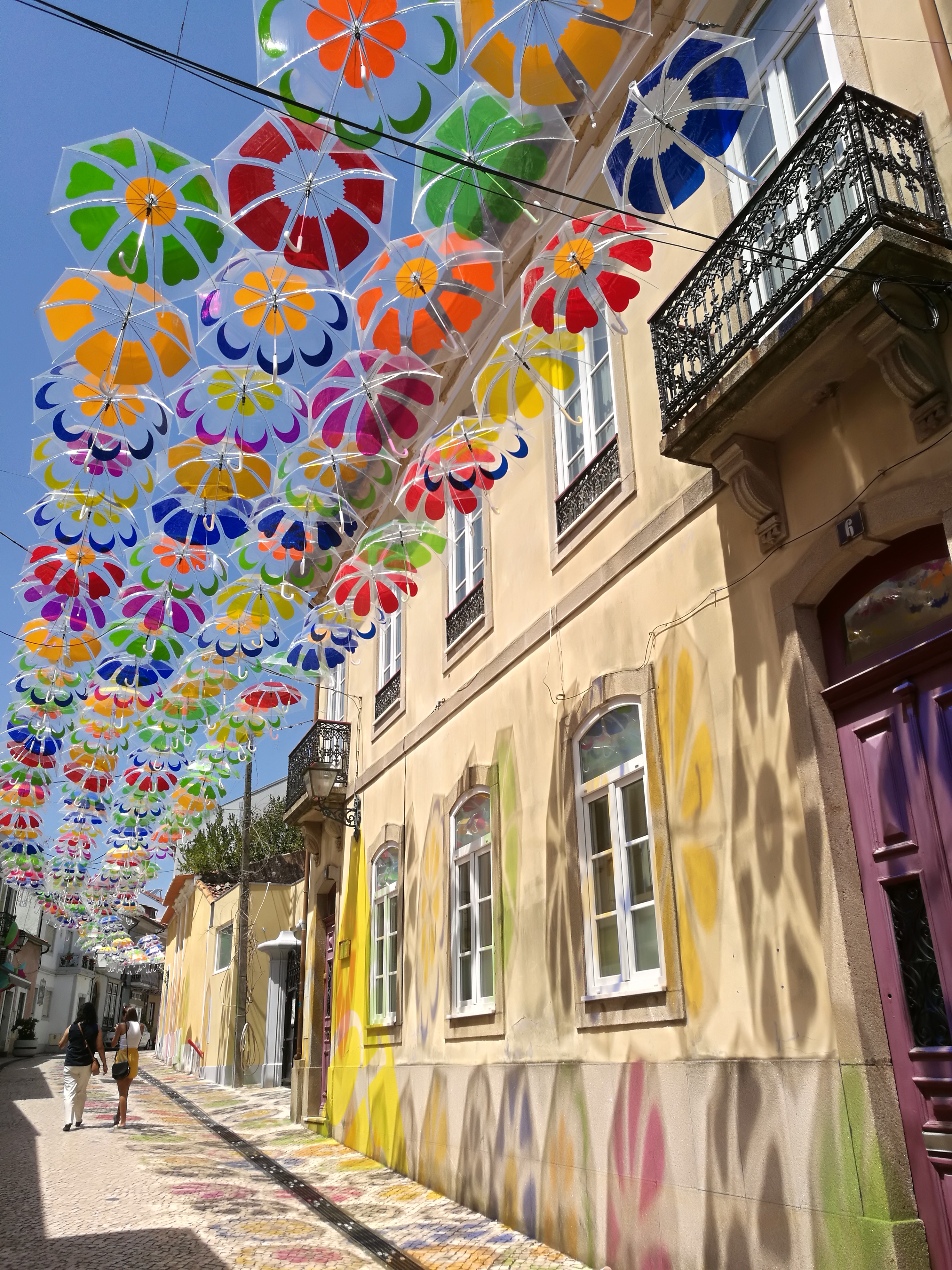
Photo: AgitaÁgueda, Carnaval Fora de Horas

When he left

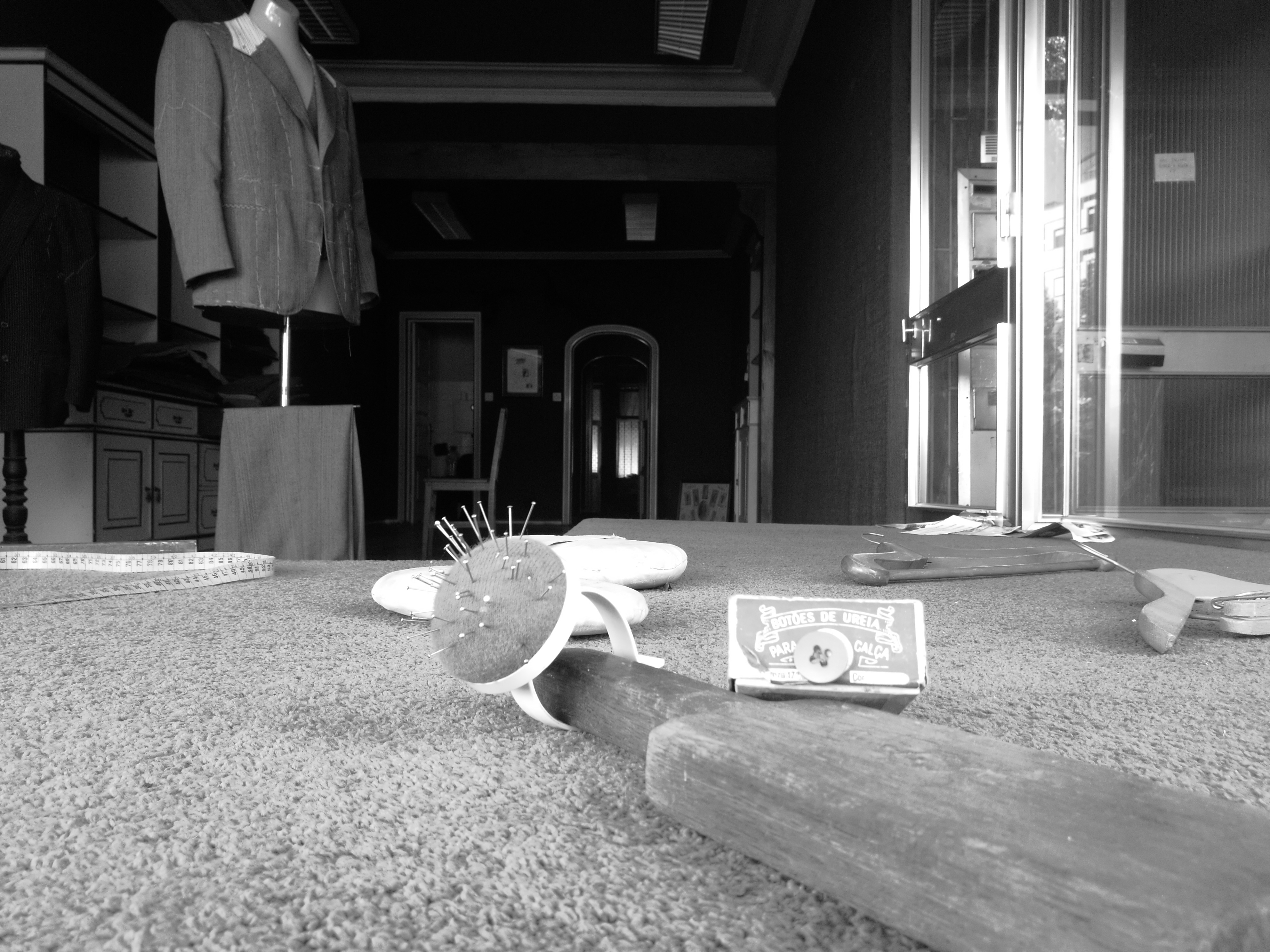
Mr. Alexandre used to work here, from 1962 until he died in 2016.

From the street, looking through the window, it doesn’t look like this place is abandoned. He might come back. Someone might come back for their bespoke suit.

If you read Portuguese, please head to Blog dos Alfaiates, Mr. Alexandre’s story is there along with other stories about other masters of elegance.

Photo: Alexandre Alfaiate, Praça Coronel Pacheco, Porto

Memory, hither come, And tune your merry notes


After a nervous smartphone breakdown, the cloud has been generous enough to give me back some pieces of what it seems to have been my recent life.

References

Memory, hither come by William Blake

A Dream Deferred

What happens to a dream deferred?
Does it dry up
like a raisin in the sun?
Or fester like a sore —
And then run?
Does it stink like rotten meat?
Or crust and sugar over —
like a syrupy sweet?

Maybe it just sags
like a heavy load.

Or does it explode?


Langston Hughes, Dream Deferred in The Panther and the Lash May 1967

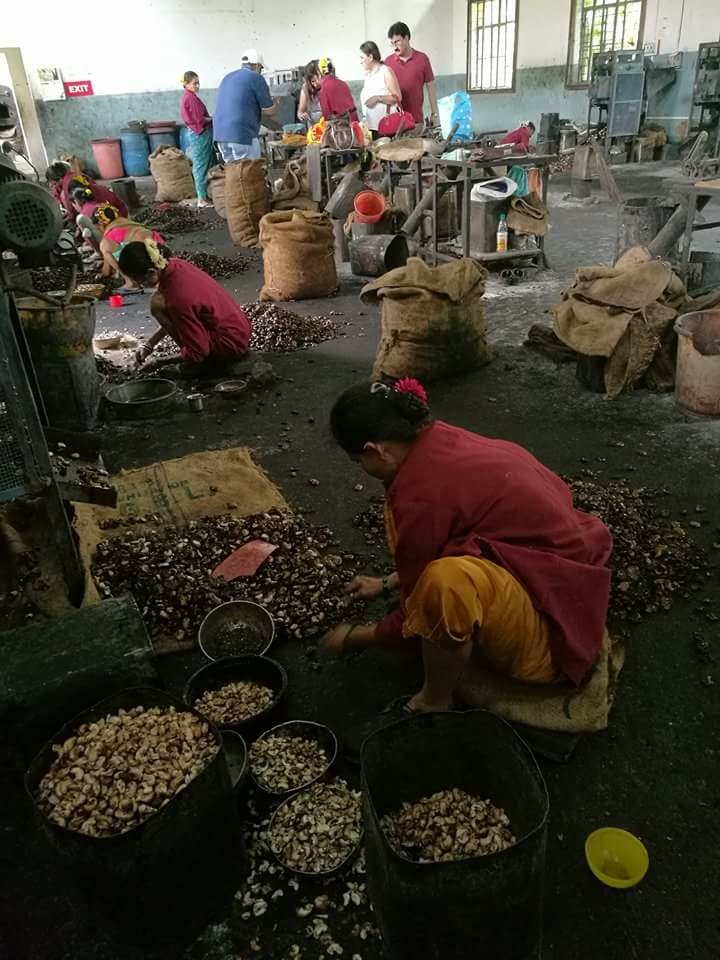
Photo: workers at cashew nut processing  unit, Goa, 2016

The shape of life

bdr

A bridge of silver wings stretches from the dead ashes of an unforgiving nightmare
to the jeweled vision of a life started anew.

Aberjhani, The Bridge of Silver Wings (2007)


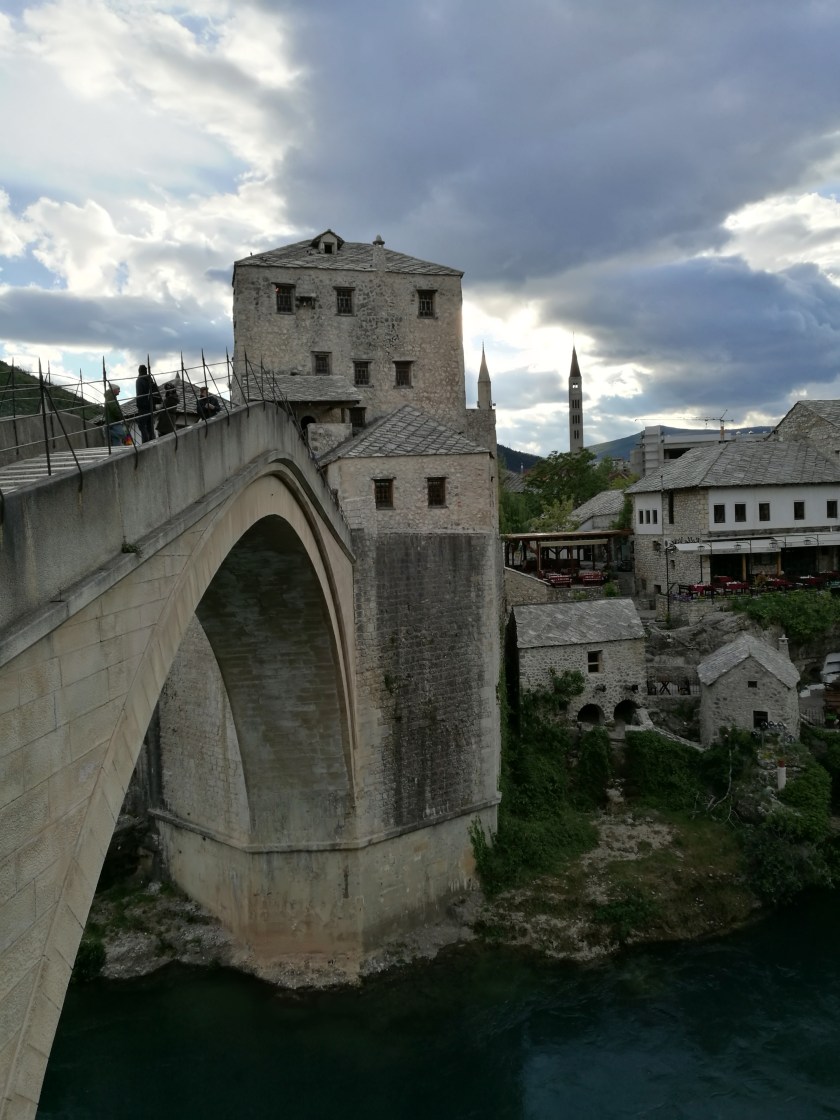
I could have chosen any of the ones in Porto, but Stari Most was the topic of conversation over coffee today. Some bridges keep you together. No matter what.

Mostar, April 2017

Q & A

  
What is Worth Knowing?

That van Gogh’s ear, set free
wanted to meet the powerful nose
of Nevsky Avenue.
That Spain has decided to help
NATO. That Spring is supposed to begin
on the 21st March.
That if you put too much salt in the keema
just add a few bananas.
That although the Dutch were the first
to help the people of Nicaragua they don’t say much
about their history with Indonesia.
That van Gogh collected Japanese prints.
That the Japanese considered
the Dutch to be red-haired barbarians.
That van Gogh’s ear remains full of questions
it wants to ask the nose of Nevsky Avenue.
That the vaccinations for cholera, typhoid and yellow fever
are no good – they must be improved.
That red, green and yellow are the most
auspicious colours.
That turmeric and chilli powder are good
disinfectants. Yellow and red.
That often Spring doesn’t come
until May. But in some places
it’s there in January
That van Gogh’s ear left him because
it wanted to become a snail.
That east and west
meet only in the north and south – but never
in the east or west.
That in March 1986 Darwinism is being
reintroduced in American schools.
That there’s a difference
between pigeons and doves, although
a ring-dove is a wood-pigeon.
That the most pleasant thing is to have a fever
of at least 101 – because then the dreams aren’t
merely dreams but facts.
That during a fever the soul comes out
for fresh air, that during a fever the soul bothers to
speak to you.
That tigers are courageous and generous-hearted
and never attacked unless provoked –
but leopards,
leopards are malicious and bad-tempered.
That buffaloes too,
water-buffaloes that is, have a short temper.
That a red sky at night is a good sign for sailors,
for sailors…..what is worth knowing?
What is worth knowing?

What is Worth Knowing? (1986) 

Sujata Bhatt 

Photo by J M P , Venice (2012)