These eleven films form a constellation around themes of memory, desire, and the cruel passage of time. Each represents cinema at its most emotionally penetrating, whether through the neon-soaked dystopia of Strange Days, the sun-drenched melancholy of In the Mood for Love, or the theatrical intensity of A Streetcar Named Desire.
Several of these films share a fascination with non-linear storytelling and the unreliability of memory. Memento constructs its entire narrative around the protagonist’s inability to form new memories, creating a puzzle that mirrors our own struggles to make sense of fragmented experiences.
Similarly, Strange Days explores how technology might allow us to literally experience others’ memories, raising questions about authenticity and identity.
Wong Kar-wai’s 2046 and In the Mood for Love approach time more poetically, using repetition, slow motion, and careful composition to create a sense of moments suspended in amber.
The films suggest that certain experiences – particularly those involving unrequited love – exist outside normal temporal flow.
Le Mépris, Pierrot Le Fou, and Bonjour Tristesse represent different facets of French cinema’s relationship with American genre films and European art house traditions. Godard’s works deconstruct classical narrative while maintaining an almost naive romanticism about love and cinema itself.
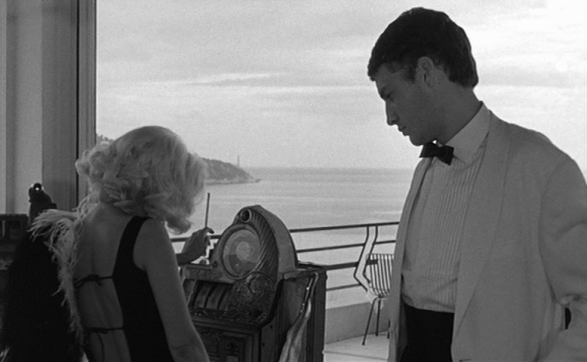
Bonjour Tristesse, the 1958 one, though earlier, not French, and more conventional in structure, shares this tension between sophistication and genuine emotional vulnerability. I also have to say that my relation to these three movies is strongly emotional, probably because they all represent the sort of endless Mediterranean summer that I see as my “happy place”.
The Tennessee Williams adaptations – Suddenly Last Summer and A Streetcar Named Desire – bring a heightened theatrical sensibility to cinema. Both films explore themes of desire, madness, and social decay with an intensity that borders on the operatic. Their Southern Gothic atmosphere creates a unique American contribution to the broader themes of psychological dissolution found throughout this collection.
Wild at Heartstands as perhaps the most anarchic entry in this collection, with Lynch’s characteristic blend of violence, dark humor, and surreal imagery. Yet it shares with the other films an interest in characters who exist outside conventional society, whether by choice or circumstance.
Taste of Cherry approaches this outsider status from a profoundly different angle. Kiarostami’s meditative masterpiece follows a man driving through the hills around Tehran, seeking someone to help him with a final act. The film’s minimalist approach – long takes, natural lighting, real-time conversations – creates a contemplative space that stands in stark contrast to the more stylized works in this collection, yet shares their interest in characters grappling with fundamental questions of existence.
What unites these diverse films is their commitment to cinema as a form of visual poetry. Each director uses the medium’s unique properties – its ability to manipulate time, space, and perception – to explore internal psychological states that might be difficult to express in other art forms.
The careful attention to color, composition, and rhythm in films like In the Mood for Love creates meaning that exists beyond dialogue or plot. Similarly, the fragmented structure of Memento becomes a metaphor for how we all construct identity from incomplete information. Taste of Cherry‘s patient, observational style transforms the Iranian landscape into a canvas for philosophical reflection, proving that cinema’s poetry can emerge from the most naturalistic approaches.
These films suggest that cinema’s greatest power lies in its ability to preserve moments of intense feeling and make them eternal. Whether it’s the devastating final shot of In the Mood for Love, the cyclical structure of 2046, or the backwards progression of Memento, each film grapples with time’s passage and our desire to hold onto fleeting experiences, and to ourselves.
I’ve chosen these particular films because they understand cinema not just as entertainment. They view it as a means of exploring the deepest questions of human experience: How do we love? How do we remember? How do we make meaning from the chaos of existence?
These are films that reward multiple viewings, revealing new layers of meaning with each encounter – much like memory itself, they become richer and more complex over time.
“The cinema,” said André Bazin, “substitutes for our gaze at a world more in harmony with our desires.”
Despite all critical advice, I have finally decided to watch Joker: Folie à Deux and actually liked it.
“Joker: Folie à Deux” succeeds brilliantly, in my opinion, in presenting music not as traditional Broadway spectacle, but as something far more intimate and psychologically honest—the way a real person might slip into musical response when processing their world. The film uses its musical sequences to show how characters experiencing mental illness might perceive reality, with songs emerging organically from their psychological states rather than as theatrical showstoppers.
This approach places the film in fascinating company with movies like “All That Jazz” and “Dancer in the Dark,” where musical elements emerge from psychological necessity rather than theatrical convention.
Lars von Trier’s Dancer in the Dark (2000) is a heart-wrenching musical drama that uses music as a form of escapism for its protagonist, Selma (Björk), a factory worker who is slowly losing her sight. Selma’s internal soundtrack is a series of elaborate musical numbers that she imagines to escape the harsh realities of her life.
The film’s musical sequences are starkly different from its grim, handheld-camera visuals. When Selma sings, the world around her transforms into a vibrant, dreamlike stage, filled with synchronized dancers and sweeping orchestration. These moments are not just fantasies; they are Selma’s way of coping with her struggles and finding beauty in an otherwise bleak existence.
What makes Dancer in the Dark so powerful is the contrast between Selma’s internal soundtrack and the external world. The music is a refuge, a place where she can momentarily forget her pain. However, as the film progresses, the line between her fantasies and reality begins to blur, leading to a devastating climax.
In All That Jazz, music isn’t just a backdrop—it’s the heartbeat of Joe Gideon’s world. The film uses musical numbers as a way to externalize Joe’s thoughts, fears, and desires. These sequences are often surreal, blending fantasy and reality in a way that mirrors Joe’s fragmented state of mind.
One of the most striking aspects of the film is how it uses music to explore Joe’s inner conflicts. For example, the recurring song “Take Off With Us” from the fictional musical Joe is directing becomes a metaphor for his own life—glamorous on the surface but deeply chaotic underneath. The musical numbers are often grandiose and theatrical, reflecting Joe’s larger-than-life personality and his tendency to escape into his art rather than confront his personal demons.
The film’s climax, set to the song “Bye Bye Life,” is a masterful use of music as an internal soundtrack. As Joe lies on his deathbed, he imagines a final, elaborate performance where he bids farewell to his loved ones and his own life. This sequence is both heartbreaking and exhilarating, as it captures Joe’s acceptance of his mortality while celebrating his passion for performance. The music here isn’t just a narrative device; it’s a window into Joe’s soul, revealing his regrets, his pride, and his ultimate surrender.
Like Bob Fosse’s semi-autobiographical exploration of a mind fracturing into musical fragments, “Joker” uses music both as a representation of psychological breaking and as an attempt to make sense of a fractured self.
What makes “Joker: Folie à Deux” particularly compelling is its critical examination of how audiences consume and destroy the very authenticity they claim to seek. Arthur’s relationship with his audience is fundamentally parasitic—they don’t see him as a person, but as a performance, a symbol, or a projection of their own desires. Even his most intimate musical moments become public spectacle, transforming personal expression into consumable entertainment.
This stands in stark contrast to David Lynch’s “Wild at Heart,” where Sailor’s Elvis channeling serves a completely different function. When Nicolas Cage’s Sailor breaks into Elvis, he’s not seeking validation—he’s expressing something essential about himself that can’t be contained in normal conversation. His musical moments are defiantly authentic, performed for himself and Lula while remaining beautifully unconcerned with audience approval.
The difference is crucial: Sailor tries to explain who he is but ultimately doesn’t need the audience’s approval, while Arthur is trapped in the tragic paradox of only being allowed to exist as what people think he is. In “Wild at Heart,” performance becomes liberation; in “Joker,” it becomes another form of confinement.
Both films explore the concept of shared reality, but they reach opposite conclusions about its power. Sailor and Lula’s relationship in “Wild at Heart” can be understood as a kind of folie à deux—a shared delusion—but it’s ultimately the fairy tale reinterpretation that wins out. Their shared fantasy world isn’t madness; it’s a shield against the real madness surrounding them. Their love story becomes a survival mechanism, with their heightened, stylized worldview protecting them from genuine grotesquerie.
“Joker: Folie à Deux,” however, suggests that shared musical reality is ultimately illusory. By the end, there’s the devastating recognition that nothing was truly shared—just parallel solitudes briefly overlapping before dissolving into the resigned acceptance of “That’s Life.”
Most of us also turn to internal soundtracks to help us process emotions, express what we can’t verbalize, and transform mundane moments into something more meaningful. Whether consciously or not, we live with our own ongoing musical theater—often of questionable taste—that helps us make sense of our daily experiences.
The key difference between healthy and destructive musical thinking lies in agency and authenticity. When our internal soundtracks serve genuine self-understanding rather than performance for others’ consumption, they become tools for emotional navigation rather than traps of external expectation.
David Lynch’s work consistently championed individual authenticity against societal norms, seeing personal expression as a sacred, almost magical force capable of transforming reality through sheer commitment to one’s authentic self.
This offers a hopeful counterpoint to “Joker’s” more pessimistic view of how individual authenticity can be crushed under the weight of public perception and media consumption. Where Lynch sees individual expression as liberating, “Joker” presents it as tragically vulnerable to commodification and distortion.
Perhaps the most honest approach to our internal musical theater is to embrace it with both commitment and humor—acknowledging its questionable taste while recognizing its genuine power to help us navigate life’s complexities. We can choose to be more like Sailor, using our personal soundtracks as tools for authentic self-expression, or risk becoming like Arthur, trapped by others’ expectations of our performance.
Music isn’t just entertainment—it’s a fundamental way humans process reality, express emotion, and connect with both ourselves and others. Whether it becomes a source of liberation or confinement depends on whether we’re performing for ourselves or for an audience that may never truly see us.
In the end, we’re all living with our own internal musical theater. The question isn’t whether this is normal or healthy—it’s whether we can maintain agency over our own soundtrack while staying true to the complex, sometimes ridiculous, often beautiful music of being human.
A Personal Note: The Power of the Snakeskin Jacket
After watching “Wild at Heart,” (for the first time) I was so moved by Sailor’s unapologetic authenticity—his commitment to being exactly who he was, snakeskin jacket and all—that I convinced my mother to buy me my own snakeskin jacket. It wasn’t about cosplay or imitation; it was about understanding that sometimes we need external symbols of our internal commitment to authenticity.
Like Sailor’s jacket, which he describes as “a symbol of my individuality and my belief in personal freedom,” my jacket became a reminder that it’s possible to navigate the world on your own terms, with your own soundtrack, regardless of what others might think. Sometimes the most profound cinematic experiences aren’t just about understanding characters—they’re about finding the courage to become more authentically ourselves.
That jacket still hangs in my closet, a tangible reminder that the best films don’t just entertain us—they give us permission to live more boldly, more musically, and more true to our own questionable-taste internal theater.
In Federico Fellini’s masterpiece “La Dolce Vita” (1960), the protagonist Marcello Rubini wanders through a decadent Rome, encountering various women who represent different facets of desire, connection, and modern existence. Among these characters, two stand in fascinating contrast to each other: Sylvia, the exuberant American starlet, and Maddalena, the wealthy, world-weary heiress.
Sylvia, portrayed with iconic flair by Anita Ekberg, embodies pure enthusiasm for life. Her character arrives in Rome like a force of nature, commanding attention and transforming the ancient city into her personal playground. The famous Trevi Fountain scene captures her essence perfectly—wading into the water with childlike wonder while fully dressed in an evening gown, beckoning Marcello to join her in this spontaneous celebration of being alive.
What makes Sylvia so captivating is her unfiltered joy. She moves through the world with an almost supernatural confidence, unconcerned with social conventions or consequences. When she climbs the stairs of St. Peter’s Basilica, dances in nightclubs, or pets kittens in an empty apartment, she does so with complete presence in the moment. She represents a kind of freedom that seems increasingly elusive in modern society—the freedom to experience pleasure without cynicism.
Sylvia’s appeal is immediate, visceral, and larger than life. She is the embodiment of spectacle in a film that is itself concerned with spectacle. Yet her character remains somewhat untouchable, a fantasy that can be approached but never fully possessed.
In stark contrast stands Maddalena, played with nuanced perfection by Anouk Aimée. Where Sylvia bursts with emotion, Maddalena presents a cool, composed exterior. Her elegance isn’t performative but ingrained—the natural result of someone who has seen all there is to see in Rome’s high society and found it wanting.
Maddalena navigates the night with a detached awareness that makes her all the more alluring. She’s not impressed by the trappings of wealth and fame because they are her everyday reality. Instead, she seeks authentic connection in a world of artifice, most memorably in the scene where she and Marcello communicate through the echo chambers of a flooded basement in a ruined aristocratic villa—a perfect metaphor for the distance that exists even in their moments of intimacy.
Her world-weariness isn’t simply cynicism but a form of wisdom. She understands the hollowness of “la dolce vita” because she has lived it fully. This knowing perspective gives her character depth and complexity that contrasts with Sylvia’s more straightforward exuberance.
The appeal of both characters creates an internal conflict familiar to many of us. Do we embrace life with Sylvia’s abandon, diving headfirst into experiences without reservation? Or do we move through the world with Maddalena’s sophisticated detachment, protecting ourselves from disappointment while seeking deeper meaning?
Fellini doesn’t present one approach as superior to the other. Instead, he uses these characters to illustrate the tensions of modern existence. Marcello is pulled between these poles throughout the film—between passion and detachment, innocence and experience, spontaneity and reflection. He does seem to reject flat out the emotional stability offered by Emma whose “sticky, maternal love” he despises.
What makes these characters so enduring is that they represent more than just different types of feminine appeal. They embody different philosophies of living, different responses to a world that simultaneously offers too much and not enough. Sylvia’s enthusiasm and Maddalena’s coolness aren’t just personality traits but strategies for navigating a changing society.
I would be Sylvia in the days I want to live as a fleeting dream, a force of nature that dazzles but never truly belongs. This is, I suppose, the luxury of anonymity. When we are the foreigner, no one really has any reference on how and who we are. Therefore, they have no idea on how we are supposed to be.
While Sylvia is the unattainable fantasy, Maddalena mirrors Marcello’s existential drift. She’s just as lost, but with a sharper self-awareness. A proud and typical GenX I, and most probably a lot of others reared on post punk and goth influences, resonate with depth, complexity, and the ache of searching for meaning in a world that feels hollow and could, thus, more easily be Maddalena.
Anouk Aimée plays her with this devastating coolness—luxury draped over emptiness. She craves love but sabotages ii. She’s too disillusioned to hope, yet too alive to stop searching. Fellini frames her suffering with such deliberate elegance that her loneliness becomes inseparable from her glamour. But this isn’t mere vanity—it’s a survival tactic, a way to exert control over the void.
Sylvia: Life as spectacle, pure dolce vita (the Trevi Fountain scene = ecstatic but fleeting).
Maddalena: Life as introspection, the aftermath of indulgence. She’s what happens when the party ends.
Fellini’s Contrast: Sylvia is myth; Maddalena is reality. One is adored, the other understood (sort of)—which is more tragic?
Ah, the young girl at the beach—Fellini’s silent, enigmatic coda to La Dolce Vita. She’s the film’s great unanswered question, a glimmer of purity in a world of exhausted decadence. A waitress from the seaside café (played by Valeria Ciangottini), unnamed, barely speaking. Marcello meets her earlier when she shyly asks for his autograph. Unlike the jaded socialites and performers, she’s untouched by Rome’s corruption. Her white dress mirrors Sylvia’s, but without the erotic charge—it’s virginal, almost angelic.
She waves, but it’s ambiguous—is it farewell, or an invitation? The sea (a classic symbol of renewal) separates them. She calls to him across the water, but he can’t hear her (or won’t). Her words are lost in the wind—Fellini’s metaphor for Marcello’s spiritual deafness. She is the irreversible loss of one’s own innocence, not through fate, but through a thousand small surrenders.
I don’t care about stories. I never did. Every story is the same. We have no new stories. We’re just repeating the same ones. I really don’t think, when you do a movie that you have to think about the story. The film isn’t the story. It’s mostly picture, sound, a lot of emotions.
And, I remembered that one of the first movies that made me feel the same was Peter Greenway’s The Pillow Book, beautiful to behold and impossible to forget. I can’t remember the story but I do remember feeling spellbound by its visual poetry and the idea of being a living book. Greenway employs multiple aspect ratios, picture-in-picture compositions, and superimposed calligraphy that transforms the screen into a living, breathing manuscript. Bodies become canvases, and ink becomes an extension of desire. The film’s approach to visual composition mimics the practice of calligraphy itself—disciplined yet sensual, structured yet flowing with emotion.
It took me another 10 years to get my first tattoo and it was not a written one. I had a leopard done in Johannesburg because I was born in South Africa and the leopard is one of the Big 5. When I finally decided to have something written, I was in San Diego in 2014. For a full 5 hours or so, someone patiently wrote Macbeth’s soliloquy in Act 5 Scene 5 on the right side of my rib cage. Surprisingly, there was no pain. The tattooer, who was very young, asked why I had chosen such a strange thing. I wanted to be constantly reminded of the fleeting nature of life and meaning, I said.
After I got divorced, Richard II was written on my right tight under the leopard. I wasted time and now doth time waste me.
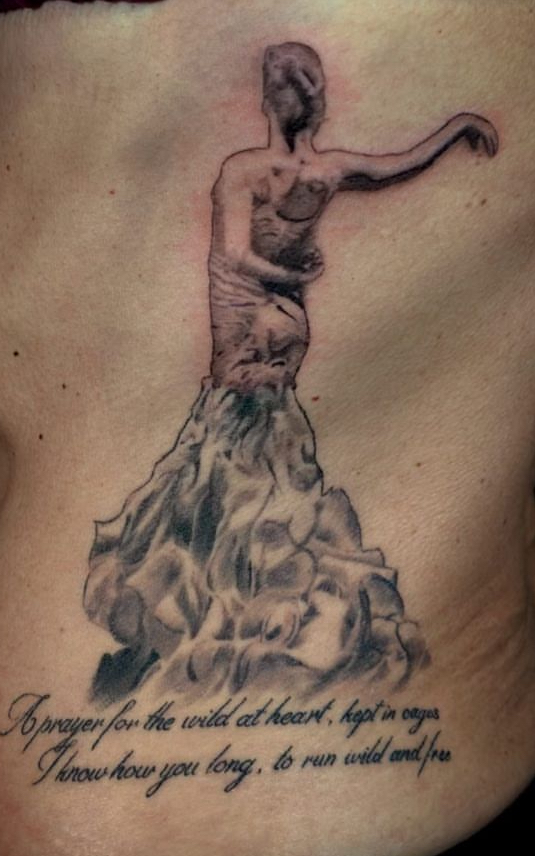
My last one was done in 2024, a very common tattoo written under a flamenco dancer on my left rib cage. Tennessee Williams’ first verses of A Prayer for The Wild at Heart. The tattoo artist thought that having the whole poem would be over the top.
I wanted to show, even though they are not visible, that for me there’s nothing more important than literature. Particularly the one exploring human struggles, mortality, and the desire for freedom.
The “Pillow Book” connection made perfect sense now – like the film, I was using my body as a canvas for meaningful text. Yes, I could use paper, but text on skin becomes something more intimate and embodied than words on a page. I also see them as a way of relating my reminder’s of life’s impermanence and the tension between duty and desire to the struggles of everyone else.
I am now thinking of getting a tattoo of goddess Athena. I have to find suitable words.
There. There you are. You have just dropped a marker pin on your body, to reclaim yourself, to remind you where you are: inside yourself. Somewhere. Somewhere in there Caitlin Moran, How to Be a Woman
On Saturday I went to see Pablo Larraín’s Maria with a a friend. My friend cried at the end of the movie. Surprisingly ( to me), I didn’t. I am not quite sure I liked it. Angelina Jolie presumably excels as the tragic Diva; Massimo Cantini Parrini’s costume design was impeccable, as it should, since the source material was already extraordinary as he acknowledges in this interview to Harper’s Bazaar:
Working on the costumes for Maria Callas was not that difficult in terms of finding or drawing inspiration, as Maria Callas was a diva and she had been interviewed and photographed by so many different journalists and people. But beyond the most iconic photographs that we had all seen sooner or later of Maria Callas, I was also able to dig deeper and deeper in my research to find other pictures of where she was portrayed at homes of friends, dining out—a number of events that were not typically those linked to her professional life. That was a great inspiration, and it allowed me to imagine and create her wardrobe, which spans throughout the ’50s, ’60s, and ’70s.
Costume design in María not only transforms Jolie into La Divina, it also serves as a visual metaphor for the film’s meditation on artistry, identity, and transformation. Through María Callas’ wardrobe, Larraín and Massimo Cantini Parrini articulate the tension between art as a living, breathing force and art as a frozen, ornamental relic
Callas was an artist shaped by both her voice and her image. Her costumes reflect this duality. Onstage, she is adorned in grand, operatic gowns. These gowns are heavy with history, as if carrying the weight of her own myth. These pieces emphasize how she became an icon, a living masterpiece. But offstage, her wardrobe shifts to softer, more intimate attire, revealing the woman beneath the legend. The contrast suggests that while the world sees only the diva, Callas herself wrestles with her own identity beyond the stage.
In her later years, Callas’ wardrobe takes on a different role. The extravagant fashion—high collars, structured silhouettes, luxurious fabrics—becomes almost like a museum exhibit. It serves as a way of preserving an identity that is slipping away. Even as her voice fades, her costumes remain striking. They seem like the last remnants of the persona she spent a lifetime constructing.
As Callas grapples with the loss of her voice, her costumes become more muted, understated—less fireworks, more elegy. The colors may darken, the embellishments may soften, mirroring the internal shift from performance to reflection.
A very long introduction to answer that if I could be someone else for a day, I would choose to be this kind of genius. Not the one shown in the movie. While not everyone knows what it’s like to command an opera house or possess extraordinary talent, we all know and experience, in very different measures, the personal side of decline.
You are born an artist or you are not. And you stay an artist, dear, even if your voice is less of a fireworks.
To be able to experience for one day what it would feel like having lightning running through your veins, knowing that every note you produce is pure artistic truth. The sheer physical and emotional power required to project that voice, to inhabit roles like Tosca or Norma so completely that the boundary between performance and reality almost disappears…
To know not adoration but to live with the certainty that your extraordinary gift has made a difference in the world through beauty.
Now, I am the same age as Callas was when she died and realize that I really wished I could be myself everyday even if there are so many more spectacular lives than my own.
If you could be someone else for a day, who would you be, and why?
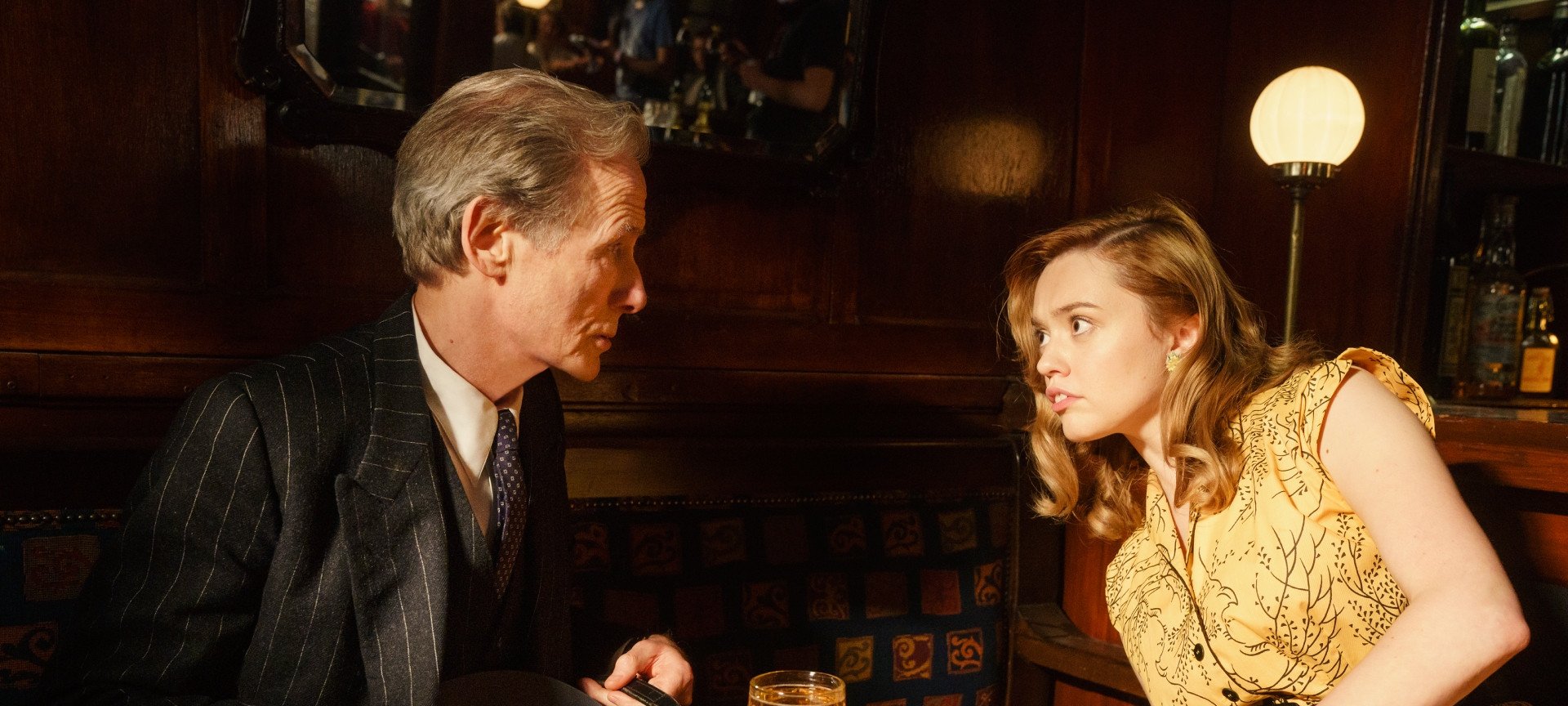
In Oliver Hermanus’s “Living” (2022), we witness a remarkable cultural translation that spans continents and decades. The film, starring Bill Nighy in a masterfully restrained performance, reimagines Akira Kurosawa’s 1952 masterpiece “Ikiru,” itself inspired by Leo Tolstoy’s “The Death of Ivan Ilyich.” This layered adaptation creates a fascinating meditation on bureaucracy, mortality, and the search for meaning in one’s life.
I watched this movie last Monday, January 6, and since I couldn’t come up with any New Year’s resolutions, I figured I’d use this movie as a bit of a wake-up call during that time of year when SAD usually kicks in, leaving me feeling as bare as a dormant tree. It will serve as a reminder that there is more to life than killing time and adjusting your reactions to whatever is thrown at you.
The film transposes Kurosawa’s narrative from post-war Tokyo to 1950s London with remarkable precision. The setting shift illuminates fascinating parallels between Japanese and British societies – both deeply hierarchical, bound by tradition, and struggling with the weight of their own formalities. Where Kurosawa’s film depicted Japanese bureaucracy through the lens of post-war reconstruction, Hermanus explores British civil service during the dawn of the welfare state.
The film’s portrayal of working life in 1950s London is meticulously crafted. The film’s opening credits sequence serves as a masterful visual overture to its themes of conformity and class structure. Shot from above, we witness a mesmerizing choreography of dark-suited men crossing London Bridge, their bowler hats creating a hypnotic pattern of black circles moving in mechanical precision. This aerial view transforms individual civil servants into an abstract pattern – a visual metaphor for the system’s absorption of individual identity.
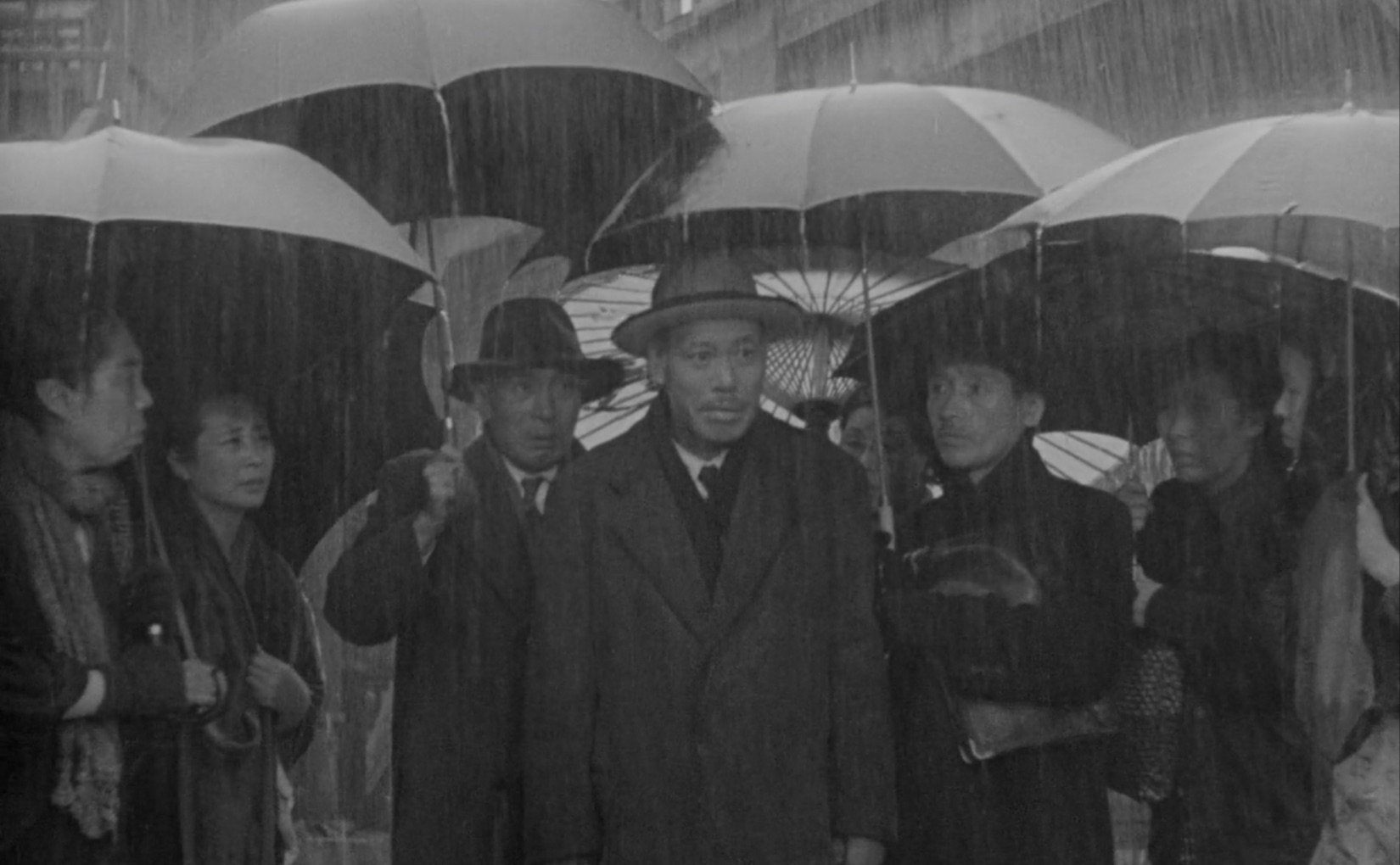
The sequence pays homage to the famous “Umbrella Scene” in Kurosawa’s “Ikiru,” but recontextualizes it for 1950s London. Where Kurosawa used umbrellas to suggest the anonymity of bureaucratic life, Hermanus employs the bowler hat – a quintessentially British symbol of middle-class respectability. The camera’s careful composition turns these hats into a kind of musical notation, with the men’s movements creating a visual rhythm that echoes the mechanical nature of their working lives.
The credits themselves, appearing in a clean, period-appropriate typeface, float above this sea of conformity. Their precise placement and timing work in concert with the movement below, creating a multi-layered opening that establishes both the film’s aesthetic restraint and its concern with systems and structures.
As the sequence progresses, we begin to distinguish Mr. Williams among the crowd – a feat that becomes significant only in retrospect, as we watch him gradually break free from this uniformity throughout the film. The way he emerges from this abstract pattern of hats and suits foreshadows his journey from anonymity to individuality.
The Public Works department where Mr. Williams (Nighy) serves as a senior civil servant becomes a microcosm of British society. The carefully arranged desks, the ritualistic shuffling of papers, and the precise adherence to tea times all speak to a system where order masks stagnation.
Costume designer Sandy Powell crafts a visual hierarchy that speaks volumes about social status and personal transformation. The film opens with a sea of identical bowler hats and dark suits flooding London Bridge – a powerful image of conformity within the civil service. Mr. Williams’s bowler hat serves as a symbol of his position and the rigid system he inhabits. When illness forces him to leave it behind, its absence marks the beginning of his transformation.
The subsequent adoption of a Borsalino hat represents more than a mere change in headwear. The Italian-made fedora, with its softer lines and continental associations, symbolizes Mr. Williams’s gradual liberation from the constraints of his former life. This subtle costume change speaks to a broader rebellion against the suffocating propriety of British bureaucracy.
The precision in costume extends beyond headwear. The gradual loosening of Mr. Williams’s tie, the eventual unbuttoning of his collar, and even the slight dishevelment of his usually impeccable suit all chart his journey from rigid conformity to a more authentic existence. These changes are particularly striking against the unchanged appearance of his colleagues, who remain locked in their sartorial prison.
Wearing Existence: Costume as Existential Metaphor
The costume design in both “Ikiru” and “Living” serves as a powerful visual metaphor for the existential journey that Tolstoy first explored in “The Death of Ivan Ilyich.” Each film uses clothing to express both the weight of social conformity and the gradual awakening to authentic existence, though they do so through distinctly different cultural vocabularies.
The Uniform of Non-Existence
In both films, the protagonists’ initial costumes represent what Tolstoy called a life lived “most ordinarily” – a form of spiritual death disguised as propriety:
– Watanabe’s dark suits and hat in “Ikiru” reflect the standardization of post-war Japanese bureaucracy, where Western business attire represented both modernization and loss of traditional identity
– Mr. Williams’s bowler hat and precisely tailored suit in “Living” embody the British civil service’s rigid hierarchy and emotional suppression
These initial costumes serve as armor against life itself, much as Ivan Ilyich’s dedication to propriety served as a shield against authentic experience.
The Gradual Undressing of the Soul
Both films use subtle changes in costume to chart their protagonists’ awakening:
In “Ikiru”:
– Watanabe’s gradual dishevelment mirrors his breaking free from social constraints
– His hat, initially perfectly positioned, begins to sit askew
– The loosening of his tie reflects his loosening grip on social conventions
– His final appearance in the swing scene, where his clothing moves freely in the snow, suggests a return to childlike authenticity
In “Living”:
– The loss of the bowler hat marks the first crack in Mr. Williams’s facade
– The Borsalino hat represents not just rebellion but a conscious choice of a new identity
– The subtle relaxing of his suit’s precision mirrors his internal liberation
– His final outfit maintains dignity while suggesting comfort in his own skin
The way each film handles this sartorial journey reflects deep cultural differences:
– Watanabe’s transformation involves a more complete dishevelment, reflecting Japanese culture’s understanding of liberation as a form of surrender
– Mr. Williams’s changes are more subtle, suggesting the British capacity for rebellion within conformity
– Both contrast with Tolstoy’s Ivan Ilyich, whose physical deterioration serves as the primary metaphor for his spiritual transformation
Class, Clothing, and Authenticity
Each film uses costume to explore how class structures inhibit authentic existence:
In “Ikiru”:
– The contrast between bureaucrats’ Western suits and the working-class traditional clothing
– The young office girl’s modern dress representing post-war freedom
– Watanabe’s final dishevelment as a rejection of class-based propriety
In “Living”:
– The precise gradations of suit quality marking civil service ranks
– The young woman’s colorful clothing suggesting life outside the system
– Mr. Williams’s Borsalino as a subtle sign of continental sophistication challenging British class rigidity
The Final Garment
Both films end with powerful costume statements:
– Watanabe dies in his loosened, snow-covered clothing, suggesting a final liberation from social constraints
– Mr. Williams’s final appearance shows him in his modified uniform – the Borsalino replacing the bowler – indicating that true liberation can occur within, rather than in rejection of, one’s social role
These costume choices echo Tolstoy’s message that awareness of death can lead to authentic life, but they do so through carefully chosen cultural idioms. The Japanese dishevelment and the British modified propriety represent different paths to the same truth: that genuine existence requires shedding, or at least transforming, the uniforms society demands we wear.
Beyond the Physical
In all three works, clothing serves as a metaphor for what Tolstoy called the “fictional life” – the life lived according to external expectations rather than internal truth. Both films use costume design to visualize what Tolstoy could only describe: the gradual awakening from this fiction to authenticity.
The genius of both adaptations lies in recognizing that this universal journey must be expressed through particular cultural languages of dress and deportment. In doing so, they make Tolstoy’s abstract existential concerns tangible and immediate, showing how the great questions of existence play out in the minute details of how we present ourselves to the world.
The Existential Thread: From Tolstoy to Kurosawa to Hermanus
At the heart of “The Death of Ivan Ilyich,” Tolstoy poses a devastating question: “What if my whole life has been wrong?” This existential inquiry echoes through both “Ikiru” and “Living,” each adaptation finding its own cultural language to explore this universal concern. The visual grammar of both films serves this central question, though they approach it through distinctly different cultural prisms.
Tolstoy’s novella examined this question through the lens of 19th-century Russian society, where Orthodox Christianity and aristocratic values shaped the understanding of a “proper life.” Kurosawa translated this inquiry into post-war Japanese society, where questions of purpose became particularly acute amid reconstruction and changing values. Hermanus relocates it to 1950s Britain, where class structures and emotional restraint created their own form of spiritual imprisonment.
In each iteration, the protagonist’s awakening to life’s true meaning is preceded by a recognition of social performance. Ivan Ilyich realizes his life has been lived “most simply and most ordinarily and therefore most terribly.” Kurosawa’s Watanabe finds that his decades of stamping papers have produced nothing of value. Mr. Williams discovers that his perfect embodiment of civil service propriety has been a form of living death.
Visual Languages of Awakening
Where Tolstoy used precise prose to dissect his protagonist’s spiritual crisis, both films employ careful visual strategies to externalize this internal journey:
– Kurosawa uses stark contrast and dramatic weather to reflect Watanabe’s emotional states, with snow and rain serving as powerful metaphors for cleansing and renewal.
– Hermanus employs the gradual softening of visual rigidity – from the geometric patterns of bowler hats to the free-flowing movement of children in the playground – to show Mr. Williams’s liberation from social constraints.
Both films share a crucial understanding: that the answer to Tolstoy’s terrible question lies not in grand gestures but in small, meaningful actions. Watanabe’s playground and Mr. Williams’s park represent more than public works projects – they are physical manifestations of their creators’ breakthrough to authentic living.
The Weight of Time
All three works deal poignantly with time’s passage:
– Tolstoy’s Ivan Ilyich realizes too late that his life has been misspent
– Kurosawa’s Watanabe races against time to complete his playground
– Mr. Williams’s measured transformation suggests that even a brief period of authentic living can redeem a lifetime of conformity
Cultural Translations of Truth
What makes both film adaptations remarkable is how they maintain Tolstoy’s essential truth while speaking through their own cultural idioms:
– Kurosawa expresses it through the lens of giri (duty) transformed into meaningful action
– Hermanus finds it in the British capacity for quiet revolution within seemingly rigid structures
Legacy and Memory
Each work concludes by examining how others remember the protagonist:
– Tolstoy’s mourners are primarily concerned with promotion opportunities
– Kurosawa’s bureaucrats briefly celebrate Watanabe before returning to their old ways
– Hermanus’s colleagues maintain their reserve, but with a new understanding glimpsed through their constrained emotions
Yet in all three versions, there’s a small group who truly understand the transformation they witnessed. This understanding becomes a kind of torch, passed from Tolstoy’s pages through Kurosawa’s lens to Hermanus’s camera – the possibility that one life, properly lived even for a short time, can illuminate the way for others.
In the end, “Living” accomplishes something remarkable: it takes Tolstoy’s existential question and Kurosawa’s humanist answer and filters them through the precise visual language of British society, creating something both culturally specific and universally resonant. Through its careful attention to visual detail – from the geometric patterns of bowler hats to the free movement of the final scenes – it shows how the great questions of existence can be explored through the smallest details of human behavior and social custom.
The film reminds us that the search for meaning, while universal, is always experienced through the particular – through specific hats and suits, through precise ways of moving through space, through culturally determined ways of showing or hiding emotion. In doing so, it achieves what great art should: it makes the universal deeply personal, and the personal universally understood, making you question (again) what is after all the purpose of living.
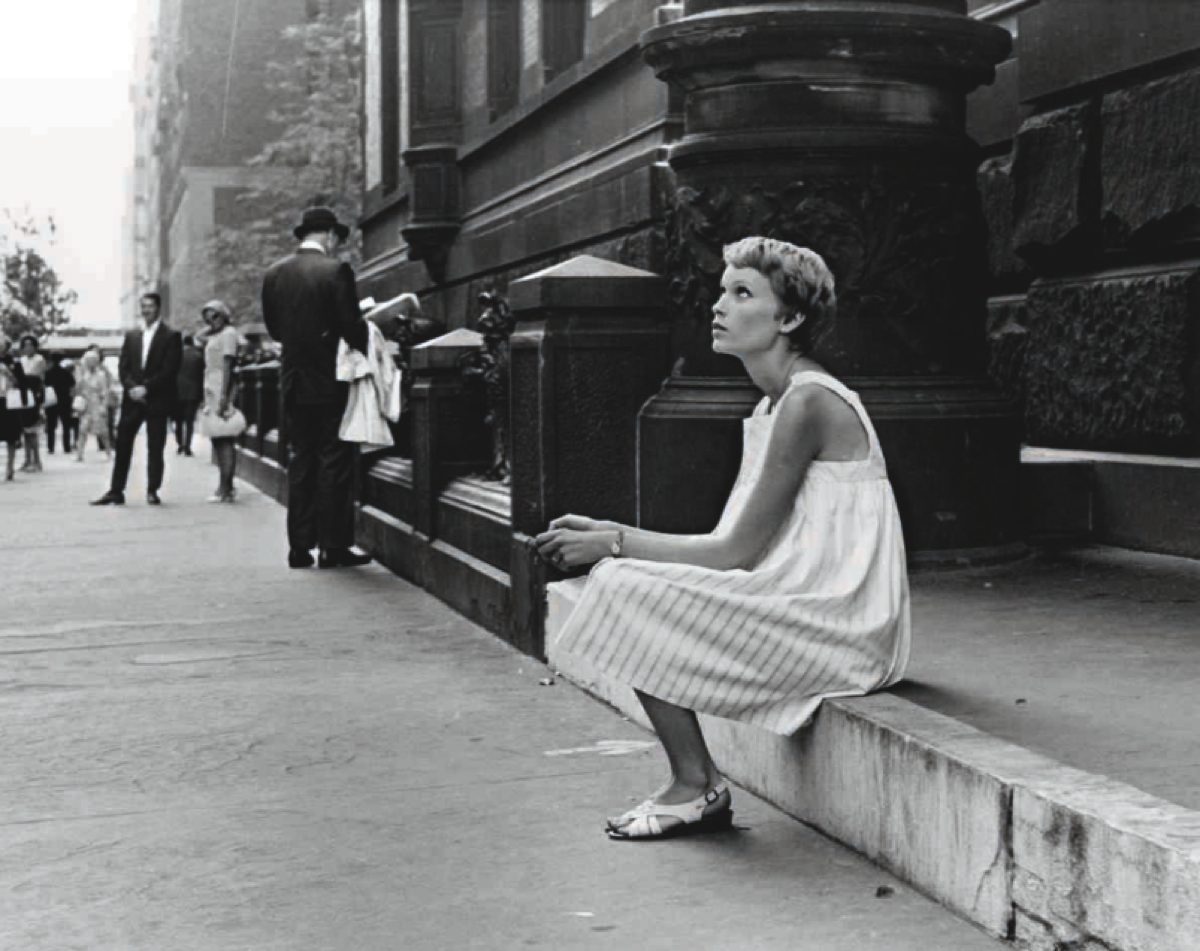
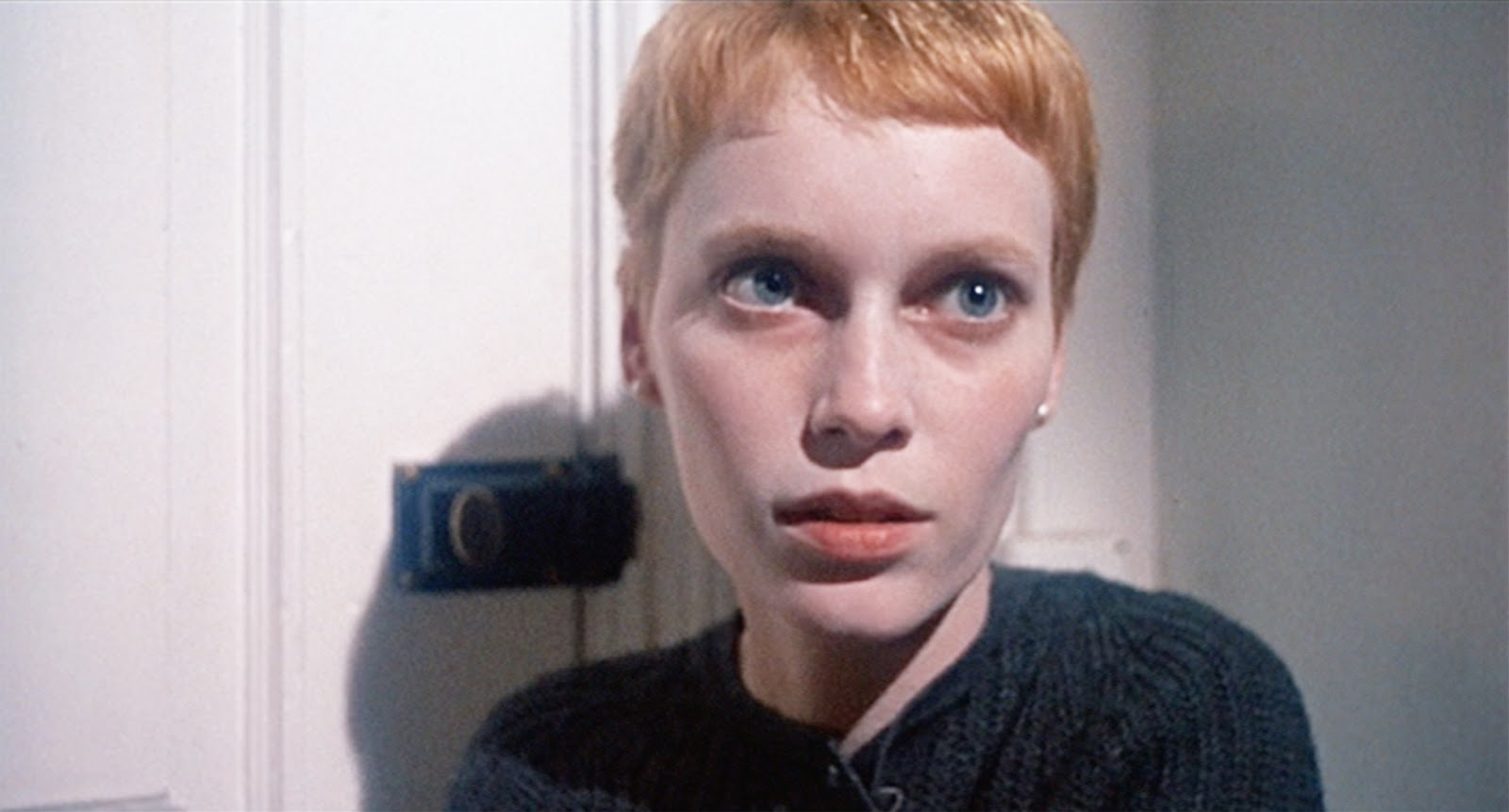
This is not one of my favourite movies and definitely not one of my favourite genres. However, I’m back to my beloved pixie haircut and 60s Mia Farrow is an unavoidable reference.
Plus, there are 56 outfit changes throughout the film and, whether performing a narrative function or a mere stylistic one, they are pretty much all memorable, inspired and inspiring.
After lunch I went to check Andrey Konchalovsky”s Paradise. This is an incredibly beautiful and intelligent movie about confronting extreme evil and dangerous ideas of a paradise that only exists at the expense of someone else’s living hell.
I walked to my car and Brahms is still echoing in my mind. It takes me a minute or so to realize that the back window was smashed. Nothing stolen. Just petty vandalism or someone got interrupted. And this is, of course, nothing. But, it did work in bringing me down to earth and reality does have a way of making me feel extremely upset.
Now I’m home trying to convince myself I need to start packaging for Sarajevo and this is a place I have never been and the TV memories it evokes, make Konchalosky’s words about his own movie all the more important and, unfortunately, also inconsequential.
‘History is full of great tragedies, most of which remain in our minds as ancient misdeeds that couldn’t possibly be replicated in the present day. One of the most terrifying moments of our generation’s history was the rise of the Nazi party and the extermination of millions of Jews and others who did not fit into the Nazi ideal of a ‘perfect’ German ‘paradise’. These atrocities exposed the depths of mankind’s capabilities for evil and although these events happened in the past, the same kind of radical and hateful thinking is apparent today and threatening the lives and safety of many around the world.
‘Paradise’ reflects on a twentieth century filled with great illusions buried in ruins, the dangers of hateful rhetoric and the need for mankind to use the power of love to triumph over evil.
‘That which has happened is a warning. It must be continually remembered. It was possible for this to happen, and it remains possible for it to happen again at any minute. Only in knowledge can it be prevented. The danger here is in the unwillingness to know, the urge to forget, and the disbelief that all of this actually happened…’ The words of German philosopher Karl Jaspers are tied strongly to the central theme of ‘Paradise’, which urges us not to forget the truths of history, no matter how horrifying or inconvenient, so that we do not repeat them’.
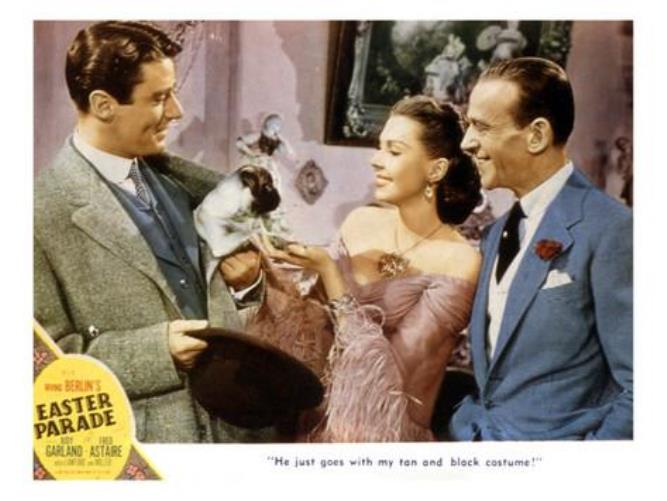
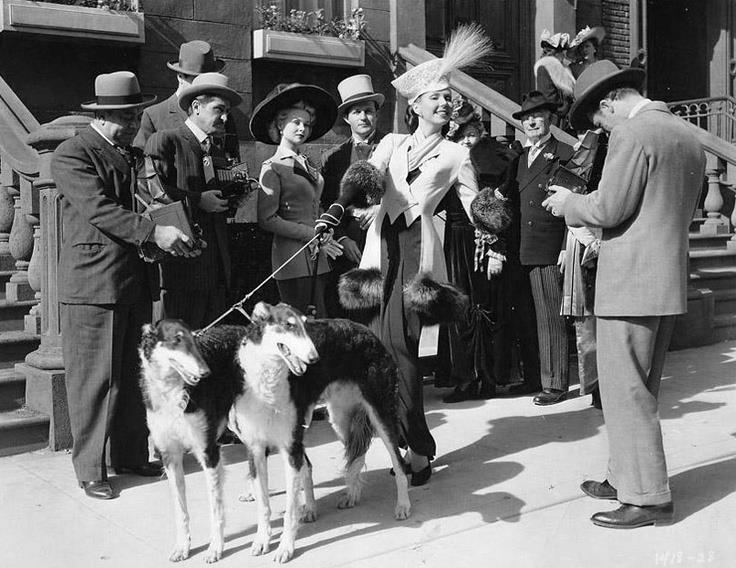
This is a somewhat obvious choice for this week because it’s Easter. Around here we do not have “Easter Parades” and there’s no tradition of Easter bonnets (which is an absolute shame). I wished we had imported this instead of Halloween. We do keep the tradition of wearing brand new clothes as a symbol of renewal and probably of remembrance of “fast-fashion free” times. Despite the lure of new clothes and chocolate eggs, I never liked Easter, I’ve never thought about it as a time of joy. I blame this on the nuns at school and the suffocating weight of tradition in Catholic countries.
Easter Parade is not one of the movies shown around here on TV during Easter break, most probably because in this case Easter just serves as a context and not as a theme. Trumpeted as the “happiest musical ever made”, even if its making seems to have involved quite a lot of suffering and unhappiness), this is the perfect antidote for whatever gloomy feelings I might nurture for Easter. There are 17 Irving Berlin songs, in this movie, stunning dance routines, and a world “in which, it seems, no man leaves the house without top hat and tails; all the women, meanwhile, swan around in fabulous gowns and fantastical Easter bonnets.”
There is Ann Miller playing Nadine ( I couldn’t help myself) who matches her outfits to her dogs (or probably the other way around).
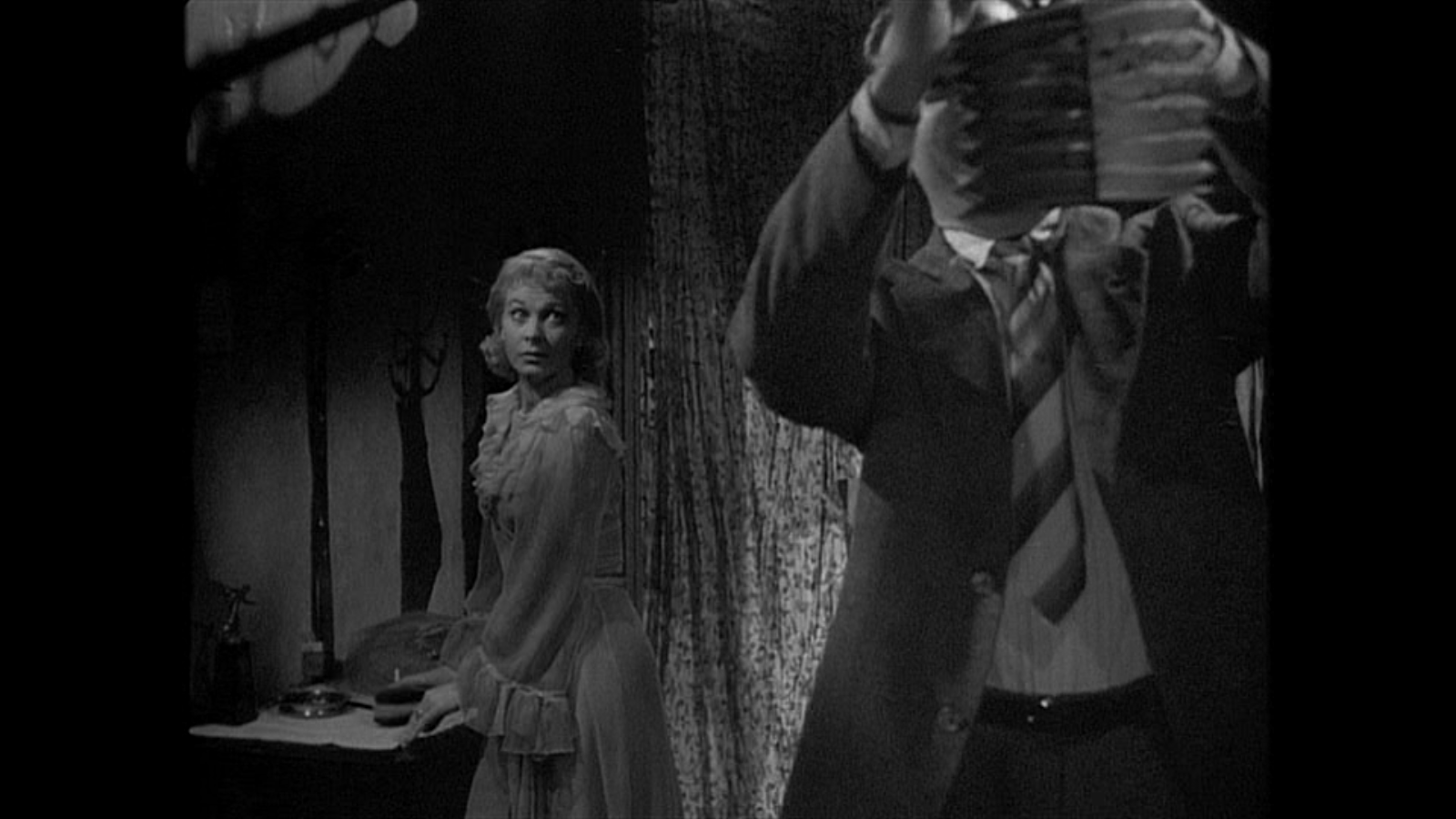
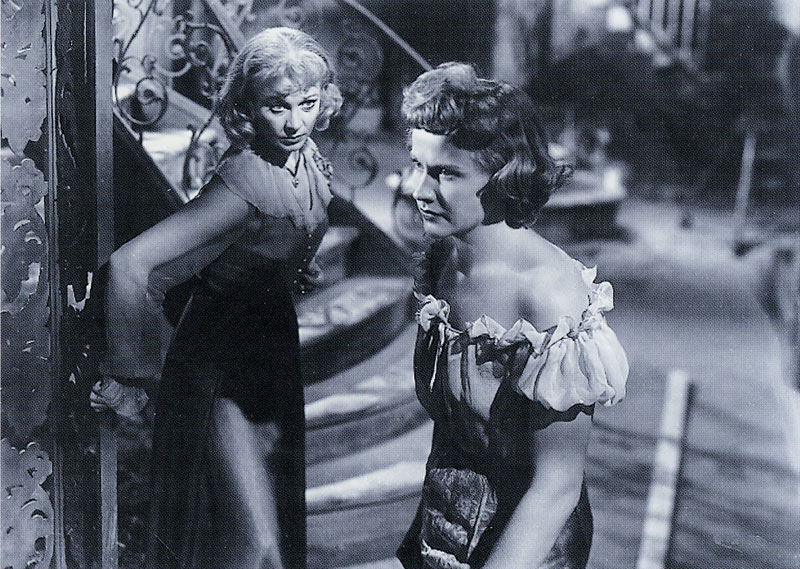
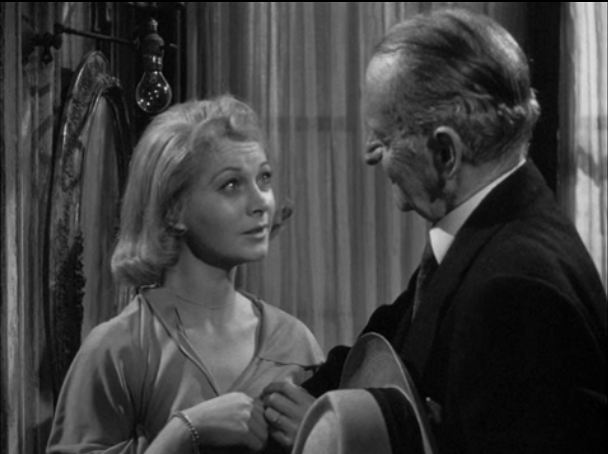
Her appearance is incongruous to this setting. She is daintily dressed in a white suit with a fluffy bodice, necklace and earrings of pearl, white gloves and hat, looking as if she were arriving at a summer tea or cocktail party in the garden district. She is about five years older than Stella. Her delicate beauty must avoid a strong light. There is something about her uncertain manner, as well as her white clothes, that suggests a moth.
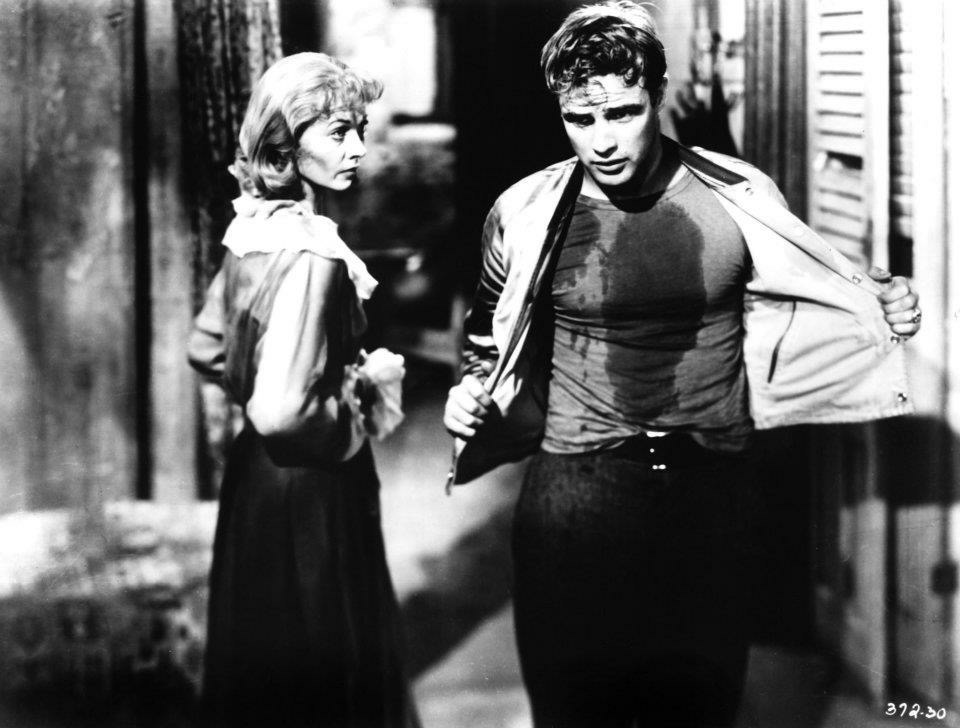
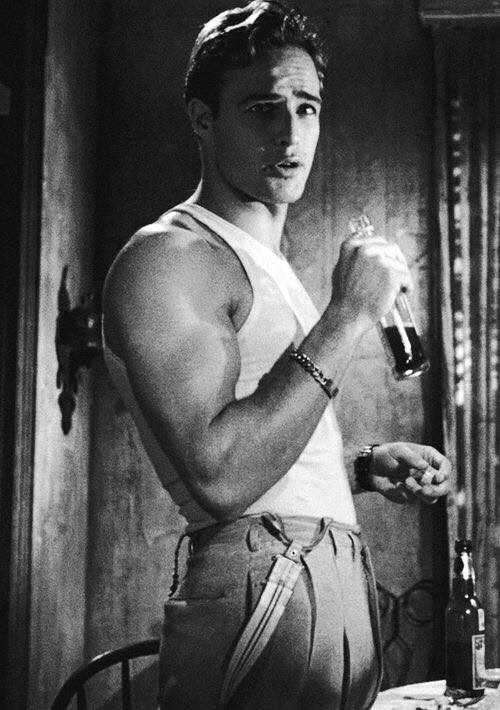
He is of medium height, about five feet eight or nine, and strongly, compactly built. Animal joy in his being is implicit in all his movements and attitudes. Since earliest manhood the center of his life has been pleasure with women, the giving and taking of it, not with weak indulgence, dependently, but with the power and pride of a richly feathered male bird among hens.
Look at these feathers and furs that she come here to preen herself in! What’s this here? A solid-gold dress, I believe! And this one! What is these here? Fox-pieces! Genuine fox fur-pieces, a half a mile long! Where· are your fox-pieces, Stella? Bushy snow-white ones, no less!
Pearls! Ropes of them! What is this sister of yours, a deep-sea diver? Bracelets of solid gold, too! Where are your pearls and gold bracelets?
Compliments to women about their looks. I’ve never met a woman that didn’t know if she was good-looking or not without being told, and some of them give themselves credit for more than they’ve got.
The poker players–Stanley, Steve, Mitch and Pablo-wear colored shirts, solid blues, a purple, a red-and-white check, a light green, and they are men at the peak of their physical manhood, as coarse and direct and powerful as the primary colors.
“And if God choose,
I shall but love thee better-after-death!”
Why, that’s from my favorite sonnet by Mrs. Browning!
I can’t stand a naked light bulb, any more than I can a rude remark or a vulgar action.
I never was hard or self-sufficient enough. When people are soft-soft people have got to shimmer and g1ow-they’ve got to put on soft colors, the colors of butterfly’ wings, and put a paper lantern over the light …it isn’t enough to be soft. You’ve got to be soft and attractive. And I-I’m fading now! I don’t know how much longer I can turn the trick.
We danced the Varsouviana! Suddenly in the middle of the dance the boy I had married broke away from me and ranout of the casino. A few moments later-a shot!
What do you two think you are? A pair of queens?
I don’t want realism. I want magic! Yes, yes, magic! I try to give that to people. I misrepresent things to them. I don’t tell truth, I tell what ought to be truth. And if that is sinful, then let me be damned for it!
The opposite is desire. So do you wonder? How could you possibly wonder!
She has dragged her wardrobe trunk into the center of the bedroom. It hangs open with flowery dresses thrown across it. As the drinking and packing went on, a mood of hysterical exhilaration came into her and -she has decked herself out in a somewhat soiled and crumpled white satin evening gown and a pair of scuffed silver slippers with brilliants set in their heels. Now she is placing the rhinestone tiara on her head before the mirror of the dressing-table and murmuring excitedly as if to a ‘group of spectral admirers.
Well, it’s a red letter night for us both. You having an oil millionaire and me having a baby.
A cultivated woman, a woman of intelligence and breeding, can enrich a man’s life – immeasurably! I have those things to offer, and this doesn’t take them away. Physical beauty is passing. A transitory possession. But beauty of the mind and richness of the spirit and tenderness of the heart-and I have all of those things-aren’t taken away, but grow! Increase with the years! How strange that I should be called a destitute woman! When I have all of these treasures locked in my heart. I think of myself as a very, very rich woman! But I have been foolish-casting my pearls before swine!
The hot trumpet and drums from the Four Deuces sound loudly
He takes off his hat and now he becomes personalized. The unhuman quality goes. His voice is gentle and reassuring as he crosses to Blanche and crouches in front of her. As he speaks her name, her terror subsides a little. The lurid reflections fade from the walls, the inhuman cries and noises die out and her own hoarse crying is calmed.
Whoever you are-I have always depended on the kindness of strangers.
’In this dark march toward whatever it is we’re approaching,’ Blanche raises the flag of magic against the crushing disappointment of reality in her “worn-out Mardi Gras outfit” and the costumes are absolutely brilliant in creating this fantasy world, showing us someone trying to survive the decay and decadence of her own life and not being able to cope with what the world has thrown at her. And that’s how a trunk full of flowery dresses and rhinestone tiaras can help you survive as long as you keep away from the brutes, maybe you’ll be able to not only tell, but also live what ought to be truth. ( And this in no way an endorsement of post truths or a glorification of mental illness)
I have to confess my ignorance because I had never heard of this film until last Saturday when I caught it by chance on tv.
I must also confess that I have never been a fan of rock opera but this is Brian De Palma’s glam rock extravaganza and it’s brilliant.
Brian De Palma’s rock opera within a rock opera (possibly the world’s first) is a bright, loud, brash, fast and funny live-action comic book, a vicious little satire of the music business, and a head-on collision between Phantom of the Opera, Faust, and early ‘70s glam [and the Picture of Dorian Gray] . Jim Knipfel
To begin, one must cross-reference the film with the historical referent that serves as its structuring absence: the Sixties. This is the lost paradise De Palma invokes in detailing the fallen world of mid-Seventies rock, the would-be utopia that has now collapsed into the death-and-glitter cesspool of 1974. Whatever may actually have happened in the decade, it’s clearly the object that has been lost by a world that can now sustain something called Death Records. The label serves as base of operation for a satanic producer/executive named Swan (Paul Williams), who stands in for the reaper who rang down the curtain on peace and love (…) The sense that something has been lost is inescapable, that it’s been corrupted by grotesquely commercialized hands.Travis MacKenzie Hoover
The theatrical element—crucial for a film that centers on a music palace called “The Paradise”—is the number one citation for the degradation of the music scene. What upsets the filmmakers most is that any jerk in gold lame and platform shoes can be a singing star with the right razzle-dazzle, as the unadorned musicians of the previous decade were being swept off the stage for Alice Cooper and his obnoxious bits of business. Travis MacKenzie Hoover
Even if the over the top, outrageous, glittery empty style of the classic glam rock era symbolizes the decadence and corruption of the music [as] business, the melodramatic characters intoxicated by stardom and masterfully served by Rosanna Norton’s imaginative and eye-popping costumes also show us a phantasy (albeit bitter) world of identity creation and playful sensuality.If this is not the particular allure of this movie, it certainly explains the pervasive influence of 70s glam rock in fashion.
The movie basically consists of well-dressed rich people standing in luxury flats and talking to a cop. Roger Ebert
I wasn’t designing for fashion, but for characteristics, which is the way I like to design clothes for daily wear. I like to design clothes for a woman who plays a particular role in life, not simply to design clothes that follow a certain trend, or that express some new silhouette.
Film noir is known for its convoluted plots and arbitrary twists, but even in a genre that gave us The Maltese Falcon, this takes some kind of prize … That Laura continues to weave a spell – and it does – is a tribute to style over sanity … All of [the] absurdities and improbabilities somehow do not diminish the film’s appeal. They may even add to it … [T]he whole film is of a piece: contrived, artificial, mannered, and yet achieving a kind of perfection in its balance between low motives and high style. What makes the movie great, perhaps, is the casting. The materials of a B-grade crime potboiler are redeemed by Waldo Lydecker, walking through every scene as if afraid to step in something
According to Ula Lukszo, “clothes of the noir film – part of the noir Look – are essential to the nostalgia and fascination we associate with these films”. The same author suggests that “noir can be defined by fashion”, observing that noir films “contain common patterns of dress and related signifiers [that make] noir fashion a significant means of constructing noir into a contemporary genre and cultural fantasy”.
I can afford a blemish on my character, but not on my clothes.
While it seems that styles portrayed in classic noir films are mere reflections of the popular styles at the time, giving the impression that clothing choices “reflect little more than everyday personal choices”, costumes in noir movies still retain their main function, characterization.
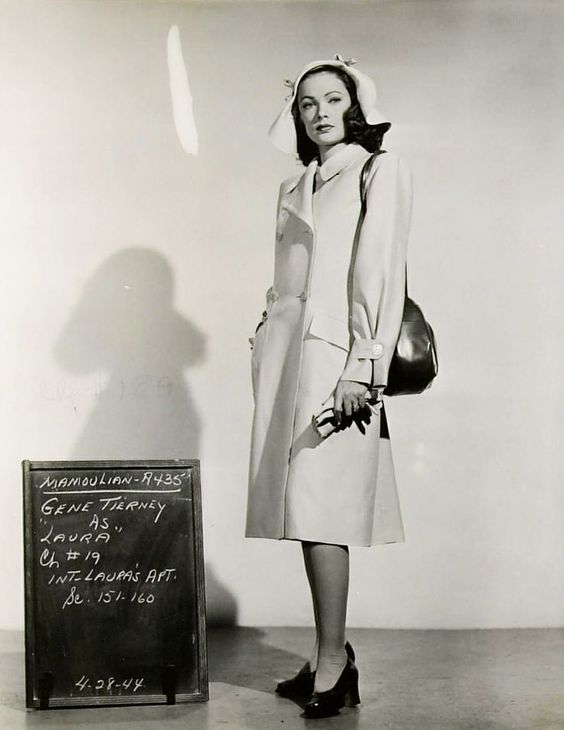
“Wherever we went, she stood out.” It helps that the excellent costume design allows Laura to be all things to all people: Elegant, simple, romantic, feminine, and complimentary.
Film noir relies on both the visual pleasure that resides in the costuming and the lighting of the film, and the emotional pleasure of seeing criminals punished and tough protagonists either dispensing “true justice (…) or succumbing to their transgressions. ( Lukszo)
Laura had innate breeding, but she deferred to my judgment and taste. I selected a more attractive hairdress for her. I taught her what clothes were more becoming to her. Through me, she met everyone. The famous and the infamous. Her youth and beauty, her poise and charm of manner captivated them all. She had warmth, vitality. She had authentic magnetism. Wherever we went, she stood out: men admired her, women envied her. She became as well known as Waldo Lydecker’s walking stick and his white carnation. But Tuesday and Friday nights we stayed home, dining quietly, listening to my records. I read my articles to her. The way she listened was more eloquent than speech. These were the best nights. Then one Tuesday, she phoned and said she couldn’t come.
No matter how undeniably inspiring the femme fatale in noir always is, I never really can bring myself to “walk the walk, talk the talk and dress the part”. Laura is a more approachable heroine in a sense that, throughout the narrative, she seems to be a “self-made” woman in spite of what the men around her might think and beyond the femme fatale / “nurturing woman” dichotomy. There’s more to her than the “fantasy of the to-be-looked-at-ness“.

































 Stories from A Closet of Errors