Other than The Stranger by Albert Camus that I have first read when I was 12 and had to re-read years later, for obvious reasons, I do not tend to return to books I’ve already read unless I’m reading for work.
Published in 1999, this prescient work examines themes that have only grown more relevant: the fragility of memory, the construction of identity, and our desperate attempts to escape emotional pain.
The unnamed protagonist works as a traveling salesman for a corporation that manufactures and distributes memory-erasing drugs. He traverses a near-future landscape of international cities—Tokyo, Barcelona, Los Angeles—selling his wares to those desperate to forget traumas, heartbreaks, and regrets. As he helps others erase their pasts, he increasingly samples his own product, gradually eroding his own identity in the process.
What makes Loriga’s narrative particularly compelling is how it positions memory erasure not as science fiction but as a logical extension of our pharmaceutical culture. The protagonist doesn’t view himself as peddling something extraordinary, but rather as providing a service comparable to antidepressants or sleep aids—just another chemical solution to human suffering.
The novel poses a profound question: If we are, essentially, the sum of our memories, what happens when we selectively delete parts of our past? The protagonist’s steady deterioration as he abuses memory-erasing drugs illustrates the devastating consequences. Without the anchoring force of his personal history, he drifts through existence as a hollow shell, unable to form meaningful connections or understand his own desires and fears. Loriga’s spare prose mirrors the protagonist’s fractured psyche, leaving readers to question: If we erase our pain, what remains of our humanity?
At its core, Tokyo Doesn’t Love Us Anymore is a meditation on memory’s role in shaping identity. Loriga asks: Are we more than the sum of our experiences? The novel’s dystopia isn’t ruled by tyrants but by a collective yearning to numb the soul. Memorama, the drug, becomes a metaphor for modern escapes—social media, substances, consumerism—that promise freedom but deliver alienation.
Tokyo is both setting and symbol. Loriga paints it as a glittering ghost town, where skyscrapers pulse with artificial light but human connection flickers out. The protagonist wanders through love hotels, karaoke bars, and rain-soaked alleyways, each locale steeped in loneliness. Unlike the chaotic vitality of real-world Tokyo, this city feels like a screensaver—vivid yet void. It’s a backdrop that recalls Blade Runner’s dystopia but feels eerily adjacent to our tech-saturated present.
Our salesman is no hero. He’s a hollow man, a mirror for the reader’s complicity in systems of escape. His internal monologue—terse, fragmented—reveals a soul gasping for meaning. When he muses, “I sell what I need most,” we glimpse Loriga’s critique of capitalism’s cycle of creation and consumption. The character’s anonymity amplifies his universality: he could be anyone, anywhere, trading fragments of self for fleeting peace.
In 2025, as AI filters our realities and “digital detox” enters the lexicon, Tokyo Doesn’t Love Us Anymore reads like a prophecy. It challenges us to ask: What do we lose when we prioritize comfort over growth? The novel doesn’t offer answers but lingers like a phantom limb, reminding us that pain and joy are inseparable threads in the fabric of self.
Ray Loriga’s book is not a love letter to Tokyo but a requiem for the modern soul. It’s a slim, sharp novel that cuts deeper with each read, leaving readers to wonder: Would I take the pill? As you close the book, Tokyo’s neon fades, but the question remains, glowing in the dark.
There’s something comforting about the idea that certain events or connections are “meant to be” – that there’s some larger pattern or purpose to our lives. Many people find meaning in interpreting significant events as part of a larger plan.
On the other hand, I’m drawn to the perspective that we have genuine agency in shaping our lives, and that the future isn’t predetermined. There’s something powerful about the idea that our choices and actions genuinely matter in determining what happens.
Some philosophical traditions try to reconcile these views – suggesting that perhaps certain broad patterns might be destined while specific details remain under our control, or that destiny might operate at a higher level while still allowing for free choice within certain parameters.
I would say I don’t believe in fate but, I’m Portuguese….
Fado, as a music genre, is deeply tied to the Portuguese concept of saudade—a mix of longing, nostalgia, and fate. The very word “Fado” comes from the Latin fatum, meaning “fate” or “destiny,” reflecting the idea that life’s joys and sorrows are inescapable.
Even if you don’t fully believe in fate, Fado embodies a cultural perspective where destiny plays a role in shaping human experiences—especially in love, loss, and hardship. The music suggests that some emotions and events are inevitable, but at the same time, Fado is an expression of personal agency, as singers pour their souls into shaping the narrative.
Portuguese culture carries a certain introspective melancholy—not just in Fado but also in literature, poetry, and even the way history is remembered. There’s a balance between accepting sorrow as part of life and finding beauty in it.
Saudade and Fado are deeply intertwined with Portuguese history, emerging from and reflecting the nation’s unique historical experiences.
Portugal’s identity was profoundly shaped by the Age of Discoveries (15th-16th centuries), when this small nation became a global maritime empire. This period created a culture of separation and longing – sailors and explorers left home for years or forever, families were torn apart, and communities lived with constant absence. Saudade developed as an emotional response to this collective experience of separation.
The economic structure of this maritime empire meant Portugal was often looking outward rather than developing internally. When ships didn’t return or imperial ventures failed, this created a cultural pattern of anticipation followed by disappointment – another dimension of saudade.
After this golden age came Portugal’s long decline – the loss of independence to Spain (1580-1640), the devastating Lisbon earthquake of 1755, the Napoleonic invasions, the loss of Brazil, and the political turmoil of the 19th and early 20th centuries. This historical arc from glory to struggle embedded a sense of lost grandeur in Portuguese cultural consciousness.
Fado emerged in the early 19th century primarily in working-class urban neighborhoods of Lisbon, coinciding with a period of national difficulty. It became a musical expression of this complex historical experience – not just personal longing but a collective cultural memory of past greatness contrasted with present difficulties.
During the Salazar dictatorship (1933-1974), this backward-looking tendency was sometimes exploited – the regime used a sanitized version of Fado and the concept of saudade in its propaganda. Yet authentic Fado remained a vital way for common people to express their emotional relationship with fate and history.
Eduardo Lourenço described Portugal as suffering from “hyperidentity” – an excessive preoccupation with national identity and destiny based on a mythologized past. Saudade and Fado became cultural spaces where this complex relationship with history could be emotionally processed rather than just intellectually analyzed.
This historical context helps explain why Fado approaches fate emotionally rather than philosophically – it emerged as a way for people to express and make sense of their lived historical experience rather than to theorize about it.
A lot of musical landscapes could exemplify this, I chose my favorite. No Teu Poema / In your Poem. A magnificent poem written by José Luís Tinoco , first sang by Carlos do Carmo in 1976, and here in my absolute favorite version by Amor Electro. Not Fado as such but the melancholy is still there.
This is a beautiful example of how the Portuguese poetic tradition captures both resignation and resistance. The lyrics acknowledge pain, struggle, and fate (a sina de quem nasce fraco ou forte), but they also hold space for courage (o passo da coragem em casa escura), hope (a esperança acesa atrás do muro), and an open future (um verso em branco à espera do futuro). A blank verse without measure exists. It suggests that within fate’s poem, there are still unwritten spaces. These are moments of possibility within destiny’s framework.
Perhaps most powerful is “A dor que sei de cor, mas não recito” (The pain I know by heart, but do not recite). This suggests that fate’s pain is so deeply internalized that it need not be explained or philosophized about—it simply exists as emotional knowledge.
For me, this song beautifully captures how Fado approaches fate—not by explaining why things happen, but by emotionally inhabiting the experience of living within destiny’s constraints while finding both beauty and dignity in that condition.
It’s like life is shaped by forces beyond our control—fate, history, circumstance—but within that, there’s still the individual’s voice, the choice to fight, to persist, or to find meaning. Do you feel like this duality is part of your own outlook on life?
No teu poema Existe um verso em branco e sem medida Um corpo que respira, um céu aberto Janela debruçada para a vida
No teu poema Existe a dor calada lá no fundo O passo da coragem em casa escura E aberta, uma varanda para o mundo
Existe a noite O riso e a voz refeita à luz do dia A festa da senhora da agonia E o cansaço do corpo que adormece em cama fria
No teu poema Existe o grito e o eco da metralha A dor que sei de cor mas não recito E os sonos inquietos de quem falha
No teu poema Existe um cantochão alentejano A rua e o pregão de uma varina E um barco assoprado à todo o pano
Existe a noite O canto em vozes juntas, vozes certas Canção de uma só letra e um só destino a embarcar O cais da nova nau das descobertas
Existe um rio A sina de quem nasce fraco, ou forte O risco, a raiva a luta de quem cai ou que resiste Que vence ou adormece antes da morte
No teu poema Existe a esperança acesa atrás do muro Existe tudo mais que ainda me escapa E um verso em branco à espera Do futuro
In your poem There is a blank verse, boundless and free A body that breathes, an open sky A window leaning into life
In your poem There is silent pain deep within The step of courage in a darkened home And open, a balcony to the world
There is the night Laughter and a voice remade by daylight The feast of Our Lady of Agony And the weariness of a body That falls asleep in a cold bed
In your poem There is the cry and the echo of gunfire The pain I know by heart but never recite And the restless sleep of those who fail
In your poem There is an Alentejan chant The street and the call of a fishmonger And a ship blown forward at full sail
There is the night The song in voices joined, voices sure A tune with just one word, one shared fate Embarking from the dock Of a new ship of discoveries
There is a river The destiny of those born weak, or strong The risk, the rage, the struggle Of those who fall or those who resist Who triumph or fall asleep before death
In your poem There is hope burning beyond the wall There is everything else I cannot yet grasp And a blank verse waiting For the future
Remembrance of things past is not necessarily the remembrance of things as they were
I have spent the last couple of weeks trying to account for every month of 2017. I needed to go through all the photos in my phone to be able to do this. It seems that without them it would not have been possible for me to recall what I have lived. 2017 was not an easy year for me and for those around me. I broke someone’s heart and got badly bruised by someone else. Some sort of cosmic retribution I would say, if I was inclined to believe in a such thing.
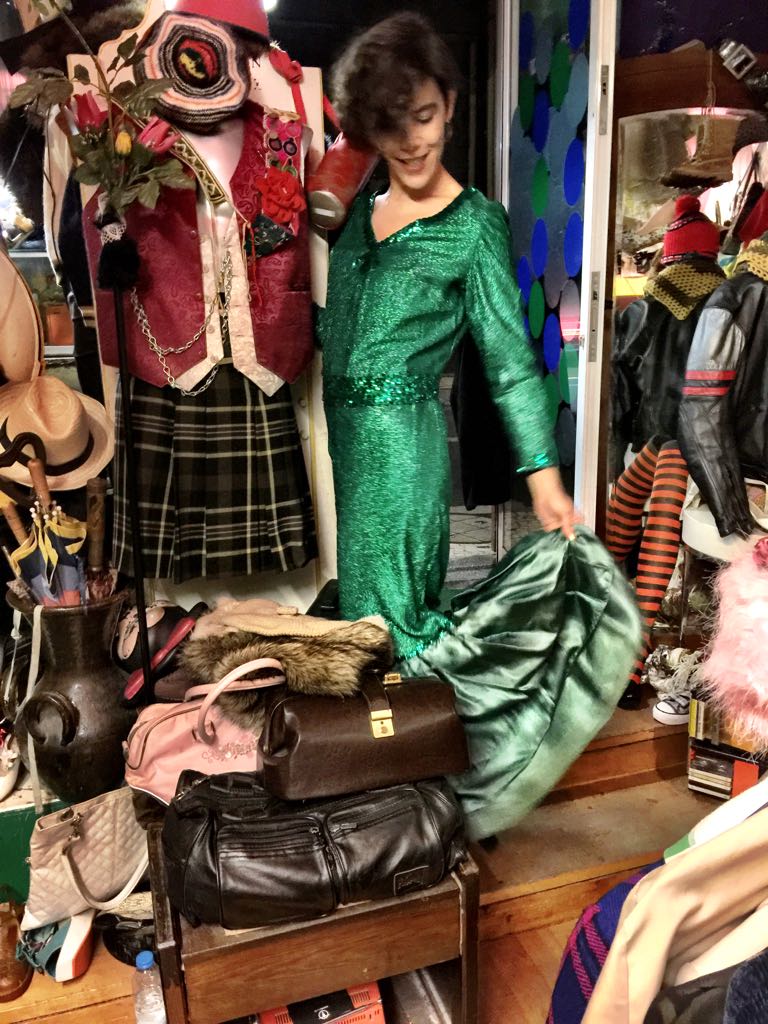
I don’t remember much happening in January 2017. I remember that I did not celebrate New Years, I went to bed before midnight. For the past eleven years I lived with someone who did not “believe in that sort of thing” and accommodated. I do believe in starting over, either on January 1st or whenever there is a need to do so. The best of January 2017 was hoping for something better to come along during the rest of the eleven months ahead. Daydreaming has always seemed to me another form of making plans. I did play dress up at Fatima‘s which seems to be my favourite form of therapy and was happy to find my Mozambique travel diary.
Why, what’s the matter, That you have such a February face, So full of frost, of storm and cloudiness?
I particularly dislike the first three months of every year. They are normally cold and grey and wet and February does feel like paradoxically long most of the times, but this one I actually remember it as being a happy month, celebrating Futurism and Almada in the voice of talented friends and art exhibitions, going back to Fatima’s for a somewhat surreal fashion shoot, having my hair cut and feeling incredibly cool and authentic as a tomboy, getting on stage for Flamenco tangos and fandangos and being busy with costumes and make up backstage.
March was also surprisingly good: Filipe Catto doing Variações, finding the life of strangers inside second-hand books, commuting in Lisbon with people that have no end, as Almada would say, those are the best people; seeing friends’ dreams come to life, Anna Karenina remixed at TNSJ (How she dies) and finally gaining momentum to read it all, page after page, without spiking details, Olivier Saillard‘s manifesto, waiting around for friends who are always late, going back in time, Macbeth’s open rehearsal and being reminded of the absolute privilege of hearing António M. Feijó
April came and it was not the cruelest month. Going away, enjoying bad habits at cool smokers lounges, arriving in Sarajevo, the sun, the snow, the coffee, new Friends, their stories, the history, the drive to Mostar, long conversations on everything and nothing, swan lake reloaded, the beauty, hanging out over drinks and photos and dance, “come what sorrow can it cannot countervail the exchange of joy”. Sarajevo might not have changed my life but has changed something inside me forever in the way I am able to relate and feel immense love for other people and to the moments we shared. Realizing I live somewhere in musical schizophrenia, absolutely loving two of the best concerts of the year between Heavy Metal and Fado, and that this actually helps. Every day.
May walked backwards: going back to the roots that sometimes still clutch, being back in Siena in great company, getting lost in museums, being silly enough to play La Niña de Fuego, going back to the music that once made sense
June chasing angels and finding them: Loft living in DTLA, getting an education at Los Feliz, unexpected gifts, falling in love with a bookstore, the kind and dapper gentlemen at Clifton’s, old school partying, the Los Angeles Athletic Club, being back at the MOCA, stars that never fade, hanging out with some of the coolest Ladies I know, feeling in heaven at the Way we Wore, feeling at home at LACMA, “The city is named for the angels, And its angels are easy to find”, on Beauty and Consolation, Shakespeare, being called Hope and the freedom of learning by heart, feeling at peace in Porto, clowning around on stage.
When to the sessions of sweet silent thought
I summon up remembrance of things past,
I sigh the lack of many a thing I sought,
And with old woes new wail my dear time’s waste:
Then can I drown an eye, unus’d to flow,
For precious friends hid in death’s dateless night,
And weep afresh love’s long since cancell’d woe,
And moan th’ expense of many a vanish’d sight;
Then can I grieve at grievances foregone,
And heavily from woe to woe tell o’er
The sad account of fore-bemoaned moan,
Which I new pay as if not paid before.
But if the while I think on thee, dear friend,
All losses are restor’d, and sorrows end.
July “I believe I read most of it with my eyes shut” Spring’s Awakening, Summer sunsets, flamingo shoes, walking on sunshine, flirting with writing machines and getting no answers, seeing the fog clear; “life is a matter of taste”.
August getting older and none the wiser: Chance encounters have consequences too, birthday surprises, finally returning to Mérida and making it to the classical theater festival, between a rock and a hard place, checking works of art walk by, music does save your mortal soul (writing letters might not). Fátima moved to Braga and I almost did as well.
September “Music melts all the separate parts of our bodies together.” Going kitsch, Being hugged by strangers, getting closer, Rosalía e Raül Refree at Theatro Circo, Revisiting Viana and more talented friends, realizing that nothing lives there anymore, Lisbon stories por buleria, reconnecting with Luis after having met in Boston, Still writing letters (with a pen), Jazz with a view, bumping into Lola Lola, Book fairs and pulp fictions, Being somewhat afraid of Virginia Woolf, meta coincidences, Being teletransported to The Zap via Ian’s syndrome, Revisiting Mr. Vertigo’s last (together) space, Being disarmed by words, bedtime stories and playlists feeling like goodnight kisses, Between lived words and word games, Street poets on the verge of insanity. Facing the truth and having it added to my pillow book.
I wasted time, and now doth time waste me
October “There is nothing in the dark that isn’t there when the lights are on.” A road trip through a black hole, Spiraling into someone else’s talent, Seeing George and Martha come to life, The apparent insight and kindness of strangers, Getting it wrong, learning where not to go, learning to let go, forgetting the door was open and letting chance walk right in (again), the Safety of favourite places and favourite people, Walls quoting Sartre, Lisbon stories, Healing noises, Wonder walks, wonder walls and the best guide in town, Black cats and English eccentrics, Bad concerts with cool friends, Reaching Point Omega, Making peace with Virginia Woolf through Orlando, “To put it in a nutshell, he was afflicted with a love of literature. It was the fatal nature of this disease to substitute a phantom for reality.” I have fallen in love with words. The ones I wanted to read, the one’s the poet on the other side knew were the right ones.
November “O bom é ser inteligente e não entender. É uma benção estranha, como ter loucura sem ser doida.” (The good thing is to be intelligent and not to understand. It’s a strange blessing, like having madness without being crazy.) In love with Josef Isräels‘ Mijmering, Stendhal syndrome episodes, Daydreaming and insomnia, Fictional love affairs through jet lag induced illusions – such is the power of words: they make you see things that aren’t there. Teenaging in Yichang, getting to know Frida who met at me at the airport wanting to know if my name really meant hope, hanging out with Cathy, Being a lucky charm, Getting Lost in translation and still feeling better than Charlotte, Tai Chi classes on airplanes, the sunset in Xangai and the sunrise in Amsterdam, Dark Porto, Lisbon stories on disappointment and being a spoiled brat, Life according to George Costanza, Flying solo, Getting it (so incredibly) wrong and trying to take the high road, Lisbon stories – the cold shoulder episode, saved by the happiness of strangers and a wise beyond her years long distance friend, Chasing walls, 3 a.m. dinners and the warmth of platonic love, Boots, Songs about boots, Good concerts with the same cool friends and some more, Drafting fictional memories, “For once the disease of reading has laid upon the system it weakens so that it falls an easy prey to that other scourge which dwells in the ink pot and festers in the quill. The wretch takes to writing. ” Flying high and falling hard: Considering emotional exile, Soap bubbles as reality filter
December “São tudo fantasias que o cinema projectou no meu olhar” (They are all fantasies that the cinema projected in my gaze): Letting someone else’s clothes and music do the talking; Being called a pearl farmer and realizing that every once in a while casting pearls to swine is no big deal; I’ll still have plenty left. The circus, moments of pure joy, remembering my Grandparents, because they were the ones who used to take me when I was a kid, Sharing heartbreak stories during the storm with a name, pretending to be Mia Wallace and then dreaming of being Vivian Rutledge, better yet, Florence Carala (there was enough mist for that), If only I was Jackie Demaistre, Facing lost possibilities, Befriending misfits while drinking coffee and talking for an hour at gas stations, Going back to the classroom and considering that I might actually enjoy teaching, Midnight strolls during Sagittarius birthdays, Playing diva with the Diva, Holly Golightly gifts for breakfast, Christmas Day at the movies, making up gangster stories at Turkish restaurants, Bumping into Pedro from school and being 9 again, ivory colored letters in real envelopes with real stamps, feeling connected while trying to disconnect, Synthesizer freaks, being Alice but not in the city, time lapsing, picking up where we left off, So many ways to be (“no olvides que solo eres real cuando tocas y te tocan“), the Clear Insight, Incredible Patience, Undivided Attention and Unconditional Love of old Friends. Braga doing more for my sanity this year than any shrink could have ever done. “And the rest is rust and stardust.”
I can only note that the past is beautiful because one never realises an emotion at the time. It expands later, and thus we don’t have complete emotions about the present, only about the past
I think this is the first time I try to write some kind of “memory”. I am not very good at describing events, everything that has happened seems to have only a translation in how places, books, movies, plays, poems, music, little details, events, actions and the words of others have made me feel. And, in 2017, most of them have hurt me deeply. This year, I celebrated New Year, for two whole days. On December 30 I went to a punk rock show and decided not to move away from the mosh pit as some sort of “shock therapy” and it felt good. I spent New Years Eve with my best friend and his family and even though we had not thought of going out, we did and danced the night away until morning. And all this might not solve anything, but just giving myself away to music makes me feel both hugged by the world and ready to restart.
The appeal of inebriating oneself.
The appeal of the dance and of the shout,
the appeal of the colorful ball,
the appeal of Kant and of poetry,
all of them . . . and none of them resolves things
Today (January 1st) I went back to the circus and felt like crying during Duo eMotion‘s act. Real life is never this perfect. Or beautiful. And then, sometimes it happens. I went for coffee at my favorite place in Porto and wished by favorite waiter a Happy New Year and he just called me my love and kissed me. These little details end up, in a way, making up for a lot of the mistakes and disappointments of the previous year.
Unspoken feelings are unforgettable
If you set them free by writing unnecessarily long posts they might just go away.
References:
Vladimir Nabokov, Marcel Proust, William Shakespeare, Clarice Lispector, Virginia Woolf Anais Nin, Samuel Beckett, Carlos Drummod de Andrade, Andre Tarkovsky, António Variações, The Twilight Zone
Recomeça….
Se puderes
Sem angústia
E sem pressa.
E os passos que deres,
Nesse caminho duro
Do futuro
Dá-os em liberdade.
Enquanto não alcances
Não descanses.
De nenhum fruto queiras só metade.
E, nunca saciado,
Vai colhendo ilusões sucessivas no pomar.
Sempre a sonhar e vendo
O logro da aventura.
És homem, não te esqueças!
Só é tua a loucura
Onde, com lucidez, te reconheças…
Miguel Torga
I can’t, unfortunately, translate poetry without murdering it. This is how I feel I want my year to be after not celebrating anything and going to bed before 12 last night. No anguish, no hurries. Free. Whole and never enough.











 Stories from A Closet of Errors