
References

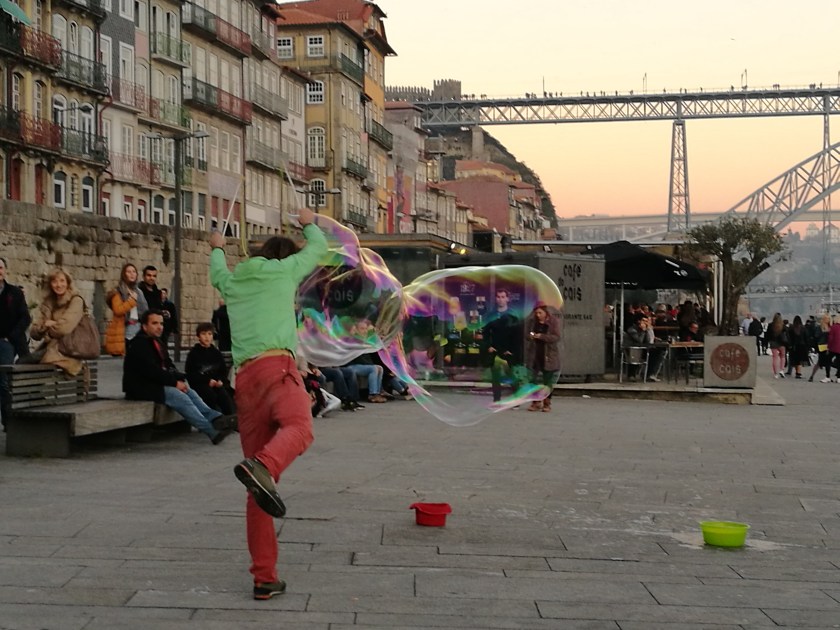
And to me also, who appreciate life, the butterflies, and soap-bubbles, and whatever is like them amongst us, seem most to enjoy happiness.
Friedrich Nietzsche, Thus Spoke Zarathustra
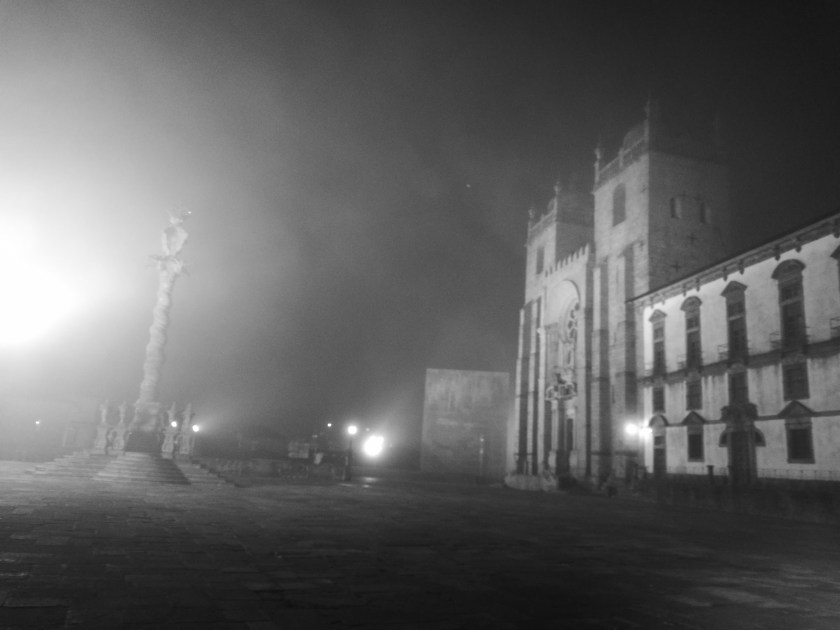
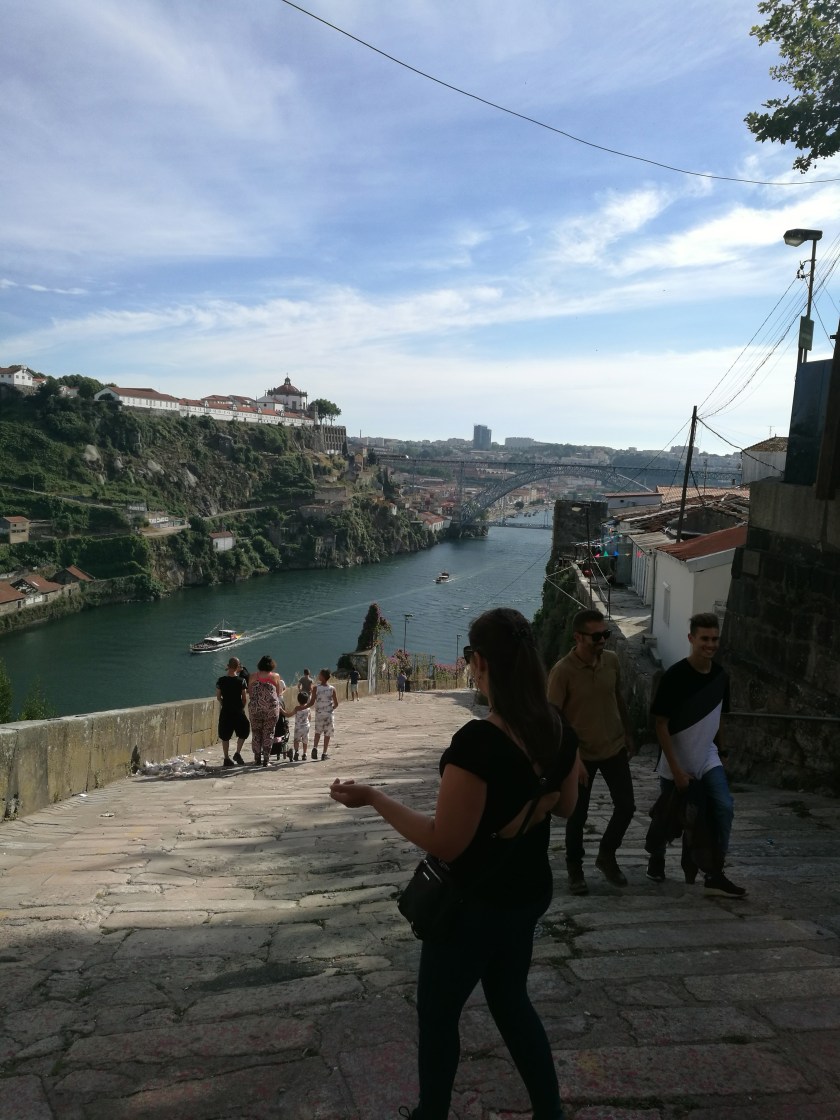
Porto through a different filter
after many years
of hard work and a long voyage
you stand in the centre of your room,
house, half-acre, square mile, island, country,
knowing at last how you got there,
and say, I own this,
is the same moment when the trees unloose
their soft arms from around you,
the birds take back their language,
the cliffs fissure and collapse,
the air moves back from you like a wave
and you can’t breathe.
No, they whisper. You own nothing.
You were a visitor, time after time
climbing the hill, planting the flag, proclaiming.
We never belonged to you.
You never found us.
It was always the other way round.
M. bought this dress Monday morning (my time zone) and the rest of my day was spent trying to remember what seemed to have been long forgotten.
I can’t remember the last time I wore this dress, but I am sure I wore it during a chilly evening in the summer of 1997 at a concert in Montemor‘s castle. I remember who was with me and the theory that “villages with medieval castles are always cold” but I could not remember who was playing.
Trying to dig up something that you have forgotten to remember from the pre-internet era is not always easy. I tried to google what I did remember. The same artist was also a photographer who, probably in the same year, had an installation called “I could write a book” at Galeria Zé dos Bois in Lisbon. Inspired by the famous jazz standard, specifically by Dinah Washington’s rendition of it (1955), the installation featured an unmade bed, photos and diary entries and little notes from the time the author lived, in love, in Tokyo because if someone had asked him, he could have written a book.
If they asked me, I could write a book
About the way you walk, and whisper, and look
I could write a preface
On how we met
So the world would never forget
But I did forget and, as the day progressed I felt more and more irritated at not being able to recall the name. Probably C. went with me to Lisbon so I decided to send an email explaining my quasi existential doubt of the day. He thought it was absurd and called me. He had no recollection whatsoever of such installation he most probably did go but couldn’t remember. We also saw this same guy at Labirintho, I said. Remember that? We went with another friend who got drunk and almost in trouble. Remember that? I even remember where we had parked the car and that we drove away and Cake’s Fashion Nugget was playing. He could not remember anything at all. It seems like we have done really interesting stuff together in the 90s, though.
By 8 pm I could recall some Greek connection and my Google search was “Californian musician, Greek ancestry, living in Lisbon in the 90s”. There it was an article about “the greatest Portuguese talents of the 90s”, about the great “unknown”, groundbreaking talent of Portuguese Pop/Rock and the growing popularity of Dance and Hip-Hop scenes. Finally Darin Pappas, aka Ithaka Darin Pappas aka Korvowrong and the album “Stellafly”, the most powerful and consistent national registry edited in 1997. That might help explain why I seemed to have travelled across the country to hear him even if now it doesn’t really make much sense.
But then again, C.P. Cavafy’s IthaKa is the conclusion that it’s never about getting there but always about the search, as long as you understand what the Ithakas mean.
As you set out for Ithaka
hope the voyage is a long one,
full of adventure, full of discovery.
Laistrygonians and Cyclops,
angry Poseidon—don’t be afraid of them:
you’ll never find things like that on your way
as long as you keep your thoughts raised high,
as long as a rare excitement
stirs your spirit and your body.
Laistrygonians and Cyclops,
wild Poseidon—you won’t encounter them
unless you bring them along inside your soul,
unless your soul sets them up in front of you.
Hope the voyage is a long one.
May there be many a summer morning when,
with what pleasure, what joy,
you come into harbors seen for the first time;
may you stop at Phoenician trading stations
to buy fine things,
mother of pearl and coral, amber and ebony,
sensual perfume of every kind—
as many sensual perfumes as you can;
and may you visit many Egyptian cities
to gather stores of knowledge from their scholars.
Keep Ithaka always in your mind.
Arriving there is what you are destined for.
But do not hurry the journey at all.
Better if it lasts for years,
so you are old by the time you reach the island,
wealthy with all you have gained on the way,
not expecting Ithaka to make you rich.
Ithaka gave you the marvelous journey.
Without her you would not have set out.
She has nothing left to give you now.
And if you find her poor, Ithaka won’t have fooled you.
Wise as you will have become, so full of experience,
you will have understood by then what these Ithakas mean.C.P. Cavafy, Collected Poems. Translated by Edmund Keeley and Philip Sherrard
I texted the name and sent it to C. “wtf, who remembers that” was the answer. Right.
Now, the material trigger for all this is on its way to another hemisphere and I hope it will continue to inspire random thoughts, impromptu travels, silly theories and becomes someone else’s story.

What men call the shadow of the body is not the shadow of the body, but is the body of the soul.
Oscar Wilde, A House of Pomegranates
A Infância de Caim (The Childhood of Cain)
António Teixeira Lopes, 1890
Museu Nacional Soares dos Reis
I’ve forgotten the words with which to tell you. I knew them once, but I’ve forgotten them, and now I’m talking to you without them.
Marguerite Duras, Emily L.


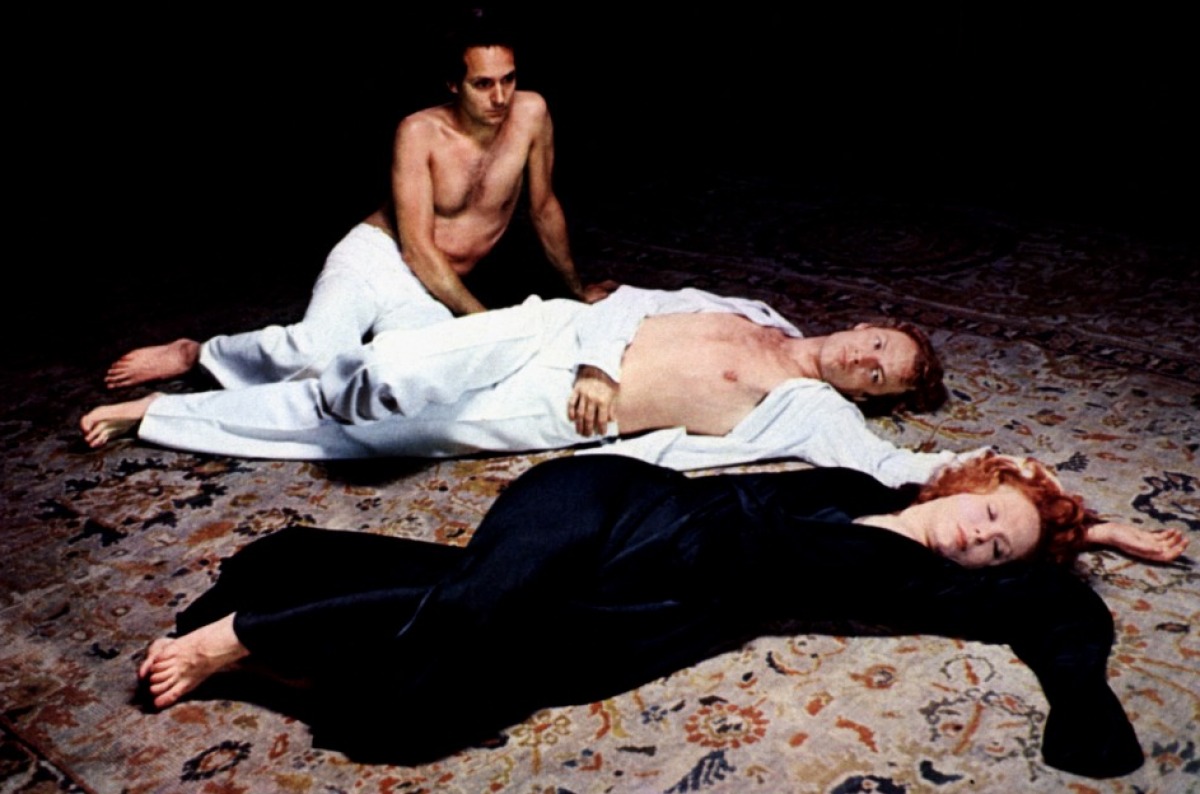




A memory piece that calls up the dead, its heroine, Anne-Marie Stretter (Delphine Seyrig), dances with her lover, Michael Richardson (Claude Mann), in the ballroom of the French Embassy in Calcutta, where her memorial—a photograph, a stick of burning incense, some flowers—is already arranged on the piano. Time folds in on itself in India Song, and space is fractured by the huge mirror that nearly covers one wall so that the reflection of the room is a constant; it is always different, however, from the framing of the room by the camera, whether still or moving. The image created by Duras and cinematographer Bruno Nuytten is at once ghostly and eroticized, so delicately colored that it seems hand-tinted, and the closeness of the air, weighted by the insufferable heat, is palpable. India Song puts all the senses on high alert, and yet it is not in any sense realism. No one would be surprised to learn that it was shot on a set constructed in a crumbling mansion near Paris.

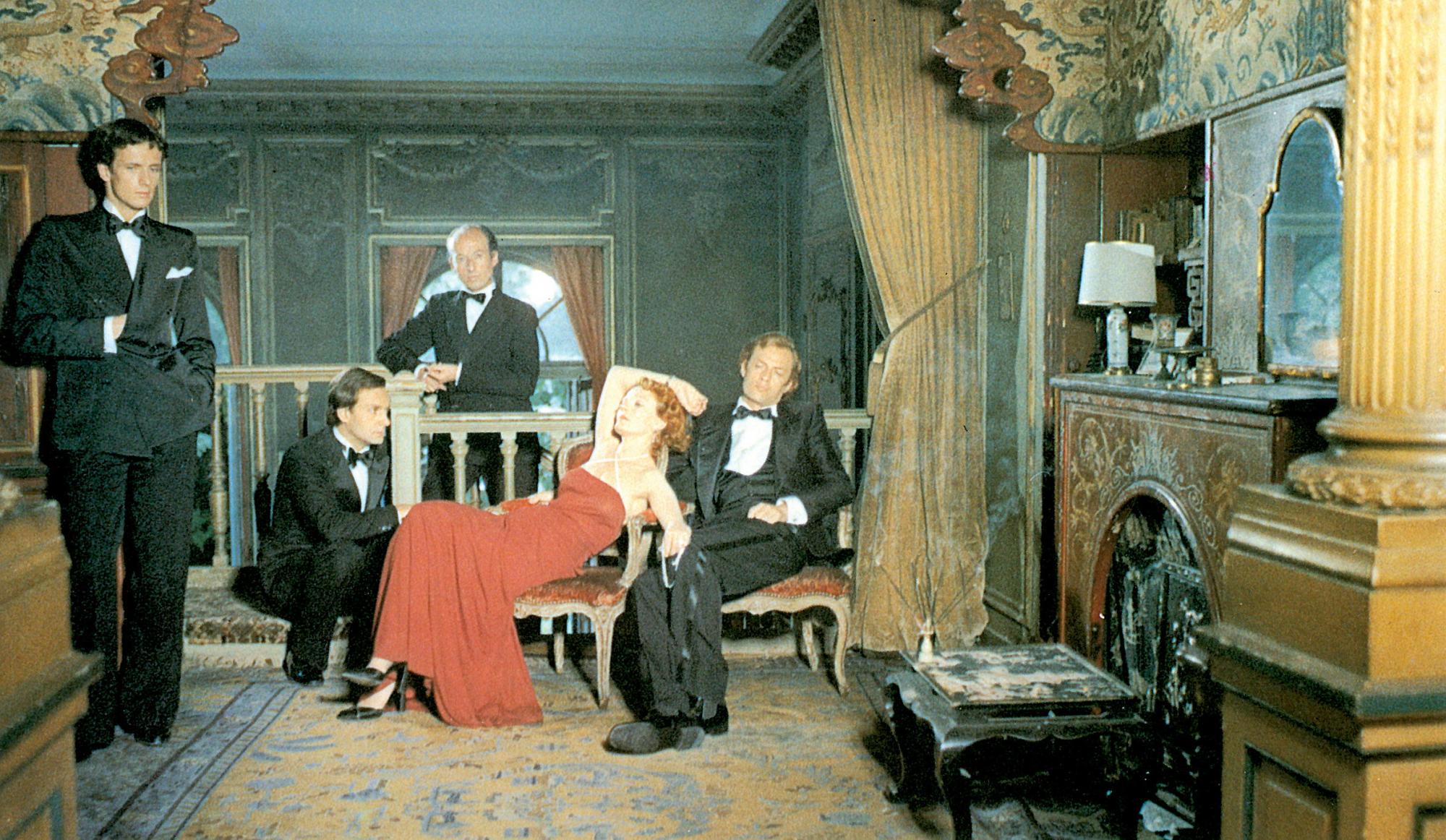


I’m leaving tomorrow. This is my first trip to India and all the images I have are the ones that never show you India just the dreamlike state of decadence of what has been lost.

Photos and References
http://kebekmac.blogspot.pt/2014/09/duras-1975-india-song.html
The Ghosts of Parties Past: Exorcising India Song
Tree tunnels have always felt like a path into a different dimension. As a kid I believed that another world was waiting at the narrow end.
Revisiting one of my favourite books this Africa Day

Jim Naughten’s wonderful book Conflict and Costume: The Herero Tribe of Namibia, tells the tale of the surviving descendants of the Herero whose 1904-1908 genocide at the hands of German colonialist is considered the first of the 20th century.

Each image, a portrait of Herero tribe members of Namibia, reveals a material culture that harkens the region’s tumultuous past: residents wear Victorian era dresses and paramilitary costume as a direct result and documentation of its early 20th century German colonization. Namibia’s borders encompass the world’s oldest desert. Bleak lunar landscapes, diamond mines, German ghost towns, rolling sea fogs, nomadic tribes and a hostile coastline littered with shipwrecks and whale skeletons comprise the region’s striking and haunting natural features. Namibia’s geography has witnessed a turbulent and little documented history of human settlement, upheaval and war within a particularly brutal period of European colonization.

The history of Herero clothing is extraordinary. Rhenish missionaries first introduced Victorian dress, which the tribe gradually accessorized by adding, for example, cow horn headdresses. Later, during the 1904 war with Namibia’s German colonisers, Herero tribe members claimed the military uniform of dead German soldiers.

Dressed in the costumes that have been appropriated from their colonial past, the men, women and children are taking part in a modern re-enactment of their peoples’ bloody history. The tribe’s now traditional costumes are seen by anthropologists as a fascinating subversion of their former rulers’ fashion, showing how the tribe survived a concerted effort by German colonialists to wipe them from the face of the earth.

All photos: Jim Naughten
Introduction by Lutz Marten
Published by Merrell Publishers (February 19, 2013)
I was born in the Southern Hemisphere and live in Southern Europe although my current city is geographically “up North” and people here tend to passionately identify themselves as “northerners “.
For a while I lived in Brighton, also the South in the North and then moved to London and to a more northern lifestyle. I did identify with England mainly because of the music that nurtured me through my teenage angst and bouts of dramatic isolation from the rest of the world. I miss my English life often, I miss the politeness and the freedom of being foreigner but accepted, or at least tolerated. I even miss the pebble beaches and the custard and the days spent in libraries and trying to find a proper espresso. I miss wandering around with nowhere to go. I miss feeling lonely in London and still quietly happy. I miss the quirkiness and people not staring at you because you look different. I miss talking to street performers and photographing them. I miss spending a fortune at Joe’s Basement in Soho to get contacts printed.
I could have stayed. I left and felt that I really belonged there. Up North. I don’t. My landscape is now far from the green grass, blue eyes, grey sky and the gothic lines that I only revisit when travelling Northbound. Now I marvel at the marble collonades, the porches and patios and baroque pearls of the south. Red soil, black eyes, blue sky.
son dos pozos de estrellas tus ojos negros
Geographies aside, I’m intellectually from the North and culturally and emotionally from the South. Not the place. The set of values. The feeling. That different dimension where one floats and feels whole and at home in all “souths”. The olive tree souths, the palm tree souths and the fern souths. The Atlantic souths and the Indic souths, the Mediterranean and the Gulf souths. The carnation souths, the azahar souths, the magnolia-scented souths and the lavender souths. The jacaranda south. The iced tea souths and the wine and manzanilla souths. The beignet souths and the cannoli souths. The pistachio colored souths, the turquoise souths and the ochre souths. The south of Tango and the south of Blues. The rhythmic south. The south of Duende.
Llevo el Sur,
como un destino del corazon,
soy del Sur,
como los aires del bandoneon.
The Belles souths and the Amazons souths. The Maria souths and the Carmen souths and the Tallulah souths. The polite souths and the loud-mouthed souths. The south of dark hair and lustrous eyes and cadenced walks and throbbing charm. The south of apparent frailty and unbreakable strength.
The orange souths, the mango souths and the strange fruit souths.
The lazy, laughing South
With blood on its mouth.
The cruel south. Not a geography. A metaphor of all the pain in humanity. A testimony of decadence. The fatalist souths and the combative souths.
The emotional souths and the passionate souths. The souths of private virtues and public vices. The south of sin. The south of absolution.
The souths of Homer. The south of Faulkner. The souths of disquiet. The lazy Apollonian souths, the dancing, graceful, spontaneous, impulsive souths. The eternal midday, clear, still and in the moment South. The nostalgic, embracing South.
And still, the yearning for the lost South. “And there were other ways to live…”
Se você tem uma idéia incrível. É melhor fazer uma canção. Está provado que só é possível. Filosofar em alemão.
References (in a very random order)
Astor Piazolla, Caetano Veloso, Camaron de la Isla, Jorge Luis Borges, Eugene Walter, Langston Hughes, Agustina Bessa-Luís, Fernando Pessoa, Susan Sontag, William Faulkner, Billie Holiday, Oswald Spengler, Nietzsche
I’m standing at the entrance of the room checking Caetano Veloso get on stage for the technical rehearsal of this evening’s show. And this is actually happening. Tropicália, one of the founding songs of the movement, echoes in the empty room and Caetano’s voice seems to hold me in a hug.
I grew up listening to Brazilian music, not specifically to Caetano whose music I only discovered in my 20s, but to the amazing voices of Elis Regina, to the powerful words of Chico Buarque and the outrageous performances of Ney Matogrosso. That music, those words, have functioned as my citizenship, like a deeper connection to a language that even though it’s my native language, I have never managed to master in an elegant way but could, none the less, substitute my passport.
I was not born in 1967, my generation didn’t actually have to create a revolution, we were born in the aftermath of insurrection and before red carnations took to the streets.
Brazil, a country I traveled to for the first time when I was 9, meant as a cliché, samba, beach and a carefree existence. Caetano’s songs showed me something else. A country that can hold the entire world in both its glory and its misery. I started paying attention to the music that makes you want to get up and celebrate life through dancing and to the words that make you stand still and think. Last time I was in Brazil was in 2000 while the celebrations for its 500 years of postcolonial history were underway. Walking through the streets of Salvador all the way up to a candomblé house made me feel thankful for paying attention. That’s where the music materialized itself, in the Roma Negra.
From Porto Seguro and Salvador, the journey ended in Rio de Janeiro and I could still hear the words, who hasn’t felt the swing of Henri Salvador. We were staying in Copacabana and took the bus to the Flamengo neighborhood to see the Carmen Miranda Museum on an amazing journey through scandalous platform shoes and outrageous costumes and jewelry. A dream closet. In all her esthetic exaggeration, the adopted icon of tropicalism was a true precursor, taking it all in, who she was, who others thought she was, Europe, America and the tropics in one flamboyant persona.
Oswald’s anthropophagy, the solution to the problem of identity, the antidote to having your mind chained to labels and to grim values of behavior and morality. Thoroughly thought anarchy and cultural eclecticism, helas, flamboyance as a beautiful form of resistance.
Movements become dated and even our music heroes get old but this evening, the Coliseu sang Tieta to the ones that still shine brighter than a million suns and Gilberto Gil, all dressed in white, danced. And I have no films, photos or recordings and yet it will be registered forever.
References
Photo cover to Tropicália ou Panis et Circencis by Mário de Andrade
I am a terrible decision maker. I do not like planning or strategizing or even making pro/con lists.
I find decision making excruciatingly tedious and, on top of that, I can’t read maps and even manage to get lost using gps devices. That’s how I often take the roads less traveled. I am also not good at following instructions.
Not many, if any, of these new roads are left to be metaphorically or literally explored. I suppose we all would like to be pioneers and trailblaze our own road but that is lonely and difficult path we’re seldom ready to take.
In some ways, this blog is, for me, the road less traveled, the road of self-examination as a public exercise. And, as Dr. Peck would put it “life is difficult”, being honest with yourself is not an easy task. Being honest with yourself in public can oftentimes be soul crushing as is the realization that you can’t really always get what you want.
At least two people in my life have tried to make me understand (in very obvious ways) that life is seldom what you want it to be and often what it has to be. I haven’t learnt this lesson yet. I go on insisting that there has to be more. As a traveler, I always want to take both or all the roads in front of me and start walking even if sometimes never arriving and other times taking the easy, comfortable road and not getting where I wanted to be.
The roads left are the roads not taken and these might be the ones that would make all the difference.
References:
Robert Frost (1920)
Morgan Scott Speck (1978)
Mick Jagger / Keith Richards (1969)




 Stories from A Closet of Errors