Whatever it might be

I will, most probably, not face it alone

Skunk Anansie, Porto, 02.08.2025

for Mordechai Vanunu

not to be complicit
not to accept everyone else is silent it must be alright

not to keep one’s mouth shut to hold onto one’s job
not to accept public language as cover and decoy

not to put friends and family before the rest of the world
not to say I am wrong when you know the government is wrong

not to be just a bought behaviour pattern
to accept the moment and fact of choice

I am a human being
and I exist

a human being
and a citizen of the world

responsible to that world
—and responsible for that world

Being a Human Being by Tom Leonard
Navigating Today’s Chaos with Skin’s Fearlessness

In the late 90s, when Skunk Anansie emerged with their fierce blend of alternative rock and political awareness, frontwoman Skin confronted society’s hypocrisy with unflinching honesty. Their music, to which I confess, I wasn’t paying much attention at the time, but can hear it loud and clear from the first time I saw them live, offered profound commentary on disillusionment, authenticity, and betrayal that remains startlingly relevant today.

In today’s social media landscape, we curate selective versions of ourselves, seeking validation in an ecosystem that promises universal acceptance while quietly enforcing rigid conformity. The anger in Skin’s voice when challenging religious and social hypocrisy reminds us that genuine acceptance remains conditional—algorithms, trends, and social capital determining who is seen and who remains invisible.

The message behind “God Loves Only You” resonates powerfully in an era where people preach inclusivity while practicing exclusion. We’ve traded explicit prejudice for implicit bias, creating environments where belonging still comes with unspoken qualifications. How many of us perform the correct political positions online while failing to embody those principles in our daily lives?

Skunk Anansie, Porto 02.28.2025

“It Takes Blood & Guts To Be This Cool But I’m Still Just A Cliché” highlights our contemporary paradox. We demand authenticity yet punish genuine vulnerability. Today’s world expects us to be fearlessly original yet utterly digestible, to stand out while fitting in. The song’s provocative title captures this contradiction perfectly.

Those who dare to exist outside accepted parameters face consequences ranging from algorithmic invisibility to outright harassment. Meanwhile, true boldness gets commodified, packaged, and resold as aesthetic without substance. We’ve developed sophisticated language for social justice while failing to achieve its fundamental aims—much like the performative rebellions Skin critiqued decades ago.

Skunk Anansie, Porto 02.28.2025

“Hedonism (Just Because You Feel Good)” offers another layer to our modern dilemma. In an era of instant gratification and endless distraction, the song’s exploration of pleasure without purpose speaks directly to our attention economy. Social media platforms are designed like casinos—engineered to maximize engagement through dopamine hits while creating little lasting satisfaction.

The chorus question, “Just because you feel good, does it mean that you’re right?” perfectly encapsulates our collective susceptibility to emotional reasoning. From consumer choices to political positions, we increasingly mistake feeling good for being right, comfort for truth. The hollow promise of digital hedonism—endless scrolling, outrage cycles, validation seeking—leaves us, as Skin powerfully articulates, “Empty like the hole you left behind.”

Skunk Anansie, Porto 02.28.2025

Skunk Anansie’s “Yes, It’s Fucking Political” delivers a raw, uncompromising message that challenges our ability to remain neutral in times of conflict. In today’s world, wars rage on physical battlefields and across digital information spaces. The song’s central assertion—that everything is political—cuts through comfortable illusions of neutrality.

As Skin defiantly proclaims in the song, political realities can’t be escaped or ignored; they shape our lives whether we acknowledge them or not. This truth resonates powerfully in our current moment, where algorithms curate our worldviews while creating the illusion of objective reality. The conflicts we witness—from armed struggles to culture wars—aren’t distant abstractions but forces that directly impact human lives.

The song’s visceral intensity highlights the frustration of those whose suffering is reduced to debate topics. Their existence is framed as “political.” Meanwhile, others enjoy the privilege of claiming neutrality. At a time when we can customize our information environments to screen out uncomfortable realities, Skunk Anansie’s confrontational approach reminds us that turning away from conflict doesn’t make it disappear—it merely privileges those who benefit from the status quo.

Skunk Anansie, Porto 03.18.2022

“This Means War” offers a perfect companion to these political themes by bringing conflict to the personal level. The song’s explosive energy captures the moment when diplomacy ends and confrontation becomes necessary—not just in global politics but in our individual lives and relationships.

In today’s world, we’re encouraged to compromise, to seek middle ground, to maintain peace at all costs—even when fundamental values and boundaries are at stake. “This Means War” reminds us that sometimes, drawing a line is not just appropriate but necessary. The song’s defiant stance resonates with anyone who has reached their breaking point after repeated betrayals or violations.

The lyrics speak to personal liberation through confrontation. This theme is particularly relevant today. We increasingly recognize how power imbalances shape even our most intimate relationships. When Skin sings about declaring war, she’s articulating the moment of reclaiming power after prolonged subjugation, of refusing further compromise after continual exploitation.

From setting boundaries with manipulative institutions to refusing engagement with bad-faith arguments, from breaking cycles of abuse to confronting systemic injustice. The song’s message isn’t about glorifying conflict but recognizing its necessity in certain contexts—a message that cuts against our culture’s emphasis on toxic positivity and endless accommodation.

Skunk Anansie, Porto 02.28.2025

I believed in you, well, I was wrong. How many institutions have failed us? How many movements have been corrupted from within? How many public figures have revealed themselves to be contrary to their cultivated image? We’re continually investing faith in platforms, personalities, and communities that promise connection but deliver surveillance, promise empowerment but deliver exploitation. We believed in the democratizing power of technology only to watch it amplify inequality. We believed in the possibility of genuine community only to experience unprecedented isolation.

Skunk Anansie, Porto 02.28.2025

Like the powerful vocals and words that define Skunk Anansie’s sound, perhaps mine (our ) response to today’s challenges should be neither whispered conformity nor performative outrage, but something more raw, more honest, and ultimately more revolutionary—the sound of our authentic voices, raised together. Hope, at this time, might be just naive optimism against all evidence but, it might as well be a deliberate choice made with full awareness of reality’s harshness.

In a world where climate anxiety, political polarization, economic uncertainty, and technological disruption create a perfect storm of existential dread, envisioning alternative futures becomes crucial. It is both a psychological necessity and a political act. My biggest challenge, I don’t think it’s particular to me, is how to simultaneously process difficult truths while maintaining the creative capacity to imagine beyond them.

It does take music to survive. Music like Skunk Anansie’s doesn’t just entertain—it validates our experiences, expresses our frustrations, and offers both catharsis and connection. In a world that can feel increasingly alienating and chaotic, that musical connection is essential. It becomes not just enjoyable but necessary for emotional survival.

Live performances add another dimension entirely. There’s something about being physically present in a space with other fans who understand the importance of these songs that creates a genuine community, even if just for a few hours. It’s a reminder that we’re not alone in our experiences or our reactions to the world.

Skunk Anansie, Porto 02.28.2025

Forever alive, forever forward

In a collection that’s grown to nearly 200 pairs (I couldn’t write on budgeting even if I was paid to do it), choosing a favorite seems almost unfair although not difficult.

When I look across what I wished was a carefully curated kingdom of footwear but it’s probably just a sign of some kind of derangement , my eyes always land on the same pair: my custom Converse All Stars emblazoned with Walt Whitman’s timeless words, “resist much, obey little.”

The customization process was simple enough—Converse’s website, a font choice, a color scheme that wouldn’t overshadow the message. But the impact was anything but simple. 

Whitman’s phrase—tucked into his poem “Caution”—spoke to something essential in me. A reminder that blind conformity is the enemy of growth. That questioning authority isn’t rebellion for rebellion’s sake, but a necessary component of being and feeling alive.

“Resist much, obey little,
Once unquestioning obedience, once fully enslaved,
Once fully enslaved, no nation, state, city of this earth, ever afterward resumes its liberty.”

I received them in April 2024. In May I took them to New Orleans—my soul city. There’s something poetic about first breaking in shoes dedicated to resistance in a place that has itself resisted time, tragedy, and homogenization. Walking as if dancing, feeling the rhythm of this marvellous city, breathing music from morning to night, watching the white canvas collect the character of a city that refuses to surrender its identity—it felt like a perfect baptism for both the shoes and for me. I always feel more alive in New Orleans. I always feel I get to be myself anew.

They carried me through heartbreak in Greece, they were with me in Wembley to celebrate life with a friend that took me to see Bruce Springsteen and 60 thousand people whit hungry hearts, they got to see Ian Astbury who no longer is my teenage crush but can still stir something when singing about paradises in shattered dreams. They take me to work when I’m feeling disappointed and a bit defiant.

They remind me that authentic self-expression isn’t always comfortable, but it’s always worthwhile. That small acts of personal courage accumulate into a life of integrity. That sometimes the loudest statements are made in the quietest ways. That  resistance sometimes it’s as simple as a daily choice to live by your own compass.

References

Song of the Open Road

Walt Whitman’s Caution

A window leaning into life

There’s something comforting about the idea that certain events or connections are “meant to be” – that there’s some larger pattern or purpose to our lives. Many people find meaning in interpreting significant events as part of a larger plan.

On the other hand, I’m drawn to the perspective that we have genuine agency in shaping our lives, and that the future isn’t predetermined. There’s something powerful about the idea that our choices and actions genuinely matter in determining what happens.

Some philosophical traditions try to reconcile these views – suggesting that perhaps certain broad patterns might be destined while specific details remain under our control, or that destiny might operate at a higher level while still allowing for free choice within certain parameters.

I would say I don’t believe in fate but, I’m Portuguese….

Fado, as a music genre, is deeply tied to the Portuguese concept of saudade—a mix of longing, nostalgia, and fate. The very word “Fado” comes from the Latin fatum, meaning “fate” or “destiny,” reflecting the idea that life’s joys and sorrows are inescapable.

Even if you don’t fully believe in fate, Fado embodies a cultural perspective where destiny plays a role in shaping human experiences—especially in love, loss, and hardship. The music suggests that some emotions and events are inevitable, but at the same time, Fado is an expression of personal agency, as singers pour their souls into shaping the narrative.

Portuguese culture carries a certain introspective melancholy—not just in Fado but also in literature, poetry, and even the way history is remembered. There’s a balance between accepting sorrow as part of life and finding beauty in it.

Saudade and Fado are deeply intertwined with Portuguese history, emerging from and reflecting the nation’s unique historical experiences.

Portugal’s identity was profoundly shaped by the Age of Discoveries (15th-16th centuries), when this small nation became a global maritime empire. This period created a culture of separation and longing – sailors and explorers left home for years or forever, families were torn apart, and communities lived with constant absence. Saudade developed as an emotional response to this collective experience of separation.

The economic structure of this maritime empire meant Portugal was often looking outward rather than developing internally. When ships didn’t return or imperial ventures failed, this created a cultural pattern of anticipation followed by disappointment – another dimension of saudade.

After this golden age came Portugal’s long decline – the loss of independence to Spain (1580-1640), the devastating Lisbon earthquake of 1755, the Napoleonic invasions, the loss of Brazil, and the political turmoil of the 19th and early 20th centuries. This historical arc from glory to struggle embedded a sense of lost grandeur in Portuguese cultural consciousness.

Fado emerged in the early 19th century primarily in working-class urban neighborhoods of Lisbon, coinciding with a period of national difficulty. It became a musical expression of this complex historical experience – not just personal longing but a collective cultural memory of past greatness contrasted with present difficulties.

During the Salazar dictatorship (1933-1974), this backward-looking tendency was sometimes exploited – the regime used a sanitized version of Fado and the concept of saudade in its propaganda. Yet authentic Fado remained a vital way for common people to express their emotional relationship with fate and history.

Eduardo Lourenço described Portugal as suffering from “hyperidentity” – an excessive preoccupation with national identity and destiny based on a mythologized past. Saudade and Fado became cultural spaces where this complex relationship with history could be emotionally processed rather than just intellectually analyzed.

This historical context helps explain why Fado approaches fate emotionally rather than philosophically – it emerged as a way for people to express and make sense of their lived historical experience rather than to theorize about it.

A lot of musical landscapes could exemplify this, I chose my favorite. No Teu Poema / In your Poem. A magnificent poem written by José Luís Tinoco , first sang by Carlos do Carmo in 1976, and here in my absolute favorite version by Amor Electro. Not Fado as such but the melancholy is still there.

This is a beautiful example of how the Portuguese poetic tradition captures both resignation and resistance. The lyrics acknowledge pain, struggle, and fate (a sina de quem nasce fraco ou forte), but they also hold space for courage (o passo da coragem em casa escura), hope (a esperança acesa atrás do muro), and an open future (um verso em branco à espera do futuro). A blank verse without measure exists. It suggests that within fate’s poem, there are still unwritten spaces. These are moments of possibility within destiny’s framework.

Perhaps most powerful is “A dor que sei de cor, mas não recito” (The pain I know by heart, but do not recite). This suggests that fate’s pain is so deeply internalized that it need not be explained or philosophized about—it simply exists as emotional knowledge.

For me, this song beautifully captures how Fado approaches fate—not by explaining why things happen, but by emotionally inhabiting the experience of living within destiny’s constraints while finding both beauty and dignity in that condition.

It’s like life is shaped by forces beyond our control—fate, history, circumstance—but within that, there’s still the individual’s voice, the choice to fight, to persist, or to find meaning. Do you feel like this duality is part of your own outlook on life?

No teu poema
Existe um verso em branco e sem medida
Um corpo que respira, um céu aberto
Janela debruçada para a vida

No teu poema
Existe a dor calada lá no fundo
O passo da coragem em casa escura
E aberta, uma varanda para o mundo

Existe a noite
O riso e a voz refeita à luz do dia
A festa da senhora da agonia
E o cansaço do corpo que adormece em cama fria

No teu poema
Existe o grito e o eco da metralha
A dor que sei de cor mas não recito
E os sonos inquietos de quem falha

No teu poema
Existe um cantochão alentejano
A rua e o pregão de uma varina
E um barco assoprado à todo o pano

Existe a noite
O canto em vozes juntas, vozes certas
Canção de uma só letra e um só destino a embarcar
O cais da nova nau das descobertas

Existe um rio
A sina de quem nasce fraco, ou forte
O risco, a raiva a luta de quem cai ou que resiste
Que vence ou adormece antes da morte

No teu poema
Existe a esperança acesa atrás do muro
Existe tudo mais que ainda me escapa
E um verso em branco à espera
Do futuro

In your poem
There is a blank verse, boundless and free
A body that breathes, an open sky
A window leaning into life

In your poem
There is silent pain deep within
The step of courage in a darkened home
And open, a balcony to the world

There is the night
Laughter and a voice remade by daylight
The feast of Our Lady of Agony
And the weariness of a body
That falls asleep in a cold bed

In your poem
There is the cry and the echo of gunfire
The pain I know by heart but never recite
And the restless sleep of those who fail

In your poem
There is an Alentejan chant
The street and the call of a fishmonger
And a ship blown forward at full sail

There is the night
The song in voices joined, voices sure
A tune with just one word, one shared fate
Embarking from the dock
Of a new ship of discoveries

There is a river
The destiny of those born weak, or strong
The risk, the rage, the struggle
Of those who fall or those who resist
Who triumph or fall asleep before death

In your poem
There is hope burning beyond the wall
There is everything else I cannot yet grasp
And a blank verse waiting
For the future

To be continued ….

References

Photo: Artur Pastor – Heavenly Light

The Power and Limits of Cultural Myths in Portugal’s Search for a Post-Imperial Role

“The Zenith of our National History!”

Fado History at Museu do Fado

A good day

We are nothing more
than the time we have left,
walking toward the oblivion
we will become.

It's harsh, but that's the way it is.

The rest is just literature.

The best thing
is not to think about it too much:
keep walking,
drink coffee, fall in love,
watch the rain...

Karmelo C. Iribarren (my own attempted translation)

Monday poetry is late, again, so am I for most things

Whatever genius is

On Saturday I went to see Pablo Larraín’s Maria with a a friend. My friend cried at the end of the movie. Surprisingly ( to me), I didn’t. I am not quite sure I liked it. Angelina Jolie presumably excels as the tragic Diva; Massimo Cantini Parrini’s costume design was impeccable, as it should, since the source material was already extraordinary as he acknowledges in this interview to Harper’s Bazaar:

Costume design in María not only transforms Jolie into La Divina, it also serves as a visual metaphor for the film’s meditation on artistry, identity, and transformation. Through María Callas’ wardrobe, Larraín and Massimo Cantini Parrini articulate the tension between art as a living, breathing force and art as a frozen, ornamental relic

Callas was an artist shaped by both her voice and her image. Her costumes reflect this duality. Onstage, she is adorned in grand, operatic gowns. These gowns are heavy with history, as if carrying the weight of her own myth. These pieces emphasize how she became an icon, a living masterpiece. But offstage, her wardrobe shifts to softer, more intimate attire, revealing the woman beneath the legend. The contrast suggests that while the world sees only the diva, Callas herself wrestles with her own identity beyond the stage.

In her later years, Callas’ wardrobe takes on a different role. The extravagant fashion—high collars, structured silhouettes, luxurious fabrics—becomes almost like a museum exhibit. It serves as a way of preserving an identity that is slipping away. Even as her voice fades, her costumes remain striking. They seem like the last remnants of the persona she spent a lifetime constructing.

As Callas grapples with the loss of her voice, her costumes become more muted, understated—less fireworks, more elegy. The colors may darken, the embellishments may soften, mirroring the internal shift from performance to reflection.

A very long introduction to answer that if I could be someone else for a day, I would choose to be this kind of genius. Not the one shown in the movie. While not everyone knows what it’s like to command an opera house or possess extraordinary talent, we all know and experience, in very different measures, the personal side of decline.

You are born an artist or you are not. And you stay an artist, dear, even if your voice is less of a fireworks.

To be able to experience for one day what it would feel like having lightning running through your veins, knowing that every note you produce is pure artistic truth. The sheer physical and emotional power required to project that voice, to inhabit roles like Tosca or Norma so completely that the boundary between performance and reality almost disappears…

To know not adoration but to live with the certainty that your extraordinary gift has made a difference in the world through beauty.

Now, I am the same age as Callas was when she died and realize that I really wished I could be myself everyday even if there are so many more spectacular lives than my own.

The unlived life of N S

The unexamined life is surely worth living, but is the unlived life worth examining?

I think Stanley Kubrick actually captured something similar when he said “The truth of a thing is in the feel of it, not the think of it.”

While Socrates emphasized reflection as crucial to a meaningful life, there needs to be something substantive to reflect upon. Pure contemplation without lived experience could become a kind of hollow philosophical exercise.

There’s a point where self-reflection can spiral into a kind of paralytic introspection or self-commiseration.

When examination turns into rumination, we find ourselves in an echo chamber of our own thoughts. This detaches us from the vitality of direct experience. Excessive self-examination can also drain experiences of their natural meaning and immediacy.

Yet, I wonder if the issue isn’t with examination itself, but with its nature and purpose. There’s a difference between examination that enriches our engagement with life – helping us understand our patterns, make better choices, appreciate moments more fully – and examination that becomes a form of self-absorbed withdrawal from life.


A little more sun – I’d have been embers,
A little more blue – I’d have been beyond.
To reach it, I lacked the stroke of wings…
If only I had stayed beneath…

Wonder or peace? In vain… All faded
In a vast, deceitful sea of foam;
And the grand dream awakened in mist,
The grand dream – oh pain! – almost lived…

Almost love, almost triumph and flame,
Almost the beginning and end – almost expansion…
But in my soul, everything spills out…
And yet nothing was mere illusion!

Everything had a start… and all went astray…
– Oh, the pain of being – almost, endless pain…
I failed others, failed myself,
A wing that entwined but didn’t fly…

Moments of soul that I squandered…
Temples where I never raised an altar…
Rivers I lost without leading to the sea…
Yearnings that passed but I never held…

If I wander, I find only traces…
Gothic arches toward the sun – I see them closed;
And hands of heroes, without faith, cowardly,
Set bars over the precipices…

In a diffuse impulse of despair,
I began everything and possessed nothing…
Today, of me, only disillusion remains,
Of the things I kissed but never lived…

A little more sun – and I’d have been embers,
A little more blue – and I’d have been beyond.
To reach it, I lacked the stroke of wings…
If only I had stayed beneath…


(AI translation)

Here's the original poem, Quase by Mário de Sá Carneiro:


Um pouco mais de sol – eu era brasa,
Um pouco mais de azul – eu era além.
Para atingir, faltou-me um golpe de asa…
Se ao menos eu permanecesse aquém…

Assombro ou paz? Em vão… Tudo esvaído
Num grande mar enganador de espuma;
E o grande sonho despertado em bruma,
O grande sonho – ó dor! – quase vivido…

Quase o amor, quase o triunfo e a chama,
Quase o princípio e o fim – quase a expansão…
Mas na minh’alma tudo se derrama…
Entanto nada foi só ilusão!

De tudo houve um começo … e tudo errou…
– Ai a dor de ser – quase, dor sem fim…
Eu falhei-me entre os mais, falhei em mim,
Asa que se enlaçou mas não voou…

Momentos de alma que, desbaratei…
Templos aonde nunca pus um altar…
Rios que perdi sem os levar ao mar…
Ânsias que foram mas que não fixei…

Se me vagueio, encontro só indícios…
Ogivas para o sol – vejo-as cerradas;
E mãos de herói, sem fé, acobardadas,
Puseram grades sobre os precipícios…

Num ímpeto difuso de quebranto,
Tudo encetei e nada possuí…
Hoje, de mim, só resta o desencanto
Das coisas que beijei mas não vivi…

Um pouco mais de sol – e fora brasa,
Um pouco mais de azul – e fora além.
Para atingir faltou-me um golpe de asa…
Se ao menos eu permanecesse aquém…


Yes, that “agony of the almost” is the heart of what makes this poem so powerful and painful. Sá-Carneiro captures something uniquely torturous about consciousness – not just the pain of failure, but the specific suffering that comes from knowing you came close and fell short. All the intention was there – just not the final decisive action. It’s the difference between never having talent and having talent you squandered.

There’s also something especially modern about this kind of suffering. In earlier times, one’s path might have been more predetermined by circumstances. But now, we face a growing burden of choice and possibility. This makes the failure to realize potential feel like a personal shortcoming instead of an external limitation.

And, again, the same question, is the unlived life worth examining? Awareness itself can be a curse. As Sá-Carneiro, we don’t just lament missed opportunities, but also knowing about them – and wish we “had stayed beneath.” Self-reflection does have a potential to become self-commiseration – when awareness of what could have been overwhelms and paralyzes rather than motivates. And we stay trapped between worlds – neither fully engaged in life nor able to transcend it (“To reach it, I lacked the stroke of wings…”)

If, as Joan Didion wrote “We are well advised to keep on nodding terms with the people we used to be, whether we find them attractive company or not”, we might as well learn how to come to terms with the people we did not become.

References
Adam Phillips, Missing Out: In Praise of the Unlived Life

Always a summer day

An ideal day would be one

when I remained true to myself and moved closer to becoming the person I aspire to be.

when I was able to connect to someone and was genuinely interested in what they had to say

And it would always be a summer day, suspended in timeless radiance—no beginning, no end. Just the feeling of endless warmth and light, a moment stretched into infinity.

Here, in this eternal instant, warmth becomes more than temperature—it is a sensation that permeates skin, memory, and imagination.

No clock measures these moments. No shadow hints at morning or evening. There is only this: pure, uninterrupted radiance. A day that is not a day, but a feeling—boundless, perfect, suspended between breath and memory, where time loses all meaning and only sensation remains.

On a perfect day at the perfect time, when those beautiful colors combine, I’ll be wide awake, I’ll be living free cause that perfect feeling is inside of me

I think he does understand….

that he has an uncanny ability to know exactly what I need and that he has been the reason to keep going on for the past four years, that even though he’s not able to read, he has written his love into every little detail of my day to day.

If you could make your pet understand one thing, what would it be?

Harmonies of Chance


I do not know how I got here. Time is a difficult concept for me and, I really do not know the answer to how do significant life events or the passage of time influence my perspective on life.

I remember a few negative experiences from my childhood but can’t be really precise on the when; up to now I have been fortunate enough not to loose my parents, getting divorced felt more like a failure than a significant life event, most probably because getting married felt like a mistake. This, my therapist says, suggests a kind of emotional self-protection, a way of minimizing the impact of what could have been a deeply transformative experience. Perhaps this speaks to a broader coping mechanism – the ability to reframe potentially painful experiences in a way that doesn’t allow them to become definitional moments.

Loosing my grandmother was hard but I can’t remember the exact year, 2011, maybe. In November 2014 I was alone in Vietnam for work and, on the 16th I received a text message saying that my great aunt (my grandmother’s sister) had died. I can’t remember what the movie on the hotel TV was but the final credits rolled in to the sound of Into My Arms. Violeta, who was also there for work as well and whom I had never met before, and have never seen again but 10 years on still says I’m her “One Night Best Friend Forever” spent the whole day and evening with me the next day wandering the streets, parks, shops and cafés of Hanoi. We spent same time at a particular coffee shop watching life happen on the other side of the street while the radio played a Vietnamese rendition of Seasons in the Sun.

If I could, I’m pretty sure I can’t, speak of myself as a “curator”, I would say that my memories seem to be curated not by chronological accuracy, but by emotional resonance. The day in Hanoi, the loss of my great aunt, these moments have been preserved with a kind of tender, even if painful, clarity.

The inaccuracy of our memories—where dates and childhood experiences are unclear—indicates that we perceive time differently, more instinctively than in a straight line. We don’t recall events in order but through how they made us feel. Memories linger not due to exact times, but because of their ability to change us.

I don’t know if I have changed but I did learn that I too have the ability to be vulnerable, to allow a stranger to witness my grief, and to be remarkably open to human connection.

I have also learned how to find beauty in uncertainty, meaning in transient connections. The Vietnamese rendition of “Seasons in the Sun” playing while life unfolded on a street in Hanoi became a metaphor for what I think is my approach to existence – finding poetry in unexpected moments, creating meaning from seemingly random encounters.

I haven’t created a clear plan for my life and I, definitely don’t have everything figured out. When I’m being kind to myself, I think of my experiences as improvisational music. Maybe because I am too lazy to do it differently, I have accepted that it’s not about sticking to a script; it’s about discovering harmony in unexpected moments and finding meaning in random encounters. The strangers who are briefly but unconditionally there for me and the music that captures emotions too complex for words – these are the true landmarks of my journey.

On the illusion of being fearless and the fear of living

The illusion of fearlessness often manifests as a kind of psychological armor – we convince ourselves we’re beyond fear, untouchable. But this supposed fearlessness can actually be a defense mechanism, a way of avoiding the vulnerability that comes with truly engaging with life. True courage doesn’t seem to be so much about being fearless – it’s about acknowledging our fears and moving forward despite them.

The fear of living itself is particularly paradoxical. It can manifest as a reluctance to fully engage with life’s experiences, to take risks, to open ourselves to both joy and pain, while not being afraid of what might be physically dangerous. This fear might lead us to live in a kind of half-state – physically alive but emotionally and spiritually withdrawn. We might avoid deep relationships, challenging opportunities, or meaningful changes because they require us to be vulnerable and face potential loss or failure.

The relationship between these two concepts – the illusion of fearlessness and the fear of living – is especially intriguing. Sometimes, those who project the strongest image of fearlessness are actually the most afraid of truly living. Their apparent fearlessness becomes a cage, preventing them from experiencing the full spectrum of human experience, including the fears that make us human.

What makes this dynamic even more complex is that some degree of fear is not just natural but necessary for meaningful living. Fear can be an indicator of what we truly care about, what matters to us. The person who claims to fear nothing might also love nothing, risk nothing, and ultimately live nothing.

There’s a particular kind of emptiness that comes not from feeling sad, but from feeling nothing at all. It’s a state many of us find ourselves in, though we rarely talk about it. We exist in a fortress of our own making – safe, perhaps, but isolated from the very experiences that make life vibrant and meaningful.

I’ve come to understand this state as emotional inertia. It’s not depression exactly, nor is it simple apathy. It’s more like being trapped in a glass box, watching life happen around you but feeling fundamentally disconnected from it. The most insidious part? Sometimes we convince ourselves this is preferable to the alternative.

“It’s not worth it,” we tell ourselves. “I wouldn’t know how to engage anyway.” These aren’t just excuses – they’re reflections of a deeper truth: somewhere along the way, many of us lost or never developed the emotional muscles needed for deep engagement with life. It’s as if we’re standing at the edge of a pool, knowing we should jump in, but feeling paralyzed by both the uncertainty of how to enter and a profound passivity that makes even taking that first step seem impossibly demanding.

The cruel paradox is that the person who claims to fear nothing might also love nothing, risk nothing, and ultimately live nothing. We build these walls of numbness thinking they’ll protect us from pain, but they end up protecting us from everything – joy, connection, growth, and yes, even the ability to feel fear itself.

This isn’t just about lack of motivation. It’s about a fundamental disconnect between knowing intellectually that life could be more and feeling capable of actually reaching for it. The challenge becomes self-reinforcing: the less we engage, the more foreign engagement feels, and the more insurmountable it appears.

But perhaps there’s another way to think about this. What if, instead of seeing engagement as an all-or-nothing proposition, we viewed it as a series of tiny experiments? Maybe it starts with allowing ourselves to feel mild interest in something small – a song that catches our attention, the taste of a new food, a moment of sunrise. No pressure to feel more than that. No expectation of transformation. Just small moments of allowing ourselves to experience rather than observe.

The path out of emotional inertia isn’t about suddenly becoming fearless or forcing ourselves to feel everything at once. It’s about gentle recognition – acknowledging where we are without judgment, understanding that this state of being likely served a purpose at some point in our lives, and accepting that change, if we want it, can begin with the smallest of steps.

To those standing at the edge of their own pools, watching others swim while feeling unable to join in: you’re not alone in this. The very fact that you can recognize this state in yourself is already a form of engagement. Sometimes, acknowledging the glass box is the first step toward finding its door.

Note to self and to whomever might need this: the goal isn’t to suddenly feel everything. It’s to slowly, gradually allow ourselves the possibility of feeling anything at all. And maybe, just maybe, that’s enough of a start

What’s in a name

Sonnet 30: When to the sessions of sweet silent thought
BY WILLIAM SHAKESPEARE


When to the sessions of sweet silent thought
I summon up remembrance of things past,
I sigh the lack of many a thing I sought,
And with old woes new wail my dear time’s waste:
Then can I drown an eye, unus’d to flow,
For precious friends hid in death’s dateless night,
And weep afresh love’s long since cancell’d woe,
And moan th’ expense of many a vanish’d sight;
Then can I grieve at grievances foregone,
And heavily from woe to woe tell o’er
The sad account of fore-bemoaned moan,
Which I new pay as if not paid before.
But if the while I think on thee, dear friend,
All losses are restor’d, and sorrows end.

In 1937, the Soviet Writers’ Union instructed its members to sign a manifesto supporting the death penalty for General Yona Yakir and Marshal Mikhail Tukhachevsky, who were accused of conspiracy. During the Union’s congress, when Pasternak refused to sign this manifesto, everyone thought he would be arrested. When he stood up to speak at the congress, he only said “30” and 2,000 people stood up and recited Sonnet 30. This story is told by George Steiner here, because knowing a poem by heart is a form of resistance (like in Fahrenheit 451). During the years when Mandelstam was imprisoned (he died during this time), his wife, Nadezhda, memorized and taught others everything he had written so that after Stalin’s death, she could finally publish it.

Nadezhda (Надежда) is the Slavic and original form of my name. It means “hope.”

This is a powerful story about literary resistance in the Soviet era. The name Nadezhda is particularly meaningful in this context – the concept of hope was especially significant during the dark periods of Soviet repression. Nadezhda Mandelstam’s act of preserving her husband’s poetry through memorization became one of the most famous examples of maintaining cultural memory under totalitarianism. Her memoir “Hope Against Hope” is considered one of the most important accounts of life during the Stalinist period.

Nadezhda (Надежда) holds deep cultural and spiritual significance in Slavic culture, particularly in Russian tradition. Let me elaborate:

In religious context, Nadezhda is one of the three theological virtues celebrated in Orthodox Christianity, alongside Vera (Faith) and Lyubov (Love). This trinity is so important that there’s a feast day (September 30) celebrating Saint Sofia and her three daughters named after these virtues. The story of their martyrdom has made these names particularly meaningful in Orthodox Slavic culture.

The concept of hope (nadezhda) appears frequently in Russian literature and poetry. For example, in Pushkin’s works, hope is often portrayed as a light in darkness, reflecting the Russian cultural understanding of hope as a sustaining force during difficult times. This resonates deeply with how the name was embodied by Nadezhda Mandelstam.

In everyday Russian culture, the name is often shortened to Nadya (Надя), which maintains its warm, positive associations while being more informal. The name was particularly popular during the Soviet era, perhaps as a reflection of people’s need for hope during challenging times.

Interestingly, in Slavic naming traditions, names were often chosen for their protective or aspirational qualities. Giving a child the name Nadezhda was seen as bestowing them with the quality of hope itself, making them both a bearer and symbol of hope for their family and community.

There’s also a fascinating linguistic aspect: the word nadezhda is related to the Old Church Slavonic word “надѣяти” (nadeyati), meaning “to lay upon, to rely on.” This etymology suggests that hope in Slavic culture isn’t just about optimism for the future, but about having something solid to rely on – a more grounded, resilient kind of hope.

Or, quoting Nick Cave in Faith, Hope and Carnage, ‘Hope is optimism with a broken heart’. 

Resources

Recursos

El sobresalto fuera del poema y dentro del poema, apenas aire contenido.

Leer y releer una frase, una palabra, un rostro. Los rostros, sobre todo.
Repasar, pesar bien lo que callan.

Como no estás a salvo de nada, intenta ser tú mismo la salvación de algo.

Caminar despacio, a ver si, tentado el tiempo, hace lo mismo.

Ida Vitale in “Jardin de sílice”

—————————————————–

The startle outside the poem and inside the poem, barely contained air.

Read and reread a phrase, a word, a face. The faces, above all.
Review, carefully weigh what they silence.

Since you are safe from nothing, try to be the salvation of something.

Walk slowly, to see if, tempted by time, it does the same.

Living

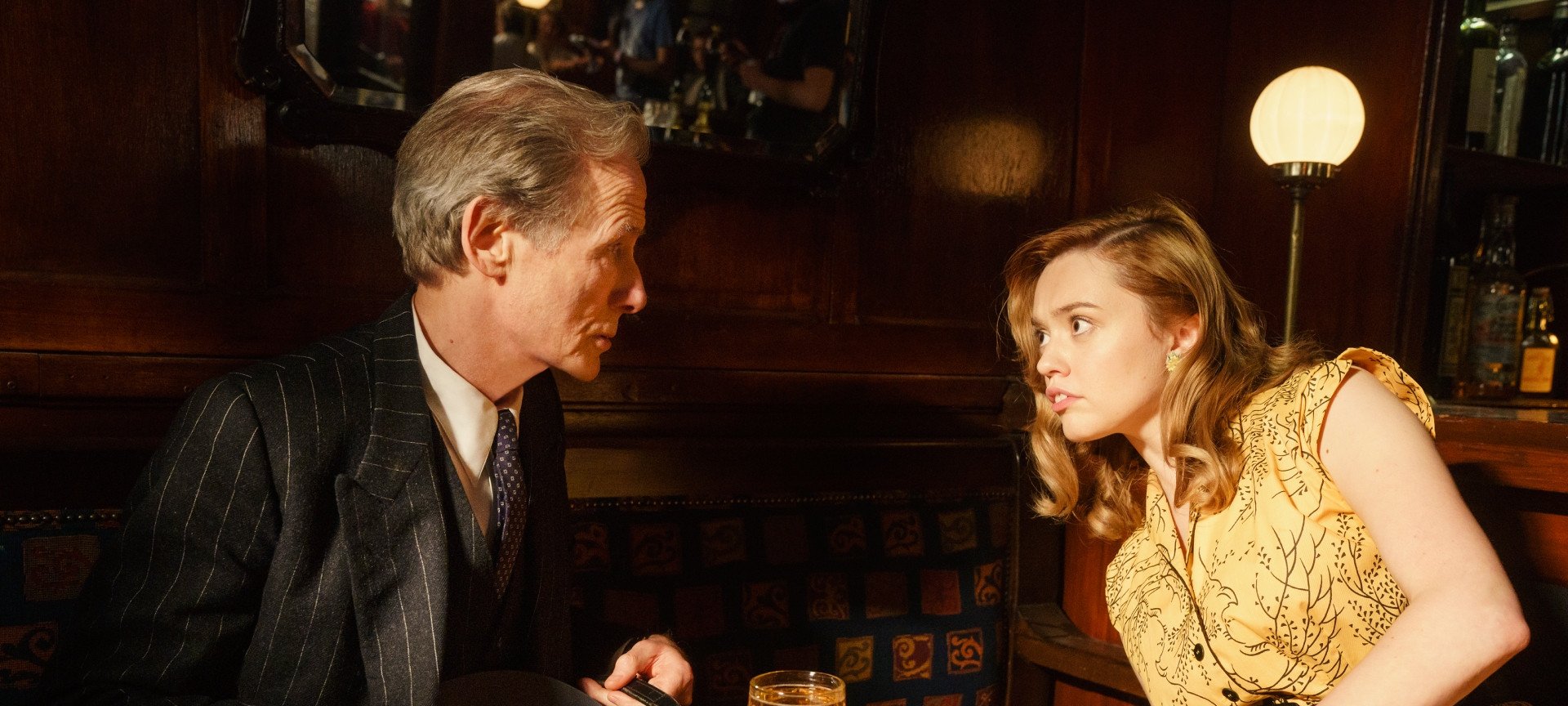
In Oliver Hermanus’s “Living” (2022), we witness a remarkable cultural translation that spans continents and decades. The film, starring Bill Nighy in a masterfully restrained performance, reimagines Akira Kurosawa’s 1952 masterpiece “Ikiru,” itself inspired by Leo Tolstoy’s “The Death of Ivan Ilyich.” This layered adaptation creates a fascinating meditation on bureaucracy, mortality, and the search for meaning in one’s life.

I watched this movie last Monday, January 6, and since I couldn’t come up with any New Year’s resolutions, I figured I’d use this movie as a bit of a wake-up call during that time of year when SAD usually kicks in, leaving me feeling as bare as a dormant tree. It will serve as a reminder that there is more to life than killing time and adjusting your reactions to whatever is thrown at you.

The film transposes Kurosawa’s narrative from post-war Tokyo to 1950s London with remarkable precision. The setting shift illuminates fascinating parallels between Japanese and British societies – both deeply hierarchical, bound by tradition, and struggling with the weight of their own formalities. Where Kurosawa’s film depicted Japanese bureaucracy through the lens of post-war reconstruction, Hermanus explores British civil service during the dawn of the welfare state.

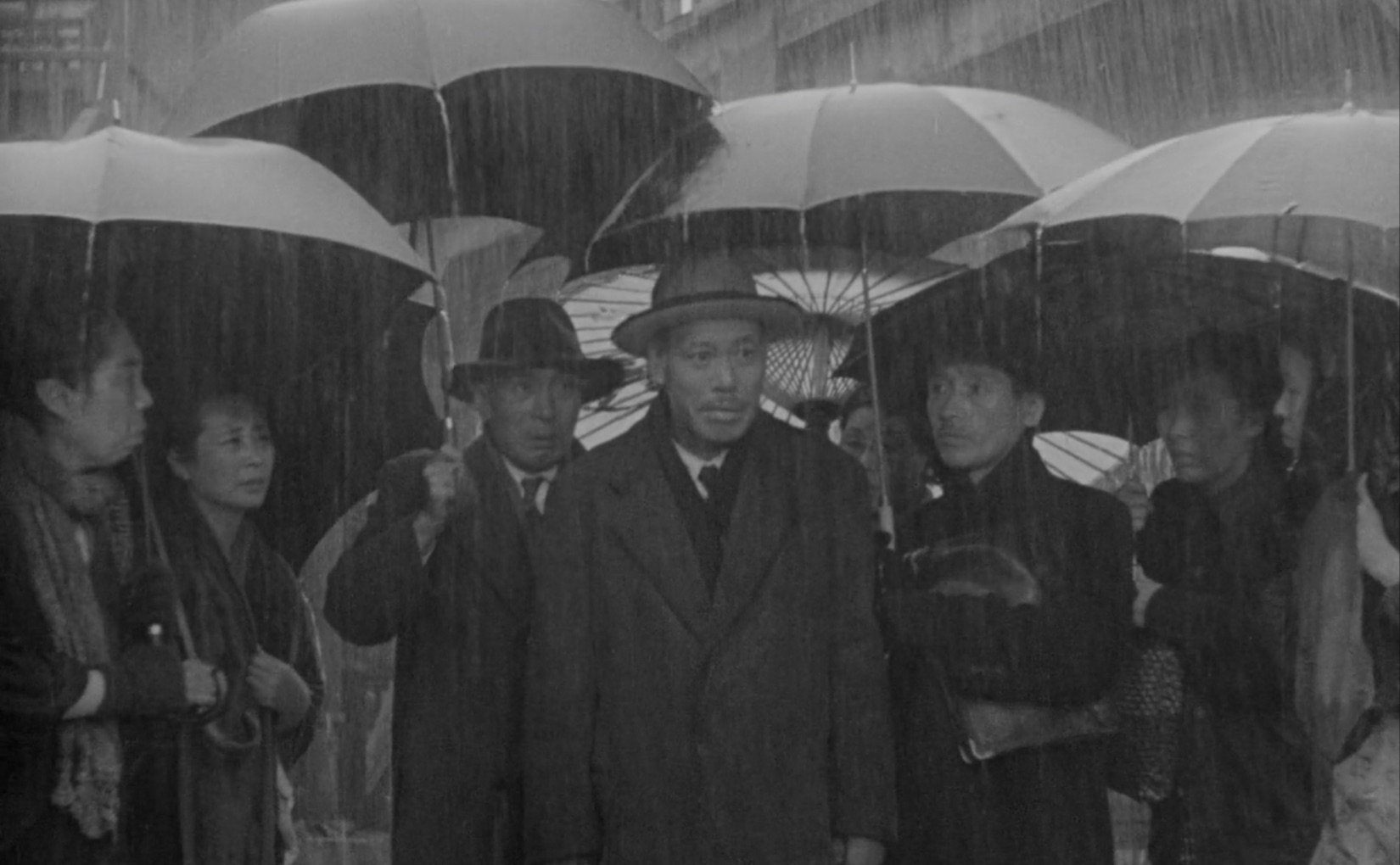
The film’s portrayal of working life in 1950s London is meticulously crafted. The film’s opening credits sequence serves as a masterful visual overture to its themes of conformity and class structure. Shot from above, we witness a mesmerizing choreography of dark-suited men crossing London Bridge, their bowler hats creating a hypnotic pattern of black circles moving in mechanical precision. This aerial view transforms individual civil servants into an abstract pattern – a visual metaphor for the system’s absorption of individual identity.

The sequence pays homage to the famous “Umbrella Scene” in Kurosawa’s “Ikiru,” but recontextualizes it for 1950s London. Where Kurosawa used umbrellas to suggest the anonymity of bureaucratic life, Hermanus employs the bowler hat – a quintessentially British symbol of middle-class respectability. The camera’s careful composition turns these hats into a kind of musical notation, with the men’s movements creating a visual rhythm that echoes the mechanical nature of their working lives.

The credits themselves, appearing in a clean, period-appropriate typeface, float above this sea of conformity. Their precise placement and timing work in concert with the movement below, creating a multi-layered opening that establishes both the film’s aesthetic restraint and its concern with systems and structures.

As the sequence progresses, we begin to distinguish Mr. Williams among the crowd – a feat that becomes significant only in retrospect, as we watch him gradually break free from this uniformity throughout the film. The way he emerges from this abstract pattern of hats and suits foreshadows his journey from anonymity to individuality.

The Public Works department where Mr. Williams (Nighy) serves as a senior civil servant becomes a microcosm of British society. The carefully arranged desks, the ritualistic shuffling of papers, and the precise adherence to tea times all speak to a system where order masks stagnation.

Costume designer Sandy Powell crafts a visual hierarchy that speaks volumes about social status and personal transformation. The film opens with a sea of identical bowler hats and dark suits flooding London Bridge – a powerful image of conformity within the civil service. Mr. Williams’s bowler hat serves as a symbol of his position and the rigid system he inhabits. When illness forces him to leave it behind, its absence marks the beginning of his transformation.

The subsequent adoption of a Borsalino hat represents more than a mere change in headwear. The Italian-made fedora, with its softer lines and continental associations, symbolizes Mr. Williams’s gradual liberation from the constraints of his former life. This subtle costume change speaks to a broader rebellion against the suffocating propriety of British bureaucracy.

The precision in costume extends beyond headwear. The gradual loosening of Mr. Williams’s tie, the eventual unbuttoning of his collar, and even the slight dishevelment of his usually impeccable suit all chart his journey from rigid conformity to a more authentic existence. These changes are particularly striking against the unchanged appearance of his colleagues, who remain locked in their sartorial prison.

Wearing Existence: Costume as Existential Metaphor

The costume design in both “Ikiru” and “Living” serves as a powerful visual metaphor for the existential journey that Tolstoy first explored in “The Death of Ivan Ilyich.” Each film uses clothing to express both the weight of social conformity and the gradual awakening to authentic existence, though they do so through distinctly different cultural vocabularies.

The Uniform of Non-Existence

In both films, the protagonists’ initial costumes represent what Tolstoy called a life lived “most ordinarily” – a form of spiritual death disguised as propriety:

– Watanabe’s dark suits and hat in “Ikiru” reflect the standardization of post-war Japanese bureaucracy, where Western business attire represented both modernization and loss of traditional identity

– Mr. Williams’s bowler hat and precisely tailored suit in “Living” embody the British civil service’s rigid hierarchy and emotional suppression

These initial costumes serve as armor against life itself, much as Ivan Ilyich’s dedication to propriety served as a shield against authentic experience.

The Gradual Undressing of the Soul

Both films use subtle changes in costume to chart their protagonists’ awakening:

In “Ikiru”:

– Watanabe’s gradual dishevelment mirrors his breaking free from social constraints

– His hat, initially perfectly positioned, begins to sit askew

– The loosening of his tie reflects his loosening grip on social conventions

– His final appearance in the swing scene, where his clothing moves freely in the snow, suggests a return to childlike authenticity

In “Living”:

– The loss of the bowler hat marks the first crack in Mr. Williams’s facade

– The Borsalino hat represents not just rebellion but a conscious choice of a new identity

– The subtle relaxing of his suit’s precision mirrors his internal liberation

– His final outfit maintains dignity while suggesting comfort in his own skin

The way each film handles this sartorial journey reflects deep cultural differences:

– Watanabe’s transformation involves a more complete dishevelment, reflecting Japanese culture’s understanding of liberation as a form of surrender

– Mr. Williams’s changes are more subtle, suggesting the British capacity for rebellion within conformity

– Both contrast with Tolstoy’s Ivan Ilyich, whose physical deterioration serves as the primary metaphor for his spiritual transformation

Class, Clothing, and Authenticity

Each film uses costume to explore how class structures inhibit authentic existence:

In “Ikiru”:

– The contrast between bureaucrats’ Western suits and the working-class traditional clothing

– The young office girl’s modern dress representing post-war freedom

– Watanabe’s final dishevelment as a rejection of class-based propriety

In “Living”:

– The precise gradations of suit quality marking civil service ranks

– The young woman’s colorful clothing suggesting life outside the system

– Mr. Williams’s Borsalino as a subtle sign of continental sophistication challenging British class rigidity

The Final Garment

Both films end with powerful costume statements:

– Watanabe dies in his loosened, snow-covered clothing, suggesting a final liberation from social constraints

– Mr. Williams’s final appearance shows him in his modified uniform – the Borsalino replacing the bowler – indicating that true liberation can occur within, rather than in rejection of, one’s social role

These costume choices echo Tolstoy’s message that awareness of death can lead to authentic life, but they do so through carefully chosen cultural idioms. The Japanese dishevelment and the British modified propriety represent different paths to the same truth: that genuine existence requires shedding, or at least transforming, the uniforms society demands we wear.

Beyond the Physical

In all three works, clothing serves as a metaphor for what Tolstoy called the “fictional life” – the life lived according to external expectations rather than internal truth. Both films use costume design to visualize what Tolstoy could only describe: the gradual awakening from this fiction to authenticity.

The genius of both adaptations lies in recognizing that this universal journey must be expressed through particular cultural languages of dress and deportment. In doing so, they make Tolstoy’s abstract existential concerns tangible and immediate, showing how the great questions of existence play out in the minute details of how we present ourselves to the world.

The Existential Thread: From Tolstoy to Kurosawa to Hermanus

At the heart of “The Death of Ivan Ilyich,” Tolstoy poses a devastating question: “What if my whole life has been wrong?” This existential inquiry echoes through both “Ikiru” and “Living,” each adaptation finding its own cultural language to explore this universal concern. The visual grammar of both films serves this central question, though they approach it through distinctly different cultural prisms.

Tolstoy’s novella examined this question through the lens of 19th-century Russian society, where Orthodox Christianity and aristocratic values shaped the understanding of a “proper life.” Kurosawa translated this inquiry into post-war Japanese society, where questions of purpose became particularly acute amid reconstruction and changing values. Hermanus relocates it to 1950s Britain, where class structures and emotional restraint created their own form of spiritual imprisonment.

In each iteration, the protagonist’s awakening to life’s true meaning is preceded by a recognition of social performance. Ivan Ilyich realizes his life has been lived “most simply and most ordinarily and therefore most terribly.” Kurosawa’s Watanabe finds that his decades of stamping papers have produced nothing of value. Mr. Williams discovers that his perfect embodiment of civil service propriety has been a form of living death.

Visual Languages of Awakening

Where Tolstoy used precise prose to dissect his protagonist’s spiritual crisis, both films employ careful visual strategies to externalize this internal journey:

– Kurosawa uses stark contrast and dramatic weather to reflect Watanabe’s emotional states, with snow and rain serving as powerful metaphors for cleansing and renewal.

– Hermanus employs the gradual softening of visual rigidity – from the geometric patterns of bowler hats to the free-flowing movement of children in the playground – to show Mr. Williams’s liberation from social constraints.

Both films share a crucial understanding: that the answer to Tolstoy’s terrible question lies not in grand gestures but in small, meaningful actions. Watanabe’s playground and Mr. Williams’s park represent more than public works projects – they are physical manifestations of their creators’ breakthrough to authentic living.

The Weight of Time

All three works deal poignantly with time’s passage:

– Tolstoy’s Ivan Ilyich realizes too late that his life has been misspent

– Kurosawa’s Watanabe races against time to complete his playground

– Mr. Williams’s measured transformation suggests that even a brief period of authentic living can redeem a lifetime of conformity

Cultural Translations of Truth

What makes both film adaptations remarkable is how they maintain Tolstoy’s essential truth while speaking through their own cultural idioms:

– Kurosawa expresses it through the lens of giri (duty) transformed into meaningful action

– Hermanus finds it in the British capacity for quiet revolution within seemingly rigid structures

Legacy and Memory

Each work concludes by examining how others remember the protagonist:

– Tolstoy’s mourners are primarily concerned with promotion opportunities

– Kurosawa’s bureaucrats briefly celebrate Watanabe before returning to their old ways

– Hermanus’s colleagues maintain their reserve, but with a new understanding glimpsed through their constrained emotions

Yet in all three versions, there’s a small group who truly understand the transformation they witnessed. This understanding becomes a kind of torch, passed from Tolstoy’s pages through Kurosawa’s lens to Hermanus’s camera – the possibility that one life, properly lived even for a short time, can illuminate the way for others.

In the end, “Living” accomplishes something remarkable: it takes Tolstoy’s existential question and Kurosawa’s humanist answer and filters them through the precise visual language of British society, creating something both culturally specific and universally resonant. Through its careful attention to visual detail – from the geometric patterns of bowler hats to the free movement of the final scenes – it shows how the great questions of existence can be explored through the smallest details of human behavior and social custom.

The film reminds us that the search for meaning, while universal, is always experienced through the particular – through specific hats and suits, through precise ways of moving through space, through culturally determined ways of showing or hiding emotion. In doing so, it achieves what great art should: it makes the universal deeply personal, and the personal universally understood, making you question (again) what is after all the purpose of living.

References and stills

Scene by Green Ikiru

Scene by Green Living

The Death of Ivan Ilyich (full text via University of Minnesota Twin Cities)

Learning about Movies episode 78

A veces uno amanece

“A veces uno amanece con ganas de extinguirse… Como si fuéramos velitas sobre un pastel de alguien inapetente. A veces nos arden terriblemente los labios y los ojos y nuestras narices se hinchan y somos horribles y lloramos y queremos extinguirnos… Así es la vida, un constante querer apagarse y encenderse.”

Julio Cortázar in Rayuela

Algo hermoso termina


  Todos los días del mundo
                                           algo hermoso termina.

                                                     Jaroslav Seifert

Duélete: 
como a una vieja estrella fatigada
te ha dejado la luz. Y la criatura 
que iluminabas 
                       (y que iluminaba
tus ojos ciegos a las nimias cosas 
del mundo)
ha vuelto a ser mortal. 
Todo recobra 
su densidad, su peso, su volumen, 
ese pobre equilibrio que sostiene 
tu nuevo invierno. Alégrate. 
Tus vísceras ahora son otra vez tus vísceras
y no crudo alimento de zozobras. 
Ya no eres ese dios ebrio e incierto 
que te fue dado ser. Muerde
el hueso que dan, 
llega a su médula, 
recoge las migajas que deja la memoria.

© 2004, Piedad Bonnett
From: Tretas del débil

  Every day of the world
                                                     something beautiful ends.

                                                                   Jaroslav Seifert

Suffer:
as if you were an old, tired star, 
light has left you. And the creature
you lighted
                 (and who lighted
your eyes, blind to the world’s
trivial things)
is now mortal again. 
Everything recovers
its density, its weight, its volume,
the poor balance that supports
your new winter. Be glad. 
Your entrails are now again your entrails
and not coarse food of anxiety. 
You’re no longer that drunk and uncertain god
that you turned out to be. Bite
the bone they give you,
down to the marrow, 
pick up the crumbs memory leaves behind.

© Translation: 2005, Nicolás Suescún