Flying at dawn

Disconnected thoughts at Frankfurt airport

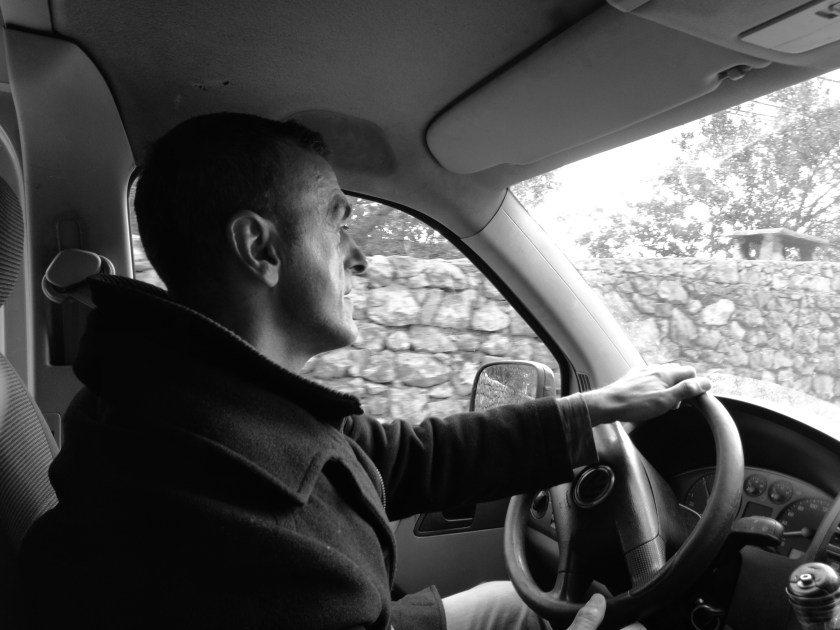
The taxi was early, it arrived at 4.20 a.m. and the driver was, surprisingly, an older gentleman. Drivers working this shift tend to be younger. His son, who has been living in London for the past eleven years, called. He was embarrassed by the language used. He told me his younger son is going to be a father soon and that his eldest daughter goes to India every month because she works as a production manager in a textile company. He had an empire once, he says. And then it was all over. His mother died after a heated argument with his brother. She had a stroke. Within months his father killed himself and his beloved older brother died of cancer. For reasons he cannot explain, he convinced himself that his wife was to blame. He divorced her. He was seeing a psychiatrist and was put on heavy medication. Maybe because of that he had a car crash that sent him to hospital for almost two years. Nowadays, he just appreciates all the insignificant moments life has to offer. Maybe his children would take care of him and he wouldn’t need to drive a taxi anymore. He is proud, he wouldn’t have it. 

I wait until 5 so I can have a coffee before facing the security screening at the airport. If you ever travelled from Porto, you know it’s terrible, if you ever come here, be prepared for senseless long lines. 

On the flight to Frankfurt, I try to read the newspaper but I’ve only had two hours of sleep and just can’t manage to keep awake.

I have no idea how Frankfurt looks like beyond the airport. I have lost count of how many connecting flights I took from here, but I have never left the airport.

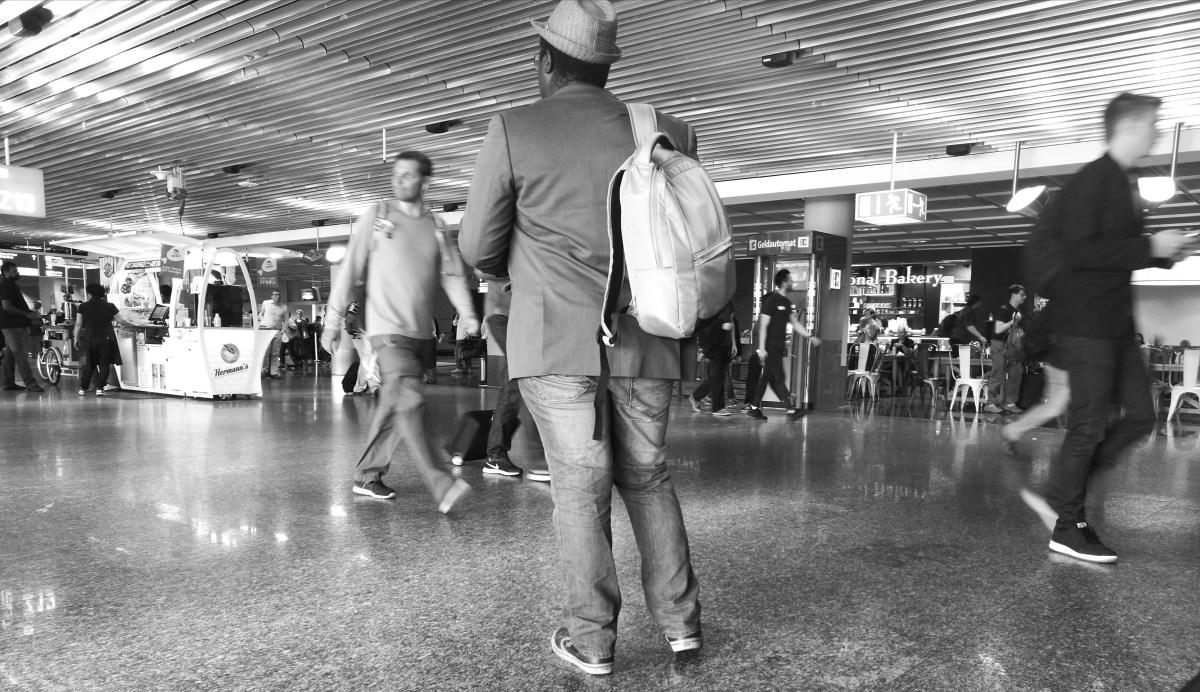
Boarding will be at gate Z 25, still two hours to go. I do enjoy people watching, so waiting, at least in airports as busy as this one, is never that much of a sacrifice.

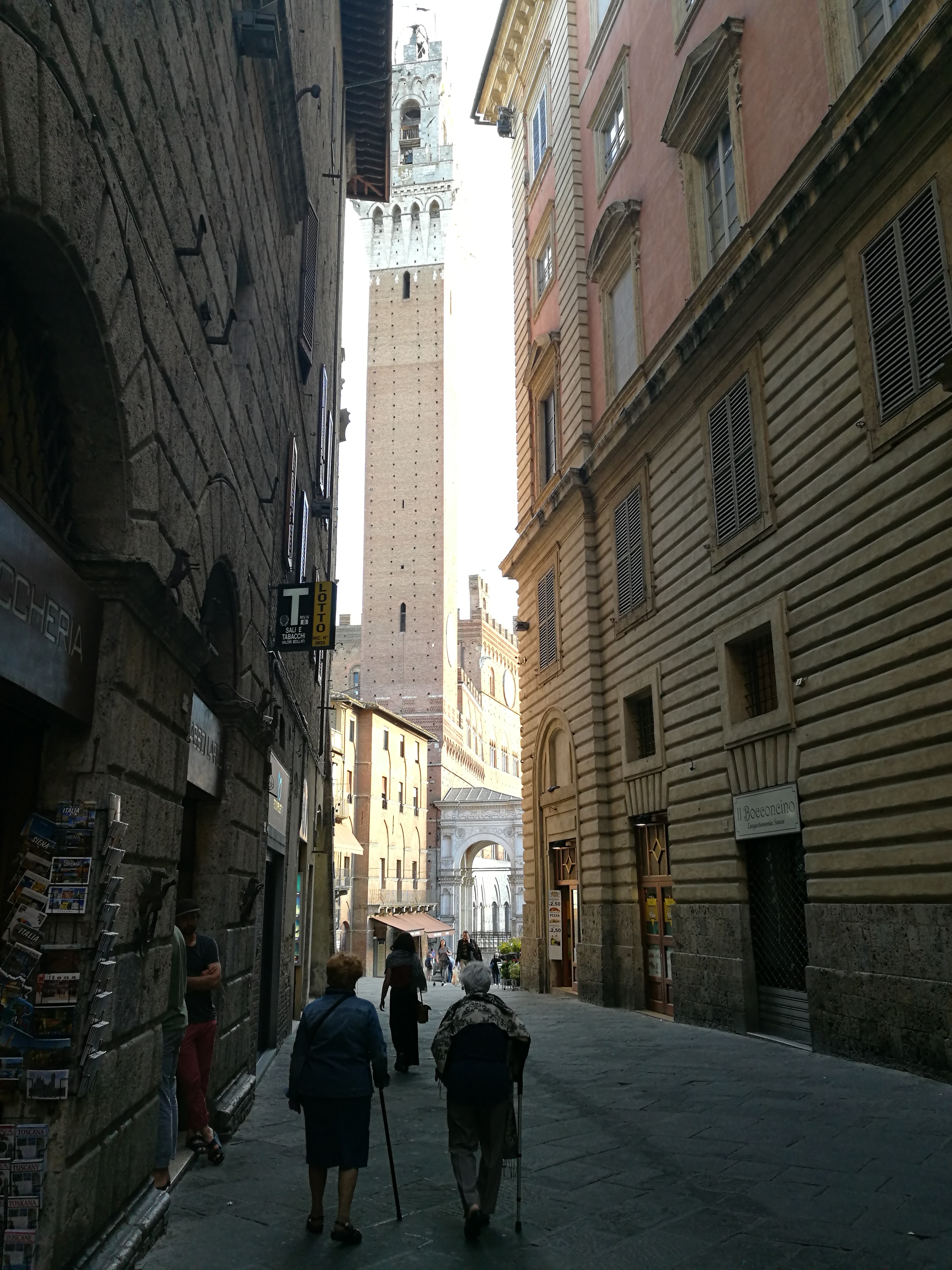
Four days ago I’ve travelled to Italy with someone who’s in law enforcement and had a keen interest in uniforms. Italian police forces seem to have a wide variety of uniforms that are astonishingly ill fitting given the country’s reputation for sartorial mastery. 

I think this part of terminal 1 is only for US bound flights. The Camel Smokers Lounge is empty. Wien and Zurich have the best lounges for people who insist on keeping disgusting habits. Like myself. In certain circumstances, smoking is a social activity; you get to chat with strangers sharing your (still) legal addiction. At airports, we all look like ashamed social pariahs and we keep to our smartphones.

Twenty minutes to boarding time. 

you will look back at us with astonishment

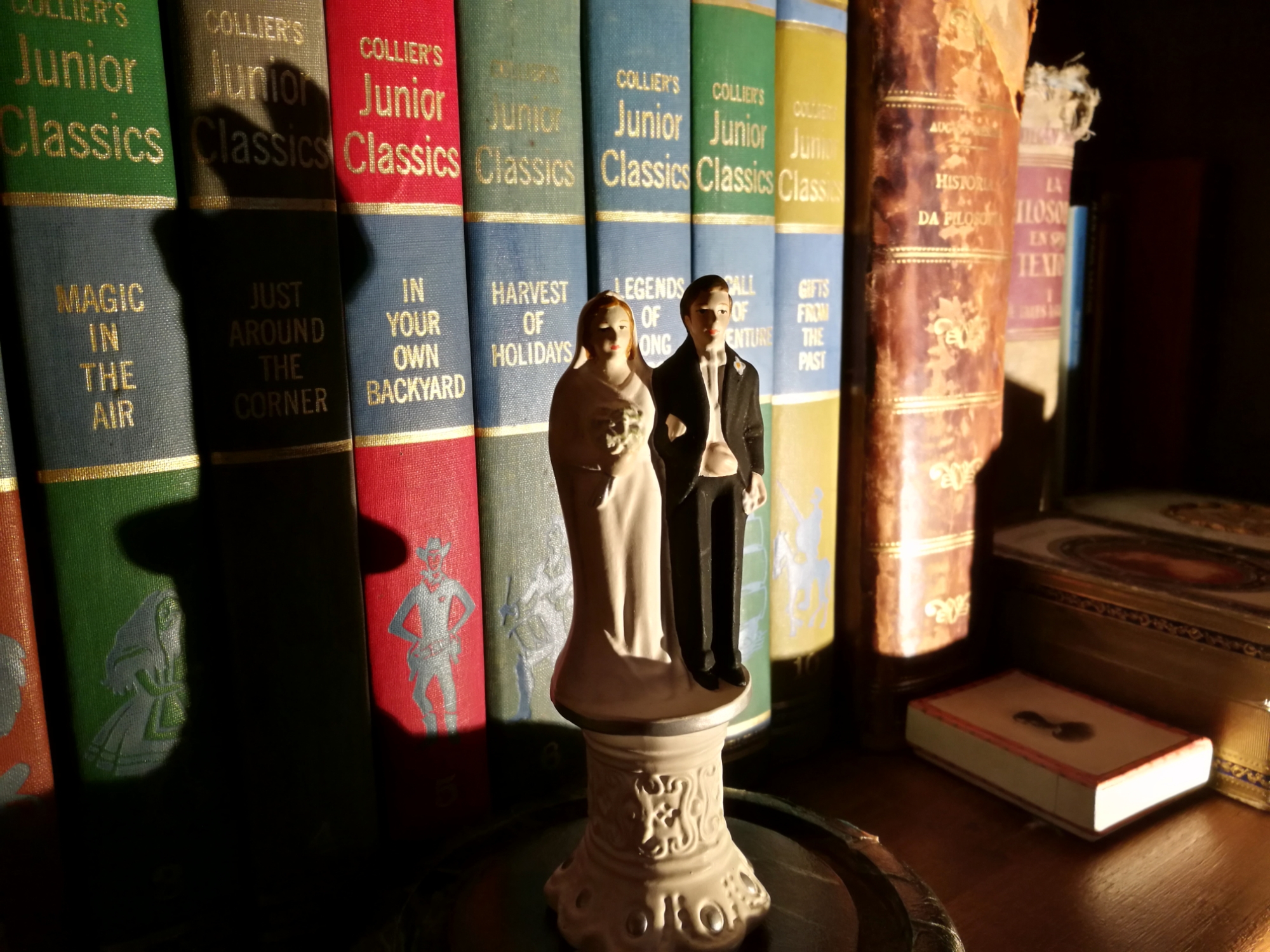
My grandparents got married in September 1948. This was their wedding cake figurine.

References

Olive Schreiner

Heritage

Who’s the audience

1.
Peony silks,

in wax-light:

that petal-sheen,

gold or apricot or rose

candled into-

what to call it,

lumina, aurora, aureole?

About gowns,

the Old Masters,

were they ever wrong?

This penitent Magdalen’s

wrapped in a yellow

so voluptuous

she seems to wear

all she’s renounced;

this boy angel

isn’t touching the ground,

but his billow

of yardage refers

not to heaven

but to pleasure’s

textures, the tactile

sheers and voiles

and tulles

which weren’t made

to adorn the soul.

Eternity’s plainly nude;

the naked here and now

longs for a little

dressing up. And though

they seem to prefer

the invisible, every saint

in the gallery

flaunts an improbable

tumble of drapery,

a nearly audible liquidity

(bright brass embroidery,

satin’s violin-sheen)

raveled around the body’s

plain prose; exquisite

(dis?)guises; poetry,

music, clothes.

2.
Nothing needs to be this lavish.

Even the words I’d choose

for these leaves;

intricate, stippled, foxed,

tortoise, mottled, splotched

-jeweled adjectives

for a forest by Fabergé,

all cloisonné and enamel,

a yellow grove golden

in its gleaming couture,

brass buttons

tumbling to the floor.

Who’s it for?

Who’s the audience

for this bravura?

Maybe the world’s

just trompe l’oeil,

appearances laid out

to dazzle the eye;

who could see through this

to any world beyond forms?

Maybe the costume’s

the whole show,

all of revelation

we’ll be offered.

So? Show me what’s not

a world of appearances.

Autumn’s a grand old drag

in torched and tumbled chiffon

striking her weary pose.

Talk about your mellow

fruitfulness! Smoky alto,

thou hast thy music,

too; unforgettable,

those October damasks,

the dazzling kimono

worn, dishabille,

uncountable curtain calls

in these footlights’

dusky, flattering rose.

The world’s made fabulous

by fabulous clothes.
Couture

Mark Doty, 1953

 The thousands of mirrors that reflect me


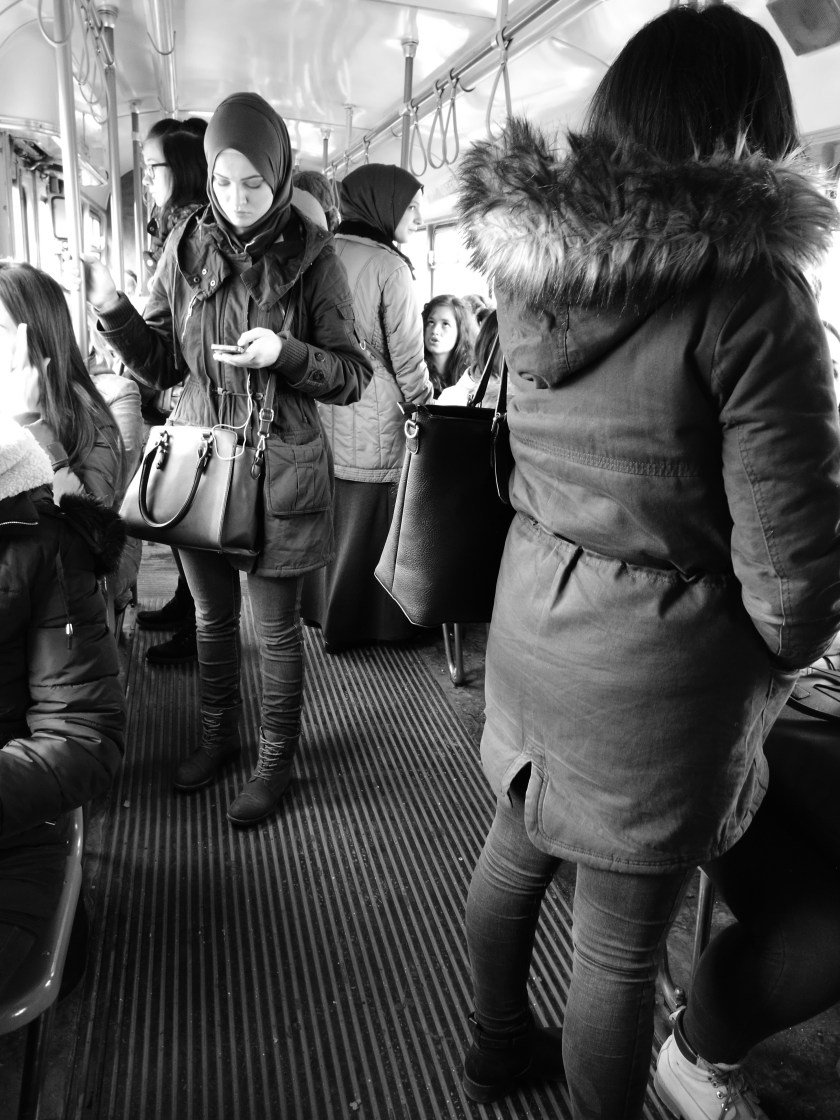
Self Reflecting as a fortuneteller (according to my husband) on the tram in Sarajevo

For I do not exist: there exist but the thousands of mirrors that reflect me. With every acquaintance I make, the population of phantoms resembling me increases. Somewhere they live, somewhere they multiply. I alone do not exist. Vladimir Nabokov, The Eye

With people like us our home is where we are not…


References

F. Scott Fitzgerald, This Side of Paradise

So much for escapism

After lunch I went to check Andrey Konchalovsky”s Paradise. This is an incredibly beautiful and intelligent movie about confronting extreme evil and dangerous ideas of a paradise that only exists at the expense of someone else’s living hell. 

I walked to my car and Brahms is still echoing in my mind. It takes me a minute or so to realize that the back window was smashed. Nothing stolen. Just petty vandalism or someone got interrupted. And this is, of course, nothing. But, it did work in bringing me down to earth and reality does have a way of making me feel extremely upset.

Now I’m home trying to convince myself I need to start packaging for Sarajevo and this is a place I have never been and the TV memories it evokes, make Konchalosky’s words about his own movie all the more important and, unfortunately, also inconsequential.

‘History is full of great tragedies, most of which remain in our minds as ancient misdeeds that couldn’t possibly be replicated in the present day. One of the most terrifying moments of our generation’s history was the rise of the Nazi party and the extermination of millions of Jews and others who did not fit into the Nazi ideal of a ‘perfect’ German ‘paradise’. These atrocities exposed the depths of mankind’s capabilities for evil and although these events happened in the past, the same kind of radical and hateful thinking is apparent today and threatening the lives and safety of many around the world. 

‘Paradise’ reflects on a twentieth century filled with great illusions buried in ruins, the dangers of hateful rhetoric and the need for mankind to use the power of love to triumph over evil. 

‘That which has happened is a warning. It must be continually remembered. It was possible for this to happen, and it remains possible for it to happen again at any minute. Only in knowledge can it be prevented. The danger here is in the unwillingness to know, the urge to forget, and the disbelief that all of this actually happened…’ The words of German philosopher Karl Jaspers are tied strongly to the central theme of ‘Paradise’, which urges us not to forget the truths of history, no matter how horrifying or inconvenient, so that we do not repeat them’.


At home

POEMA A UN GATO

No son más silenciosos los espejos
Ni más furtiva el alba aventurera;
Eres, bajo la luna, esa pantera
Que nos es dado divisar de lejos.

Por obra indescifrable de un decreto
Divino, te buscamos vanamente;
Más remoto que el Ganges y el poniente,
Tuya es la soledad, tuyo el secreto.

Tu lomo condesciende a la morosa
Caricia de mi mano.
Has admitido,
Desde esa eternidad que ya es olvido,
El amor de la mano recelosa.

En otro tiempo estás.
Eres el dueño
De un ámbito cerrado como un sueño.

Jorge Luis Borges, El oro de los tigres, 1972


To a cat

Mirrors are not more wrapt in silences
nor the arriving dawn more secretive;
you, in the moonlight, are that panther figure
which we can only spy at from a distance.
By the mysterious functioning of some
divine decree, we seek you out in vain;
remoter than the Ganges or the sunset,
yours is the solitude, yours is the secret.
Your back allows the tentative caress
my hand extends. And you have condescended
since that forever, now oblivion,
to take love from a flattering human hand.
You live in other time, lord of your realm —
a world as closed and separate as dream.

Jorge Luis Borges (translated by Alastair Reid, 1977)

one­-less-­days

“The Verb to Be,“ a Poem by André Breton

I know the general outline of despair. Despair has no wings, it doesn’t necessarily sit at a cleared table in the evening on a terrace by the sea. It’s despair and not the return of a quantity of insignificant facts like seeds that leave one furrow for another at nightfall. It’s not the moss that forms on a rock or the foam that rocks in a glass. It’s a boat riddled with snow, if you will, like birds that fall and their blood doesn’t have the slightest thickness. I know the general outline of despair. A very small shape, defined by jewels worn in the hair. That’s despair. A pearl necklace for which no clasp can be found and whose existence can’t even hang by a thread. That’s despair for you. Let’s not go into the rest. Once we begin to despair we don’t stop. I myself despair of the lampshade around four o’clock, I despair of the fan towards midnight, I despair of the cigarette smoked by men on death row. I know the general outline of despair. Despair has no heart, my hand always touches breathless despair, the despair whose mirrors never tell us if it’s dead. I live on that despair which enchants me. I love that blue fly which hovers in the sky at the hour when the stars hum. I know the general outline of the despair with long slender surprises, the despair of pride, the despair of anger. I get up every day like everyone else and I stretch my arms against a floral wallpaper. I don’t remember anything and it’s always in despair that I discover the beautiful uprooted trees of night. The air in the room is as beautiful as drumsticks. What weathery weather. I know the general outline of despair. It’s like the curtain’s wind that holds out a helping hand. Can you imagine such a despair? Fire! Ah they’re on their way … Help! Here they come falling down the stairs … And the ads in the newspaper, and the illuminated signs along the canal. Sandpile, beat it, you dirty sandpile! In its general outline despair has no importance. It’s a squad of trees that will eventually make a forest, it’s a squad of stars that will eventually make one less day, it’s a squad of one­-less-­days that will eventually make up my life.

Translated from the French by Bill Zavatsky and Zack Rogow via The Paris Review


Original Poem can be read here

Photo me by F.M.

Inside history

Two weeks ago I ordered a few used books from AwesomeBooks and inside A History of Fashion by J. Anderson Black & Madge Garland I found four letters from 1992. This was not one of those amazing discoveries that sometimes happens in the wonderful world of second-hand books. They are letters written to Gemma by friends that seem to have met her during a summer course in France while sharing a dorm and, most probably, a few giggling nights in a chatêau. I remember this kind of experience when I was a teenager sharing a room with Monica from Cugat del Valles at Cathy and Howard’s house in Cheltenham. In our minds, our friendship was forever. We also wrote letters to each other planning visits and other adventures. They never happened and we never met each other again. I wonder if Gemma and her friends kept in touch.

The first letter to Gemma was written on December 26. Her friend, whose birthday was December 2, got clothes, chocolate, a “very nice new desk” and soft toys, for her collection, as Christmas gifts. Maybe Gemma got A History of Fashion as a seasonal token of affection. In another letter, another friend writes about her mother who is a teacher and even though she looks like one, she is actually not that boring. But she swears quite a lot at home. In public, she assumes a “pompous” persona. Her dad is a vicar described in short and rather unpleasant words. She really hopes Gemma won’t be “put off” by her family. The other two letters are about boys. There’s Tristan, the knight in shining armour, with whom the girl is so smitten that she even talked to her mother about him. She didn’t tell her mum everything… There’s also Bob, fancied by another one of Gemma’s friends. Bob doesn’t seem very interested in going out with her. Maybe they could have one of those “open relationships, as they say”.

After the first excitement of finding these letters ( I do love all kinds of surprises and most especially if they are of the written kind), it took me a week to decide whether I should read them or not. I suppose the answer to this would always have to be no. These are, after all, personal stories traveling between Lincolnshire and Essex and I still read them. And even decided to share what I’ve read.

I remember C. telling me that he wished he would have the time to get rid of all his notes and letters before he died so no one would get to invade what was only his. We had this conversation again a few weeks ago. He has now given up on that sort of absolute control. Maybe it doesn’t make much sense to fight for privacy anymore. It does, however still bother me that I did not resist the temptation to invade someone’s else’s life.

There’s a full name and address (I didn’t Google them) on the envelopes; maybe you could just return them, J. suggests. What’s the chance that Gemma is still living in the same place? What’s the chance that twenty-five years later she is actually interested in getting some loose pieces of her life back? Would you want your adolescence to come back to you?

Natália

AUTORRETRATO


Espáduas brancas palpitantes:

asas no exílio dum corpo.

Os braços calhas cintilantes

para o comboio da alma.

E os olhos emigrantes

no navio da pálpebra

encalhado em renúncia ou cobardia.

Por vezes fêmea . Por vezes monja.

Conforme a noite. Conforme o dia.

Molusco. Esponja

embebida num filtro de magia.

Aranha de ouro

presa na teia dos seus ardis.

E aos pés um coração de louça

quebrado em jogos infantis.


Again I wish I could translate poetry without committing some kind of murder. I can’t.

This is the self-portrait of a bird in exile, whose arms know that they are wings trapped in a human body. Whose eyes migrate but never leave. A ship stranded by cowardice and abjuration. A Woman. Sometimes a female, sometimes a nun.

From night to day.

Strong, fragile, beautiful, talented and contradictory. They said. Very dark and very tender. A force of nature is the appropriate cliché. Unjust for someone who lived like a true original. In full. Strident in controversy, provocative and original, strong, excessive and forceful.  Witch and Lark of the abolition of opposites.

My words could never come close

a heart of china

broken in childish games

wp-1488928997973.jpeg

Era uma mulher inigualável. Nos caprichos, nos excessos, nas iras, nas premonições, nos exibicionismos, na sedução, na coragem, na esperança. Cantava, dançava, declamava, improvisava, discursava, polemizava como poucos entre nós alguma vez o fizeram, o somaram.

Fernando Dacosta

She was an unrivaled woman. In whims, in excesses, in anger, in premonitions, in exhibitionism, in seduction, in courage, in hope. She sang, danced, recited, improvised, discoursed, polemicized as few among us ever did and ever added.

wp-1488929141902.jpeg

Acho que a missão da mulher é assombrar, espantar. Se a mulher não espanta… De resto, não é só a mulher, todos os seres humanos têm que deslumbrar os seus semelhantes para serem um acontecimento. Temos que ser um acontecimento uns para os outros. Então a pessoa tem que fazer o possível para deslumbrar o seu semelhante, para que a vida seja um motivo de deslumbramento. Se chama a isso sedução, cumpri aquilo que me era forçoso fazer.

Natália Correia, in Entrevista (1983)

I think a woman’s mission is to haunt, to amaze. If a woman does not amaze … Besides, it is not only the woman, all human beings have to dazzle their peers, they have to be an event. We have to be a momentous event for each other. So one has to do one’s best to dazzle one’s fellow human, so that life can be a cause of wonder. If this is called seduction, I accomplished what I had to.

References

NATÁLIA CORREIA – 10 anos depois

One too many

Eyes blinded by the fog of things

cannot see truth.

Ears deafened by the din of things

cannot hear truth.

Brains bewildered by the whirl of things

cannot think truth.

Hearts deadened by the weight of things

cannot feel truth.

Throats choked by the dust of things

cannot speak truth.

Harold Bell Wright, The Uncrowned King

And yet, there is no amount of self help books, “keep it simple” formulas or declutter instructions that will tame the maximalist in me.  

A euphemism for self-indulgence most probably.