
Two things we must therefore root out: fear of distress in the future and the memory of distress in the past. The one concerns me no longer. The other concerns me not yet.
Seneca
Made with Gemini

Two things we must therefore root out: fear of distress in the future and the memory of distress in the past. The one concerns me no longer. The other concerns me not yet.
Seneca
Made with Gemini
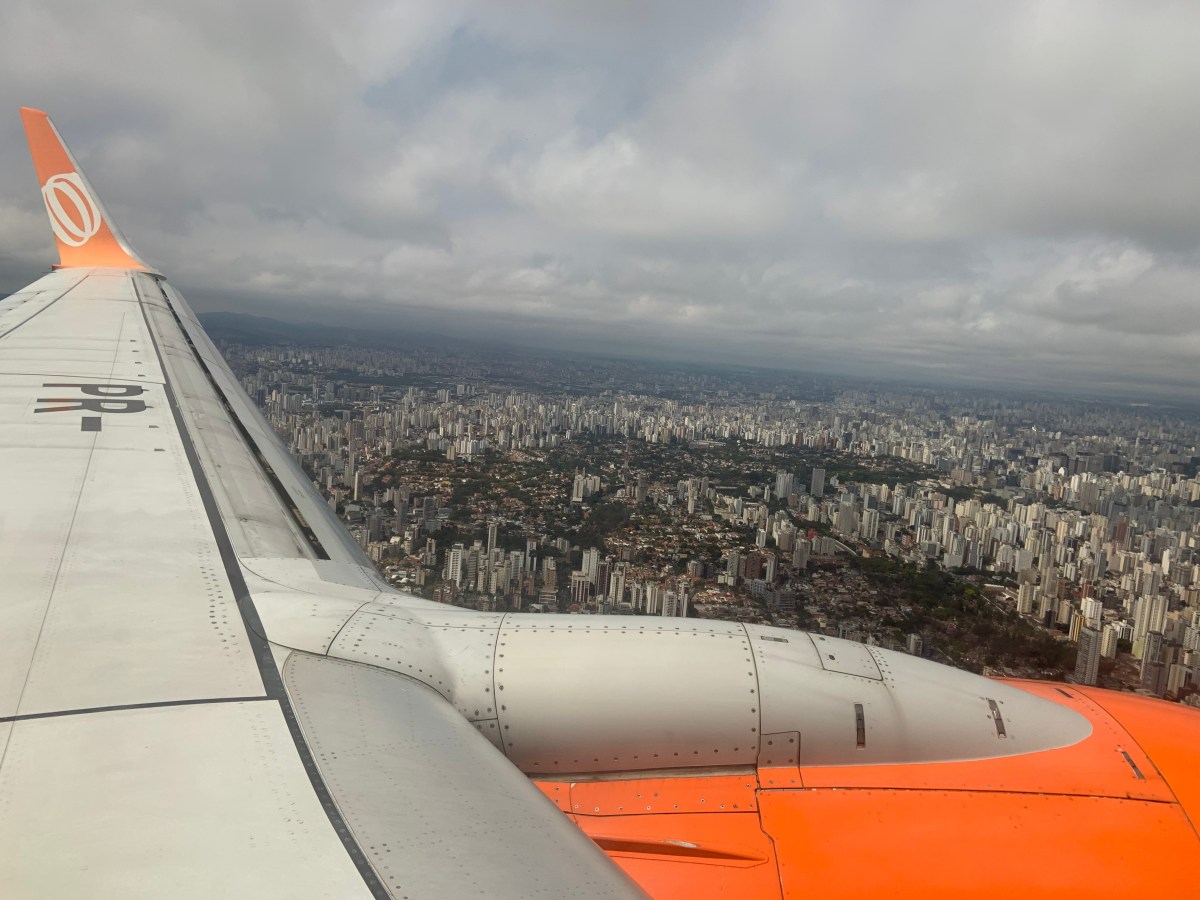
“Where do they go, the airplanes we never take?”
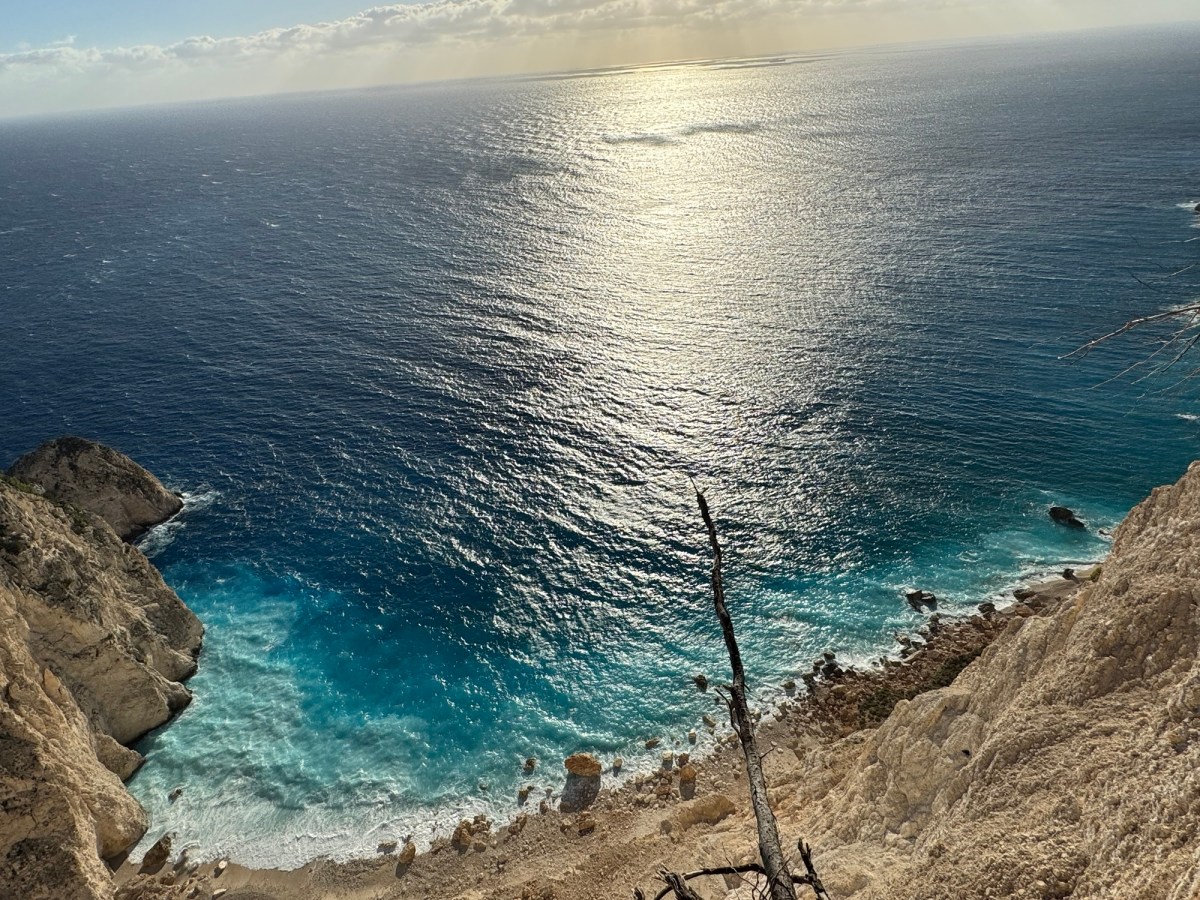
I would quit my job, sell my house and set out for Ithaka because I think I belong to that sea
If I were guaranteed not to fail… I think I’d attempt to be honest with myself. To understand why certain songs make me cry, what wound keeps resurfacing in different masks, what version of myself I’m most afraid to become.
Maybe the fear isn’t really about failing, but about what succeeding would mean. About choosing the untethered life over the anchored one.
As you set out for Ithaka
hope your road is a long one,
full of adventure, full of discovery.
Laistrygonians, Cyclops,
angry Poseidon—don’t be afraid of them:
you’ll never find things like that on your way
as long as you keep your thoughts raised high,
as long as a rare excitement
stirs your spirit and your body.
Laistrygonians, Cyclops,
wild Poseidon—you won’t encounter them
unless you bring them along inside your soul,
unless your soul sets them up in front of you.

Hope your road is a long one.
May there be many summer mornings when,
with what pleasure, what joy,
you enter harbors you’re seeing for the first time;
may you stop at Phoenician trading stations
to buy fine things,
mother of pearl and coral, amber and ebony,
sensual perfume of every kind—
as many sensual perfumes as you can;
and may you visit many Egyptian cities
to learn and go on learning from their scholars.

Keep Ithaka always in your mind.
Arriving there is what you’re destined for.
But don’t hurry the journey at all.
Better if it lasts for years,
so you’re old by the time you reach the island,
wealthy with all you’ve gained on the way,
not expecting Ithaka to make you rich.

Ithaka gave you the marvelous journey.
Without her you wouldn't have set out.
She has nothing left to give you now.

And if you find her poor, Ithaka won’t have fooled you.
Wise as you will have become, so full of experience,
you’ll have understood by then what these Ithakas mean

Ithaka By C. P. Cavafy
Sometimes the fantasy of guaranteed success lets us see what we really want, even if we have to walk toward it without guarantees.
Art has long been regarded as a vessel for truth, transcending mere aesthetics to probe the depths of human experience. For Hegel, art is a stage in the unfolding of the Absolute Spirit, rendering abstract truths sensuously intelligible. Harold Bloom, in Take Arms Against a Sea of Troubles, positions poetry as a shield against existential despair, a means of self-creation in the face of chaos. This essay explores how poetry, as an art form, bridges Hegel’s universal truth and Bloom’s individual salvation, arguing that poetry uniquely mediates between collective human consciousness and personal revelation.
Hegel’s philosophy situates art within the dialectical journey of the Absolute Spirit toward self-realization. In his Lectures on Aesthetics, he posits that art’s purpose is to “unfold the truth” by embodying spiritual ideals in material forms. Unlike philosophy, which abstracts truth into concepts, art makes truth palpable through imagery, sound, and narrative. Poetry, as the highest form of verbal art, synthesizes the concrete and the abstract, using language to evoke both emotion and intellect. For Hegel, great poetry—such as Greek tragedy or Shakespearean drama—captures the spirit of its age, reflecting societal values and conflicts. The truth here is historical and collective, a manifestation of humanity’s evolving self-awareness.
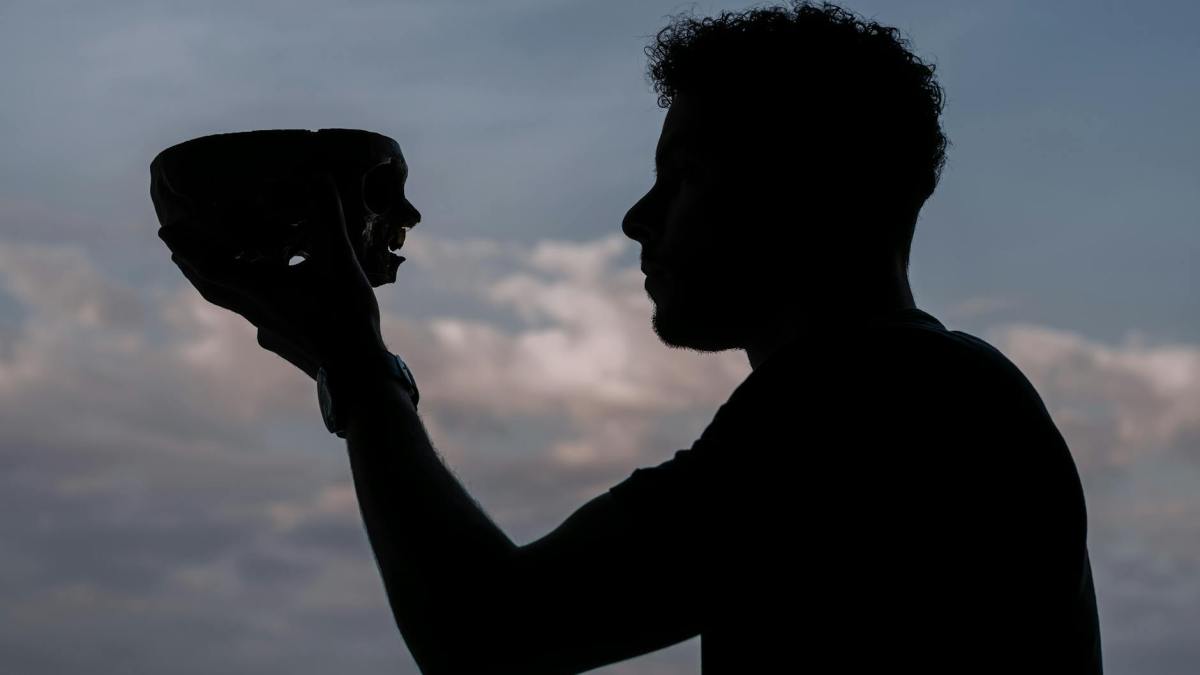
Bloom’s Take Arms Against a Sea of Troubles shifts the focus inward, framing poetry as a tool for individual survival. Drawing on Shakespeare’s Hamlet (“take arms against a sea of troubles”), Bloom argues that poetry equips readers to confront suffering and mortality. Through close engagement with canonical poets—from Milton to Whitman—readers forge their own identities, resisting the “anxiety of influence” by internalizing and reinterpreting poetic voices. For Bloom, truth is not universal but existential; it emerges in the interplay between reader and text, offering solace and self-knowledge. Poetry becomes a “mirror turned lamp,” illuminating the reader’s inner world while reflecting shared human struggles.
Hegel and Bloom converge in their belief that art reveals truths inaccessible to pure reason, but they diverge in scope. Hegel’s truth is teleological, part of humanity’s collective march toward freedom. Bloom’s is intimate, a dialogue between solitary reader and text. Yet poetry bridges these realms. Consider Wordsworth’s Tintern Abbey: Hegel might laud its embodiment of Romanticism’s spirit, while Bloom would emphasize its therapeutic role in reconciling memory and loss. Similarly, Emily Dickinson’s condensed verses distill metaphysical inquiries into personal lyricism, satisfying Hegel’s demand for sensuous form and Bloom’s call for existential courage.
Poetry’s power lies in its duality. It transforms abstract truths (Hegel’s “Absolute”) into visceral imagery, while inviting readers to project their lived experiences onto its language (Bloom’s “self-creation”). A Shakespearean sonnet about time’s passage speaks both to Renaissance cosmology and a modern reader’s fear of mortality. This duality ensures poetry’s endurance: it is both a cultural artifact and a personal companion.
Hegel and Bloom, though separated by centuries and aims, collectively affirm poetry’s role as a mediator of truth. For Hegel, it is a historical force; for Bloom, a lifeline. Together, they illustrate how poetry transcends its form to become a space where universal and personal truths coexist. In an age of fragmentation, poetry remains vital—not merely as a relic of the spirit’s journey, but as a living dialogue between the self and the sublime. As long as humans seek meaning in chaos, poetry will endure as both witness and weapon, unfolding truths that philosophy cannot touch and solace that history cannot provide.
Disclaimer: not really jotting down the first thing that comes to mind, practicing for a speech next week
References:
Harold Bloom, Take Arms Against a Sea of Troubles: the Power of the Reader’s Mind Over a Universe of Death (2020)
Hegel’s Aesthetics at Stanford Encyclopedia of Philosophy
In Federico Fellini’s masterpiece “La Dolce Vita” (1960), the protagonist Marcello Rubini wanders through a decadent Rome, encountering various women who represent different facets of desire, connection, and modern existence. Among these characters, two stand in fascinating contrast to each other: Sylvia, the exuberant American starlet, and Maddalena, the wealthy, world-weary heiress.
Sylvia, portrayed with iconic flair by Anita Ekberg, embodies pure enthusiasm for life. Her character arrives in Rome like a force of nature, commanding attention and transforming the ancient city into her personal playground. The famous Trevi Fountain scene captures her essence perfectly—wading into the water with childlike wonder while fully dressed in an evening gown, beckoning Marcello to join her in this spontaneous celebration of being alive.
What makes Sylvia so captivating is her unfiltered joy. She moves through the world with an almost supernatural confidence, unconcerned with social conventions or consequences. When she climbs the stairs of St. Peter’s Basilica, dances in nightclubs, or pets kittens in an empty apartment, she does so with complete presence in the moment. She represents a kind of freedom that seems increasingly elusive in modern society—the freedom to experience pleasure without cynicism.
Sylvia’s appeal is immediate, visceral, and larger than life. She is the embodiment of spectacle in a film that is itself concerned with spectacle. Yet her character remains somewhat untouchable, a fantasy that can be approached but never fully possessed.
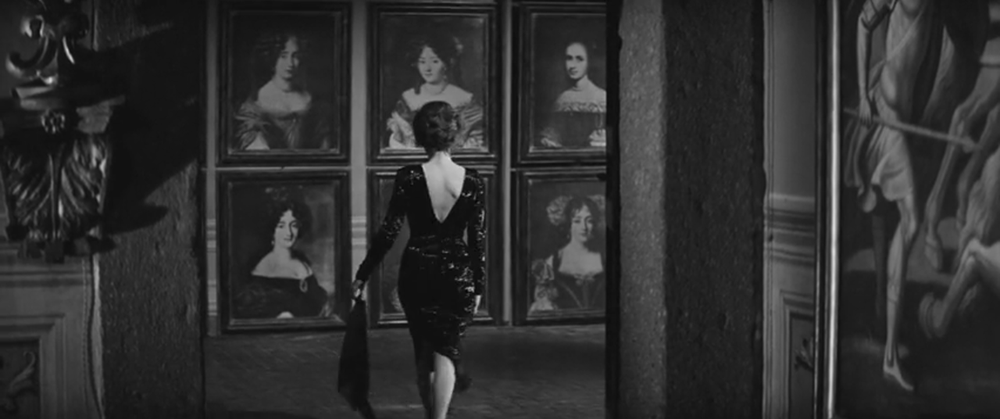
In stark contrast stands Maddalena, played with nuanced perfection by Anouk Aimée. Where Sylvia bursts with emotion, Maddalena presents a cool, composed exterior. Her elegance isn’t performative but ingrained—the natural result of someone who has seen all there is to see in Rome’s high society and found it wanting.
Maddalena navigates the night with a detached awareness that makes her all the more alluring. She’s not impressed by the trappings of wealth and fame because they are her everyday reality. Instead, she seeks authentic connection in a world of artifice, most memorably in the scene where she and Marcello communicate through the echo chambers of a flooded basement in a ruined aristocratic villa—a perfect metaphor for the distance that exists even in their moments of intimacy.
Her world-weariness isn’t simply cynicism but a form of wisdom. She understands the hollowness of “la dolce vita” because she has lived it fully. This knowing perspective gives her character depth and complexity that contrasts with Sylvia’s more straightforward exuberance.
The appeal of both characters creates an internal conflict familiar to many of us. Do we embrace life with Sylvia’s abandon, diving headfirst into experiences without reservation? Or do we move through the world with Maddalena’s sophisticated detachment, protecting ourselves from disappointment while seeking deeper meaning?
Fellini doesn’t present one approach as superior to the other. Instead, he uses these characters to illustrate the tensions of modern existence. Marcello is pulled between these poles throughout the film—between passion and detachment, innocence and experience, spontaneity and reflection. He does seem to reject flat out the emotional stability offered by Emma whose “sticky, maternal love” he despises.
What makes these characters so enduring is that they represent more than just different types of feminine appeal. They embody different philosophies of living, different responses to a world that simultaneously offers too much and not enough. Sylvia’s enthusiasm and Maddalena’s coolness aren’t just personality traits but strategies for navigating a changing society.
I would be Sylvia in the days I want to live as a fleeting dream, a force of nature that dazzles but never truly belongs. This is, I suppose, the luxury of anonymity. When we are the foreigner, no one really has any reference on how and who we are. Therefore, they have no idea on how we are supposed to be.
While Sylvia is the unattainable fantasy, Maddalena mirrors Marcello’s existential drift. She’s just as lost, but with a sharper self-awareness. A proud and typical GenX I, and most probably a lot of others reared on post punk and goth influences, resonate with depth, complexity, and the ache of searching for meaning in a world that feels hollow and could, thus, more easily be Maddalena.
Anouk Aimée plays her with this devastating coolness—luxury draped over emptiness. She craves love but sabotages ii. She’s too disillusioned to hope, yet too alive to stop searching. Fellini frames her suffering with such deliberate elegance that her loneliness becomes inseparable from her glamour. But this isn’t mere vanity—it’s a survival tactic, a way to exert control over the void.
Ah, the young girl at the beach—Fellini’s silent, enigmatic coda to La Dolce Vita. She’s the film’s great unanswered question, a glimmer of purity in a world of exhausted decadence. A waitress from the seaside café (played by Valeria Ciangottini), unnamed, barely speaking. Marcello meets her earlier when she shyly asks for his autograph. Unlike the jaded socialites and performers, she’s untouched by Rome’s corruption. Her white dress mirrors Sylvia’s, but without the erotic charge—it’s virginal, almost angelic.
She waves, but it’s ambiguous—is it farewell, or an invitation? The sea (a classic symbol of renewal) separates them. She calls to him across the water, but he can’t hear her (or won’t). Her words are lost in the wind—Fellini’s metaphor for Marcello’s spiritual deafness. She is the irreversible loss of one’s own innocence, not through fate, but through a thousand small surrenders.
An archaeologist
A writer
A theatre actress
A prima ballerina
A cello player
A fashion designer
An art historian
A spy
A political scientist
A professor
An artist
A gardener
When I Grow Up I Want to Be a List of Further Possibilities
Chen Chen
I used to love traveling no matter how. I now hate airports and the tiring processes entailed in flying somewhere .
I used to like road trips or, at least, the idea of road trips.
I think I still like trains.
I still have the fantasy of traveling on a cargo ship .
Reference
Caminante, no hay camino / Traveler, There Is No Road
by Antonio Machado
“Caminante, son tus huellas
el camino y nada más;
Caminante, no hay camino,
se hace camino al andar.
Al andar se hace el camino,
y al volver la vista atrás
se ve la senda que nunca
se ha de volver a pisar.
Caminante, no hay camino
sino estelas en la mar.”
Traveler, your footprints
are the only road, nothing else.
Traveler, there is no road;
you make your own path as you walk.
As you walk, you make your own road,
and when you look back
you see the path
you will never travel again.
Traveler, there is no road;
only a ship’s wake on the sea.
translated by Mary G. Berg and Dennis Maloney
Dear Nadine,
I haven’t written letters in so long that I’m not quite sure how to do this.
If you have made it as far into the future, I suppose you have managed to survive the anxiety and anger you were feeling when everything around you defied a logical explanation. Maybe you have learned that things are not as extreme as you perceive them. Although, being a Leo, I’m intrigued how you have managed to curb your tendency to overreact.
If you have made it as far into the future, I hope you have outgrown therapy or, at least, have found a therapist that does not seem to need help more than you do and, managed to open up and allowed yourself to be helped.
If you have made it as far into the future, I hope you danced as much and often as you could and that you have managed to read all the books you wanted to read and kept your to read pile always high.
If you made it as far into the future, I hope you have understood how to deal with the pain of losing loved ones and that you have kept your friends close by. I hope that living alone has not been too much of a burden and that you have enjoyed your freedom.
If you made it this far into the future, I guess you have mastered your horrible tendency to procrastinate. Maybe you followed through with all your plans and are now living in some Greek island surrounded by blue.
I hope you have always carried with you all the songs that have helped life make sense and that your inner soundtrack keeps growing.
I hope you have not gotten lost inside yourself. I hope you still remember.
I hope you have kept the passion and that you have not become indifferent to people, to beauty. I hope you still believe that elegance is a form of resistance.
I hope you have never stayed quiet in the face of injustice, that you have helped others and, that your world is much better than the one right now. I hope you haven’t given in.
I hope you have owned your choices and that you have always insisted on being the Sun and never a black hole.
Even if you do not look like the AI projected version of yourself, I hope your eyes keep showing that your name is Hope instead of impossible.
I hope you still like poetry even if you have never managed to write a single line of verse.
Dear future self
By JP Howard

If  I should ever forget you,
this is my love note to you

You were loved
You were somebody’s lover
You were loving
You held parts of all the women you loved,
somewhere deep in your generous heart

You were heartbroken
You were a heartbreaker too, girl
Sometimes you were heartache
Your heart never grew heavy though,
I remember that about you

You were silly
You were giggles
You were somebody’s Mama
You always wanted to be a Mama
Mama was the greatest title you ever had

You were jealous as fuck
You were selfish
You were sad
You held other folks’ sadness,
especially Mama’s sadness
You buried that deep in our heart

You were swag girl
Leo charm and confidence
Couldn’t nobody crack you up
as much as yourself

You were cute and you were vain
You wore lipstick under your mask
during a pandemic
because you were cute and you were vain

You loved your family
Your lover loved you for decades
Sometimes you would ask yourself,
How I get so lucky, girl?

You loved people
You were at home on a stage in front of a mic,
sitting with community in a circle,
or talking one on one with a friend
for hours on end in a coffee shop

You were a poet
You are a poet
This is your love poem to yourself, Juliet
References
Henry the V, Act 2, scene 4
On Saturday I went to see Pablo Larraín’s Maria with a a friend. My friend cried at the end of the movie. Surprisingly ( to me), I didn’t. I am not quite sure I liked it. Angelina Jolie presumably excels as the tragic Diva; Massimo Cantini Parrini’s costume design was impeccable, as it should, since the source material was already extraordinary as he acknowledges in this interview to Harper’s Bazaar:
Working on the costumes for Maria Callas was not that difficult in terms of finding or drawing inspiration, as Maria Callas was a diva and she had been interviewed and photographed by so many different journalists and people. But beyond the most iconic photographs that we had all seen sooner or later of Maria Callas, I was also able to dig deeper and deeper in my research to find other pictures of where she was portrayed at homes of friends, dining out—a number of events that were not typically those linked to her professional life. That was a great inspiration, and it allowed me to imagine and create her wardrobe, which spans throughout the ’50s, ’60s, and ’70s.
Costume design in María not only transforms Jolie into La Divina, it also serves as a visual metaphor for the film’s meditation on artistry, identity, and transformation. Through María Callas’ wardrobe, Larraín and Massimo Cantini Parrini articulate the tension between art as a living, breathing force and art as a frozen, ornamental relic
Callas was an artist shaped by both her voice and her image. Her costumes reflect this duality. Onstage, she is adorned in grand, operatic gowns. These gowns are heavy with history, as if carrying the weight of her own myth. These pieces emphasize how she became an icon, a living masterpiece. But offstage, her wardrobe shifts to softer, more intimate attire, revealing the woman beneath the legend. The contrast suggests that while the world sees only the diva, Callas herself wrestles with her own identity beyond the stage.
In her later years, Callas’ wardrobe takes on a different role. The extravagant fashion—high collars, structured silhouettes, luxurious fabrics—becomes almost like a museum exhibit. It serves as a way of preserving an identity that is slipping away. Even as her voice fades, her costumes remain striking. They seem like the last remnants of the persona she spent a lifetime constructing.
As Callas grapples with the loss of her voice, her costumes become more muted, understated—less fireworks, more elegy. The colors may darken, the embellishments may soften, mirroring the internal shift from performance to reflection.
A very long introduction to answer that if I could be someone else for a day, I would choose to be this kind of genius. Not the one shown in the movie. While not everyone knows what it’s like to command an opera house or possess extraordinary talent, we all know and experience, in very different measures, the personal side of decline.
To be able to experience for one day what it would feel like having lightning running through your veins, knowing that every note you produce is pure artistic truth. The sheer physical and emotional power required to project that voice, to inhabit roles like Tosca or Norma so completely that the boundary between performance and reality almost disappears…
To know not adoration but to live with the certainty that your extraordinary gift has made a difference in the world through beauty.
Now, I am the same age as Callas was when she died and realize that I really wished I could be myself everyday even if there are so many more spectacular lives than my own.
131 days ago life took a weird, sharp turn after a few months of my driving it erratically in and out of course. Because I am prone to think of my life as a movie or perhaps as a series of pilot episodes in shows that never get aired, I failed to realize that maybe real life was happening. And I have a problem with this. My mind anticipates all kinds of scenarios, dramatic dialogues and plot twists, failing to see what’s right in front of me, failing to hear Caetano‘s warning that life is after all real and skewed. I insist on other melodies, I insist on not getting tired of hoping that one day I will get to be everything.
My homeless heart
Wants to keep the world
In me
131 days ago we coincided in space and time; he told me I was making him travel, I didn’t realize he was making me come home. For once, life was not about being the rebel in a made up cause, it was not about coming up with the perfect character for the occasion, it was not about trying to be perfect, it was not about packing and going somewhere trying to find whatever is needed at the moment to feel more alive. It was about staying. I didn’t know that to stay took a special kind of courage. I have spent well over seven thousand days of my adult life being adventurously brave, going everywhere, doing everything, preferably on my own. Along the way I collected all the clichés of falling madly, deeply and foolishly in love, of getting married and divorced, of hurting and getting hurt and feeling that I have committed the worse sin my twelve years of Catholic, yet somewhat liberal, education helped me identify, I have wasted my time and have, of course, ended up being wasted by it. Staying, in the same way as getting older, is not for the faint of heart. Staying means you have to face life as it is not as you think it was meant to be.
131 days ago I begun to understand what years of fictional manipulation have done to me, how they have created the most unrealistic expectations and contributed to an almost complete emotional disarrangement. In the midst of my inability to deal with what was happening, I have read these wise words:
Your deepest beliefs about seduction were carefully crafted by high-capitalist strategists. Lust and fantasy are opiates of the masses, easily manipulated into shapes that human animals fall for, over and over again.
I have never really taken advice columns very seriously, probably because I tend to be a bit of a snob, but every single word Heather Havrilesky poured into her column of February 28, struck a chord and I understood that yes, it was really about surrendering to reality with no futile embellishments. And still, 131 days were not enough to learn that the assumptions one makes about one self and others are also created by all the nonsense around you and that they are not real. For 131 days I have promised myself, almost everyday, that I was not going to fall in that trap, I was going to let life get real because it might not be the most glamorous or exciting place to be but you have at least a chance of not seeing life disappear without getting to live it. But, self-sabotage is a powerful force, “a way of avoiding that moment of showing up, of facing potential loss, of being strong enough and courageous enough to surrender to the unknown — but also, to surrender to the goodness of ordinary human beings.” 131 days ago, getting hurt living my fictional life was easy enough to deal with because fictional feelings tend to be overtly dramatic but shallow.
Getting hurt in real life gets you broken.
References
Caetano Veloso, O quereres, Coração Vagabundo
William Shakespeare, Richard II

A smile that blinds with blitheness, overspending
Upon this gasping sightless round of fun …
Das Karussell, Jardin du Luxembourg, Rainer Maria Rilke
Photo: San Diego, 2014
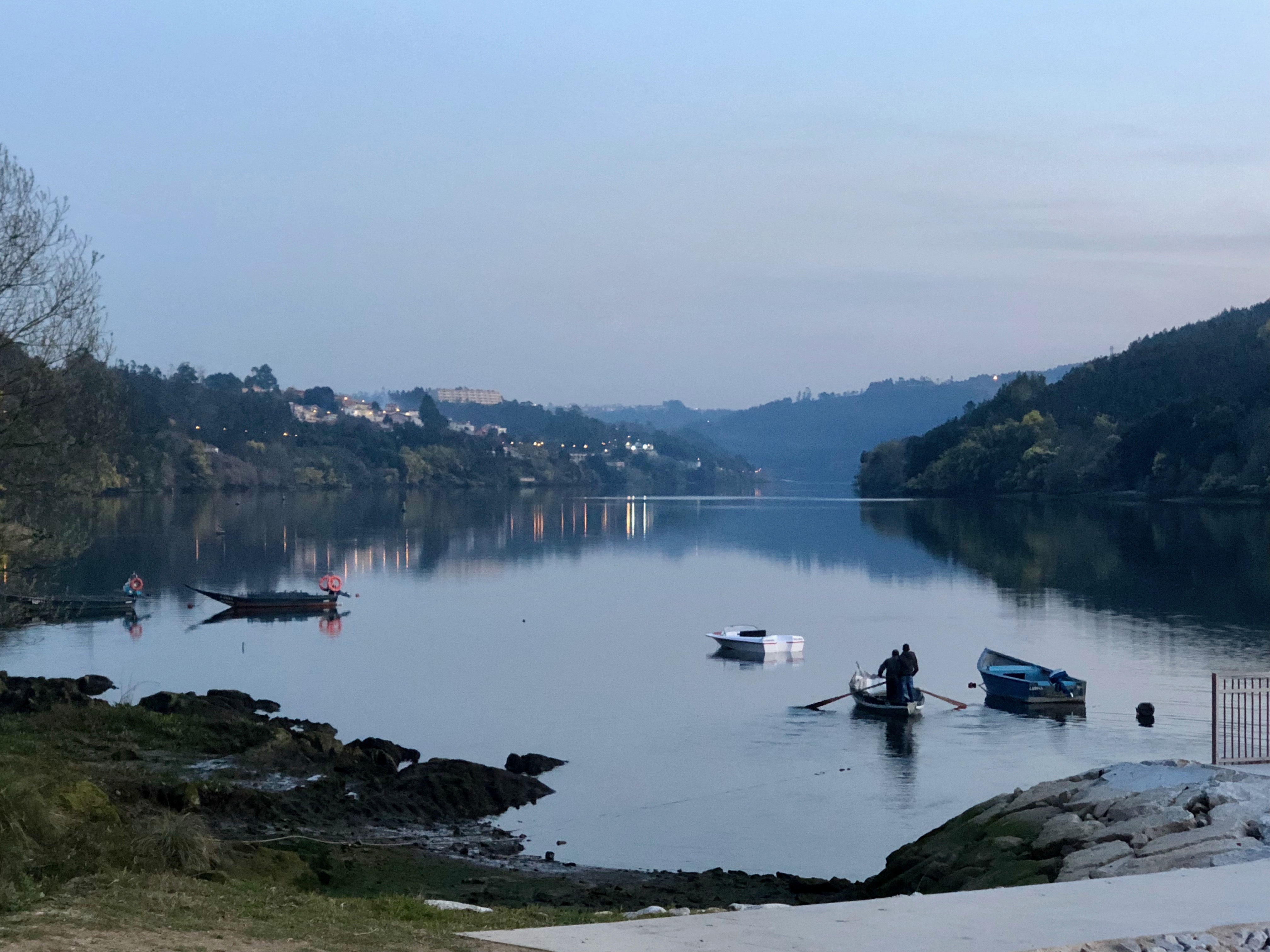
And the World is different. And it’s summer in February even though it’s still the Northern Hemisphere.
Photo: last Sunday, somewhere in Gondomar
Quiero que sepas
una cosa.
Tú sabes cómo es esto:
si miro
la luna de cristal, la rama roja
del lento otoño en mi ventana,
si toco
junto al fuego
la impalpable ceniza
o el arrugado cuerpo de la leña,
todo me lleva a ti,
como si todo lo que existe,
aromas, luz, metales,
fueran pequeños barcos que navegan
hacia las islas tuyas que me aguardan.
Ahora bien,
si poco a poco dejas de quererme
dejaré de quererte poco a poco.
Si de pronto
me olvidas
no me busques,
que ya te habré olvidado.
Si consideras largo y loco
el viento de banderas
que pasa por mi vida
y te decides
a dejarme a la orilla
del corazón en que tengo raíces,
piensa
que en ese día,
a esa hora
levantaré los brazos
y saldrán mis raíces
a buscar otra tierra.
Pero
si cada día,
cada hora
sientes que a mí estás destinada
con dulzura implacable.
Si cada día sube
una flor a tus labios a buscarme,
ay amor mío, ay mía,
en mí todo ese fuego se repite,
en mí nada se apaga ni se olvida,
mi amor se nutre de tu amor, amada,
y mientras vivas estará en tus brazos
sin salir de los míos.
Si tu me olvidas, Pablo Neruda
I want you to know
one thing.
You know how this is:
if I look
at the crystal moon, at the red branch
of the slow autumn at my window,
if I touch
near the fire
the impalpable ash
or the wrinkled body of the log,
everything carries me to you,
as if everything that exists,
aromas, light, metals,
were little boats
that sail
toward those isles of yours that wait for me.
Well, now,
if little by little you stop loving me
I shall stop loving you little by little.
If suddenly
you forget me
do not look for me,
for I shall already have forgotten you.
If you think it long and mad,
the wind of banners
that passes through my life,
and you decide
to leave me at the shore
of the heart where I have roots,
remember
that on that day,
at that hour,
I shall lift my arms
and my roots will set off
to seek another land.
But
if each day,
each hour,
you feel that you are destined for me
with implacable sweetness,
if each day a flower
climbs up to your lips to seek me,
ah my love, ah my own,
in me all that fire is repeated,
in me nothing is extinguished or forgotten,
my love feeds on your love, beloved,
and as long as you live it will be in your arms
without leaving mine.
Photo: Wall poetry on the streets of Porto
Be all this.
Be this touch with all the skin that can comfort you


 Stories from A Closet of Errors