Who understands Me but Me

They turn the water off, so I live without water,
they build walls higher, so I live without treetops,
they paint the windows black, so I live without sunshine,
they lock my cage, so I live without going anywhere,
they take each last tear I have, I live without tears,
they take my heart and rip it open, I live without heart,
they take my life and crush it, so I live without a future,
they say I am beastly and fiendish, so I have no friends,
they stop up each hope, so I have no passage out of hell,
they give me pain, so I live with pain,
they give me hate, so I live with my hate,
they have changed me, and I am not the same man,
they give me no shower, so I live with my smell,
they separate me from my brothers, so I live without brothers,
who understands me when I say this is beautiful?
who understands me when I say I have found other freedoms?

I cannot fly or make something appear in my hand,
I cannot make the heavens open or the earth tremble,
I can live with myself, and I am amazed at myself, my love,
my beauty,
I am taken by my failures, astounded by my fears,
I am stubborn and childish,
in the midst of this wreckage of life they incurred,
I practice being myself,
and I have found parts of myself never dreamed of by me,
they were goaded out from under rocks in my heart
when the walls were built higher,
when the water was turned off and the windows painted black.
I followed these signs
like an old tracker and followed the tracks deep into myself,
followed the blood-spotted path,
deeper into dangerous regions, and found so many parts of myself,
who taught me water is not everything,
and gave me new eyes to see through walls,
and when they spoke, sunlight came out of their mouths,
and I was laughing at me with them,
we laughed like children and made pacts to always be loyal,
who understands me when I say this is beautiful?

Who Understands Me but Me by Jimmy Santiago Baca

Most people, and I am, obviously, most people as well, don’t fully understand how much their perception of reality is shaped by their own emotions, biases, and past experiences. The line between “knowing” and “feeling” is far blurrier than we often acknowledge. Much of what we consider “knowledge” is deeply entangled with emotion, intuition, and social conditioning. This is why debates over facts can feel so personal. They can even seem existential.

Accepting that much of what we “know” is provisional, socially shaped, or emotionally charged is the first step toward clearer thinking. But, at times, taking this first step just feels too much of an effort.

 The first principle is that you must not fool yourself—and you are the easiest person to fool.

References

Cargo Cult Science

by RICHARD P. FEYNMAN

Some remarks on science, pseudoscience, and learning how to not fool yourself. Caltech’s 1974 commencement address.

At the still point of the turning world

Since I can remember having some sort of conscious thought, my favorite activity has been daydreaming. I would love to engage more with it? Absolutely. Should I? Most probably not. I tend to use it as a way of escaping the weight of the days, even if, sometimes, it has helped me come up with brilliant, in my opinion, ideas.

Being still was not a problem when I was a kid. I enjoyed being alone and left to my own devices. Either forced by the inevitability of growing up into an accountable and acceptable adult or by the contextual speed of life, being still became a problem and, being present became something to be learnt again.

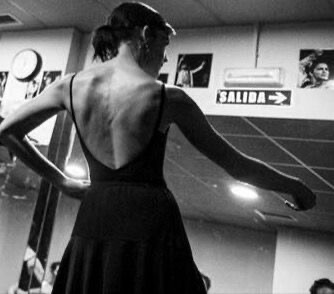
Talent or no talent , dancing— and choosing a form of dance as technically demanding as Flamenco — has slowly helped me regain a sense of connection.


Dancing unites body and mind through movement, requiring presence in a way that’s both physical and emotional. When you’re fully engaged in dance, you’re experiencing yourself as a whole being rather than fragmented parts. In the present.

At the still point of the turning world. Neither flesh nor fleshless;
Neither from nor towards; at the still point, there the dance is,
But neither arrest nor movement. And do not call it fixity,
Where past and future are gathered. Neither movement from nor towards,
Neither ascent nor decline. Except for the point, the still point,
There would be no dance, and there is only the dance.

T. S. Elliot, excerpt from
Burnt Norton, (Four Quartets)

Happy World Poetry Day!

Traveler, there is no road

I used to love traveling no matter how. I now hate airports and the tiring processes entailed in flying somewhere .

I used to like road trips or, at least, the idea of road trips.

I think I still like trains.

I still have the fantasy of traveling on a cargo ship .

Reference


Caminante, no hay camino / Traveler, There Is No Road
by Antonio Machado

“Caminante, son tus huellas
el camino y nada más;
Caminante, no hay camino,
se hace camino al andar.
Al andar se hace el camino,
y al volver la vista atrás
se ve la senda que nunca
se ha de volver a pisar.
Caminante, no hay camino
sino estelas en la mar.”

Traveler, your footprints
are the only road, nothing else.
Traveler, there is no road;
you make your own path as you walk.
As you walk, you make your own road,
and when you look back
you see the path
you will never travel again.
Traveler, there is no road;
only a ship’s wake on the sea.
translated by Mary G. Berg and Dennis Maloney

Life, friends, is boring

Dream Song 14
BY JOHN BERRYMAN


Life, friends, is boring. We must not say so.
After all, the sky flashes, the great sea yearns,
we ourselves flash and yearn,
and moreover my mother told me as a boy
(repeatingly) ‘Ever to confess you’re bored
means you have no

Inner Resources.’ I conclude now I have no
inner resources, because I am heavy bored.
Peoples bore me,
literature bores me, especially great literature,
Henry bores me, with his plights & gripes
as bad as achilles,

who loves people and valiant art, which bores me.
And the tranquil hills, & gin, look like a drag
and somehow a dog
has taken itself & its tail considerably away
into mountains or sea or sky, leaving
behind: me, wag.

What bores you?

Numbers bore me, data bores me. People complaining about their comfortable lives bore me to death. The lack of consistency between words and actions both bores me and infuriates me. My lack of discipline bores me and, sometimes, my indifference frustrates and scares me.

Forever alive, forever forward

In a collection that’s grown to nearly 200 pairs (I couldn’t write on budgeting even if I was paid to do it), choosing a favorite seems almost unfair although not difficult.

When I look across what I wished was a carefully curated kingdom of footwear but it’s probably just a sign of some kind of derangement , my eyes always land on the same pair: my custom Converse All Stars emblazoned with Walt Whitman’s timeless words, “resist much, obey little.”

The customization process was simple enough—Converse’s website, a font choice, a color scheme that wouldn’t overshadow the message. But the impact was anything but simple. 

Whitman’s phrase—tucked into his poem “Caution”—spoke to something essential in me. A reminder that blind conformity is the enemy of growth. That questioning authority isn’t rebellion for rebellion’s sake, but a necessary component of being and feeling alive.

“Resist much, obey little,
Once unquestioning obedience, once fully enslaved,
Once fully enslaved, no nation, state, city of this earth, ever afterward resumes its liberty.”

I received them in April 2024. In May I took them to New Orleans—my soul city. There’s something poetic about first breaking in shoes dedicated to resistance in a place that has itself resisted time, tragedy, and homogenization. Walking as if dancing, feeling the rhythm of this marvellous city, breathing music from morning to night, watching the white canvas collect the character of a city that refuses to surrender its identity—it felt like a perfect baptism for both the shoes and for me. I always feel more alive in New Orleans. I always feel I get to be myself anew.

They carried me through heartbreak in Greece, they were with me in Wembley to celebrate life with a friend that took me to see Bruce Springsteen and 60 thousand people whit hungry hearts, they got to see Ian Astbury who no longer is my teenage crush but can still stir something when singing about paradises in shattered dreams. They take me to work when I’m feeling disappointed and a bit defiant.

They remind me that authentic self-expression isn’t always comfortable, but it’s always worthwhile. That small acts of personal courage accumulate into a life of integrity. That sometimes the loudest statements are made in the quietest ways. That  resistance sometimes it’s as simple as a daily choice to live by your own compass.

References

Song of the Open Road

Walt Whitman’s Caution

A good day

We are nothing more
than the time we have left,
walking toward the oblivion
we will become.

It's harsh, but that's the way it is.

The rest is just literature.

The best thing
is not to think about it too much:
keep walking,
drink coffee, fall in love,
watch the rain...

Karmelo C. Iribarren (my own attempted translation)

Monday poetry is late, again, so am I for most things

Algo hermoso termina


  Todos los días del mundo
                                           algo hermoso termina.

                                                     Jaroslav Seifert

Duélete: 
como a una vieja estrella fatigada
te ha dejado la luz. Y la criatura 
que iluminabas 
                       (y que iluminaba
tus ojos ciegos a las nimias cosas 
del mundo)
ha vuelto a ser mortal. 
Todo recobra 
su densidad, su peso, su volumen, 
ese pobre equilibrio que sostiene 
tu nuevo invierno. Alégrate. 
Tus vísceras ahora son otra vez tus vísceras
y no crudo alimento de zozobras. 
Ya no eres ese dios ebrio e incierto 
que te fue dado ser. Muerde
el hueso que dan, 
llega a su médula, 
recoge las migajas que deja la memoria.

© 2004, Piedad Bonnett
From: Tretas del débil

  Every day of the world
                                                     something beautiful ends.

                                                                   Jaroslav Seifert

Suffer:
as if you were an old, tired star, 
light has left you. And the creature
you lighted
                 (and who lighted
your eyes, blind to the world’s
trivial things)
is now mortal again. 
Everything recovers
its density, its weight, its volume,
the poor balance that supports
your new winter. Be glad. 
Your entrails are now again your entrails
and not coarse food of anxiety. 
You’re no longer that drunk and uncertain god
that you turned out to be. Bite
the bone they give you,
down to the marrow, 
pick up the crumbs memory leaves behind.

© Translation: 2005, Nicolás Suescún

Standing at Fearful Attention

Standing at fearful attention, we’re grateful 
to fear, which keeps us from going mad.
Decision and courage are bad
for our health; life without living is safer.

Adventurers whose adventures are history,
standing in fear we struggle against
ironic ghosts in our ongoing quest
for what we never were and won’t be.

Standing in fear with no voice of our own,
our heart ground up by our teeth, we are
the madmen, we’re our own ghosts.

A flock of sheep pursued by fear,
we live so together and so alone
that life’s meaning has disappeared.

Alexandre O’Neill (1962) , Translation: 1997, Richard Zenith

Perfilados de medo, agradecemos
o medo que nos salva da loucura.
Decisão e coragem valem menos
e a vida sem viver é mais segura.

Aventureiros já sem aventura,
perfilados de medo combatemos
irónicos fantasmas à procura
do que fomos, do que não seremos.

Perfilados de medo, sem mais voz,
o coração nos dentes oprimido,
os loucos, os fantasmas somos nós.

Rebanho pelo medo perseguido,
já vivemos tão juntos e tão sós
que da vida perdemos o sentido . . . 

© 1962, Alexandre O’Neill
From: Poesias Completas
Publisher: Assírio & Alvim, Lisbon, 2000

At the wheel…


…of a Chevrolet on the road to Sintra,
Through moonlight and dreams, on the deserted road,
I drive alone, drive almost slowly, and it almost
Seems to me, or I almost force myself to think it seems,
That I’m going down another road, another dream, another world,
That I’m going on without having left Lisbon, without Sintra to go to,
That I’m going on, and what is there to going on except not stopping, but going on?

I’ll spend the night in Sintra because I can’t spend it in Lisbon,
But, when I get to Sintra, I’ll be sorry I didn’t stay in Lisbon.
Always this groundless worry, no purpose, no consequence,
Always, always, always,
This excessive anguish for nothing at all,
On the road to Sintra, on the road to dreams, on the road to life

Alert to my subconscious movements at the wheel,
Around me, with me, leaps the car I borrowed.
I smile at the symbol, at thinking of it, and at turning right.
In how many borrowed things do I move through the world?
How many borrowed things do I drive as if they were mine?
How many borrowed things — oh God — am I myself?

To my left, a hovel — yes, a hovel — by the roadside.
To my right an open field, the moon far off.
The car, which seemed just now to give me freedom,
Is now something I’m shut up in,
That I can only drive shut up in,
That I can only tame if I include it, if it includes me.

To my left, back there, that modest, that more than modest hovel.
Life must be happy there: it’s not mine.
If someone saw me from the window, they’d think: Now that guy’s happy.

Maybe a child spying at the upstairs window
Would see me, in my borrowed car, as a dream, a fairy tale come true.
Maybe, for the girl who watched me, hearing my motor out the kitchen window,
On packed earth,
I’m some kind of prince of girls’ hearts,
And she’ll watch me sideways, out the window, past this curve where I lose myself.
Will I leave dreams behind me? Will the car?
I, the borrowed-car-driver, or the borrowed car I drive?

On the road to Sintra in moonlight, in sadness, before the fields and night,
Forlornly driving the borrowed Chevy,
I lose myself on the future road, I disappear in the distance I reach.

And in a terrible, sudden, violent, inconceivable desire
I speed up,
But my heart stayed back on a pile of rocks I veered from, seeing without seeing it,
At the door of the hovel —
My empty heart,
My dissatisfied heart,
My heart more human than me, more exact than life.

On the road to Sintra, near midnight, in moonlight, at the wheel,
On the road to Sintra, oh my weary imagination,
On the road to Sintra, ever nearer to Sintra,
On the road to Sintra, ever farther from me…

In The Collected Poems of Álvaro de CamposVol. 2 (1928–1935) . translated by Chris Daniels


Ao volante do Chevrolet pela estrada de Sintra,

Ao luar e ao sonho, na estrada deserta,

Sozinho guio, guio quase devagar, e um pouco

Me parece, ou me forço um pouco para que me pareça,

Que sigo por outra estrada, por outro sonho, por outro mundo,

Que sigo sem haver Lisboa deixada ou Sintra a que ir ter,

Que sigo, e que mais haverá em seguir senão não parar mas seguir?

Vou passar a noite a Sintra por não poder passá-la em Lisboa,

Mas, quando chegar a Sintra, terei pena de não ter ficado em Lisboa.

Sempre esta inquietação sem propósito, sem nexo, sem consequência,

Sempre, sempre, sempre,

Esta angústia excessiva do espírito por coisa nenhuma,

Na estrada de Sintra, ou na estrada do sonho, ou na estrada da vida…

Maleável aos meus movimentos subconscientes do volante,

Galga sob mim comigo o automóvel que me emprestaram.

Sorrio do símbolo, ao pensar nele, e ao virar à direita.

Em quantas coisas que me emprestaram guio como minhas!

Quanto me emprestaram, ai de mim!, eu próprio sou!

À esquerda o casebre — sim, o casebre — à beira da estrada.

À direita o campo aberto, com a lua ao longe.

O automóvel, que parecia há pouco dar-me liberdade,

É agora uma coisa onde estou fechado,

Que só posso conduzir se nele estiver fechado,

Que só domino se me incluir nele, se ele me incluir a mim.

À esquerda lá para trás o casebre modesto, mais que modesto.

A vida ali deve ser feliz, só porque não é a minha.

Se alguém me viu da janela do casebre, sonhará: Aquele é que é feliz.

Talvez à criança espreitando pelos vidros da janela do andar que está em cima

Fiquei (com o automóvel emprestado) como um sonho, uma fada real.

Talvez à rapariga que olhou, ouvindo o motor, pela janela da cozinha

No pavimento térreo,

Sou qualquer coisa do príncipe de todo o coração de rapariga,

E ela me olhará de esguelha, pelos vidros, até à curva em que me perdi.

Deixarei sonhos atrás de mim, ou é o automóvel que os deixa?

Eu, guiador do automóvel emprestado, ou o automóvel emprestado que eu guio?

Na estrada de Sintra ao luar, na tristeza, ante os campos e a noite,

Guiando o Chevrolet emprestado desconsoladamente,

Perco-me na estrada futura, sumo-me na distância que alcanço,

E, num desejo terrível, súbito, violento, inconcebível,

Acelero…

Mas o meu coração ficou no monte de pedras, de que me desviei ao vê-lo sem vê-lo,

À porta do casebre,

O meu coração vazio,

O meu coração insatisfeito,

O meu coração mais humano do que eu, mais exacto que a vida.

Na estrada de Sintra, perto da meia-noite, ao luar, ao volante,

Na estrada de Sintra, que cansaço da própria imaginação,

Na estrada de Sintra, cada vez mais perto de Sintra,

Na estrada de Sintra, cada vez menos perto de mim…

11-5-1928

Poesias de Álvaro de Campos. Fernando Pessoa. Lisboa: Ática, 1944 (imp. 1993).- 37


I chose part of this poem to say goodbye to someone today. I did not go the funeral. “Do you want me to go?”, I asked. He didn’t. I didn’t know his father, I have never met him, I heard stories of beautiful cars and saw fading photos of a once happy life.


Photo: Not really a Chevrolet at Bastelicaccia, Corsica, August 2018

Out of place


Homens que são como lugares mal situados
Homens que são como casas saqueadas
Que são como sítios fora dos mapas
Como pedras fora do chão
Como crianças órfãs
Homens sem fuso horário
Homens agitados sem bússola onde repousem

Homens que são como fronteiras invadidas
Que são como caminhos barricados
Homens que querem passar pelos atalhos sufocados
Homens sulfatados por todos os destinos
Desempregados das suas vidas

Homens que são como a negação das estratégias
Que são como os esconderijos dos contrabandistas
Homens encarcerados abrindo-se com facas

Homens que são como danos irreparáveis
Homens que são sobreviventes vivos
Homens que são como sítios desviados
Do lugar

Daniel Faria, Poesia

Men who are like places in the wrong place
Men who are like plundered houses
Like locations not on maps
Like stones not on the ground
Like orphaned children
Men without a time zone
Agitated men with no compass to rest on

Men who are like violated borders  
Like barricaded roads
Men who are drawn to choked pathways
Men spattered by all destinies
Laid off from their lives

Men who are like the negation of strategies
Like the hiding-places of smugglers
Incarcerated men opening themselves with knives

Men who are like irreparable damage
Men who are barely living survivors
Men who are like places wrenched
Out of place

Daniel Faria translated by Richard Zenith


Today I start counting days of absence because I failed to understand all the days of Being

Words

They are like a crystal,
words.
Some a dagger,
some a blaze.
Others,
merely dew.

Secret they come, full of memory.
Insecurely they sail:
cockleboats or kisses,
the waters trembling.

Abandoned, innocent,
weightless.
They are woven of light.
They are the night.
And even pallid
they recall green paradise.

Who hears them? Who
gathers them, thus,
cruel, shapeless,
in their pure shells?

Translation: 1985, Alexis Levitin, Inhabited Heart
Perivale Press, Los Angeles, 1985

São como um cristal,
as palavras.
Algumas, um punhal,
um incêndio.
Outras,
orvalho apenas.

Secretas vêm, cheias de memória.
Inseguras navegam:
barcos ou beijos,
as águas estremecem.

Desamparadas, inocentes,
leves.
Tecidas são de luz
e são a noite.
E mesmo pálidas
verdes paraísos lembram ainda.

Quem as escuta? Quem
as recolhe, assim,
cruéis, desfeitas,
nas suas conchas puras?

Eugénio de Andrade, Coração do Dia
Limiar, Porto, 1958

Photo: Point Omega by Don Delillo (sometimes I’m too lazy to take notes)

Lingering

Come to me in the silence of the night;
    Come in the speaking silence of a dream;
Come with soft rounded cheeks and eyes as bright
    As sunlight on a stream;
       Come back in tears,
O memory, hope, love of finished years.

O dream how sweet, too sweet, too bitter sweet,
    Whose wakening should have been in Paradise,
Where souls brimful of love abide and meet;
    Where thirsting longing eyes
       Watch the slow door
That opening, letting in, lets out no more.

Yet come to me in dreams, that I may live
    My very life again though cold in death:
Come back to me in dreams, that I may give
    Pulse for pulse, breath for breath:
       Speak low, lean low,
As long ago, my love, how long ago!

Echo, Christina Rossetti

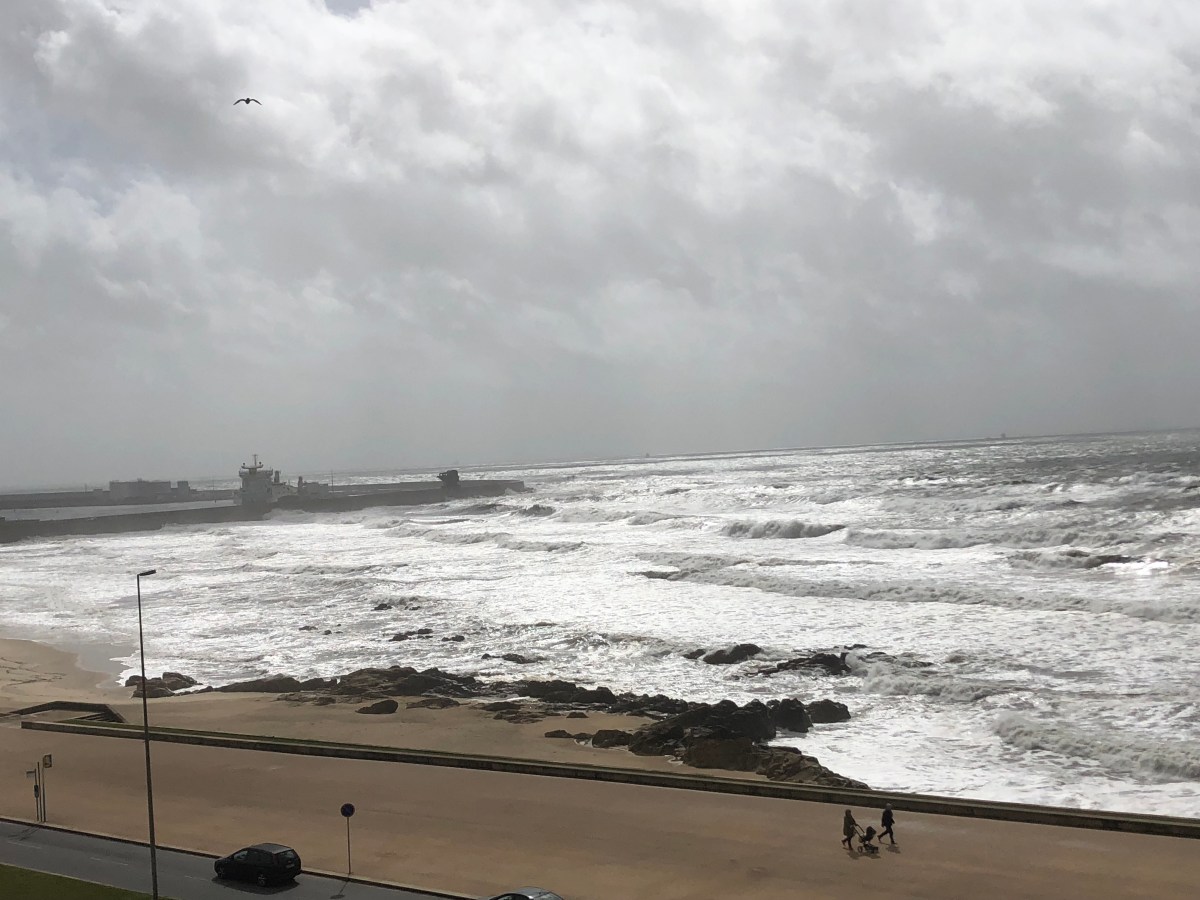
Photo: Leça da Palmeira, after the storm (March 2018)

Be all this

Quiero que sepas
una cosa.

Tú sabes cómo es esto:
si miro
la luna de cristal, la rama roja 
del lento otoño en mi ventana, 
si toco
junto al fuego 
la impalpable ceniza
o el arrugado cuerpo de la leña, 
todo me lleva a ti, 
como si todo lo que existe, 
aromas, luz, metales, 
fueran pequeños barcos que navegan 
hacia las islas tuyas que me aguardan.

Ahora bien, 
si poco a poco dejas de quererme
dejaré de quererte poco a poco.

Si de pronto
me olvidas
no me busques,
que ya te habré olvidado.

Si consideras largo y loco 
el viento de banderas 
que pasa por mi vida 
y te decides
a dejarme a la orilla
del corazón en que tengo raíces,
piensa
que en ese día,
a esa hora
levantaré los brazos
y saldrán mis raíces
a buscar otra tierra.

Pero
si cada día, 
cada hora
sientes que a mí estás destinada 
con dulzura implacable.
Si cada día sube 
una flor a tus labios a buscarme, 
ay amor mío, ay mía, 
en mí todo ese fuego se repite, 
en mí nada se apaga ni se olvida, 
mi amor se nutre de tu amor, amada, 
y mientras vivas estará en tus brazos 
sin salir de los míos.

Si tu me olvidas, Pablo Neruda


I want you to know

one thing.

You know how this is:

if I look

at the crystal moon, at the red branch

of the slow autumn at my window,

if I touch

near the fire

the impalpable ash

or the wrinkled body of the log,

everything carries me to you,

as if everything that exists,

aromas, light, metals,

were little boats

that sail

toward those isles of yours that wait for me.

Well, now,

if little by little you stop loving me

I shall stop loving you little by little.

If suddenly

you forget me

do not look for me,

for I shall already have forgotten you.

If you think it long and mad,

the wind of banners

that passes through my life,

and you decide

to leave me at the shore

of the heart where I have roots,

remember

that on that day,

at that hour,

I shall lift my arms

and my roots will set off

to seek another land.

But

if each day,

each hour,

you feel that you are destined for me

with implacable sweetness,

if each day a flower

climbs up to your lips to seek me,

ah my love, ah my own,

in me all that fire is repeated,

in me nothing is extinguished or forgotten,

my love feeds on your love, beloved,

and as long as you live it will be in your arms

without leaving mine.

Photo: Wall poetry on the streets of Porto

Be all this.
Be this touch with all the skin that can comfort you


Take from my palms

mon

Take from my palms, to soothe your heart,
a little honey, a little sun,
in obedience to Persephone’s bees.

You can’t untie a boat that was never moored,
nor hear a shadow in its furs,
nor  move through thick life without fear.

For us, all that’s left is kisses
tattered as the little bees
that die when they leave the hive.

Deep in the transparent night they’re still humming,
at home in the dark wood on the mountain,
in the mint and lungwort and the past.

But lay to your heart my rough gift,
this unlovely dry necklace of dead bees
that once made a sun out of honey.

Osip Mandelstam, Selected Poems