

It took me over a year to realize that “Death”was posing for me.

It took me over a year to realize that “Death”was posing for me.
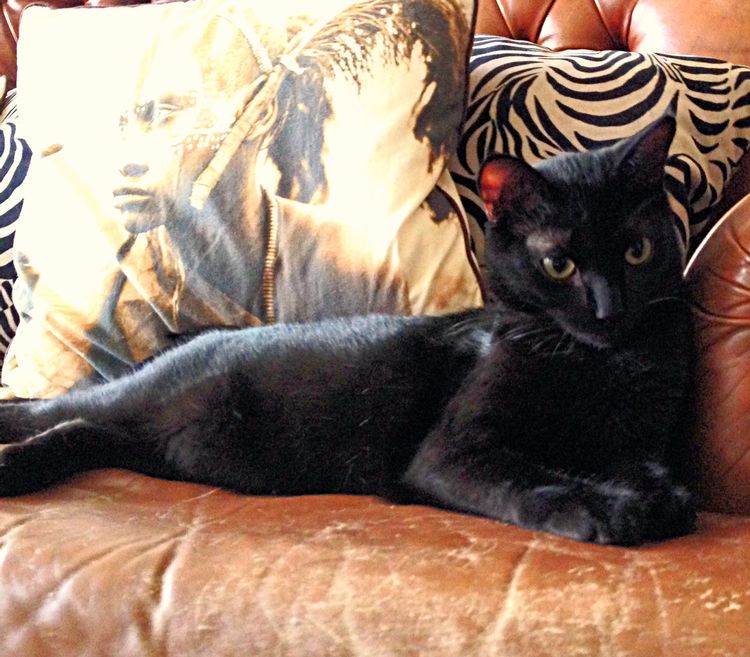
POEMA A UN GATO
No son más silenciosos los espejos
Ni más furtiva el alba aventurera;
Eres, bajo la luna, esa pantera
Que nos es dado divisar de lejos.
Por obra indescifrable de un decreto
Divino, te buscamos vanamente;
Más remoto que el Ganges y el poniente,
Tuya es la soledad, tuyo el secreto.
Tu lomo condesciende a la morosa
Caricia de mi mano.
Has admitido,
Desde esa eternidad que ya es olvido,
El amor de la mano recelosa.
En otro tiempo estás.
Eres el dueño
De un ámbito cerrado como un sueño.
Jorge Luis Borges, El oro de los tigres, 1972
To a cat
Mirrors are not more wrapt in silences
nor the arriving dawn more secretive;
you, in the moonlight, are that panther figure
which we can only spy at from a distance.
By the mysterious functioning of some
divine decree, we seek you out in vain;
remoter than the Ganges or the sunset,
yours is the solitude, yours is the secret.
Your back allows the tentative caress
my hand extends. And you have condescended
since that forever, now oblivion,
to take love from a flattering human hand.
You live in other time, lord of your realm —
a world as closed and separate as dream.
Jorge Luis Borges (translated by Alastair Reid, 1977)

Perhaps home is not a place but simply an irrevocable condition.
James Baldwin
Costume Designer: Lucinda Ballard, Nominated Best Costume Design, Black-and-White (24th Academy Awards)
And so it was I entered the broken world
To trace the visionary company of love, it’s voice
An instant in the wind (I know not whither hurled)
But not for long to hold each desperate choice.
“The Broken Tower” by Hart Crane

Her appearance is incongruous to this setting. She is daintily dressed in a white suit with a fluffy bodice, necklace and earrings of pearl, white gloves and hat, looking as if she were arriving at a summer tea or cocktail party in the garden district. She is about five years older than Stella. Her delicate beauty must avoid a strong light. There is something about her uncertain manner, as well as her white clothes, that suggests a moth.

He is of medium height, about five feet eight or nine, and strongly, compactly built. Animal joy in his being is implicit in all his movements and attitudes. Since earliest manhood the center of his life has been pleasure with women, the giving and taking of it, not with weak indulgence, dependently, but with the power and pride of a richly feathered male bird among hens.

Look at these feathers and furs that she come here to preen herself in! What’s this here? A solid-gold dress, I believe! And this one! What is these here? Fox-pieces! Genuine fox fur-pieces, a half a mile long! Where· are your fox-pieces, Stella? Bushy snow-white ones, no less!

Pearls! Ropes of them! What is this sister of yours, a deep-sea diver? Bracelets of solid gold, too! Where are your pearls and gold bracelets?

Compliments to women about their looks. I’ve never met a woman that didn’t know if she was good-looking or not without being told, and some of them give themselves credit for more than they’ve got.

The poker players–Stanley, Steve, Mitch and Pablo-wear colored shirts, solid blues, a purple, a red-and-white check, a light green, and they are men at the peak of their physical manhood, as coarse and direct and powerful as the primary colors.

“And if God choose,
I shall but love thee better-after-death!”
Why, that’s from my favorite sonnet by Mrs. Browning!
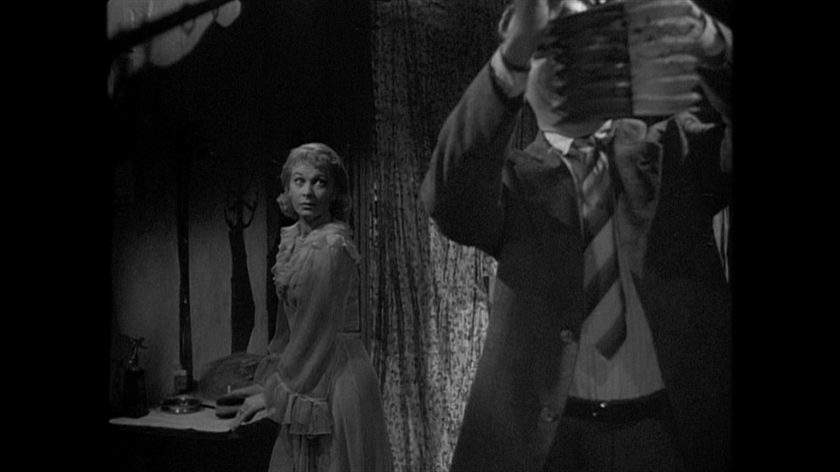
I can’t stand a naked light bulb, any more than I can a rude remark or a vulgar action.

I never was hard or self-sufficient enough. When people are soft-soft people have got to shimmer and g1ow-they’ve got to put on soft colors, the colors of butterfly’ wings, and put a paper lantern over the light …it isn’t enough to be soft. You’ve got to be soft and attractive. And I-I’m fading now! I don’t know how much longer I can turn the trick.


I don’t want realism. I want magic! Yes, yes, magic! I try to give that to people. I misrepresent things to them. I don’t tell truth, I tell what ought to be truth. And if that is sinful, then let me be damned for it!


She has dragged her wardrobe trunk into the center of the bedroom. It hangs open with flowery dresses thrown across it. As the drinking and packing went on, a mood of hysterical exhilaration came into her and -she has decked herself out in a somewhat soiled and crumpled white satin evening gown and a pair of scuffed silver slippers with brilliants set in their heels. Now she is placing the rhinestone tiara on her head before the mirror of the dressing-table and murmuring excitedly as if to a ‘group of spectral admirers.
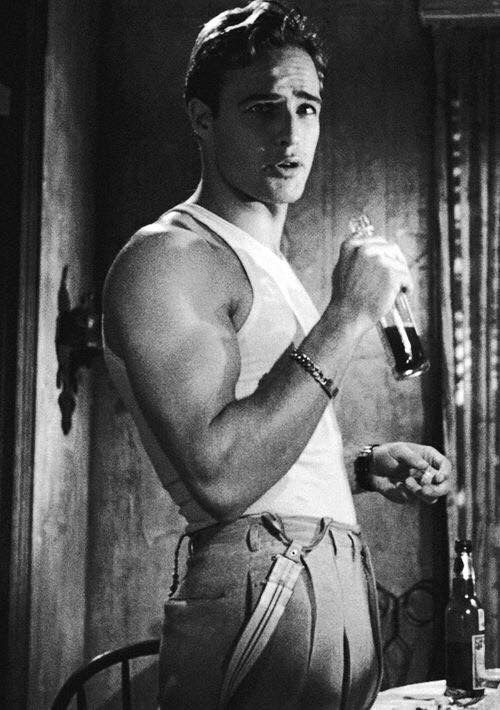
Well, it’s a red letter night for us both. You having an oil millionaire and me having a baby.

A cultivated woman, a woman of intelligence and breeding, can enrich a man’s life – immeasurably! I have those things to offer, and this doesn’t take them away. Physical beauty is passing. A transitory possession. But beauty of the mind and richness of the spirit and tenderness of the heart-and I have all of those things-aren’t taken away, but grow! Increase with the years! How strange that I should be called a destitute woman! When I have all of these treasures locked in my heart. I think of myself as a very, very rich woman! But I have been foolish-casting my pearls before swine!
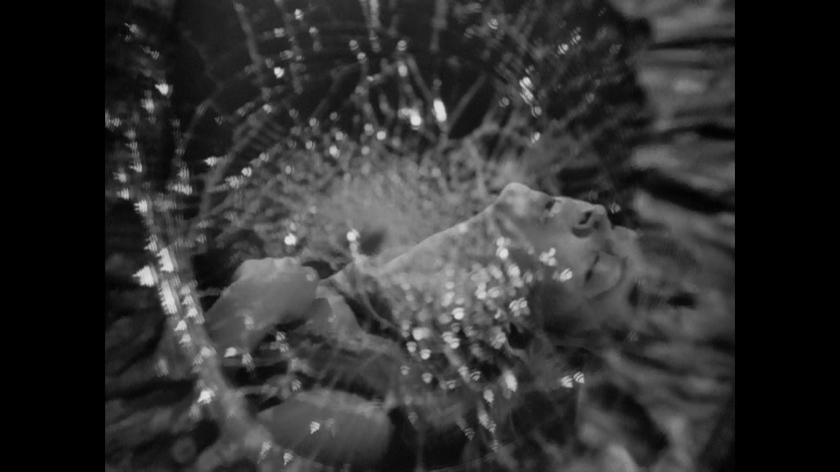

He takes off his hat and now he becomes personalized. The unhuman quality goes. His voice is gentle and reassuring as he crosses to Blanche and crouches in front of her. As he speaks her name, her terror subsides a little. The lurid reflections fade from the walls, the inhuman cries and noises die out and her own hoarse crying is calmed.
Whoever you are-I have always depended on the kindness of strangers.
’In this dark march toward whatever it is we’re approaching,’ Blanche raises the flag of magic against the crushing disappointment of reality in her “worn-out Mardi Gras outfit” and the costumes are absolutely brilliant in creating this fantasy world, showing us someone trying to survive the decay and decadence of her own life and not being able to cope with what the world has thrown at her. And that’s how a trunk full of flowery dresses and rhinestone tiaras can help you survive as long as you keep away from the brutes, maybe you’ll be able to not only tell, but also live what ought to be truth. ( And this in no way an endorsement of post truths or a glorification of mental illness)
References and Photos
Elia Kazan, A Streetcar Named Desire (1951). Norman N. Holland
Best Shot: “A Streetcar Named Desire”
The Furniture: Decorating Madness in A Streetcar Named Desire
http://www.virtual-history.com/movie/film/2060/a-streetcar-named-desire
in time of daffodils(who know
the goal of living is to grow)
forgetting why,remember how
in time of lilacs who proclaim
the aim of waking is to dream,
remember so(forgetting seem)
in time of roses(who amaze
our now and here with paradise)
forgetting if,remember yes
in time of all sweet things beyond
whatever mind may comprehend,
remember seek(forgetting find)
and in a mystery to be
(when time from time shall set us free)
forgetting me,remember me
e. e. cummings
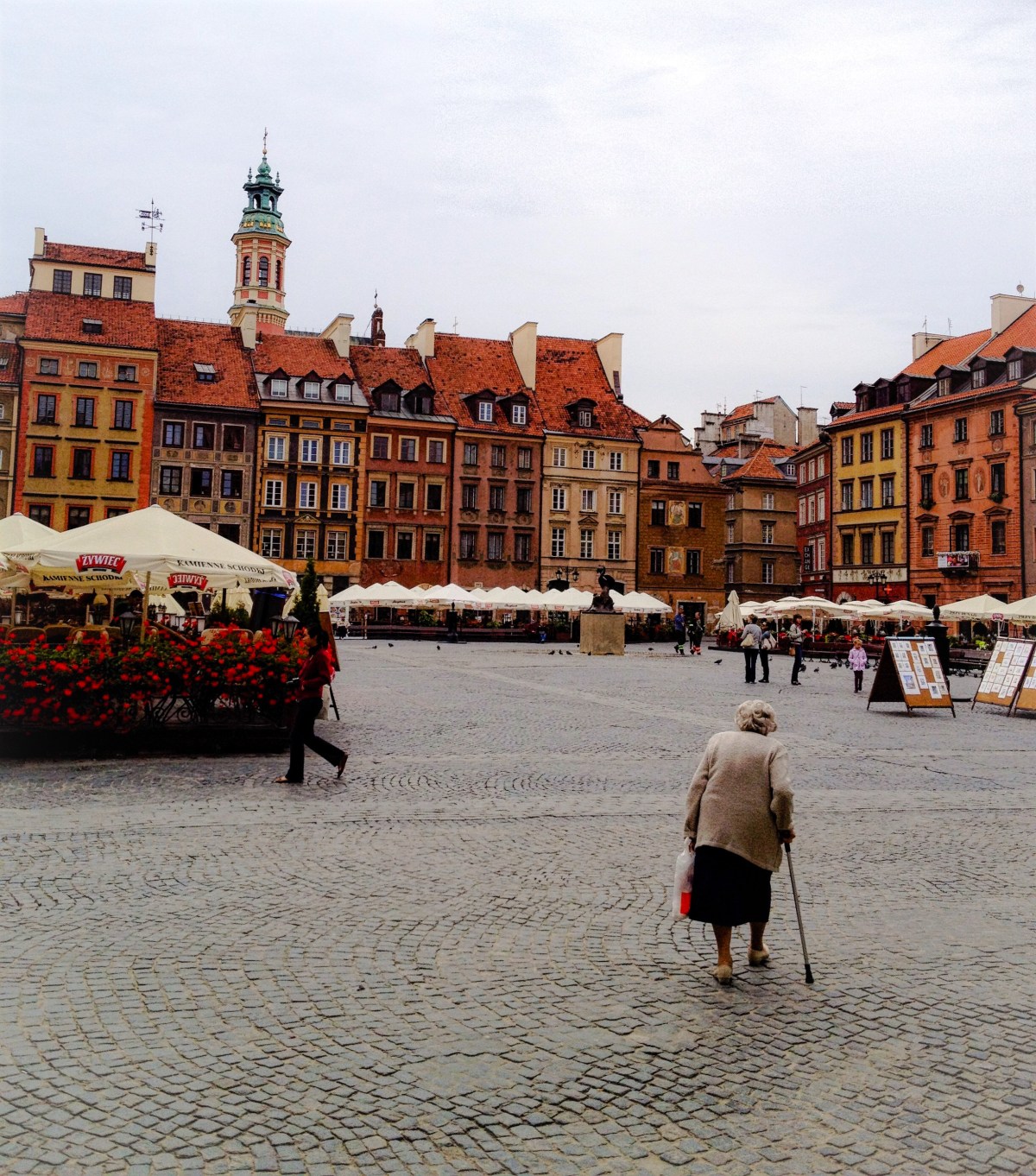
Photo: Warsaw, 2012
“The Verb to Be,“ a Poem by André Breton
I know the general outline of despair. Despair has no wings, it doesn’t necessarily sit at a cleared table in the evening on a terrace by the sea. It’s despair and not the return of a quantity of insignificant facts like seeds that leave one furrow for another at nightfall. It’s not the moss that forms on a rock or the foam that rocks in a glass. It’s a boat riddled with snow, if you will, like birds that fall and their blood doesn’t have the slightest thickness. I know the general outline of despair. A very small shape, defined by jewels worn in the hair. That’s despair. A pearl necklace for which no clasp can be found and whose existence can’t even hang by a thread. That’s despair for you. Let’s not go into the rest. Once we begin to despair we don’t stop. I myself despair of the lampshade around four o’clock, I despair of the fan towards midnight, I despair of the cigarette smoked by men on death row. I know the general outline of despair. Despair has no heart, my hand always touches breathless despair, the despair whose mirrors never tell us if it’s dead. I live on that despair which enchants me. I love that blue fly which hovers in the sky at the hour when the stars hum. I know the general outline of the despair with long slender surprises, the despair of pride, the despair of anger. I get up every day like everyone else and I stretch my arms against a floral wallpaper. I don’t remember anything and it’s always in despair that I discover the beautiful uprooted trees of night. The air in the room is as beautiful as drumsticks. What weathery weather. I know the general outline of despair. It’s like the curtain’s wind that holds out a helping hand. Can you imagine such a despair? Fire! Ah they’re on their way … Help! Here they come falling down the stairs … And the ads in the newspaper, and the illuminated signs along the canal. Sandpile, beat it, you dirty sandpile! In its general outline despair has no importance. It’s a squad of trees that will eventually make a forest, it’s a squad of stars that will eventually make one less day, it’s a squad of one-less-days that will eventually make up my life.
Translated from the French by Bill Zavatsky and Zack Rogow via The Paris Review
Original Poem can be read here
Photo me by F.M.
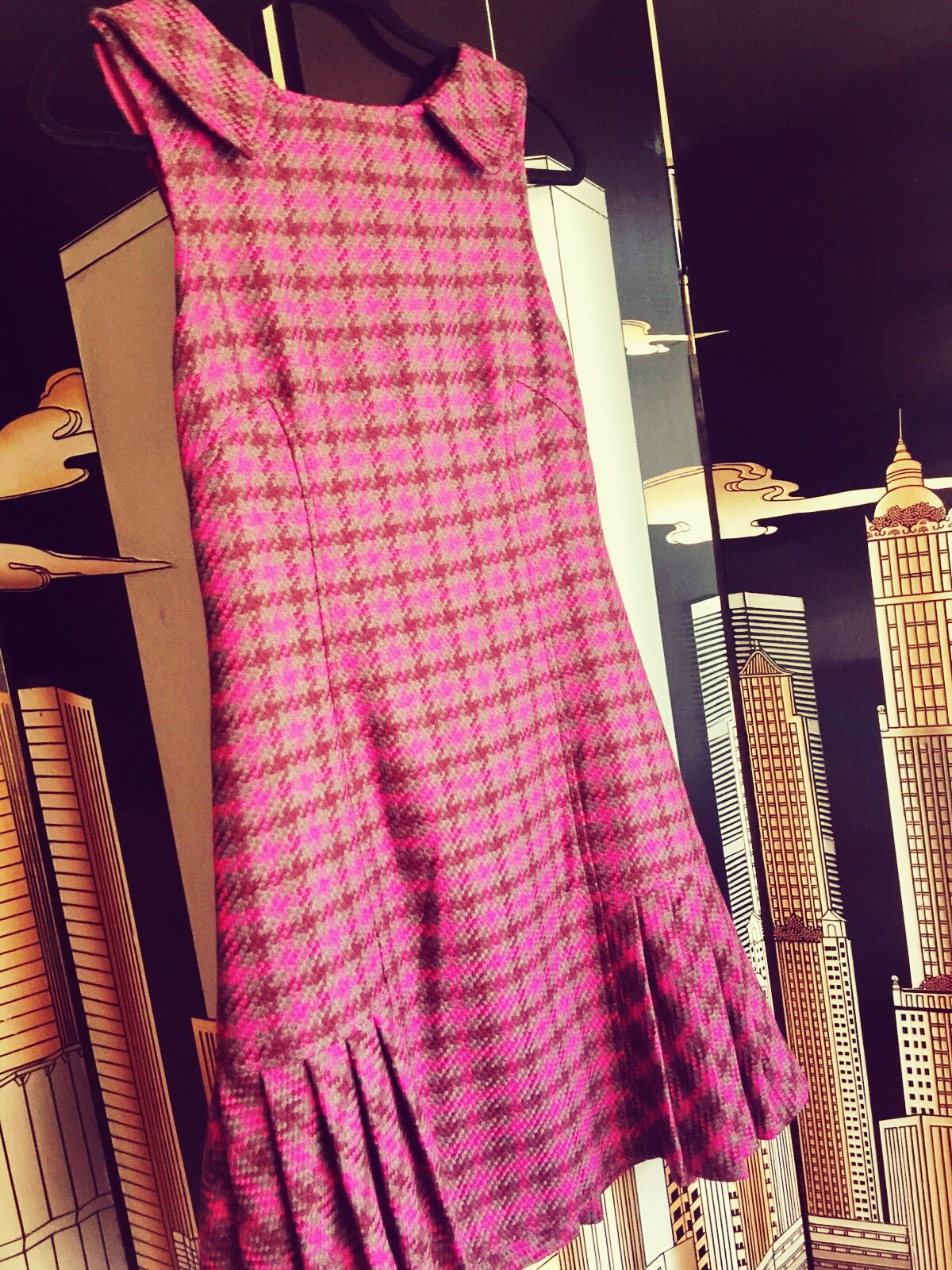
I wore this dress on Monday and the whole day I felt as if was in disguise. I thought I looked like a twenty first century flapper when I checked myself in the mirror before leaving the house, but the minute I got to work I looked as if I had borrowed the last available dress left in someone else’s closet. And that someone definitely didn’t have a lot in common with me. I didn’t buy this dress. It was a gift from my mum who probably never abandoned the hope that, in the right outfit, I would look like a pretty girl. This dress is too pink for me, it’s either too short for me or I’m too tall for it, I am also too old to pull something like this off. Not being a mother myself, I am left with a daughter’s perspective on this strange relationship that sometimes infantilizes me in order to, so it seems, avoid confronting the inevitability of time.
Mondays are never easy and I have a horrible cold and the medication is making me feel like I’m living underwater and the weight of every single thought is too much to even consider taking any kind of action.
TUESDAY
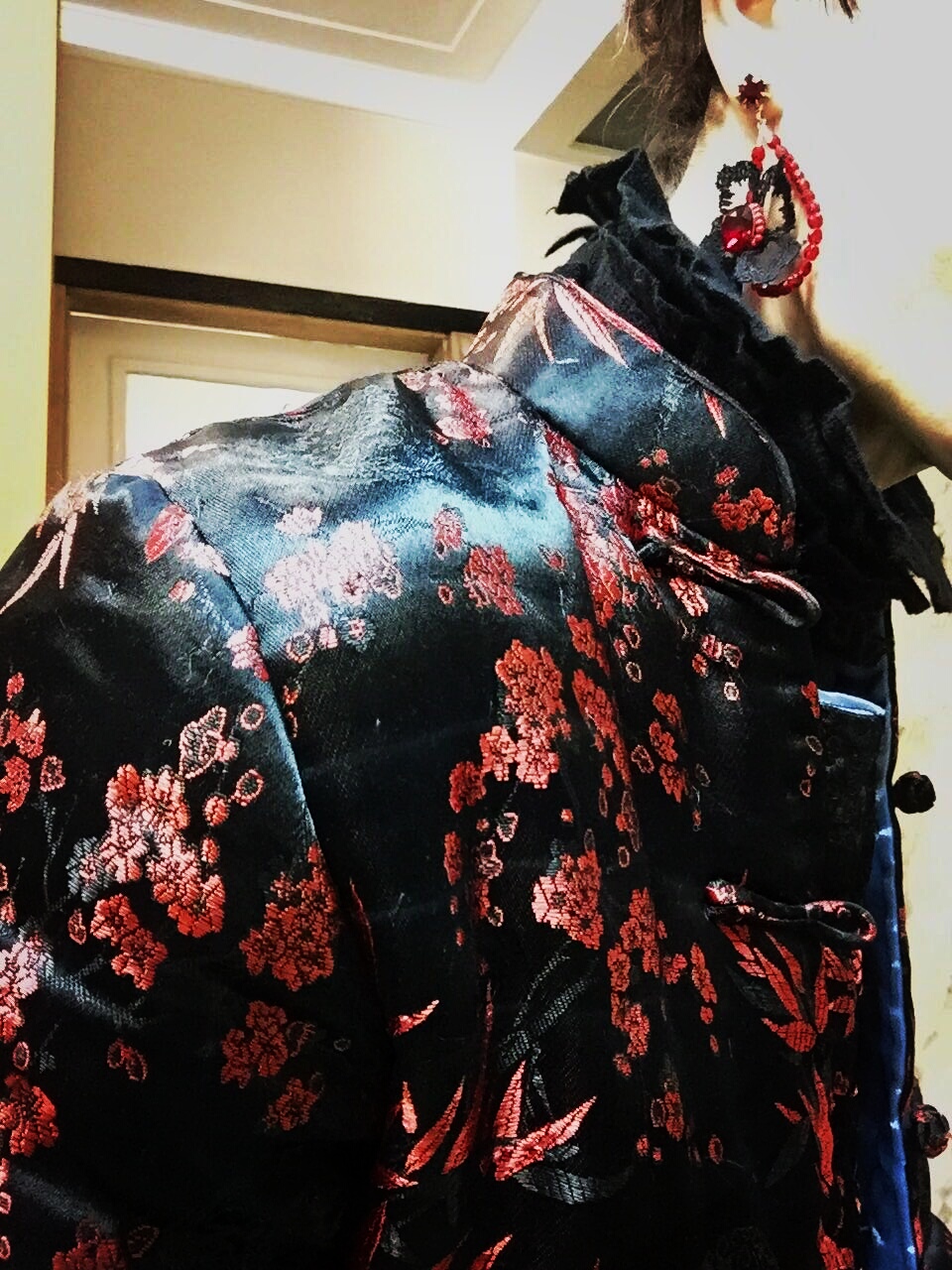
I bought this jacket in Vietnam in November 2014. A text message received while I was in Hanoi let me know that my great aunt had died. I was there for work and alone and while I can’t really say that I have always depended on the kindness of strangers, I have found that sometimes, strangers make the best friends and know exactly what to do and how to help.
Stray people brought together by chance
WEDNESDAY

I have a weak spot for chinoiserie and I absolutely adore these pants. I think I bought them some twenty years ago and they have never made it to the error category.
I felt a lot better today. After work we went to Java, the usual hang out before theater, for dinner. The TV was showing the aftermath of the Westminster attack. The coffee shop was crowded and we are all seating at an uncomfortable closeness. The gentleman next to me is wearing a brown jacket and turns his head often in my direction. Maybe he’s getting irritated at the proximity. No, he starts talking about the news. I try not to engage. I studied political science and I have no idea how to comment on the historical, sociological, or political contexts of what we are staring at. I find it difficult to rationalize barbarity. He’s British. He goes on about foreigners and political correctness. For twelve years he served in the Royal Navy, like his father before him. His eyesight started failing. He’s now a civilian. He was born in Cornwall and grew up in Scotland, now he lives in Manchester because he can’t afford to live in London. He’s been in Portugal for two weeks on vacation, this was his last night. He’s wearing a black t-shirt with some very graphic expression of discontent written in Afrikaans. I’ve never been a big fan of clothes that are too explicit in doing your talking for you. We have to go, the play starts at 9. He says goodbye kissing our hands and thanking us for the company and patience. Whatever was said, I realize I missed that accent and the blue eyed frankness I have lived with for four or so years of my life.
The play is a Portuguese – Belgian co-production spoken in French, Portuguese and Flemish with subtitles in English and Portuguese. I like the set and love the wardrobe when Anna Karenina is the woman inhabiting them and their actions. Still, it’s difficult to focus on anything either than the text. Forty years apart in Lisbon and Antwerp two couples fall out of love, question the normal life people manage to live and read Anna Karenina in French. One of the characters hasn’t read it. He actually thought about reading War and Peace but there were too many pages.
How she dies. It’s not supposed to be about this particular written death but about how literature changes or makes us change our lives. So the author says in a number of interviews.
But she did not take her eyes from the wheels of the second car. And exactly at the moment when the midpoint between the wheels drew level with her, she threw away the red bag, and drawing her head back into her shoulders, fell on her hands under the car, and with a light movement, as though she would rise immediately, dropped on her knees. And at the instant she was terror-stricken at what she was doing. ‘Where am I? What am I doing? What for?’ She tried to get up, to throw herself back; but something huge and merciless struck her on the head and dragged her down on her back
THURSDAY

Last week there was a promise of an early Summer that has vanished during this week as temperatures dropped some twenty degrees and the news reported closed schools because of the snow. Not in Porto. I miss my second ballet class of the week and go to a conference on culture and citizenship. Friends and experts come together to pay tribute to the Poet. To Poetry. There’s a painting exhibition in the room. There’s this painting, A homage to Gaugin, it’s called, and there’s this amazing figure of a woman that could also be a man painted in the warm colours that live in Tahiti. It keeps me from listening to most of what is being said.
FRIDAY

A lavender morning turned into a cold rainy afternoon. I took half the day off to seat at a open rehearsal of Macbeth at the national theater. They only started rehearsals on Monday so this is still the table-work phase of reading and exploring the text and the characters. There’s an English literature professor and expert in Shakespeare who has been invited to talk about the play, and the text, and the differences between the English original and the Portuguese translation. And there he was, academia at it’s very best, rethorical mighty with all its seductive power. And the words go on for five hours and I don’t feel tired or bored. There’s nothing more fascinating than being the witness to personal passions. Not to me, at least. The catastrophe of getting exactly what you want in life. Those who choose to loose everything and those who do. The fantasy of being whole and the prison it creates. And Sartre who could be very pedantic but also very intelligent.
We are left alone, without excuse. That is what I mean when I say that man is condemned to be free. Condemned, because he did not create himself, yet is nevertheless at liberty, and from the moment that he is thrown into this world he is responsible for everything he does.
In 2012 I did a course on Shakespeare at the University of Oxford. This was how I fell in love with Macbeth. My final essay was on the question of agency. My somewhat lazy conclusion stated that “Macbeth’s hamartia is not his ambition, as this is a character flaw, but his miscalculation of the personal consequences of assassinating Duncan and the inner torment that leads him on a murdering spree in the frantic desire for peace of mind. It is this tragic error that ultimately transforms his life in an empty mockery”. I’m often surprised and ashamed when reading what I have written.
SATURDAY

On Saturday I decided to revisit the rive gauche intellectual in me, ratty cashmere sweater and all.
Saturday is flamenco class day. I decided not to miss this one and take me and my cold for another session of trying to emulate Lola. It is not an easy, if at all possible, task to be a Lola. Either a fictional or a real one.
The rest of my Saturday is spent doing adult stuff, washing, and supermarket shopping, and other uninteresting errands. I sold a white Betty Barclay jacket. It’s going to Boise, Idaho. At the end of all this I go and see Ana present a book on American cuisine. I’m only there for moral support. Cookbooks are basically useless at my house.
It took five songs of the weird (I like to think about it as eclectic but I suspect it’s just weird) driving playlist on my iPod to drive home:

I suspect rive gauche intellectuals didn’t care much for glitter ballet flats. Shoes off. I’m not going out, I decide that watching This Property is Condemned on TV is a much better option.
SUNDAY

Daylight saving time began at 1 AM. Outside it still looks like Winter.
I go to the only cinema we have downtown, one of the two movie theaters that is not a multiplex. Popcorn free zone, what a bliss. The movie is Aquarius with Sonia Braga. Two and half hours lost, gone forever. Such a grand actress deserved a much better movie. Great soundtrack, though.
I get home to this
 My next door neighbour is a sweet Lady.
References
Tolstoy
Tennessee Williams
Aristotle


Coffee at the greenhouse around the corner
Para que ela tivesse um pescoço tão fino
Para que os seus pulsos tivessem um quebrar de caule
Para que os seus olhos fossem tão frontais e limpos
Para que a sua espinha fosse tão direita
E ela usasse a cabeça tão erguida
Com uma tão simples claridade sobre a testa
Foram necessárias sucessivas gerações de escravos
De corpo dobrado e grossas mãos pacientes
Servindo sucessivas gerações de príncipes
Ainda um pouco toscos e grosseiros
Ávidos cruéis e fraudulentosFoi um imenso desperdiçar de gente
Para que ela fosse aquela perfeição
Solitária exilada sem destino
For her to have such a slender neck
For her wrists to bend like flower stems
For her eyes to be so clear and direct
Her back so straight
Her head so high
With such a natural glow on her forehead
It took successive generations of slaves
With stooping bodies and patient rough hands
Serving successive generations of princes
Still a bit coarse still a bit crude
Cruel greedy and connivingIt took an enormous squandering of life
For her to be
That lonely exiled aimless perfection
Two weeks ago I ordered a few used books from AwesomeBooks and inside A History of Fashion by J. Anderson Black & Madge Garland I found four letters from 1992. This was not one of those amazing discoveries that sometimes happens in the wonderful world of second-hand books. They are letters written to Gemma by friends that seem to have met her during a summer course in France while sharing a dorm and, most probably, a few giggling nights in a chatêau. I remember this kind of experience when I was a teenager sharing a room with Monica from Cugat del Valles at Cathy and Howard’s house in Cheltenham. In our minds, our friendship was forever. We also wrote letters to each other planning visits and other adventures. They never happened and we never met each other again. I wonder if Gemma and her friends kept in touch.
The first letter to Gemma was written on December 26. Her friend, whose birthday was December 2, got clothes, chocolate, a “very nice new desk” and soft toys, for her collection, as Christmas gifts. Maybe Gemma got A History of Fashion as a seasonal token of affection. In another letter, another friend writes about her mother who is a teacher and even though she looks like one, she is actually not that boring. But she swears quite a lot at home. In public, she assumes a “pompous” persona. Her dad is a vicar described in short and rather unpleasant words. She really hopes Gemma won’t be “put off” by her family. The other two letters are about boys. There’s Tristan, the knight in shining armour, with whom the girl is so smitten that she even talked to her mother about him. She didn’t tell her mum everything… There’s also Bob, fancied by another one of Gemma’s friends. Bob doesn’t seem very interested in going out with her. Maybe they could have one of those “open relationships, as they say”.

After the first excitement of finding these letters ( I do love all kinds of surprises and most especially if they are of the written kind), it took me a week to decide whether I should read them or not. I suppose the answer to this would always have to be no. These are, after all, personal stories traveling between Lincolnshire and Essex and I still read them. And even decided to share what I’ve read.
I remember C. telling me that he wished he would have the time to get rid of all his notes and letters before he died so no one would get to invade what was only his. We had this conversation again a few weeks ago. He has now given up on that sort of absolute control. Maybe it doesn’t make much sense to fight for privacy anymore. It does, however still bother me that I did not resist the temptation to invade someone’s else’s life.
There’s a full name and address (I didn’t Google them) on the envelopes; maybe you could just return them, J. suggests. What’s the chance that Gemma is still living in the same place? What’s the chance that twenty-five years later she is actually interested in getting some loose pieces of her life back? Would you want your adolescence to come back to you?
Costume Designer: Rosanna Norton
I have to confess my ignorance because I had never heard of this film until last Saturday when I caught it by chance on tv.
 I must also confess that I have never been a fan of rock opera but this is Brian De Palma’s glam rock extravaganza and it’s brilliant.

Brian De Palma’s rock opera within a rock opera (possibly the world’s first) is a bright, loud, brash, fast and funny live-action comic book, a vicious little satire of the music business, and a head-on collision between Phantom of the Opera, Faust, and early ‘70s glam [and the Picture of Dorian Gray] . Jim Knipfel

In 1974, apparently, Brian De Palma believed he could do anything

To begin, one must cross-reference the film with the historical referent that serves as its structuring absence: the Sixties. This is the lost paradise De Palma invokes in detailing the fallen world of mid-Seventies rock, the would-be utopia that has now collapsed into the death-and-glitter cesspool of 1974. Whatever may actually have happened in the decade, it’s clearly the object that has been lost by a world that can now sustain something called Death Records. The label serves as base of operation for a satanic producer/executive named Swan (Paul Williams), who stands in for the reaper who rang down the curtain on peace and love (…) The sense that something has been lost is inescapable, that it’s been corrupted by grotesquely commercialized hands. Travis MacKenzie Hoover

The theatrical element—crucial for a film that centers on a music palace called “The Paradise”—is the number one citation for the degradation of the music scene. What upsets the filmmakers most is that any jerk in gold lame and platform shoes can be a singing star with the right razzle-dazzle, as the unadorned musicians of the previous decade were being swept off the stage for Alice Cooper and his obnoxious bits of business. Travis MacKenzie Hoover

Even if the over the top, outrageous, glittery empty style of the classic glam rock era symbolizes the decadence and corruption of the music [as] business, the melodramatic characters intoxicated by stardom and masterfully served by Rosanna Norton’s imaginative and eye-popping costumes also show us a phantasy (albeit bitter) world of identity creation and playful sensuality.If this is not the particular allure of this movie, it certainly explains the pervasive influence of 70s glam rock in fashion.
References
De Palma’s Best Film Ever: Phantom of the Paradise (1974)
Swan’s Video Surveillance Control Room (scene-by-scene exploration of the movie)
“E por vezes”
E por vezes as noites duram meses
E por vezes os meses oceanos
E por vezes os braços que apertamos
nunca mais são os mesmos E por vezesencontramos de nós em poucos meses
o que a noite nos fez em muitos anos
E por vezes fingimos que lembramos
E por vezes lembramos que por vezesao tomarmos o gosto aos oceanos
só o sarro das noites não dos meses
lá no fundo dos copos encontramosE por vezes sorrimos ou choramos
E por vezes por vezes ah por vezes
num segundo se evolam tantos anosDavid Mourão-Ferreira
And an attempt at a literal translation
And sometimes the nights last for months
And sometimes the months last for oceans
And sometimes the arms that we tighten
never again are the same And sometimes
We find in ourselves in a few months what the night did to us in many years
And sometimes we pretend to remember And sometimes we remember that sometimes
when we taste the oceans
Just the lees of nights not months we find in the bottom of our glass
And sometimes we smile or cry
And sometimes sometimes ah ah sometimes in a second, so many years go by
AUTORRETRATO
Espáduas brancas palpitantes:
asas no exílio dum corpo.
Os braços calhas cintilantes
para o comboio da alma.
E os olhos emigrantes
no navio da pálpebra
encalhado em renúncia ou cobardia.
Por vezes fêmea . Por vezes monja.
Conforme a noite. Conforme o dia.
Molusco. Esponja
embebida num filtro de magia.
Aranha de ouro
presa na teia dos seus ardis.
E aos pés um coração de louça
quebrado em jogos infantis.
Again I wish I could translate poetry without committing some kind of murder. I can’t.

This is the self-portrait of a bird in exile, whose arms know that they are wings trapped in a human body. Whose eyes migrate but never leave. A ship stranded by cowardice and abjuration. A Woman. Sometimes a female, sometimes a nun.

From night to day.

Strong, fragile, beautiful, talented and contradictory. They said. Very dark and very tender. A force of nature is the appropriate cliché. Unjust for someone who lived like a true original. In full. Strident in controversy, provocative and original, strong, excessive and forceful. Witch and Lark of the abolition of opposites.

My words could never come close
a heart of china
broken in childish games

Era uma mulher inigualável. Nos caprichos, nos excessos, nas iras, nas premonições, nos exibicionismos, na sedução, na coragem, na esperança. Cantava, dançava, declamava, improvisava, discursava, polemizava como poucos entre nós alguma vez o fizeram, o somaram.
Fernando Dacosta
She was an unrivaled woman. In whims, in excesses, in anger, in premonitions, in exhibitionism, in seduction, in courage, in hope. She sang, danced, recited, improvised, discoursed, polemicized as few among us ever did and ever added.

Acho que a missão da mulher é assombrar, espantar. Se a mulher não espanta… De resto, não é só a mulher, todos os seres humanos têm que deslumbrar os seus semelhantes para serem um acontecimento. Temos que ser um acontecimento uns para os outros. Então a pessoa tem que fazer o possível para deslumbrar o seu semelhante, para que a vida seja um motivo de deslumbramento. Se chama a isso sedução, cumpri aquilo que me era forçoso fazer.
Natália Correia, in Entrevista (1983)
I think a woman’s mission is to haunt, to amaze. If a woman does not amaze … Besides, it is not only the woman, all human beings have to dazzle their peers, they have to be an event. We have to be a momentous event for each other. So one has to do one’s best to dazzle one’s fellow human, so that life can be a cause of wonder. If this is called seduction, I accomplished what I had to.
References





 Stories from A Closet of Errors