
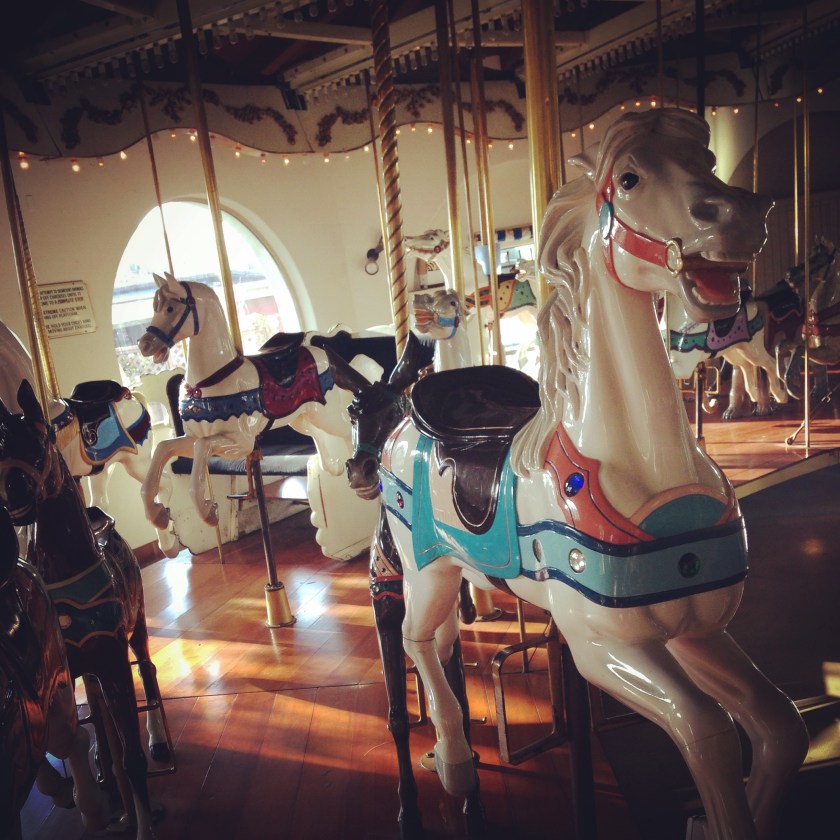
A smile that blinds with blitheness, overspending
Upon this gasping sightless round of fun …
Das Karussell, Jardin du Luxembourg, Rainer Maria Rilke
Photo: San Diego, 2014

A smile that blinds with blitheness, overspending
Upon this gasping sightless round of fun …
Das Karussell, Jardin du Luxembourg, Rainer Maria Rilke
Photo: San Diego, 2014
They are like a crystal,
words.
Some a dagger,
some a blaze.
Others,
merely dew.
Secret they come, full of memory.
Insecurely they sail:
cockleboats or kisses,
the waters trembling.
Abandoned, innocent,
weightless.
They are woven of light.
They are the night.
And even pallid
they recall green paradise.
Who hears them? Who
gathers them, thus,
cruel, shapeless,
in their pure shells?
Translation: 1985, Alexis Levitin, Inhabited Heart
Perivale Press, Los Angeles, 1985
São como um cristal,
as palavras.
Algumas, um punhal,
um incêndio.
Outras,
orvalho apenas.
Secretas vêm, cheias de memória.
Inseguras navegam:
barcos ou beijos,
as águas estremecem.
Desamparadas, inocentes,
leves.
Tecidas são de luz
e são a noite.
E mesmo pálidas
verdes paraísos lembram ainda.
Quem as escuta? Quem
as recolhe, assim,
cruéis, desfeitas,
nas suas conchas puras?
Eugénio de Andrade, Coração do Dia
Limiar, Porto, 1958
Photo: Point Omega by Don Delillo (sometimes I’m too lazy to take notes)

The souls that throng the flood
Are those to whom, by fate, are other bodies ow’d:
In Lethe’s lake they long oblivion taste,
Of future life secure, forgetful of the past.
Photo: Ponte de Lima (2017) I have spent a lot of happy and not so happy days in this place during my childhood and teenage years. A village which is known for a legend of forgetfulness has helped me to know a little bit more of who I am.
References
The Aeneid by Virgil
Come to me in the silence of the night;
Come in the speaking silence of a dream;
Come with soft rounded cheeks and eyes as bright
As sunlight on a stream;
Come back in tears,
O memory, hope, love of finished years.
O dream how sweet, too sweet, too bitter sweet,
Whose wakening should have been in Paradise,
Where souls brimful of love abide and meet;
Where thirsting longing eyes
Watch the slow door
That opening, letting in, lets out no more.
Yet come to me in dreams, that I may live
My very life again though cold in death:
Come back to me in dreams, that I may give
Pulse for pulse, breath for breath:
Speak low, lean low,
As long ago, my love, how long ago!
Echo, Christina Rossetti
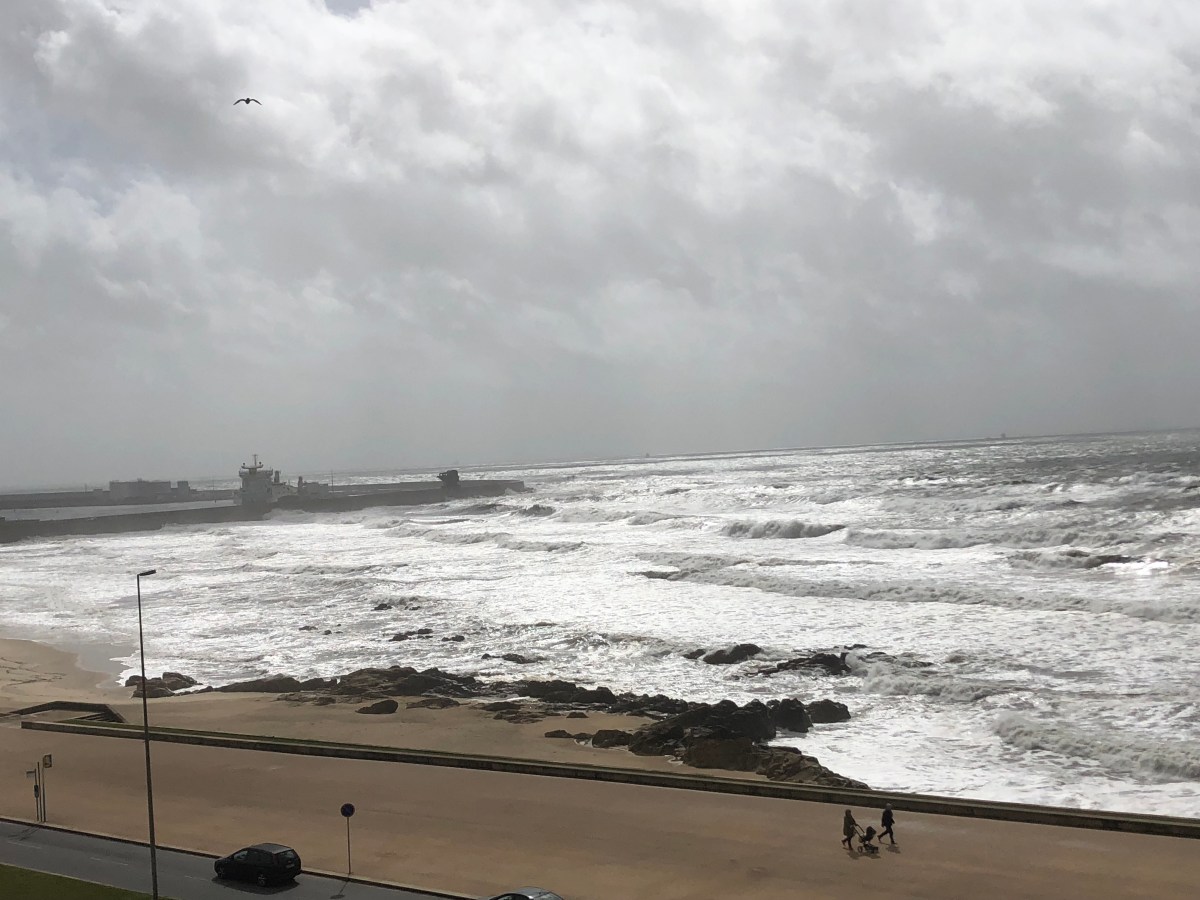
Photo: Leça da Palmeira, after the storm (March 2018)

This is not a good photo. I couldn’t get out of the car and attempt a proper photo, the letter box stands right by a traffic light and words on walls and urban equipments tend to vanish quickly, so you get them when you spot them.
Pause and reflect on the [your / mine] path
That’s how it reads to me. That’s what’s lacking, the time to stop and try to see the direction.
Hoje de manhã saí muito cedo,
Hoje de manhã saí muito cedo,
Por ter acordado ainda mais cedo
E não ter nada que quisesse fazer…
Não sabia por caminho tomar
Mas o vento soprava forte, varria para um lado,
E segui o caminho para onde o vento me soprava nas costas.
Assim tem sido sempre a minha vida, e
Assim quero que possa ser sempre —
Vou onde o vento me leva e não me
Sinto pensar.
13-6-1930
“Poemas Inconjuntos”. In Poemas de Alberto Caeiro. Fernando Pessoa.
I went out very early in the morning today
Because I woke up even earlier
And there was nothing I wanted to do…
I didn’t know which road to take
But the wind rose strong, sweeping up from one side,
And I followed the road where the wind pushed at my back.
That’s how my life has always been, and
That’s how I’d like to be able to have it always be —
I go where the wind leads me
And don’t feel like thinking.
Translation here
Photo: Afurada on a perfect Saturday morning
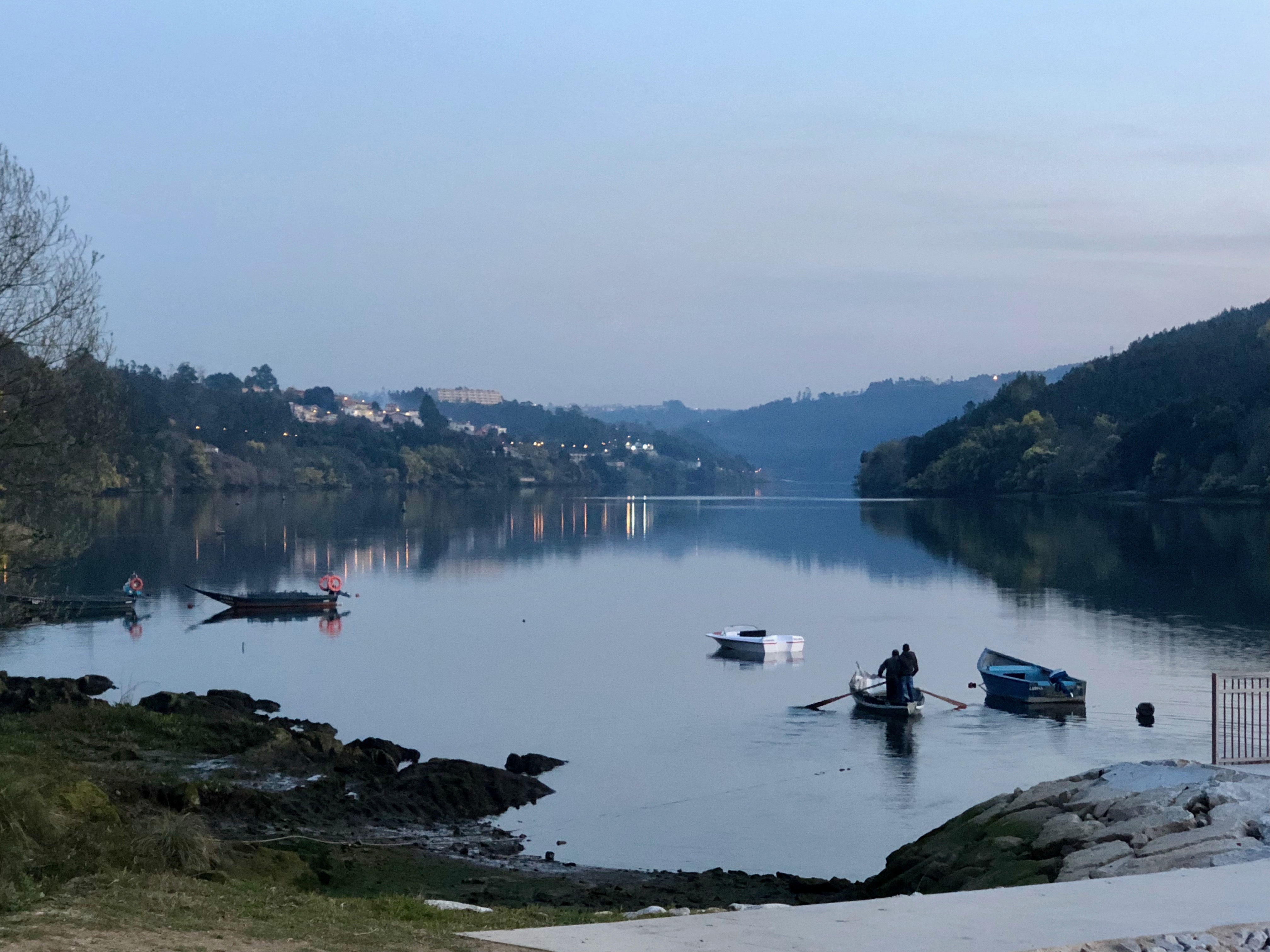
And the World is different. And it’s summer in February even though it’s still the Northern Hemisphere.
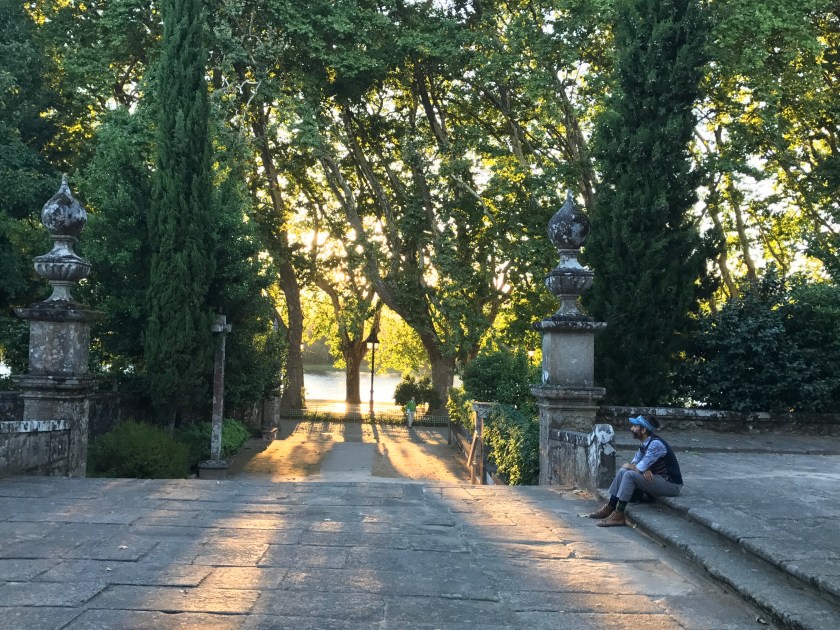
Photo: last Sunday, somewhere in Gondomar
Quiero que sepas
una cosa.
Tú sabes cómo es esto:
si miro
la luna de cristal, la rama roja
del lento otoño en mi ventana,
si toco
junto al fuego
la impalpable ceniza
o el arrugado cuerpo de la leña,
todo me lleva a ti,
como si todo lo que existe,
aromas, luz, metales,
fueran pequeños barcos que navegan
hacia las islas tuyas que me aguardan.
Ahora bien,
si poco a poco dejas de quererme
dejaré de quererte poco a poco.
Si de pronto
me olvidas
no me busques,
que ya te habré olvidado.
Si consideras largo y loco
el viento de banderas
que pasa por mi vida
y te decides
a dejarme a la orilla
del corazón en que tengo raíces,
piensa
que en ese día,
a esa hora
levantaré los brazos
y saldrán mis raíces
a buscar otra tierra.
Pero
si cada día,
cada hora
sientes que a mí estás destinada
con dulzura implacable.
Si cada día sube
una flor a tus labios a buscarme,
ay amor mío, ay mía,
en mí todo ese fuego se repite,
en mí nada se apaga ni se olvida,
mi amor se nutre de tu amor, amada,
y mientras vivas estará en tus brazos
sin salir de los míos.
Si tu me olvidas, Pablo Neruda
I want you to know
one thing.
You know how this is:
if I look
at the crystal moon, at the red branch
of the slow autumn at my window,
if I touch
near the fire
the impalpable ash
or the wrinkled body of the log,
everything carries me to you,
as if everything that exists,
aromas, light, metals,
were little boats
that sail
toward those isles of yours that wait for me.
Well, now,
if little by little you stop loving me
I shall stop loving you little by little.
If suddenly
you forget me
do not look for me,
for I shall already have forgotten you.
If you think it long and mad,
the wind of banners
that passes through my life,
and you decide
to leave me at the shore
of the heart where I have roots,
remember
that on that day,
at that hour,
I shall lift my arms
and my roots will set off
to seek another land.
But
if each day,
each hour,
you feel that you are destined for me
with implacable sweetness,
if each day a flower
climbs up to your lips to seek me,
ah my love, ah my own,
in me all that fire is repeated,
in me nothing is extinguished or forgotten,
my love feeds on your love, beloved,
and as long as you live it will be in your arms
without leaving mine.
Photo: Wall poetry on the streets of Porto
Be all this.
Be this touch with all the skin that can comfort you
Here’s your Mom, here’s your Dad.
Welcome to being their flesh and blood.
Why do you look so sad?
Here’s your food, here’s your drink.
Also some thoughts, if you care to think.
Welcome to everything.
Here’s your practically clean slate.
Welcome to it, though it’s kind of late.
Welcome at any rate.
Here’s your paycheck, here’s your rent.
Money is nature’s fifth element.
Welcome to every cent.
Here’s your swarm and your huge beehive.
Welcome to that there’s roughly five
billion like you alive.
Welcome to the phone book that stars your name
Digits are democracy’s secret aim.
Welcome to your claim to fame.
Here’s your marriage, and here’s divorce.
Now that’s the order you can’t reverse.
Welcome to it; up yours.
Here’s your blade, here’s your wrist.
Welcome to playing your own terrorist;
call this your Middle East.
Here’s your mirror, your dental gleam.
Here’s an octopus in your dream.
Why do you try to scream?
Here’s your corn-cob, your TV set.
Your candidate suffering an upset.
Welcome to what he said.
Here’s your porch, see the cars pass by.
Here’s your shitting dog’s guilty eye.
Welcome to its alibi.
Here are your cicadas, then a chickadee,
the bulb’s dry tear in your lemon tea.
Welcome to infinity.
Here are your pills on the plastic tray,
Your disappointing, crisp X-ray.
You are welcome to pray.
Here’s your cemetery, a well kept glen.
Welcome to a voice that says, “Amen.”
The end of the rope, old man.
Here’s your will, and here’s a few
takers. Here’s an empty pew.
Here’s life after you.
And here are your stars which appear still keen
on shining as though you had never been.
They might have a point, old bean.
Here’s your afterlife, with no trace
of you, especially of your face.
Welcome, and call it space.
Welcome to where one cannot breathe.
This way, space resembles what’s underneath
and Saturn holds the wreath.
Enjoying Porto’s sunsets and making Monday’s poetry late again.

“When I die I will return to seek
The moments I did not live by the sea.”
Sophia De Mello Breyner
Selected Poems, translated by Richard Zenith, Carcanet Press, 1997.

even though I feel at home in most places I travel to, even though I can’t wait to leave, even though it now looks mostly as a theme park, I sometimes can’t help but feel that Porto belongs to me because I belong to it.
References
Truman Capote
Não fora o mar,
e eu seria feliz na minha rua,
neste primeiro andar da minha casa
a ver, de dia, o sol, de noite a lua,
calada, quieta, sem um golpe de asa.
Não fora o mar,
e seriam contados os meus passos,
tantos para viver, para morrer,
tantos os movimentos dos meus braços,
pequena angústia, pequeno prazer.
Não fora o mar,
e os seus sonhos seriam sem violência
como irisadas bolas de sabão,
efémero cristal, branca aparência,
e o resto — pingos de água em minha mão.
Não fora o mar,
e este cruel desejo de aventura
seria vaga música ao sol pôr
nem sequer brasa viva, queimadura,
pouco mais que o perfume duma flor.
Não fora o mar
e o longo apelo, o canto da sereia,
apenas ilusão, miragem,
breve canção, passo breve na areia,
desejo balbuciante de viagem.
Não fora o mar
e, resignada, em vez de olhar os astros
tudo o que é alto, inacessível, fundo,
cimos, castelos, torres, nuvens, mastros,
iria de olhos baixos pelo mundo.
Não fora o mar
e o meu canto seria flor e mel,
asa de borboleta, rouxinol,
e não rude halali, garra cruel,
Águia Real que desafia o sol.
Não fora o mar
e este potro selvagem, sem arção,
crinas ao vento, com arreio,
meu altivo, indomável coração,
Não fora o mar
e comeria à mão,
não fora o mar
e aceitaria o freio.
Fernanda de Castro, in “Trinta e Nove Poemas”
I couldn’t find a translation of this poem. I did try to translate it myself and I think I ended up mutilating it because I was not able to translate the feeling of disquiet a lifetime staring at the sea actually has over ourselves. In the midst of all the routines, broken illusions and plans that have not been fulfilled, you can’t help yourself. You don’t surrender.
It weren’t for the sea,
and I would be happy on my street,
on this first floor of my house
to see, by day, the sun, at night the moon,
quiet, quiet, without a blow of the wing.
It weren’t for the sea,
and my steps would be numbered,
so many to live, to die,
so many movements of my arms,
little anguish, little pleasure.
It weren’t for the sea,
and your dreams would be without violence
like iridescent soap bubbles,
ephemeral crystal, white appearance,
and the rest – drops of water in my hand.
It weren’t for the sea,
and this cruel desire for adventure
would be vague music in the sun
not even live coal, burning,
little more than the perfume of a flower.
It weren’t for the sea
and the long appeal, the mermaid’s song,
only illusion, mirage,
brief song, brief step in the sand,
bursts of travel.
It weren’t for the sea
and, resigned, instead of looking at the stars
everything that is high, inaccessible, deep,
high, castles, towers, clouds, masts,
would be travelling face down through the world.
It weren’t for the sea
and my song would be flower and honey,
butterfly wing, nightingale,
and not rude halali, cruel claw,
Royall eagle defying the sun.
It weren’t for the sea
and this wild colt,
mane in the wind, harnessed,
my haughty, indomitable heart,
It weren’t for the sea
and I would eat out of hand,
It weren’t for the sea,
and would accept the bridle.




 Stories from A Closet of Errors